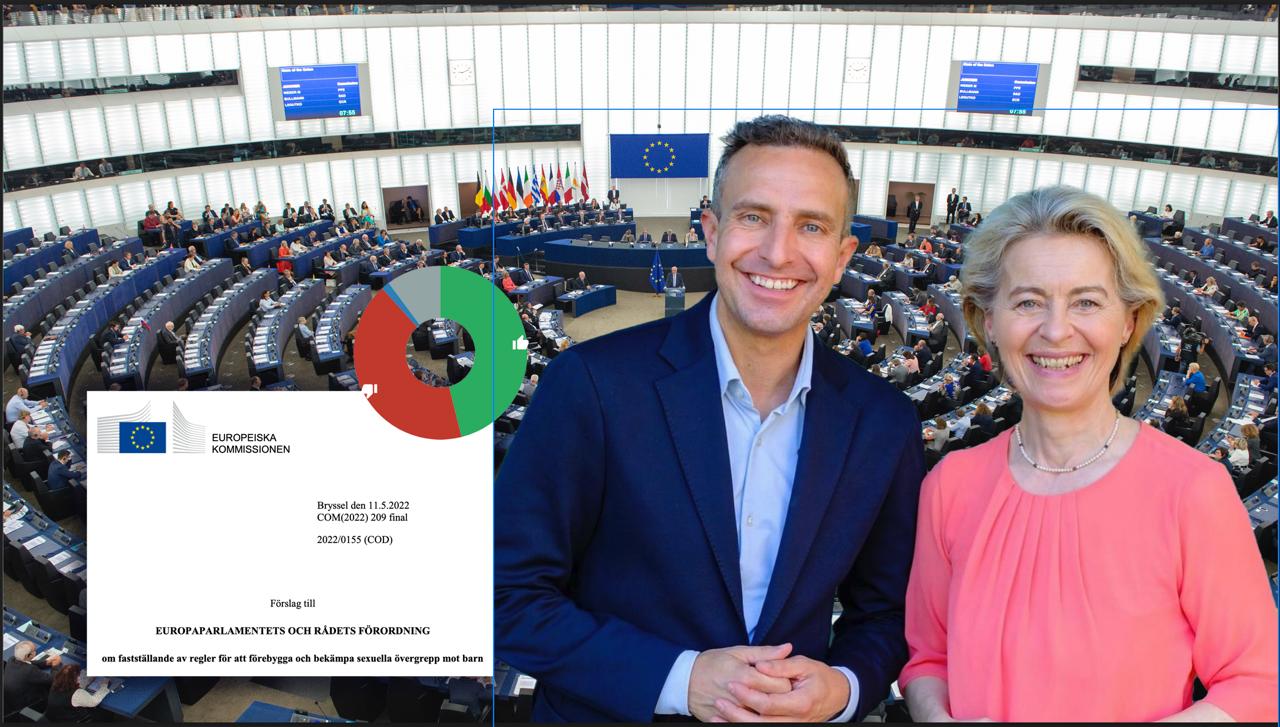
“Chat Control” is the controversial name for the EU’s attempt to introduce regulations that would make it possible to detect and report online child sexual abuse material. Supporters describe it as a tool to protect children, while critics warn that the proposals risk paving the way for mass surveillance of private messages—even in encrypted apps. The temporary arrangement, which allowed platforms to voluntarily scan communications, expired earlier this year after the European Parliament refused to extend it. This marks the third time the EU is attempting to push through the proposal.
On Tuesday, the European Parliament voted to use an urgent procedure to revisit the controversial law known by critics as “Chat Control.” The decision means that the parliament is expected this Thursday to vote on reintroducing the temporary exemption from the EU’s ePrivacy rules, which previously allowed internet platforms to voluntarily scan private communications for material related to child sexual abuse.
READ ALSO: Chat Control 1 Stopped – Now Chat Control 2 Remains
The issue has drawn harsh criticism from privacy advocates and several Members of the EU Parliament, who argue that the proposal opens the door to mass surveillance of private messages. Proponents claim the measures are necessary to combat child sexual abuse online.
The temporary law expired on April 3, 2026, after the European Parliament refused an extension in March. Now the Council has adopted the Commission’s original proposal as its position, which means the matter has entered a second reading in the Parliament. To stop or amend the Council’s text requires an absolute majority among members—otherwise, the proposal is deemed passed.
Contravenes the EU’s Own Rules
German MEP Martin Sonneborn, a member of the left-wing party Die PARTEI, reports that on Monday he tried to halt the expedited handling of Chat Control in the European Parliament.
According to Sonneborn, he and German MEP Sibylle Berg wrote to the European Parliament’s President Roberta Metsola over the weekend, noting that fast-tracking the issue violates Parliament’s rules of procedure. Despite this, according to Sonneborn, Metsola told the press that everything was being done properly.
At the opening of the session in Strasbourg, Sonneborn tried to raise the matter again. He states that his microphone was cut off after exactly 60 seconds—something he acknowledges is in line with the rules, but is, according to him, rarely enforced so strictly. Others argue it happens all the time, however.
Tried to Invalidate the Procedure
Sonneborn wanted Metsola to invalidate the handling of the issue on the basis of Parliament’s procedural rules. In his speech, he essentially accused the Presidency of pushing the issue through despite procedural objections.
According to Sonneborn, the next step is for the Parliament to vote on the urgent procedure itself on Tuesday. If it passes, Chat Control is expected to be brought to a plenary vote on Thursday afternoon. To block the proposal at that stage, he says, 361 members would need to vote against it.
He also criticizes the timing of the vote. Thursday is the last day before the Parliament’s summer break, which, according to Sonneborn, means that several members might already be on their way home or on holiday when the decision is made. He indicates in his post that this timing is deliberately chosen for just that reason.
READ MORE: The EU’s Mass Surveillance Chat Control Criticized by Experts
The Moderates Support ChatControl
Tobias Tobé, Moderate MEP, went to the media in April 2023, about a year before the EU elections, announcing that he would go against his own party in government regarding ChatControl by promising to vote no.
– Honest people should be able to feel secure that their right to privacy and personal integrity is protected, Tomas Tobé (M) said then.
But now, just over three years later, he is acting in direct contradiction to that promise. The blog Femte juli reports that Tobé himself defended the renewed proposal for Chat Control 1 in the chamber.
READ MORE: IT Security Expert on Chat Control: “Our Politicians Have Been Completely Fooled”
Note that Chat Control 1 means that messaging services are voluntarily permitted to scan the contents of their users’ electronic messages. Chat Control 2 meanwhile refers to permanent legislation and is still the subject of so-called “trilogue negotiations” between the EU Council, the European Parliament, and the European Commission.
Vote Properly
Thursday’s vote is the third attempt to extend Chat Control 1. It was when the EPP group came up with the idea to let the EU Council present the proposal one more time and use rule 170(6) in Parliament’s Rules of Procedure to initiate so-called “urgent procedure” that the whole process led to tomorrow’s vote.
This is not the first time the EU has redone votes that did not go its way. The Lisbon Treaty was voted down three times (in France, the Netherlands, and Ireland). Ireland was forced to vote again the following year, while the governments of France and the Netherlands overruled the people without another vote.
Following the EU’s way of handling Ireland’s vote, Margot Wallström (S) participated in a now infamous interview in which she demonstrated her and the EU’s contempt for democratic decisions.