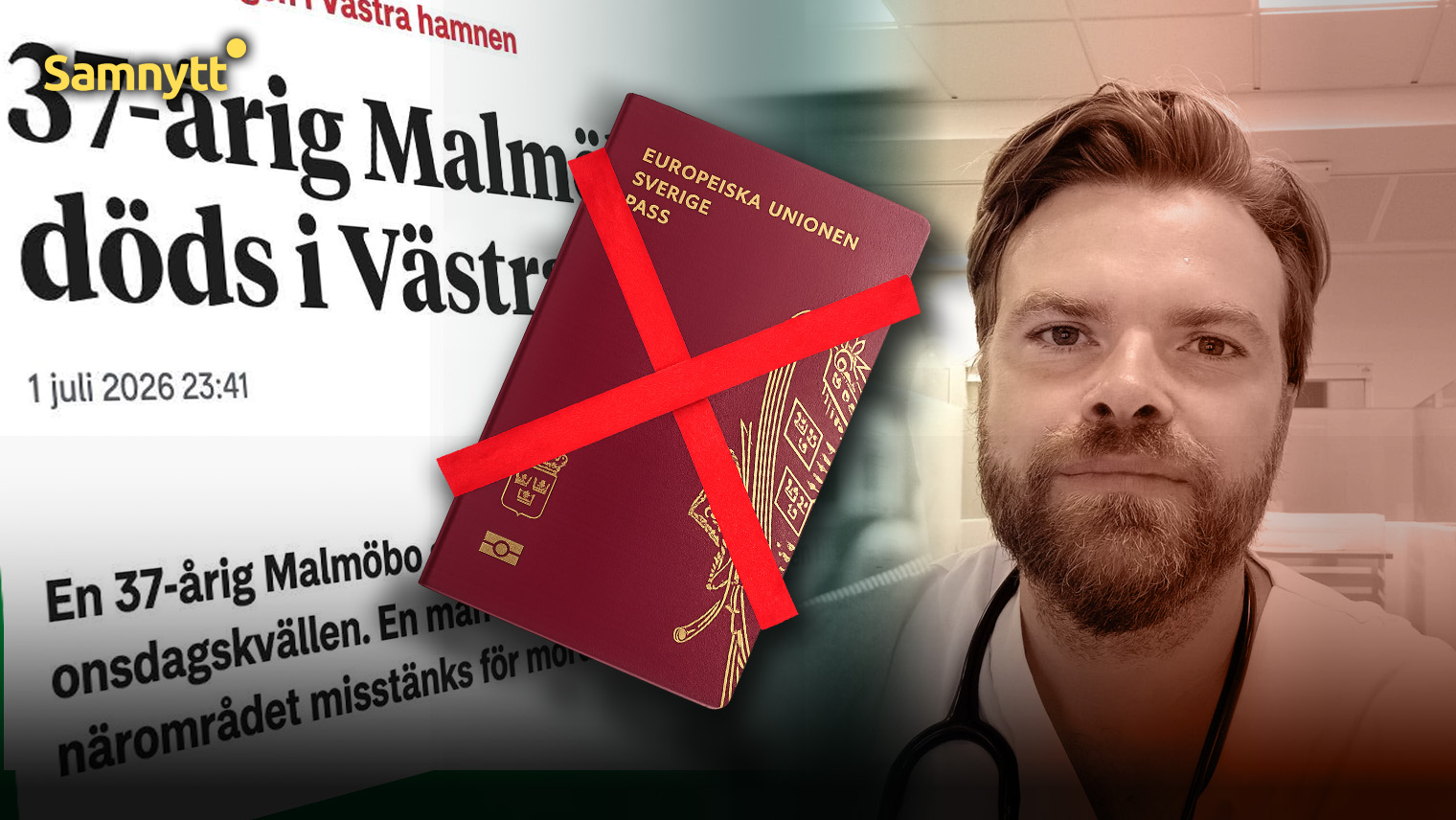
The execution in Västra hamnen shows that ‘Sluta skjut’ has not made Malmö safer. So says Malmölistan party leader Nils Littorin, who believes the effects of the project have been exaggerated by politicians and authorities. In a longer interview with Samnytt, he instead argues for significantly harsher penalties, revoked citizenships for serious criminals, deportation of criminal clans, and a crime policy inspired by, among others, El Salvador.
For Malmölistan’s party leader Nils Littorin, the murder in Västra hamnen is yet another proof that the criminal policy model launched with high expectations in 2018 has not delivered the promised results.
The background is the high-profile shooting in Västra hamnen in Malmö during the night to Wednesday. A man in his mid-30s was shot dead in public and later died from his injuries. Several shots were fired in a residential area, and at least one bullet struck the door of an apartment building. The police are investigating the incident as murder and the motive has not yet been established.
In an interview with Samnytt, he sharply criticizes both the Social Democrats, Moderates, and the National Council for Crime Prevention (BRÅ). According to him, “Sluta skjut” has become a political prestige project whose effects have been exaggerated, while significantly more impactful measures have been deprioritized.
He says that several people in the healthcare sector have contacted him after the Västra hamnen murder, as the killed man worked in healthcare.
– They are devastated and shocked. They don’t even know why he was shot. And in reality, nobody knows today. But they all ask the same question – why is nothing happening? How can a person be gunned down in the middle of Malmö, and it’s barely news a day later?
You need to remove the entire clan from society. Since these are immigrant clans, the solution is to deport the entire clan.
Nils Littorin, doctor and party leader for Malmölistan
He describes the murder as yet another example of how serious violence has become part of everyday life.
– Bullets whizzing all around. One hits an entrance where people live. Children ride their bikes there during the day. That this happens in Malmö is no coincidence.
“The Social Democrats’ Flagship Project”
Explain how you conclude that the ‘Sluta skjut’ campaign has failed?
– It is the Social Democrats’ major police initiative against shootings and gang violence, their big flagship. It was launched with great fanfare in 2018 and was supposed to be an evidence-based method against serious crime.
It has been a failure and a distraction from things that everyone knows actually have an effect. Sweden lacks immediate, effective, and tough consequences for people who commit serious crimes.
Nils Littorin, doctor and party leader for Malmölistan
But according to him, the project has instead become a distraction from measures he believes actually work.

– It has been a failure and a distraction from things that everyone knows actually have an effect. Sweden lacks immediate, effective and harsh consequences for people who commit serious crimes.
As part of “Sluta skjut”, serious criminals were invited to special meetings with police and other authorities. After the conversations, pizza and drinks were served, which sparked debate about the method’s design and symbolism. Following the criticism, police changed the menu and started serving vegetarian wraps to the serious criminals instead.
READ ALSO: Swedish police’s “Sluta skjut” campaign mocked abroad
He draws a parallel to earlier campaigns.
– There was a campaign called “Sluta tafsa” (“Stop groping”). It feels equally naive to believe that motivational talks will get hardcore criminal gangs to lay down their arms.
How can the project continue despite such serious criticism?
– People really want it to work. Previous governments have kept providing funding, and now the model is used in Gothenburg, Örebro and several other cities. At the same time, the authorities’ own evaluations show that we actually do not know if it works.
READ ALSO: Police tear down S boasting about ‘Sluta skjut’ in Malmö: ‘Not the reason shootings have decreased’
He points specifically to the final report from the National Council for Crime Prevention (BRÅ).
– You see that shootings decrease over the period, but you cannot say it is because of ‘Sluta skjut’. There is no such clear connection.
READ ALSO: After “Sluta skjut”: now comes “Stop Hitting”
According to Littorin, the project also coincides with several other very extensive police operations.
He mentions the national Operation Rimfrost, the European EncroChat operation which led to hundreds of convictions of serious criminals, as well as the pandemic, when crime patterns shifted in many places.
– So many other extraordinary things happen during the same period that it would not be surprising if shootings went down regardless of motivational talks or not.
He also highlights that, according to him, the positive trend began even before the project was implemented.
These citizenships need to be revised. It’s obvious that these people came here to destroy our society and enrich themselves — and to live here as criminal parasites. So, of course, they can’t stay. You revoke their citizenships and throw them out. It’s not harder than that.
Nils Littorin, doctor and party leader for Malmölistan
– The decrease in shootings starts before ‘Sluta skjut’ begins. So BRÅ is basically forced to say that they see an effect, but at the same time they cannot say if the project actually caused it. He sums up:
– But what works is harsh consequences.
READ ALSO: Over 67,000 people linked to gang crime in Sweden — Government: “Serious situation”
You suggest the model worked better in Boston in the US. Why?
– The American model is based on something entirely different from the Swedish one. The method was developed in Boston during the 1990s to reduce youth murders through contact with gangs, offers of help and threats of consequences if the violence continued. Littorin elaborates:
– There, they managed to cool down conflicts and cut the number of gang murders among young people by more than half.
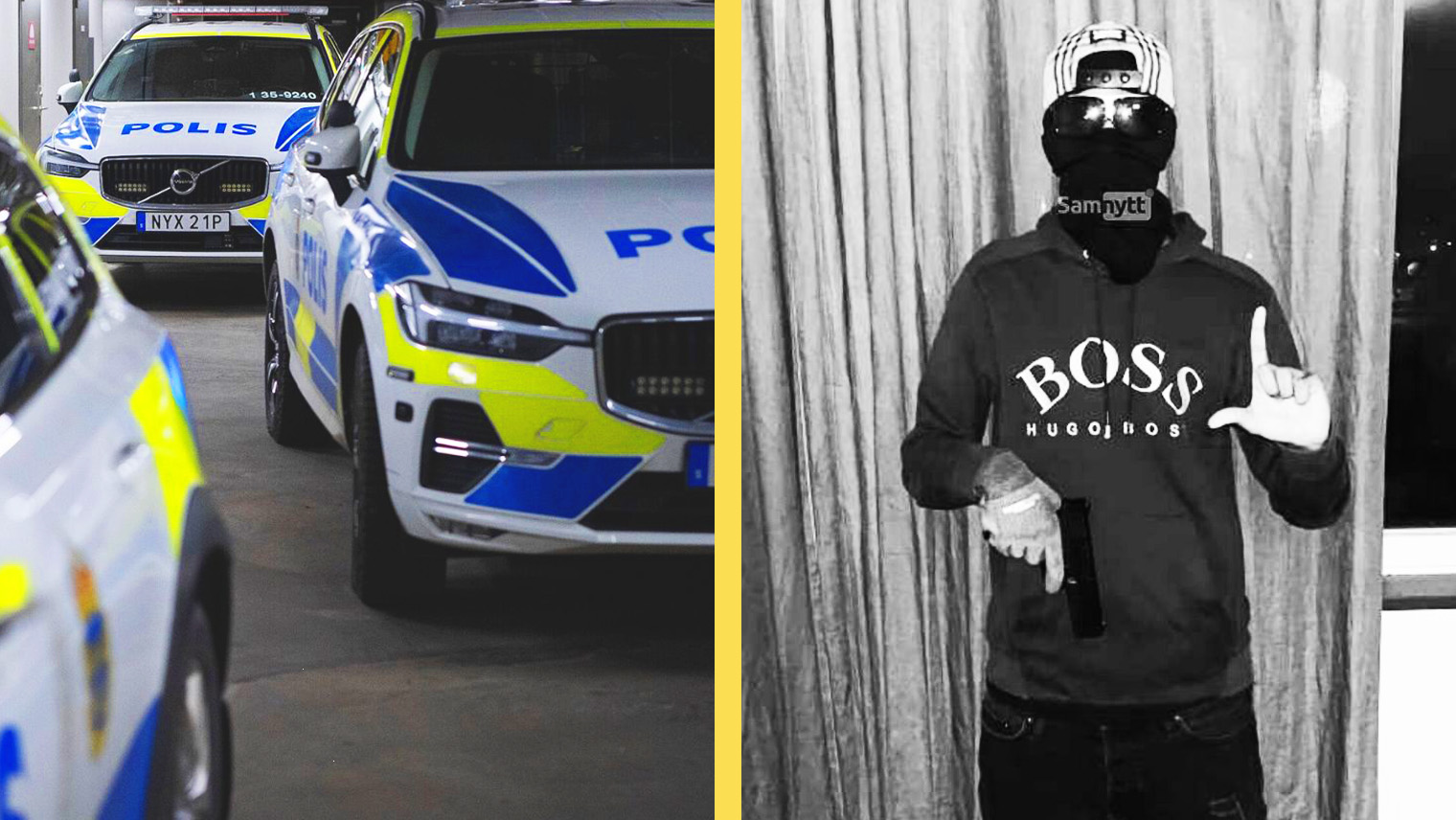
But the crucial difference, he says, is the judicial system.
– They have federal prosecutors and very powerful tools. If you risk 30 years in prison, that’s a real threat. Swedish police and prosecutors don’t have that possibility. In Sweden, the consequences are more about increased surveillance or more checks. He continues:
– That is not enough to deter people who are already prepared to murder.
He also refers to information that about half of those who participated in the project’s talks later were suspected of new serious crimes.
– It doesn’t work in the Swedish context. Sure, you can have motivational talks, but what is needed regardless is very tough sentences.
READ ALSO: National Police Commissioner troubled — shifts responsibility for gang crime onto the citizens
Littorin wants to see a sharp tightening of sentences for serious crime.
– If you walk around armed in the city — twenty years in prison.
“The whole clan must go”
You go further than many others and say that entire criminal clans should be deported. What do you mean?
– The police themselves have identified around forty immigrant criminal clans. These are extended families where loyalty to the clan outweighs any loyalty to Swedish society.
He believes it is not enough to prosecute individual persons.
– You need to remove the entire clan from society. Since these are immigrant clans, the solution is to deport the entire clan.
READ ALSO: Migration Agency’s inside: Clans, Swedes in the minority, and culture of silence
According to Littorin, this differs from the reasoning of both the Tidö parties and the Sweden Democrats.
– This is something new. When I grew up, there were individual criminals. Now, we have criminal families that control entire residential areas.
Of course no one wants prisons. It would be better if they were not needed. But we must protect ordinary honest citizens from psychopaths who have no respect for human life.
Nils Littorin, doctor and party leader for Malmölistan
He describes a hypothetical scenario in which the state gives a notorious criminal clan a final deadline before the whole network is arrested and deported.
– The Prime Minister, the Security Service chief, and the National Police Commissioner hold a press conference and say: “We know who you are. You have one week to leave Sweden. Then we will throw you out.”
Littorin believes such action would quickly shift the balance of power.
– You make an example. Then you go there at four in the morning, arrest the whole clan, and send them out. That’s what I mean by deporting criminal clans. He continues:
– That even applies if Ahmed is studying to become a police officer. If he is part of this criminal clan, his loyalty will still be with the clan, not Sweden.
READ ALSO: Åkesson: “We will restore a Swedish Sweden without gang violence, clans, and Islamism”
You also say that citizenships should be revoked; how should that be done?
– Yes, you revoke them. These citizenships need to be reviewed. It’s obvious that these people came here to destroy our society and enrich themselves — and to live here as criminal parasites. He continues:
– So of course, they cannot stay here. You revoke their citizenships and throw them out. It’s not harder than that.
Littorin also believes Sweden should use diplomacy to enable more deportations.
He points out that Denmark has established contacts with the Taliban regime in Afghanistan and says that similar solutions, together with financial incentives, could also be used for countries like Somalia to accept people deported from Sweden.
Inspired by El Salvador
You also cite El Salvador as a role model. What does Sweden have to learn from that development?
– The Central American country is an example of how a society can regain control from seriously criminal networks. For a long time, El Salvador was the country in the world with the highest murder rate per capita. Gangs controlled entire residential areas and terrorized the population.
According to him, the situation changed when the country’s government chose a much tougher line.
– The president did exactly what many claim should never be done. He rounded up tens of thousands of gang criminals and locked them up.
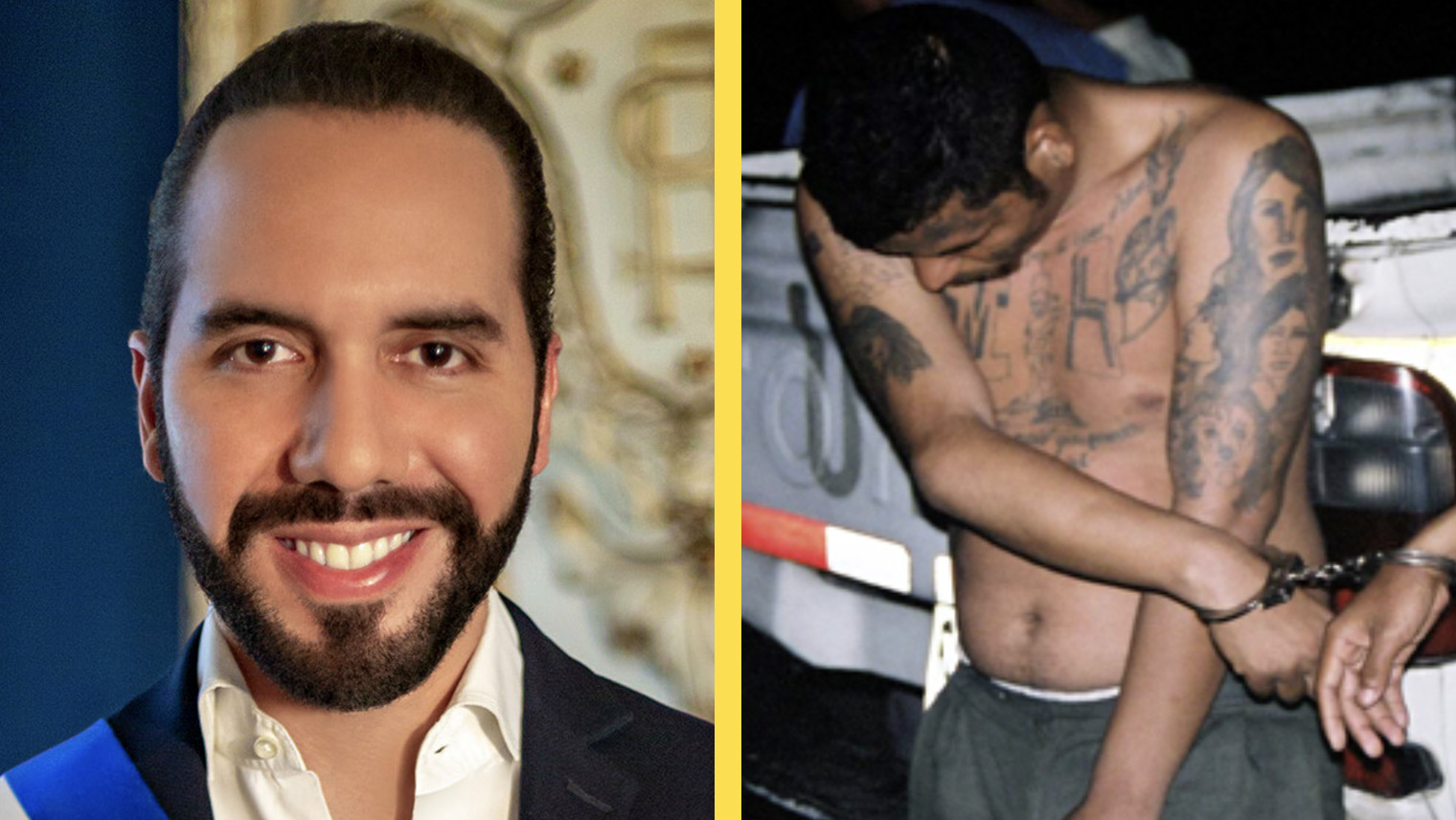
Littorin says a speech from the president especially impressed him.
– He was criticized for the fact that gang criminals did not get good enough food in prison. He responded that the pregnant woman at home should get chicken first, the bus driver should be able to afford food first, and schoolchildren should eat properly first. Then the gang criminals can have what’s left. That priority order is the right one, I think.
READ ALSO: Serious gang crime to be stopped with voluntary talks
According to Littorin, this development shows that consistent criminal justice can produce results.
– Today, El Salvador is one of the safest countries in Latin America. It shows that it is possible to regain control.
El Salvador’s tough criminal policy under President Nayib Bukele has attracted international attention. While the government has been praised for drastically reducing gang crime, human rights and left-wing organizations have criticized issues such as mass arrests and legal security.
“We need to protect ordinary people”
Critics claim tougher sentences do not solve the problem of new gang recruitment. What is your response?
– Prisons are not desirable in themselves, but they are a necessary part of a functioning legal society. He continues:
– Of course no one wants prisons. It would be better if they were not needed. But we must protect ordinary honest citizens from psychopaths who have no respect for human life.
About half of those who work within the Police Authority sit in offices. More need to be out on the streets and squares. In the past, police patrolled on foot. Today, they mostly sit in cars going between incidents.
Nils Littorin, doctor and party leader for Malmölistan
He believes the vision of a society where harsh penalties are not needed is a long way off.
READ ALSO: Danish criminologist tears down Swedish silence culture on gang crime: “Scandal”
He also dismisses comparisons to Norway.
– Norway is often highlighted as having a humane justice system with more open prisons and greater freedoms for inmates. But Norway has not imported forty criminal clans controlling entire residential areas. Policy needs to be adapted to reality.
You also want to give security guards greater powers and reintroduce neighborhood police. How do you imagine that would work?
– Several things need to be done at once. In parallel with locking up or expelling these people, there must be long-term efforts too.
He wants to see a return to the local police presence he claims existed previously.
– Neighborhood police were a good idea. They prevent crime just by being present. If there are patrolling officers where children go to school, it is much harder for drug dealing to take place openly.
READ ALSO: Police on multicultural Gothenburg: “Our city has been torn apart”
He also says today’s police organization has become too administrative.
– About half of those working for the Police Authority are office-bound. More need to be out on the streets and squares. Previously police patrolled on foot. Today they mostly sit in cars, going from call to call.
As an example, he mentions Barcelona.
– You often see armed police in the city center, officers with submachine guns. If you value people’s sense of security, it’s not strange if the authorities also show who’s in charge.
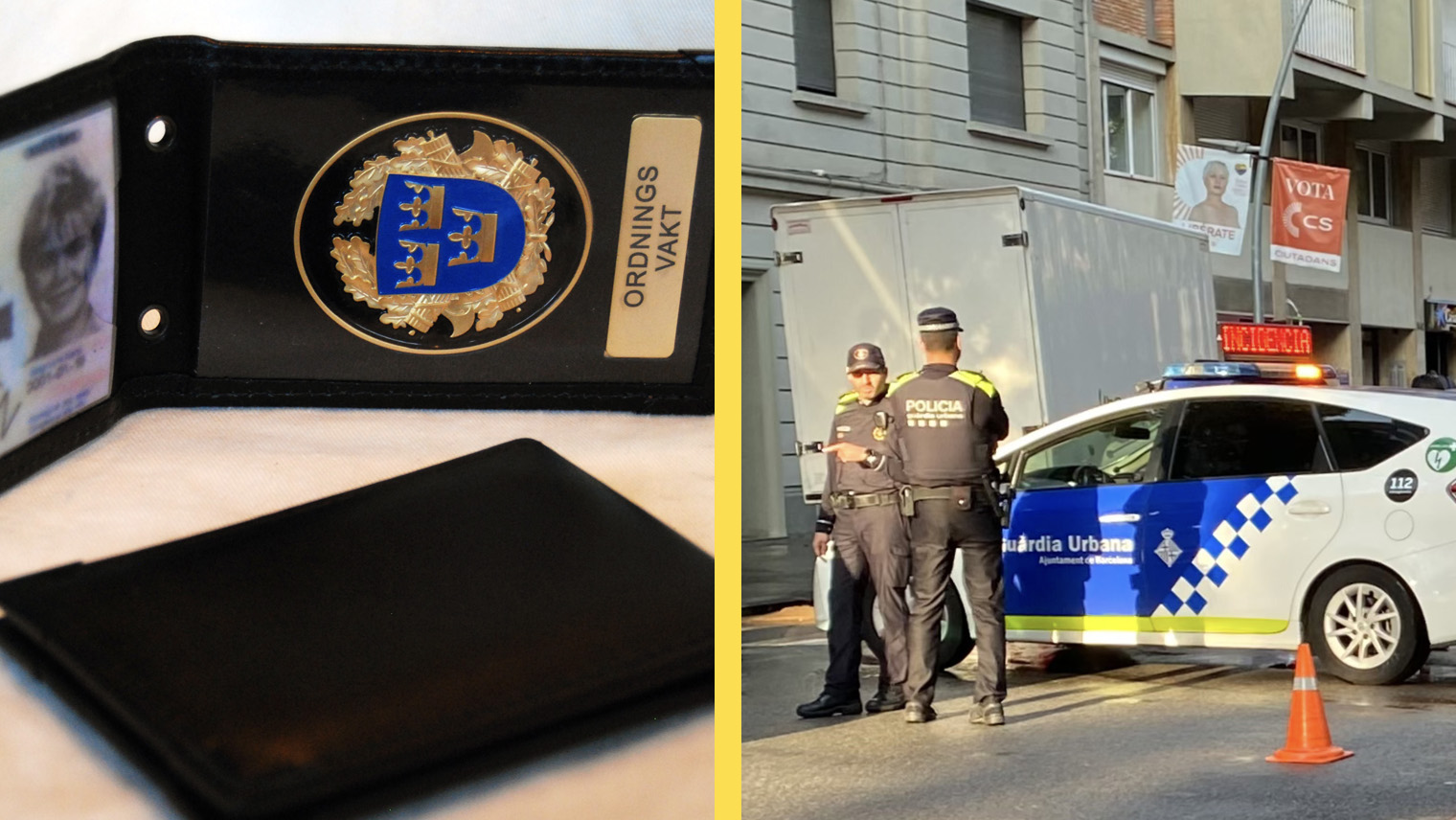
According to Littorin, local presence also has a practical value.
– Police who know their area know which families and individuals keep reoffending. You lose that local knowledge if you centralize and bureaucratize the organization.
“Children should not roam the streets”
At the same time, Littorin emphasizes that criminal policy is not only about punishment. He believes society must also reduce recruitment to criminality by giving children clearer boundaries.
– No matter how many we put in prison or deport, there will always be dysfunctional families and children growing up in tough circumstances. So society must offer them something different.
He wants children to participate much more in organized activities after school.
– They should not roam around in antisocial groups. They should play football, handball, martial arts, music, dance, or theater together with adult leaders.
Littorin refers to Iceland’s work against youth addiction in the 1990s.
– There they built sports facilities and got young people involved in organized activities. At the same time, substance abuse dropped sharply.
He says he could even consider curfews for children and youths in particularly vulnerable areas.
– Parents should take care of their children. If not, they should be with other adults in organized activities.
Another key issue for Littorin is the role of schools. He believes schools must function as a counterforce to destructive environments.
– The most important factor behind criminality is the immediate environment – the family, siblings, and the area you grow up in. Then the school has to compensate for that.
READ ALSO: Mass immigration, feminism, and chaos — how the Swedish school was crushed
He wants to see much clearer rules for order.
– Schools should teach children discipline, responsibility, and consequences.
Littorin believes that today’s schools are characterized by unclear leadership.
– If I were running Malmö, I would tell principals and teachers that they are in charge. They should have full support from politics.
He mentions several concrete examples of how he wants to restore order.
– If you take home a book from the school library and don’t return it, there should be consequences. Phones should be banned from classrooms. You should take off your cap and show respect for teachers.
Avrättningen i Västra hamnen-idyllen i Malmö visar misslyckandet för sosse och moderatprojektet "Sluta skjut". Motiverande samtal och tandlösa sanktioner fick inte gängen att sluta skjuta.
Jag har ett bättre förslag: Ut med dem! pic.twitter.com/FW7u2ln9iA— Nils Littorin (@Nils_Littorin) July 5, 2026
“Malmö should be safe again”
If Malmölistan could implement its entire crime policy program – what would Malmö look like in four years?
– It would mean a completely changed power balance. Today, ordinary people are afraid of antisocial immigrant gangs. Four years from now, it should be the criminals who are afraid of the police and the consequences.
READ ALSO: Politician rages at Malmö after rape of 94-year-old: “Complicit in the assault”
He believes that many serious criminals would then either be in prison or have left the country.
– They will be hunted, exposed, and on their way out of Sweden or already deported.
He also hopes the development would be noticeable among children and youths.
– Police should step by step reclaim the neighborhoods. At the same time, thousands of children should be participating in sports, schools should be characterized by order, and students should have better opportunities to succeed later in life.
For Littorin, crime policy is ultimately about restoring security.
– Ordinary people should feel at home on Malmö’s streets again — not the criminals.
Get 50% off today
123 083 33 50