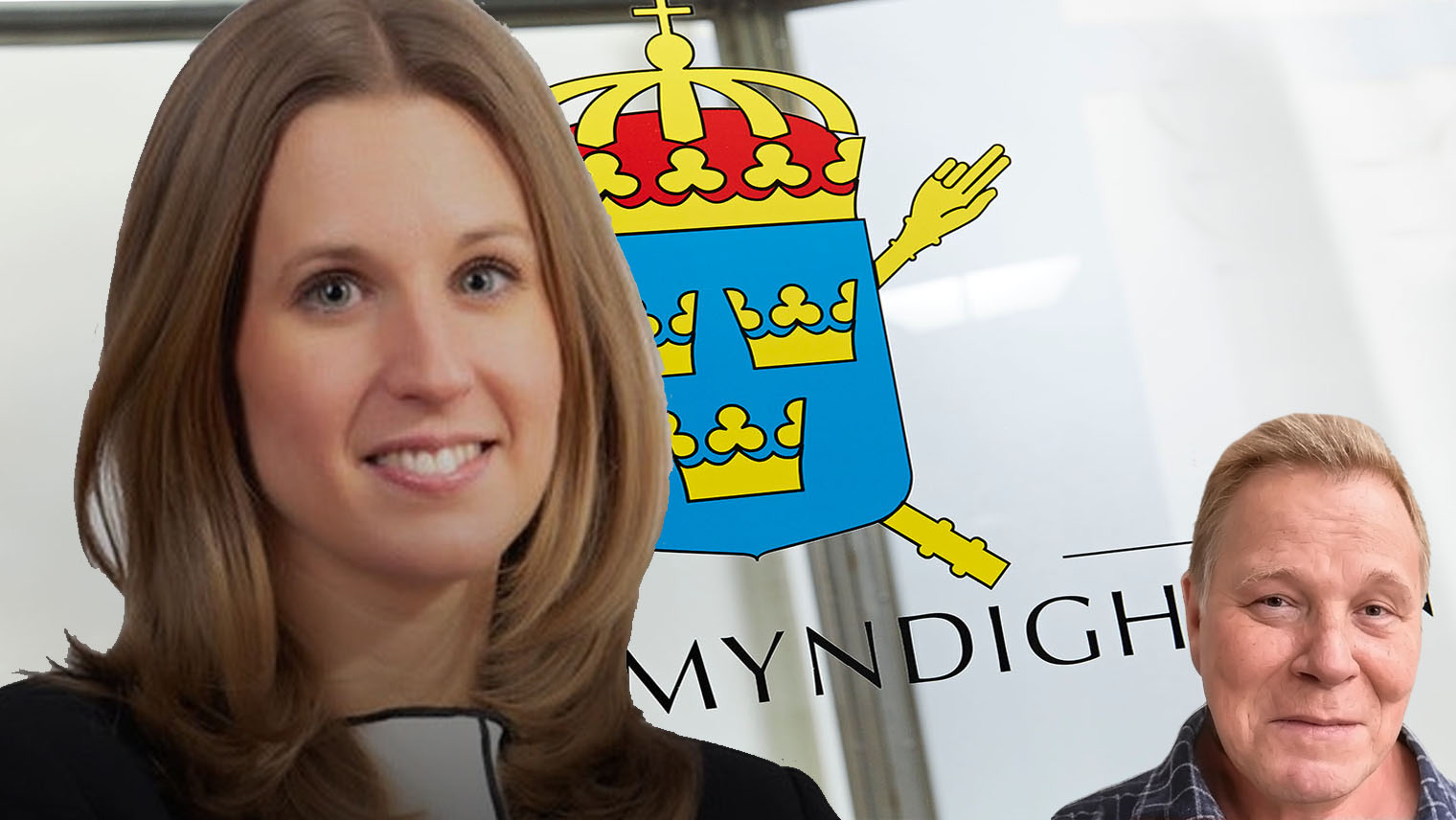
LEADER • The seizure of journalist Christian Peterson’s work equipment was halted by the court. Yet, the affair raises a bigger and more disturbing question: Are parts of the judiciary moving to advance their positions against constitutionally protected press freedom—while the major publishing institutions look the other way?
When freelance journalist Christian Peterson was stopped at Landvetter and had his computer, phone, and storage media confiscated, it was formally an action within a preliminary investigation for defamation. In practice, it meant that the state accessed—or at least created the possibility to access—journalistic work material that may be covered by source protection.
SAMNYTT TV The journalist on the prosecutor’s abuse of justice: “Sweden is not safe for journalists”
The Stockholm District Court revoked the decision. The proportionality did not hold. The story could have ended there, as yet another example that the rule of law’s control mechanisms work. But the truly interesting question begins here: how could it go so far in the first place?
The responsible prosecutor, Filippa Henkow, has since declined to answer questions. The silence from the authority is telling. When the exercise of power against journalists goes wrong, there is otherwise usually a strong interest in explaining how the assessment was made.
READ ALSO: Prosecutor seized journalist’s computer and phone—halted by court and now reported for misconduct
The Selective Outrage
It’s not hard to imagine the entirely different reaction had this happened to a reporter at Dagens Nyheter or Aftonbladet. No one can seriously believe it would have gone equally unnoticed. Every mainstream media newsroom, media umbrella organizations, Swedish PEN, and Reporters Without Borders would have gone into uproar.
But when it comes to smaller or politically inconvenient editorial offices, something entirely different arises: silence. It is hard to interpret it any other way than that principles today seem to depend on the sender. Press freedom applies—but only for some.
Lawfare and the Unpredictable Law
For us at Samnytt, this is not theoretical. We have already felt how legal processes are used as tools to wear down, intimidate, and, in practice, silence.
I, the undersigned, as former responsible publisher, was sentenced to prison after covering a legal dispute between Näthatsgranskaren Tomas Åberg and freelance journalist Joakim Lamotte. The information considered defamatory was obtained from public documents—such material that every citizen has the right to access according to the constitutionally protected principle of public access.
READ ALSO: The prison sentence against Samnytt puts Sweden in the same league as Russia and Belarus
If publication of material from these documents is criminal, where does the logic end up? Is it the courts that release these documents that should really be held accountable before their own bar?
Moreover, we have an order where true information can be defamatory. Where a publisher can never know for sure in advance what might later be judged as criminal. The threat of prison hangs over every decision. Such uncertainty creates self-censorship. And self-censorship is the opposite of press freedom.
The Freedom of the Press Act needs to be amended so that all media, not just some, can feel safe publishing the same material, and so that fewer facts than today are considered defamatory—especially those that are true and those that fall under the principle of public access, such as already secrecy-reviewed legal documents.
Only those who have been seriously lied about, undeservedly subjected to grossly pejorative epithets, or had classified information or material belonging to the sanctity of their private life revealed should be considered defamed. That is what defamation law looks like in a rule of law. That is the case in most free democracies. Sweden stands out negatively.
When the Chancellor of Justice Says No—But the Process Continues Anyway
In the cases where the Chancellor of Justice, as the only competent authority for constitutionally protected media with a publishing certificate and responsible publisher, has reviewed requirements for prosecution against Samnytt, the decision has been no. They have not considered prosecution called for in the public interest.
This should carry weight. Instead, the system can be bypassed by private prosecutions. The result is that anyone with money, time, or strong motives can continue the process anyway—with the courts’ help. So what does the Chancellor of Justice’s role mean in practice? The whole system is undermined.
A Groggy Awakening
When the so-called pedophile hunter site Dumpen recently saw its responsible publisher sentenced for gross defamation, suddenly more voices awoke. Among them, media now worried that even the coverage of legal processes that they themselves engage in may become risky.
It is a legitimate awakening. But it’s also worth noting that this is exactly what Samnytt was sentenced for earlier and tried to highlight. Then there was silence, or even approval. Better late than never.
The Government’s Responsibility
A government cannot step in and control an individual case. That’s as it should be. But the government appoints the Prosecutor General and sets the framework for the authority’s work. If prosecutors like Henkow continually push the boundaries against constitutionally protected media, the Prosecutor General needs to act—pull them up, in the final instance dismiss them. If not, the government must do the equivalent with the Prosecutor General.
The government also has the final say when it comes to the appointment of judges. They are appointed for life but are not irremovable in the case of gross and/or repeated neglect of their duties. The principle of separation of powers—which Sweden formally does not fully apply—must not become a shield for prosecutors and judges to disregard press freedom.
Protecting press freedom is not optional. It is a core mission of a democracy. Political activism within the judiciary, whether by the Prosecution Authority or the courts, is something that belongs to non-democracies.
In recent times, we have seen prosecutors obstruct democratically decided laws that murderers must be prosecuted regardless of age. These same prosecutors then pursue freelance journalists they have a personal grudge against.
Courts with one hand turn a blind eye to climate extremists who commit system-threatening crimes on streets, at airports, and against other critical infrastructure. With the other hand, they imprison investigative journalists. It is gnats and camels, and the opposite of impartial exercise of authority.
A Principle Greater Than the Individuals
You can think what you like about Christian Peterson, about Samnytt, or about other players in the media landscape—as a private individual at home, not as a prosecutor at work. If protection for journalism only applies to those who are appreciated, then in practice there is no protection at all.
Press freedom is always tested most severely when it concerns those who disturb and challenge. These are the voices the constitution is meant to protect. In Sweden, it increasingly resembles just a backdrop for the left-liberal establishment, intended to mask its authoritarian double face.