EDITORIAL • Volodymyr Zelensky is still legally Ukraine’s president, albeit with the support of emergency laws. But the longer the war continues, the harder it becomes to ignore the democratic paradox that has arisen — Russia’s invasion is the reason Ukrainians cannot choose their president, and by continuing the war, Vladimir Putin can indirectly push Ukraine’s next election further into the future. At the same time, the West also has strong reasons to maintain continuity in Kyiv. Zelensky is a proven and reliable partner. No one knows for sure what foreign policy course his successor would choose.
It is tempting to describe Volodymyr Zelensky as a president “overstaying his term” without the people’s mandate. His five-year term, which began after his landslide victory in 2019, under normal circumstances would have been followed by a new presidential election in spring 2024. But legally, the situation is less dramatic than critics claim.
Ukraine’s constitution explicitly states in Article 108 that the president exercises authority until a newly elected president takes office. At the same time, martial law prohibits elections during the ongoing war. Therefore, Zelensky has not, in any apparent way, occupied an office he is constitutionally obliged to leave. He remains Ukraine’s president with the formal powers to be so. But legal legitimacy and democratic legitimacy are not quite the same thing.
Putin Cannot Decide When Ukraine Votes
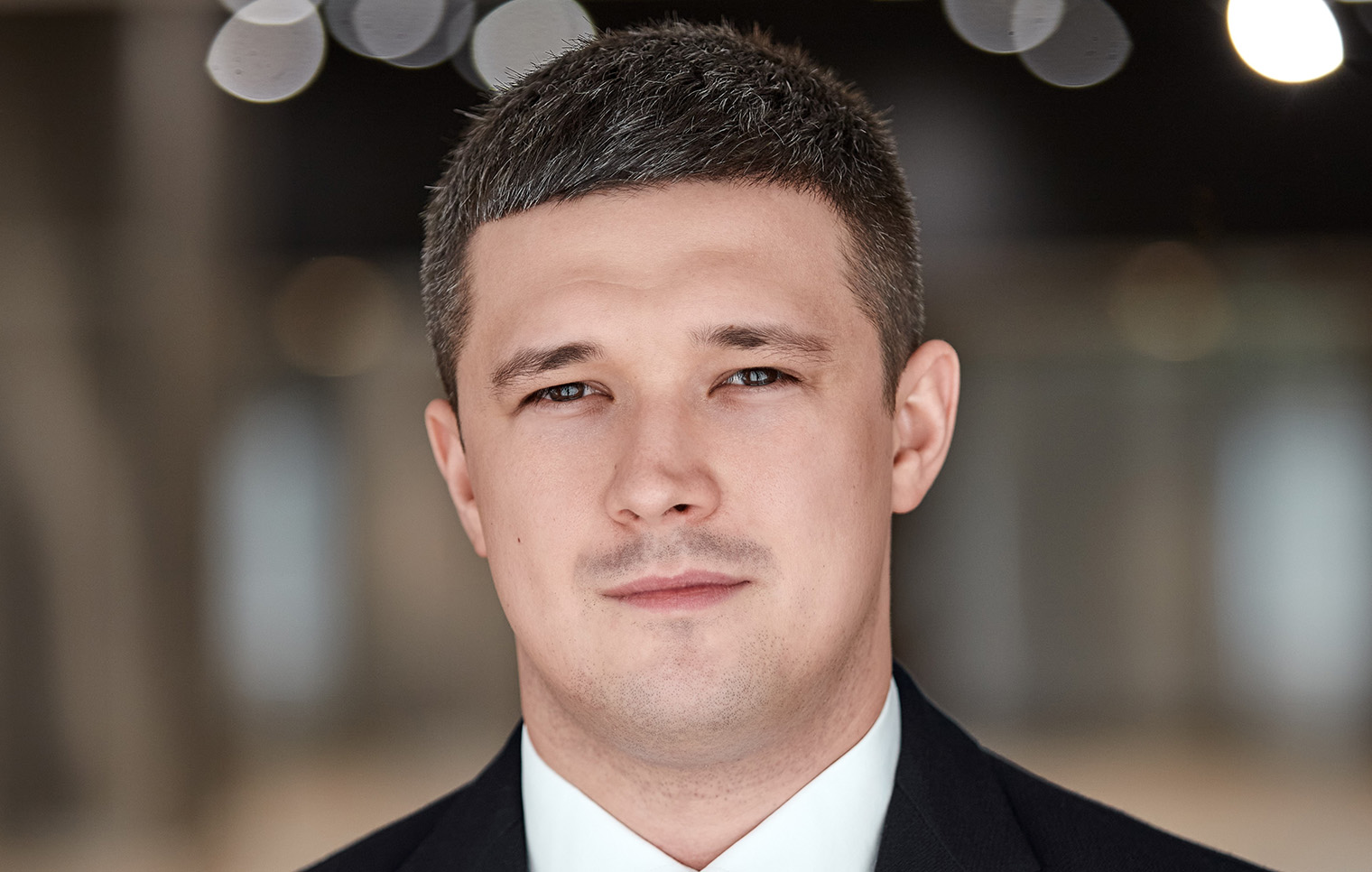
This is where the recently dismissed Defense Minister Mykhailo Fedorov’s remarks become interesting, as I wrote about recently. “We must not let Putin decide when Ukrainians can choose their government,” he said this week while calling for a model to hold elections despite the war.
READ ALSO: Dismissed Defense Minister Challenges Zelensky as President
Fedorov raises a point that becomes harder to dismiss as the war drags on. Russia invades Ukraine. Ukraine imposes martial law. Martial law makes elections impossible. Russia continues the war. Therefore, the election is postponed again. In theory, this can go on for a very long time. Perhaps also in practice, as many actors seem more interested in continuing the war than ending it.
The absurd consequence is that Putin, who wants to weaken Ukrainian democracy, indirectly gains influence over when that democracy can use its most important tool for holding power accountable.
At the same time, the objections to holding an election during wartime are very real. How does one conduct a fair campaign while cities are being bombed? How is voting ensured for soldiers at the front, for millions of Ukrainian exiles abroad, for those living near the front lines—or in territory controlled by Russia?
It’s not just administrative details. It’s about the very legitimacy of the election. And there is no clear popular uprising demanding an immediate election. Polls have shown that a majority of Ukrainians, albeit barely, still prefer to wait until the war is over. The problem is rather what happens if the war never seems to end. What would the answer be if the question included another five years… or ten?
A Mandate That Can’t Be Renewed
It’s also worth distinguishing between support for Zelensky and support for holding an election. A Ukrainian can very well believe that it would be irresponsible to organize a presidential election in the middle of a war—and at the same time wish to vote Zelensky out when the election actually comes. That’s where the notion of a “popular mandate” becomes tricky.
READ ALSO: Dagerlind: Should Ukraine Have Done Like Hungary and Czechoslovakia?
Zelensky received an almost overwhelming mandate in 2019. He won the second round with just over 73 percent of the votes. After the Russian invasion in 2022, he also became the symbol of Ukrainian resistance and enjoyed exceptional trust. But no polling institute can replace an election—especially not with old numbers.
Fedorov’s dismissal and the protests that followed show that Zelensky’s political position is no longer what it was in the war’s first year. Fedorov, who once belonged to Zelensky’s inner circle, now appears as a possible future challenger. Recent polls even indicate that Fedorov could defeat the sitting president in a second round.
This does not mean that Zelensky lacks popular support. But it does mean that no one can know for sure how large it is. That’s what elections are for, after all.
Ukraine’s constitution also sets a limit of two consecutive presidential terms. Zelensky is formally still in his first—these extra years he remains, waiting for a new election to be held, do not mean a second term has automatically begun. This means that, at least from the wording of the constitution, he could run for another five years when elections become possible again. But the longer the war lasts, the more awkward this possibility becomes from a democratic perspective.
If, for example, Zelensky were to remain for nearly ten years before the next election and then seek the voters’ mandate for another five, he could theoretically govern for about 15 consecutive years—even though the system normally limits a president to two five-year terms. That may not be legally wrong. But it is perfectly reasonable to ask whether someone whose time in power has already been greatly extended by an extraordinary state of emergency should also abstain from exploiting the chance for another full term.
The West Knows What It Has
There’s also a dimension that is rarely discussed as openly. Zelensky is not just Ukraine’s president. After more than four years of war, he is also one of the West’s most important political partners.
The US and the European NATO countries have invested enormous financial, military, and political resources in Ukraine’s survival. Ukraine’s defense is deeply integrated with the West through arms deliveries, training, intelligence cooperation, and funding. In this context, Zelensky is a known quantity. The West knows where it has him.
READ ALSO: Dagerlind: The Room for Reform Didn’t End on Its Own—Follow the Money to Ukraine
His government has consistently sought EU and NATO membership and views Ukraine’s future as anchored in the Western security order. Despite recurring disagreements with Washington and European capitals, there is no doubt about Ukraine’s geopolitical orientation under Zelensky.
There are thus rational reasons for European governments to prefer political continuity in Kyiv to the uncertainty a presidential election would entail. This may, but need not, be about some hidden conspiracy. States have interests, and with Ukraine, they have been fairly clear about what those are.
The Memory of Yanukovych Remains
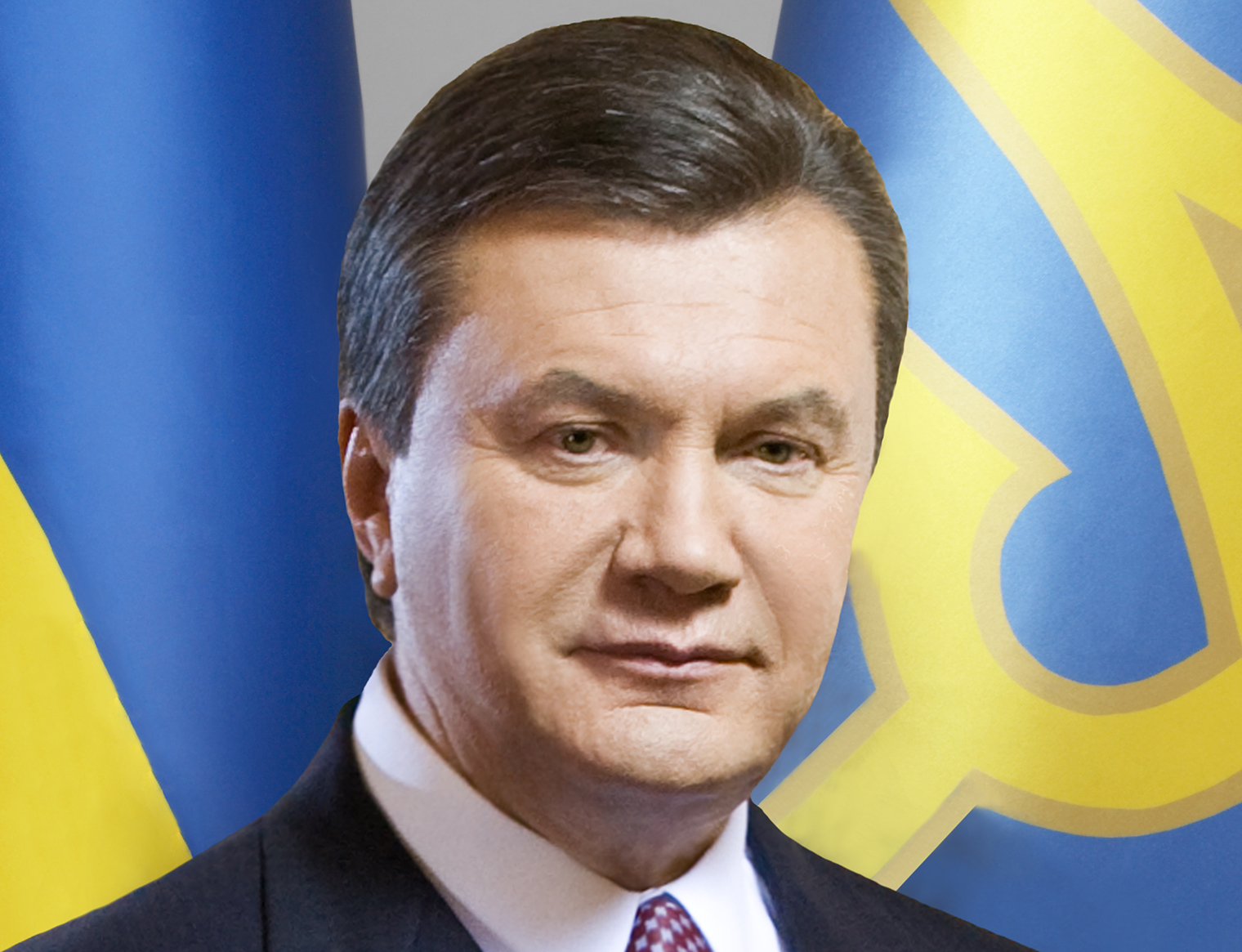
The West also knows that Ukraine’s Westward orientation is no historical inevitability. Viktor Yanukovych won the presidential election in 2010 and, during his time in power, tried to balance between Russia and the West. When he in 2013 declined the planned association agreement with the EU and instead moved closer to Moscow, protests erupted in Maidan, which ended with his fall in February 2014.
What happened then is still described in radically different ways depending on who tells the story. In the official West, we speak of the Maidan Revolution or the “Revolution of Dignity” — a popular revolt against corruption and an authoritarian president who abandoned the country’s European future. Others portray the events as a Western-backed coup.
Reality contains elements that make both simplified narratives inadequate. Maidan was a real and extensive Ukrainian protest movement. But the US and EU were far from neutral bystanders.
Western powers supported the pro-Western opposition and tried to influence Ukraine’s political development, while Russia used both economic incentives and pressure to pull the country in the opposite direction. Analysts already in 2014 described these developments as a geopolitical tug-of-war in which both Russia and the West sought to influence Ukraine’s direction.
This is relevant even today. For a future Ukrainian presidential election isn’t just about who administers the state best. It can also be about what relationship the country should have with Washington, Brussels, and Moscow—and which concessions Ukraine might accept to end the war.
The Next President Need Not Be Zelensky
That’s why it would be naive to think that Western powers are indifferent to who governs Ukraine and passively watch—regardless of the rhetoric about how unacceptable foreign election interference is. A successor to Zelensky could be just as clearly pro-Western. Perhaps even more so. But there’s no guarantee of that.
After years of death, mobilization, displacement, destroyed cities, and economic hardship, a future candidate could also win support on a wholly different message—that the most important thing now is to end the war, even if the price involves territorial or security-policy compromises previously deemed unthinkable.
READ ALSO: Dagerlind: Could the Ukraine War Have Been Avoided with Trump?
At the same time, one must be careful with claims that Ukrainians would now accept any peace at all. Opinion is far more complicated. War-weariness and declining optimism about a military victory do not automatically mean a readiness to simply accept Putin’s terms.
And attitudes toward the West are not uniform—a KIIS poll from early summer, for instance, showed that 64 percent still viewed Europe’s support as serious and aimed at a just peace, while 25 percent thought Europe had grown tired and was pressing Ukraine toward an unjust settlement.
The view of the US was notably more skeptical. But for that very reason, the next election is unpredictable. A democracy can choose wrongly—at least from the perspective of other states.
A Proxy War—But Not Only That
This also leads to the uncomfortable question of what the war in Ukraine has really become. Fundamentally, the answer is simple—Russia invaded Ukraine and Ukraine is defending its country. But after four and a half years of large-scale war, it is also part of a much bigger geopolitical conflict.
NATO countries supply Ukraine with weapons, money, training, and intelligence while trying to avoid direct military confrontation with Russia. Moscow, in turn, describes the war as a conflict with the West and sees Ukraine’s future security orientation as a central issue. There are therefore obvious elements of a proxy war between Russia and the West.
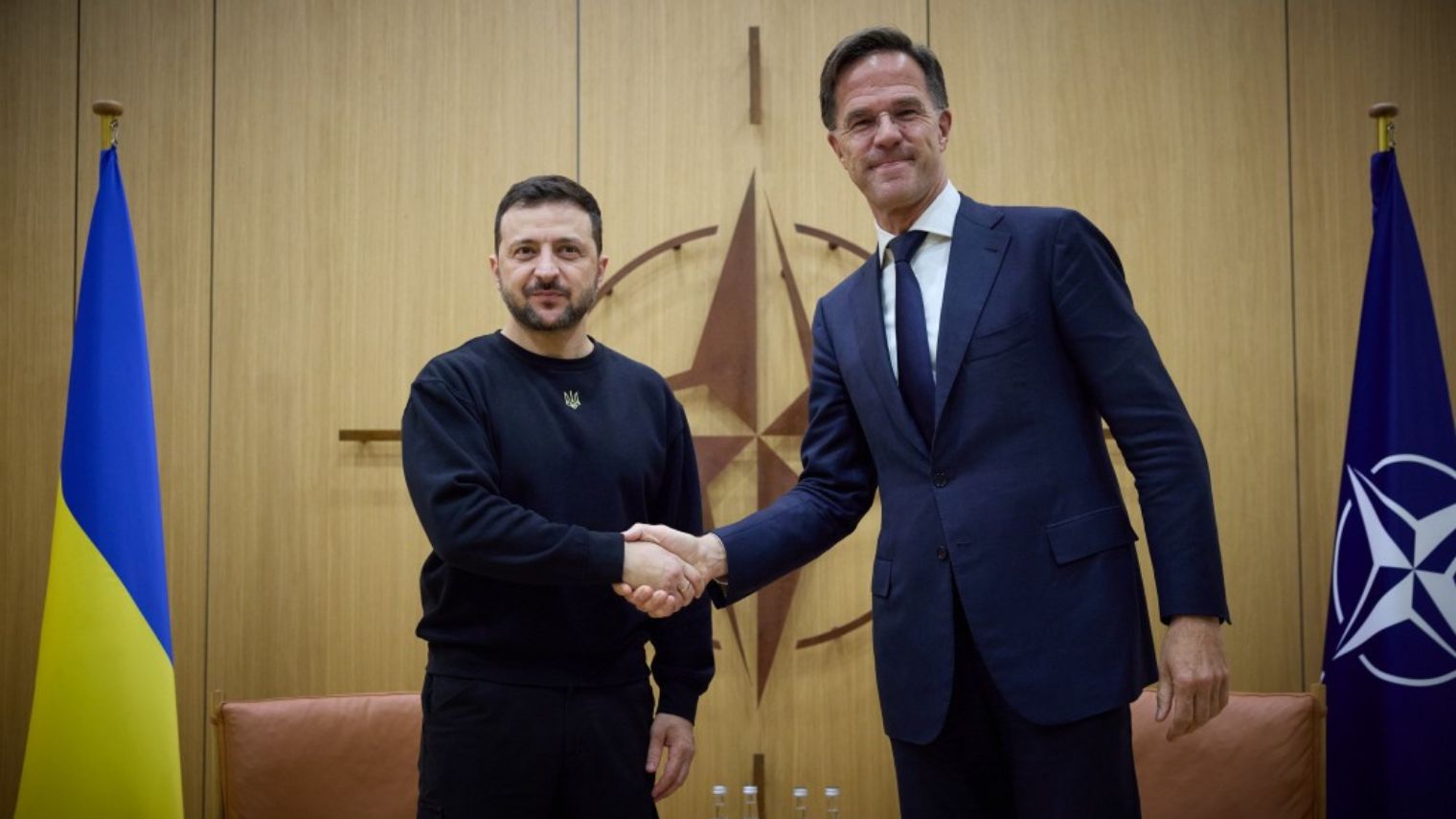
But the word becomes misleading if it suggests that Ukrainians themselves lack agency. Ukraine is not just a pawn that NATO moves around the chessboard. It is a country subjected to Russian invasion and has its own interests, political conflicts, and viewpoints on how the war should end. It broke away from Moscow’s control when the Soviet Union collapsed. That freedom, it does not wish to give up. But it’s also about freedom from totalitarianism, and here, the issue of elections and having a government with a true democratic mandate is important.
Two things can be true at the same time—this is Ukraine’s war of defense against Russia, and Ukraine has become the most important stage for a greater power struggle between Russia and the West.
Continuity Is in the West’s Interest
It would thus go too far to claim that Zelensky remains only because NATO wants him to stay. There is no evidence for such causality, other than the fact that nothing would remain as it is in Ukraine without the West’s support in the war.
But imagining the opposite—that Washington, London, Paris, Berlin, and Brussels have no preferences and just sit with their arms crossed—is also naive. They have invested enormous resources in Ukraine’s defense. There are global geopolitical interests and strong, functioning relationships have been built with the country’s political and military leadership. And they know from Ukraine’s modern history that the country’s political orientation can change.
READ ALSO: Albinsson: Ukraine—the Perpetual War?
It is therefore reasonable to assume that continuity under Zelensky has value for at least parts of the West. But to claim this as the sole or even main reason why no election is being held would be to go further than the evidence allows. That distinction is important, even though speculation is allowed.
Democracy’s Real Stress Test Comes Later
The greatest democratic problem, therefore, may not be that Ukraine lacks elections right now. Canceling elections while the country is subjected to a large-scale invasion can be justified both legally and practically. The real stress test comes if the exception becomes more permanent.
How long can a country remain democratic if its voters never get the chance to change its government? When does a legitimate state of emergency become a democratic problem? And who decides when that line has been crossed? Fedorov’s question therefore deserves a better answer than just dismissing it with the fact that there is a war.
Ukraine is fighting not just for territory. Throughout the war, the country has emphasized that it is also fighting for the right to choose its own political future. This right must, sooner or later, also include the ability to vote out those who govern the country.
Otherwise, the paradox that Fedorov highlights arises—the state that tried to subdue Ukraine’s democracy by force also, by continuing the war, gains the power to postpone its next democratic turning point.
And that can hardly be a sustainable order—neither for Ukraine nor for the Western democracies that claim to defend its right to choose its own path.