Instances where criminals exploit staff within the Swedish Prison Service are becoming more frequent. At the same time, the level of infiltration is believed to be high. Experts are increasingly concerned about the development.
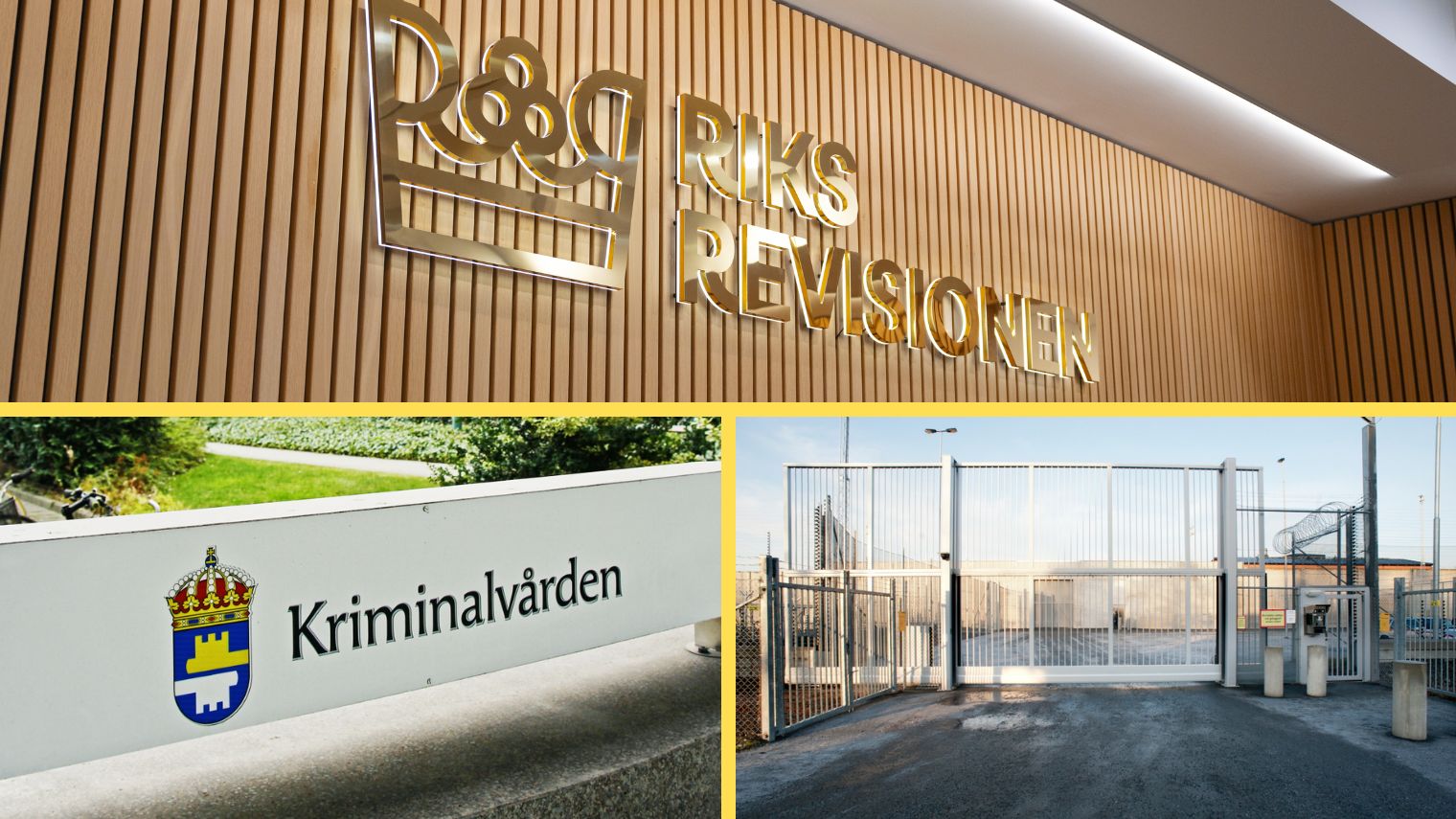
The Swedish National Audit Office has reviewed the efforts made by three government agencies to prevent infiltration: the Swedish Defence Materiel Administration (FMV), the Legal, Financial and Administrative Services Agency, and the Swedish Prison and Probation Service. These agencies were chosen because their operations are considered to face a high risk of infiltration, and the consequences could be extremely serious.
The overall conclusion is that anti-infiltration efforts are not effective. The shortcomings are sometimes so severe that they risk leaving critical security gaps open. Many governmental agencies face the threat of infiltration, for example, by criminal organizations or foreign powers, according to the report.
– Our assessment is that the reviewed agencies have not placed sufficient emphasis on security work, and this has led to extensive security deficiencies which could, in the worst case, have serious consequences, says Auditor General Christina Gellerbrant Hagberg.
READ ALSO: Female Prison Officer Detained – Caught With Over 200 Kilos of Drugs
Protection against infiltration is unevenly developed at the three agencies. The Swedish Prison and Probation Service has critical shortcomings which weaken both preventive measures and detection, but in recent times has taken several steps in the right direction. It is also observed that the agencies’ ongoing security vetting of their staff has not had sufficient impact. For example, sensitive but important questions about employees’ private finances, social exposure, threats, blackmail, and dependencies are asked far too seldom to reveal vulnerabilities.
– Follow-up security vetting interviews are often difficult conversations, since managers have to ask sensitive questions to employees. But it is too late to have these talks only when suspicions have already arisen, says Per Dackenberg, project manager for the review.

Extensive Infiltration
Within the Swedish Prison and Probation Service, employees are systematically exploited by criminals. This can involve smuggling items into facilities or communicating with the outside world. Nearly a third of the agency’s employees know, or believe they know, that infiltration is happening.
– I’m not surprised that it is coming to light, says Christer Hallqvist, head of the Seko trade union within the Swedish Prison and Probation Service, to Arbetet.
Although the Swedish National Audit Office highlights romantic relationships between inmates and prison officers as a problem, a third of the employees who have undergone security vetting have not been asked about personal acquaintances. They also are not questioned about their private finances and debts – another vulnerable area which can be exploited.
– They are easy targets in that respect, he says.
Hallqvist sees both a workplace safety issue and a security risk, and would prefer that staff always work in pairs to minimize the risk of staff and inmates conspiring together.
READ ALSO: Inappropriate Contacts Between Prison Officers and Convicts On the Rise