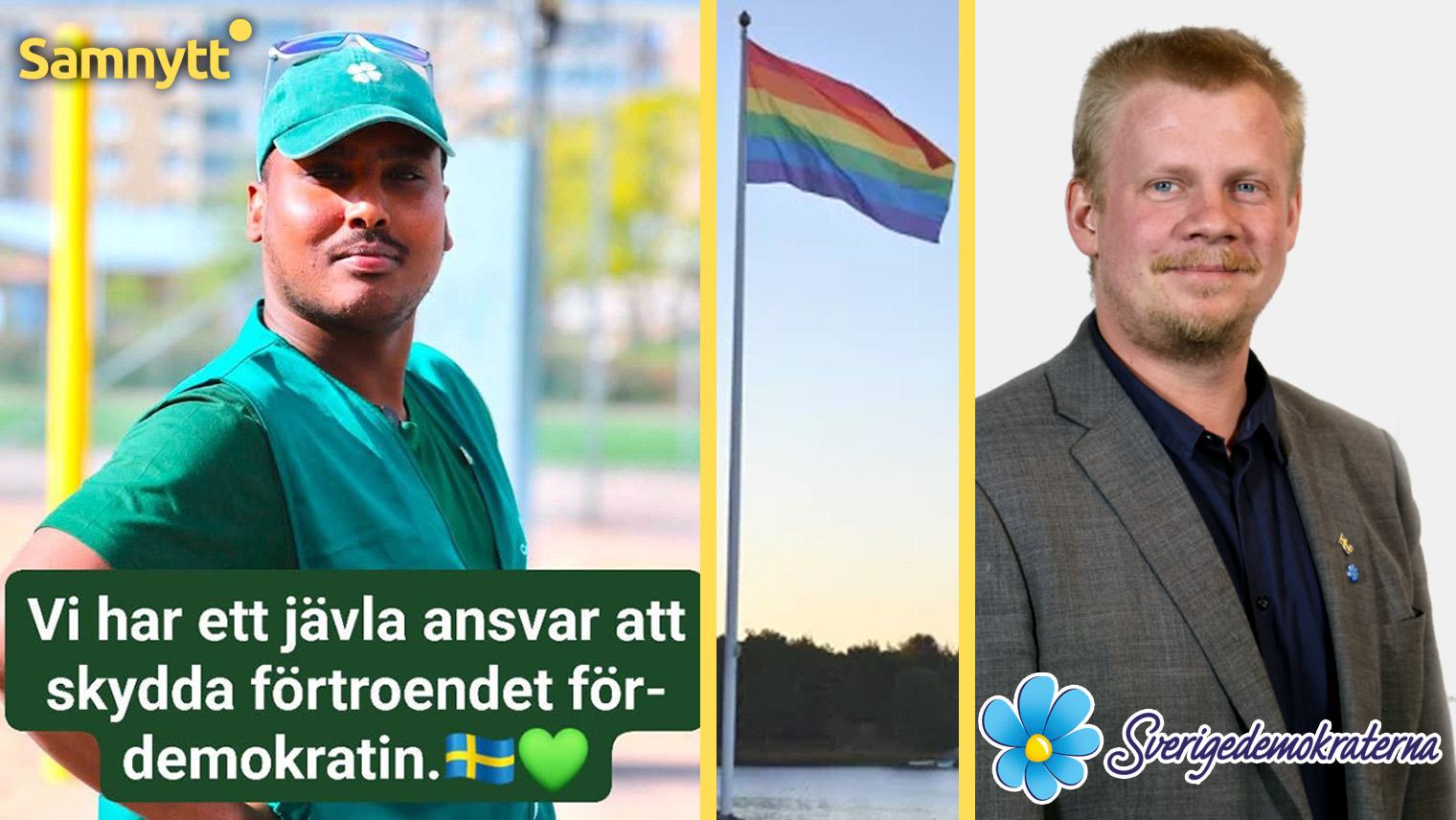
What started as a question of municipal flag flying has developed into an inflamed political conflict in Färgelanda. Since the Pride flag was not raised at the town hall, despite a new flag policy having been adopted by the municipal council, accusations of broken democratic decisions, political values, and improper exercise of authority have followed one another. Now, the chairman of the municipal executive board, Christoffer Wallin (SD), has been reported to the Parliamentary Ombudsman (JO) by the Center Party’s Faraah Mohamud.
The background to the conflict is the flag policy that the Färgelanda municipal council adopted last year following an initiative from Faraah Mohamud (C), second deputy chair of the municipal council. The policy includes, among other things, local flag days and allows for the raising of the controversial Pride flag for one week in connection with the West Pride event.
According to Mohamud, the municipality had both procured flags and prepared for flag flying ahead of this year’s Pride Week. But when the designated day came, the flag was never raised.
Mohamud claims that the municipal executive board’s chairman, Christoffer Wallin (SD), blocked the flag raising despite the municipal council’s decision. Wallin, however, denies that any formal decision to stop the flag raising was made.
Instead, he has referred to discussions with responsible officials about the municipality’s resources and priorities. Among the reasons given were a purchasing freeze, a hiring freeze, and the need to prioritize the core operations of the municipality.
Accusations That the Council’s Decisions Have Been Set Aside
The Center Party has been highly critical of the municipal leadership’s actions. Faraah Mohamud believes that at its core, the issue is about respect for democratically made decisions.
In a letter to Dalslänningen, he asked why, specifically, the decision about the Pride flag was not carried out when adopted by the municipal council. He argued that the chairman of the municipal executive board cannot unilaterally choose which decisions to implement and which to leave unaddressed.
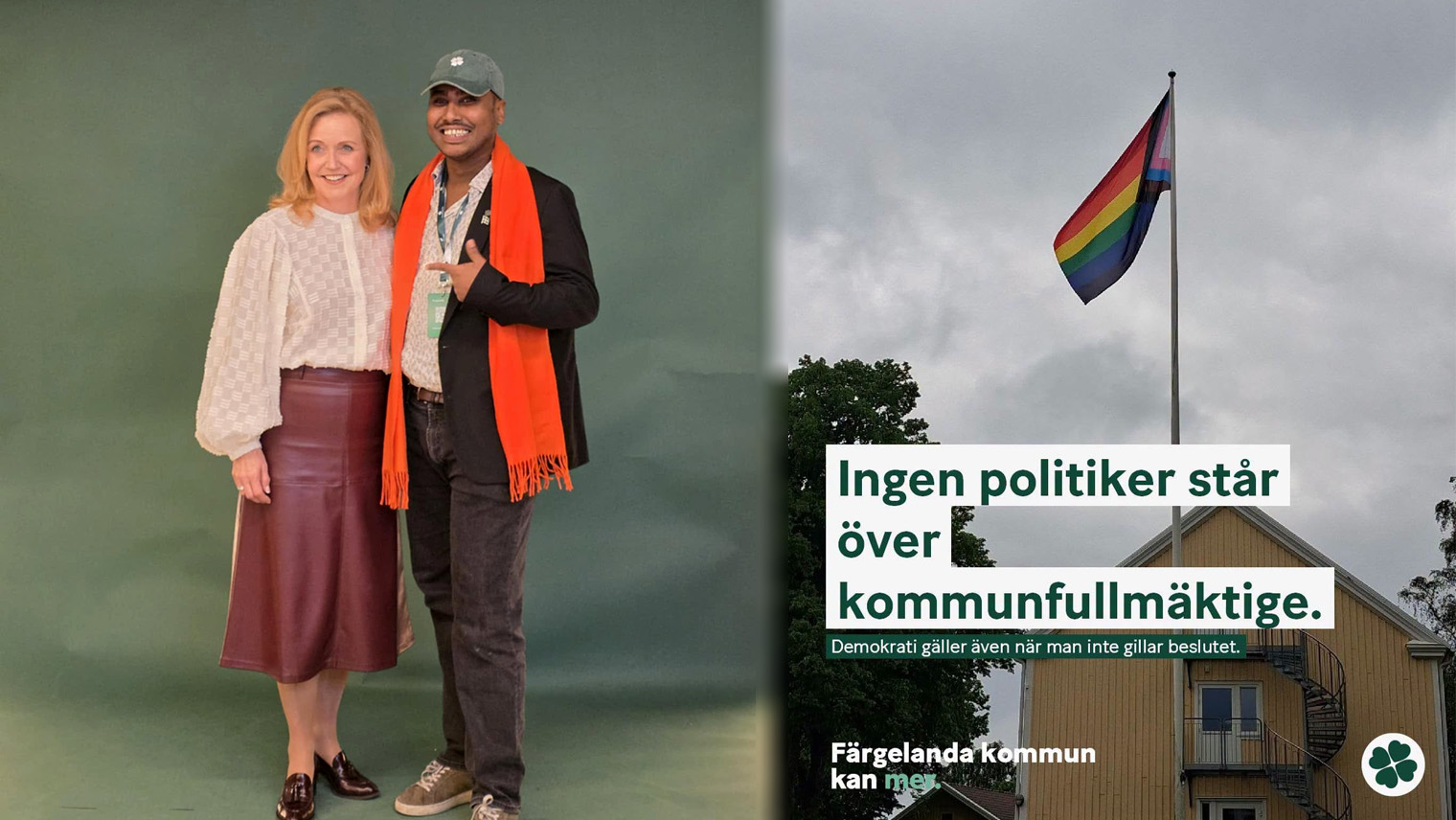
Mohamud has also questioned the economic arguments presented. According to invoice records later made public, the municipality purchased a Pride flag as early as 2025 at a cost of nearly 2,000 kronor, a burden on the municipal taxpayers. Since the purchasing freeze was introduced only later, the Center Party argues that this explanation does not hold up.
Municipal Commissioner: The Core Operations Must Be Prioritized
The municipal leadership has focused on the municipality’s financial situation and the need for prioritization. Christoffer Wallin has pointed out that even flag raising involves staff costs and that resources must be used where they are of the greatest benefit to local residents.
He has referred to political decisions to prioritize services for children, the young, the elderly, and measures to reduce social exclusion. At the same time, Wallin has denied that he personally made any formal decision to stop the flag raising and has declined to comment on all aspects of the accusations directed against him, especially from the Center Party.
Complaint to the Parliamentary Ombudsman to Test the Municipality’s Actions
The conflict has now taken another step as Faraah Mohamud has filed a complaint with the Parliamentary Ombudsman (JO). In the complaint, he asks the JO to examine whether the municipality’s handling of the case has been consistent with the principle of objectivity, good administrative practice, and respect for democratically made decisions.
He specifically points out the various explanations given for why the flag was not raised. However, a report to the JO does not mean anyone has committed wrongdoing. The JO’s task is to review whether authorities and public officials have acted in accordance with the law and regulations.
Symbolic Issue with Larger Political Dimensions
In recent years, the Pride flag has become a recurring political symbol issue in many Swedish municipalities. Supporters see the flag as an expression of equal value for all people and as a gesture of inclusion for homosexual, bisexual, transgender people and other LGBTQI+ identities—a symbol of tolerance and the right to live openly regardless of sexual orientation or gender identity.
Critics, on the other hand, argue that municipalities should be cautious with politically or ideologically charged symbols and should instead stick to national, regional, and municipal flags. Some also believe that public institutions should avoid taking positions on issues viewed as politically controversial.
The Pride movement and its symbols are controversial, among other things because they are associated with organizations such as RFSL and other actors who not only work with LGBTQ rights but also advocate clearly left-leaning positions on a wide range of political issues far beyond the basic principle of the right to be and love who you want.