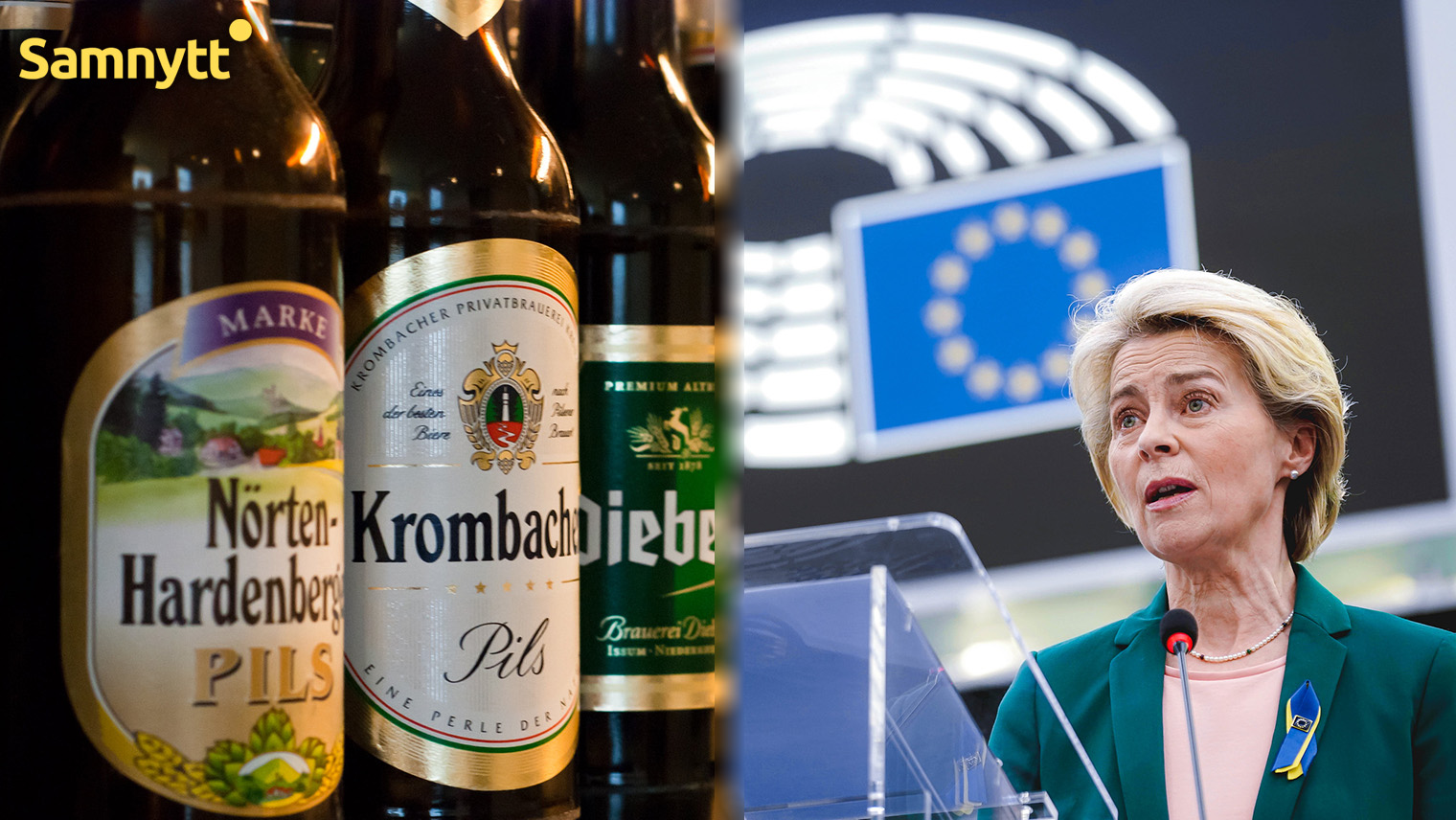
The EU’s new packaging regulation faces harsh criticism from representatives of the brewing industry in Denmark, Sweden, Finland, and Norway. They argue that Brussels is pushing through symbolic policies that risk higher prices, increased bureaucracy, and huge costs for the sector—without delivering any environmental or climate benefits.
The leaders of the Nordic brewers’ organizations—Nick Hækkerup, CEO of Bryggeriforeningen in Denmark, Anna-Karin Fondberg, CEO of Sveriges Bryggerier, Lasse Pipinen, CEO of Panimoliitto in Finland, and Erlend Vagnild Fuglum, CEO of Bryggeri- og drikkevareforeningen in Norway—deliver a strong attack on the EU’s new Packaging and Packaging Waste Regulation (PPWR). They make their case in an opinion piece in SvD.
They emphasize that they share the goal of reducing waste and strengthening the circular economy, but believe that the regulation’s requirements for refillable beverage packaging risk having the opposite effect in the Nordics and may do more harm than good from a climate and environmental standpoint.
Criticizing Requirements for Returnable Glass
According to the brewers, EU regulations are based on an approach that may work in parts of Europe but does not take into account the particular conditions of the Nordic countries. The regulation mandates that 10 percent of beverages such as beer, cider, soda, and water be sold in refillable packaging by 2030. By 2040, that share must increase to 40 percent.
The authors argue that, in practice, this requirement would amount to a return to glass deposit bottles, even though the Nordics already have well-functioning deposit systems for cans and PET bottles.
“In the Nordic countries, we have developed the world’s most efficient deposit and return systems for cans and PET bottles. Consumers help ensure that almost all packaging is collected and recycled into new cans and bottles. This is not a system in crisis. It is a system that works.”
The brewers argue that there are no environmental or climate reasons for forcing a shift to glass bottles. They point out that glass is heavier to transport, requires more water in cleaning, and involves higher energy usage throughout the entire chain.
References to Climate Studies
According to the commentators, independent lifecycle analyses show that the Nordic systems for recyclable cans and bottles provide results equal to, or in some cases better than, those of refillable glass bottles.

They also stress that returnable glass may be a reasonable solution in countries that lack established deposit systems but believe that the EU regulation misses the differences between Member States’ circumstances.
Warnings of Billions in Costs
The brewing industry is also warning of significant economic consequences. According to the Nordic trade organizations, breweries and bottling companies would be forced to make large investments in new trucks, bottling lines, and facilities for washing and refilling glass bottles. They estimate that the cost of the transition could reach nearly six billion kronor in the Nordic region.
Particularly vulnerable are the many small breweries that currently only use recyclable cans and bottles. The authors warn that over a thousand local breweries in the Nordic countries may struggle to compete for a growing share of the market if they cannot invest in their own returnable glass systems. The brewers argue this stands in direct contrast to the EU’s stated goal of supporting small and medium-sized enterprises.
Higher Prices for Consumers
The criticism goes beyond the breweries. The authors note that grocery retailers would also face extensive costs to expand and adapt their bottle rooms for handling returnable glass.
Their calculations suggest that investments for retailers could amount to about five billion kronor, while ongoing operating costs would increase by more than half a billion kronor annually.
In the end, they argue, the bill will be passed on to consumers through higher prices. At the same time, selection could decrease, and managing beverage packaging will become more complicated.
Urging Governments to Act
The brewers’ organizations also warn that the rules could create problems on the EU’s internal market since refillable glass bottles must be transported back to their country of origin and cannot easily be integrated into other countries’ return systems.
Overall, they believe the regulation worsens conditions for both consumers and businesses without providing any demonstrable environmental benefits. They are therefore urging the Nordic governments to press the EU Commission to use the option for an exemption from the returnable glass requirement.
According to the brewers, there are both environmental and economic grounds for such an exemption. They stress that the aim is not to oppose the EU’s environmental ambitions but to ensure that regulations are designed in a practical way that takes into account the Nordics’ already well-developed deposit and return systems.