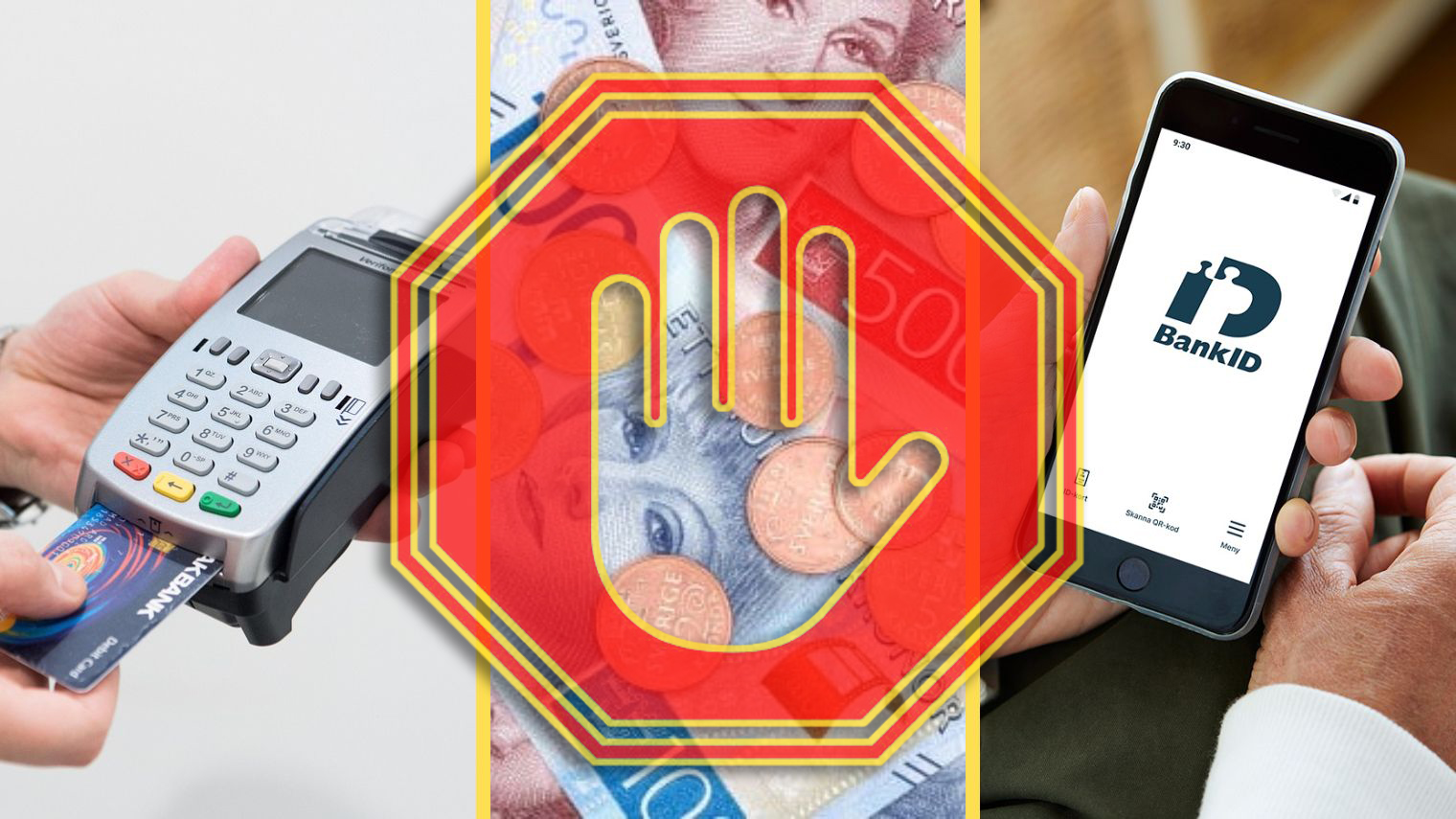
The Riksbank proposes that a cap of 10,000 SEK be introduced for cash payments in retail. The aim is to hinder money laundering linked to immigration-related gang crime. In contrast, the central bank simultaneously highlights cash as an important means of payment and talks about increased inclusion. At the same time as cash transactions are being limited, more and more Swedes report being excluded from digital payment services.
The proposal presented in the Riksbank’s new payment report means that cash purchases over 10,000 SEK will no longer be permitted in retail. According to Riksbank Governor Erik Thedéen, the amount is a reasonable compromise.
“If you set it too low, cash becomes too irrelevant. We thought 10,000 was a pretty good balance,” he says.
The stated purpose is to make it more difficult for criminal immigrant gangs to use cash to launder proceeds of crime, for example by purchasing expensive goods.
Intended to “strengthen confidence” in cash
The Riksbank presents a ceiling and restrictions on the use of cash as something positive. In the report, it is argued that a cap could help increase public confidence in cash.
The Swedish public needs clear guidelines for how they can use their cash, according to the bank. In the event of a crisis or war, the Riksbank also recommends that households keep cash at home but considers 1,000 SEK per adult sufficient.
The proposal for a cash ceiling is expected to be introduced in connection with the EU’s new anti-money laundering rules coming into force in 2027, which will allow or require national upper limits.
Talk of “inclusion” at the same time
In the same report, the Riksbank emphasizes the need to make the payment system more inclusive. The central bank notes that there are still people in Sweden without a bank account or who have difficulty accessing digital services.

Therefore, the Riksbank argues, more payment options and better access to cash services are needed. Banks are also urged to try milder measures before denying or closing a payment account.
The wording reflects a growing concern that certain groups risk being excluded from the digital economic system.
Banks closing thousands of accounts
Meanwhile, in recent years, developments have gone in the opposite direction. Banks have increasingly closed accounts or restricted customers’ access to services citing anti-money laundering regulations and so-called know-your-customer practices.
Critics argue that the system in practice means a reversed burden of proof in which customers are expected to prove they are not engaging in criminal activity. Cases in which accounts have been closed after relatively ordinary transactions are not uncommon.
ALSO READ: Ordinary customers affected as banks aim to stop money laundering
Samnytt has previously reported on a woman who lost both her account and BankID after the bank deemed she had shopped too much at a kiosk—something that ultimately caused her to lose her home.
Business owners also testify that closed accounts can in practice function as a business ban since the ability to receive payments is lost.
Criticism of banks’ power
According to information from the Financial Supervisory Authority, the number of denied payment accounts has increased sharply in recent years, and tens of thousands of accounts are closed annually at the banks’ initiative. This has led to a broader debate about the banks’ role in society.
When bank accounts, BankID, and digital payments have become necessary to receive wages, pay bills, and interact with authorities, being blocked effectively excludes a person from central aspects of societal life.
Critics therefore argue that private banks, in a way not compatible with a democratic society with civil liberties and rights, have in practice been given a role as gatekeepers to the economic system.