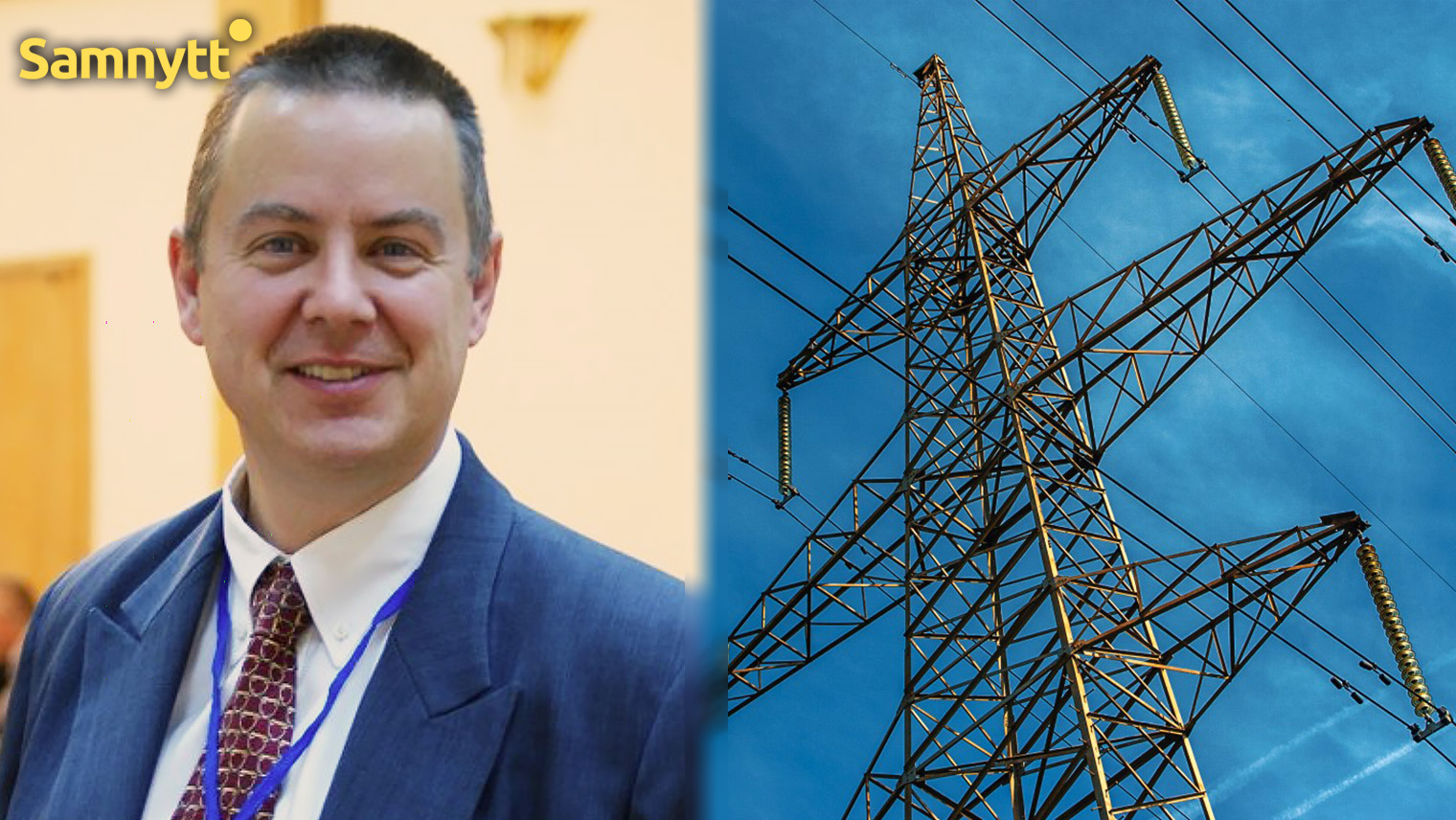
Nuclear physicist and social commentator Jan Blomgren offers sharp criticism of how so-called life cycle analyses, LCOE (Levelized Cost of Electricity), are used in the Swedish energy debate. In an opinion piece, he argues that the method is often used in a misleading way to make certain types of power generation appear cheaper than they actually are.
According to Blomgren, LCOE is fundamentally a useful tool for estimating the cost of producing electricity from a single facility over its lifetime. The problem arises when the results are used to compare power sources with entirely different characteristics, such as nuclear power and wind or solar power.
“There are three kinds of lies: lies, damned lies, and statistics,” writes Blomgren, referencing the well-known quote from Mark Twain, before adding that in today’s energy sector, one could almost replace the word statistics with “life cycle analysis.”
In the article, published in Svenska Epoch Times, Blomgren argues that LCOE does not capture the system costs caused by different types of production. He points in particular to costs for electricity networks, balancing power, and storage, which he says can be substantial when electricity production is weather-dependent and fluctuates over time.
Compares to the Human Circulatory System
Blomgren illustrates his reasoning by likening the electricity system to the human circulatory system. A grid dominated by a few large power plants, he says, can be built much more simply than a system where electricity is produced by many small facilities spread across the country. When electricity must be transported in multiple directions simultaneously, both more lines and more advanced control are required, driving up costs, he argues.
READ ALSO: Professor of Nuclear Physics: Germany’s Energy Path a Warning Example
Furthermore, Blomgren claims that comparisons between nuclear power and weather-dependent sources are misleading because they deliver different types of electricity. Nuclear power is designed for continuous production year-round, whereas wind and solar power vary with the weather and seasons. If costs for energy storage or other supplementary production are included, the calculation changes significantly, according to him.
Blomgren also highlights that the market price of electricity is often lowest when solar production is at its peak—a factor he believes is rarely considered in simplified cost comparisons.
A Worthless Metric
At the same time, he emphasizes that LCOE is not a worthless metric. On the contrary, he believes that the method works well when comparing similar facilities or investments within the same technology. On the other hand, Blomgren argues, its value is “extremely limited” when used to compare power sources with fundamentally different characteristics without taking their impact on the broader electricity system into account.
The article ends with a clear conclusion: “Everything becomes cheap if someone else pays.” According to Blomgren, incorrectly used life cycle analyses risk becoming a tool for misleading argumentation in energy policy discussions.