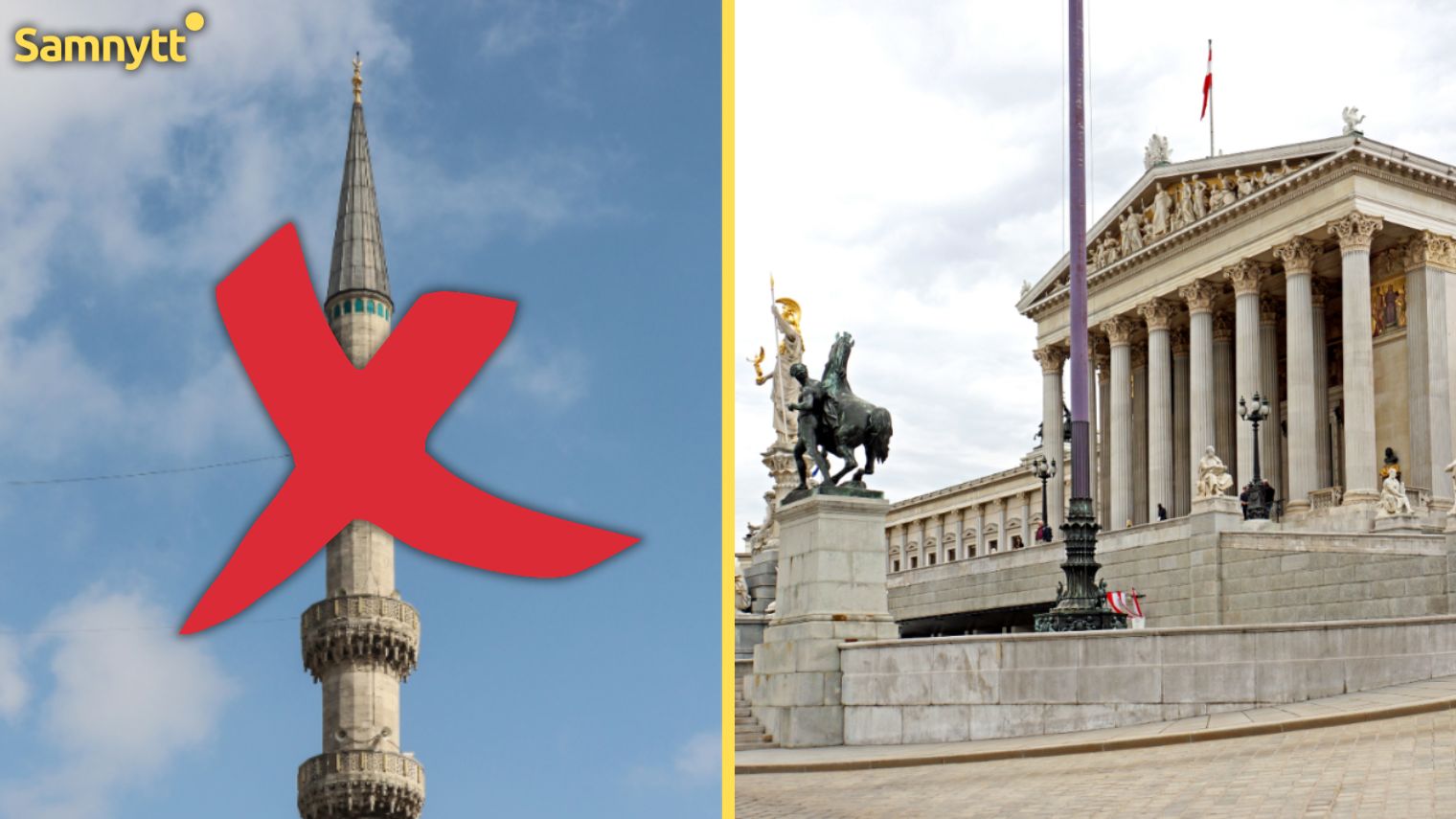
Austria is taking new steps towards stricter legislation against political Islam. The government wants to tighten regulations for associations and organizations with ties to Islamist circles, while the right-wing FPÖ party is demanding a special ban on political Islam.
The issue of political Islam has increasingly become a topic in Austrian politics. Chancellor Christian Stocker’s government has announced that association laws will be tightened so authorities can act against political—and especially violent—Islamism.
At the same time, the nationalist Freedom Party, FPÖ, is pushing for a significantly more far-reaching demand. The party wants to introduce a special ban on political Islam—a so-called Verbotsgesetz. Such a proposal was reintroduced in March 2026.
READ ALSO: Gothenburg gangster arrested in Austria for 13-year-old murder
The FPÖ’s proposal would, among other things, ban activities for political Islam or its objectives. Mosques and organizations identified as part of the political Islamist milieu could be dissolved and their assets seized.
The proposal also includes the possibility of revoking Austrian citizenship for persons who belong to or support such organizations.
However, no such total ban has gained a majority yet. When the FPÖ tried to get the National Council to support a ban in March, only the FPÖ voted in favor. The governing parties ÖVP, SPÖ, and NEOS as well as the Greens voted against.

New Initiatives
However, this doesn’t mean the issue has disappeared. In April, FPÖ submitted another initiative, demanding, among other things, better information-sharing between authorities, a comprehensive financing ban for Islamist institutions, a register of so-called hate preachers, and stricter rules in Austrian Islam and symbolism legislation. The proposal has been reviewed in the constitutional committee but postponed.
An explicit ban on sharia has also become part of the debate. FPÖ wants to enshrine in law that Islamic law cannot be applied in Austria, for example via contracts or association statutes. This proposal also currently lacks a majority and has been postponed by the committee.
At the same time, the governing parties have shown they are willing to take concrete measures against individual organizations. The National Council has unanimously decided that the government should examine the possibility of closing or banning the Imam Ali Center in Vienna. The decision was supported by all parties in parliament.
READ ALSO: Germany and Austria stop asylum applications from Syrians