
Foreign doctoral students are eager to come to Sweden to take advantage of tuition-free education. However, far from all of them stay afterwards to contribute to the country’s skills supply. This is shown by new figures from Statistics Sweden (SCB).
No matter your origin, studying at the doctoral level at Swedish universities is tuition-free, with Swedish taxpayers covering most of the costs.
Three years after completing their studies, more than 40 percent of the foreign doctoral students who graduated in Sweden have left the country. This emerges from SCB’s analysis of researchers who graduated between 2017 and 2020. Among those who stay in Sweden, most have earned doctorates in engineering, medicine, and natural sciences.
READ ALSO: Researchers Want Swedish Universities to Support Climate Extremists
The share of graduates who remain in Sweden differs between various institutions.
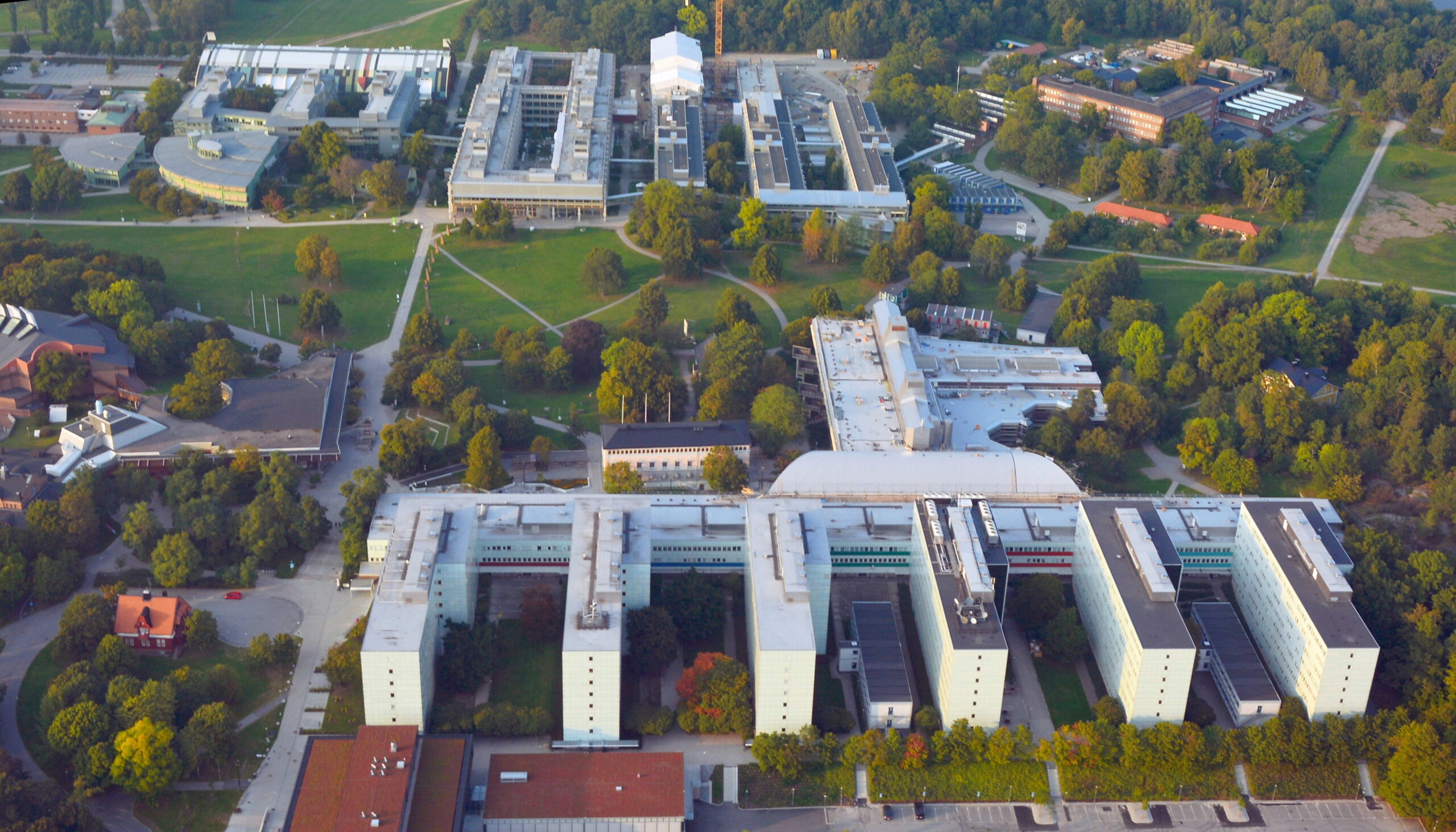
– Of those who studied at specialized universities, a larger proportion stays compared to other institutions. Among those with doctoral degrees from Luleå University of Technology and Chalmers University of Technology, the highest proportion continue to work in Sweden after graduation, says Tomas Westling, statistician at SCB.
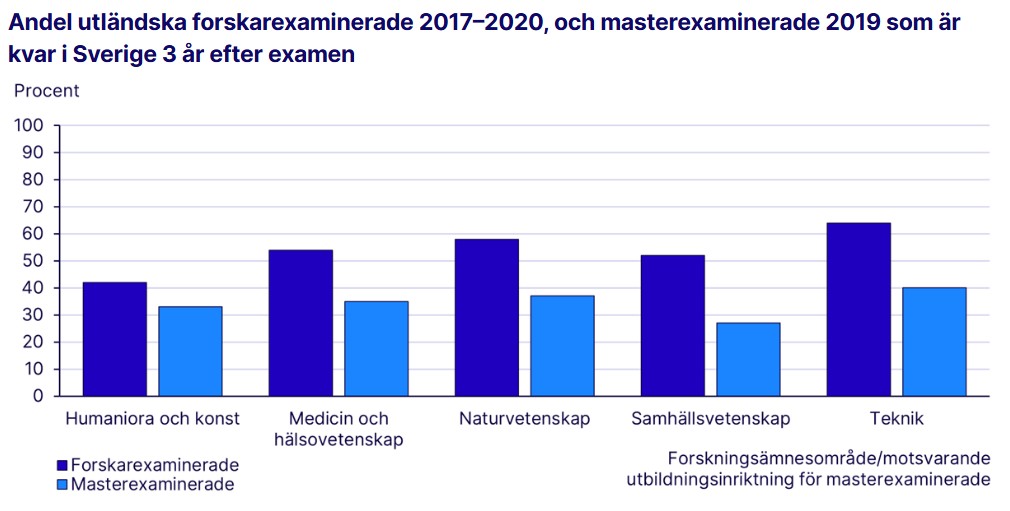
The fact that only about half stay can be explained by the relatively low income advantage of higher education in Sweden, whereas other countries often offer far more attractive conditions for those with a doctorate.
Among those who earned a master’s degree in 2019, only one in three were still in the country three years later, and among those with a one-year master’s degree, the figure was as low as 15 percent. In total, about 1,000 foreign doctoral students graduate each year in Sweden. Roughly 5,000 complete a two-year master’s program, and about 1,600 finish a one-year master’s program.
Language Skills and Networks
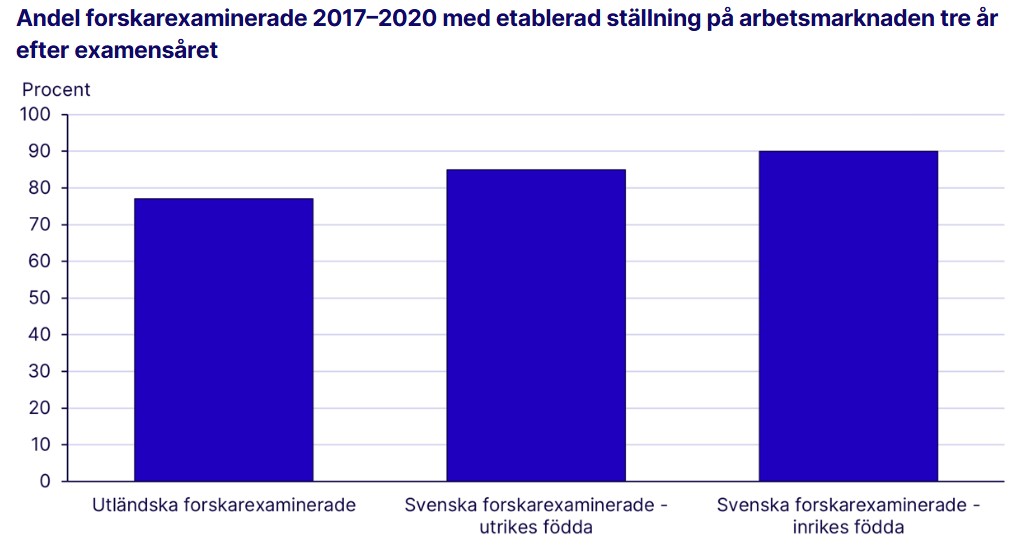
Foreign doctoral graduates also establish themselves in the Swedish labor market to a lesser degree than domestic doctoral graduates. Of the foreign doctoral graduates who remain in the country, 77 percent were established in the labor market, while the equivalent proportion among native-born was 89 percent.
– The labor market and demand, but also language skills and connections to working life, are factors that may impact job opportunities, says Tomas Westling.
READ ALSO: Professor Warns: University Degrees Lead to Fake Jobs