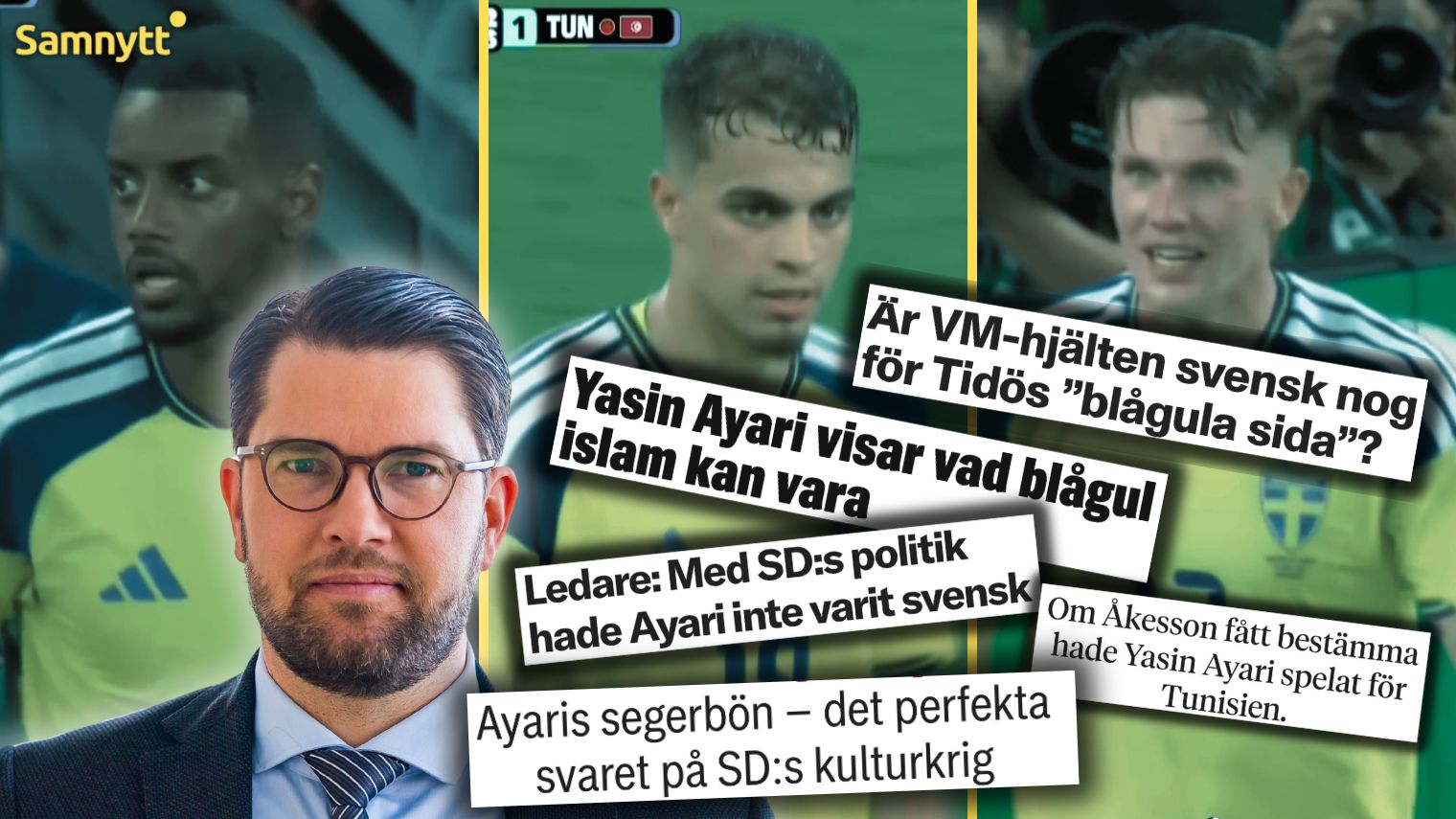
Sweden’s landslide victory over Tunisia in the football World Cup, where the team won 5–1, has not only sparked sports joy in left-liberal newsrooms. The match has also ignited a political and cultural debate about Swedishness, Islam, and integration—with the Sweden Democrats and party leader Jimmie Åkesson at the center of a new media campaign ahead of the election.
The background to the debate is that several of the national team’s goal scorers have immigrant backgrounds. Yasin Ayari scored two goals in the opener, while Alexander Isak and Viktor Gyökeres were also among the scorers. This has led to various interpretations in the public sphere of what it means to be Swedish.
Several culture and editorial writers have, in the aftermath of the match, raised the question of national identity in relation to the football team.
READ ALSO: Sverige–Tunisien: Everything Went Sweden’s Way!
In a cultural piece in Expressen, Professor of Church History Joel Halldorf highlights Ayari as an example of a more inclusive Swedishness, where religious and cultural diversity fits within the nation. At the same time, he questions earlier statements from Åkesson declaring that a practicing Muslim cannot automatically be considered Swedish.
“Is he Swedish enough for Åkesson?” Halldorf writes.
The left-liberal church figure describes the national team as a symbol of a modern Sweden where different backgrounds meet without religion or origin becoming decisive obstacles.
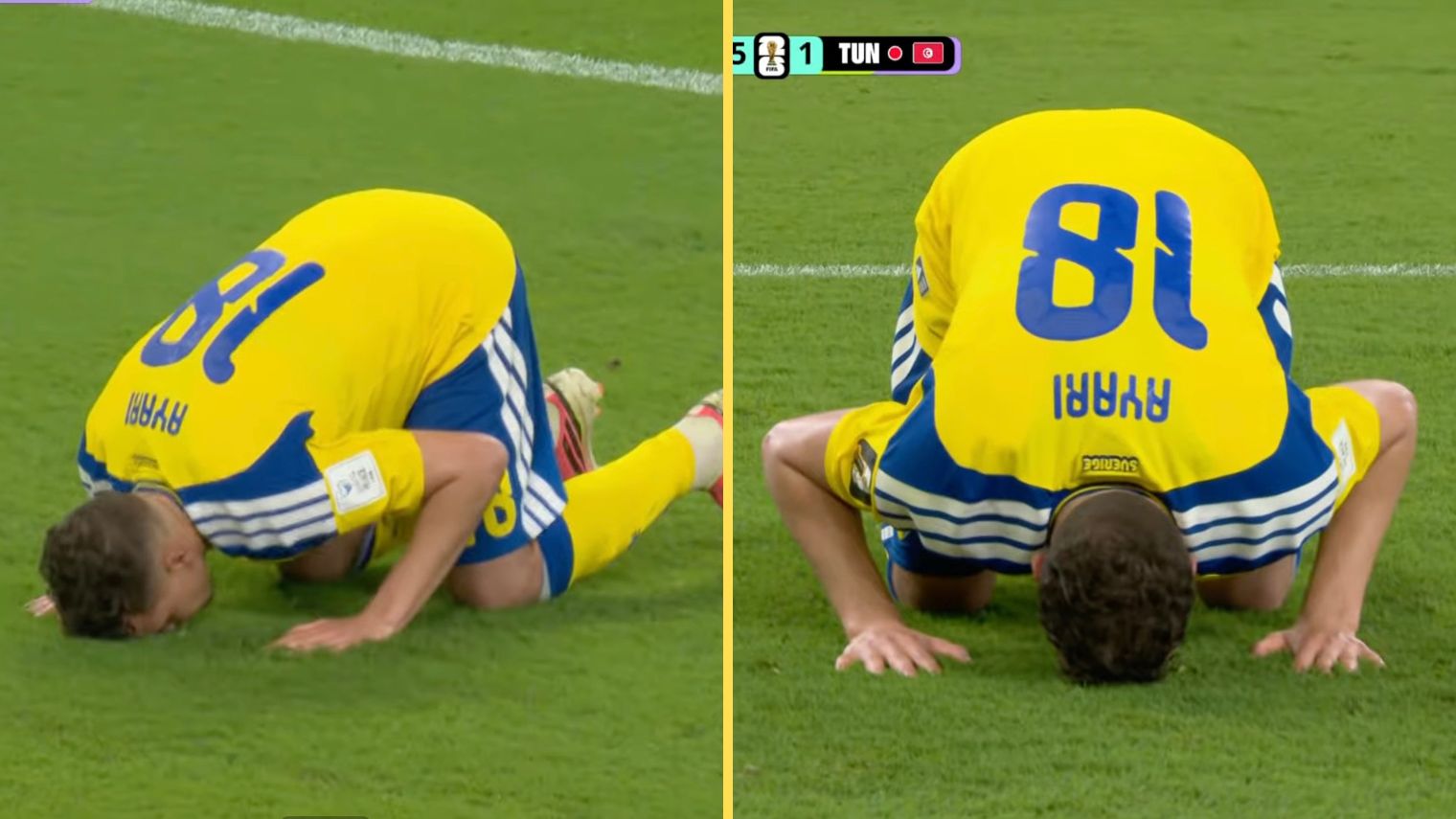
READ ALSO: Sweden’s World Cup Hero Made Muslim Prayer After Goal
Aftonbladet’s editorial page has also commented on the match. There, Markus Alexandersson argues that the debate around Ayari’s celebration reveals a bigger conflict over who is included in Swedishness. He contends that the political right’s view risks making national belonging dependent on origin and religion.
“So we have a government alternative that thinks a Swedish football hero cannot be Swedish. Those are the parties that call themselves ‘the blue and yellow side’. It’s provocative,” Alexandersson writes.
A number of other newspapers have, in their editorials and cultural pieces, joined in on the criticism of the Sweden Democrats. The debate often centers on the link between the party’s policies and the discussion about Swedishness, especially as national team players with immigrant backgrounds have scored goals.
Åkesson’s Response: “What Do You Want to Achieve?”
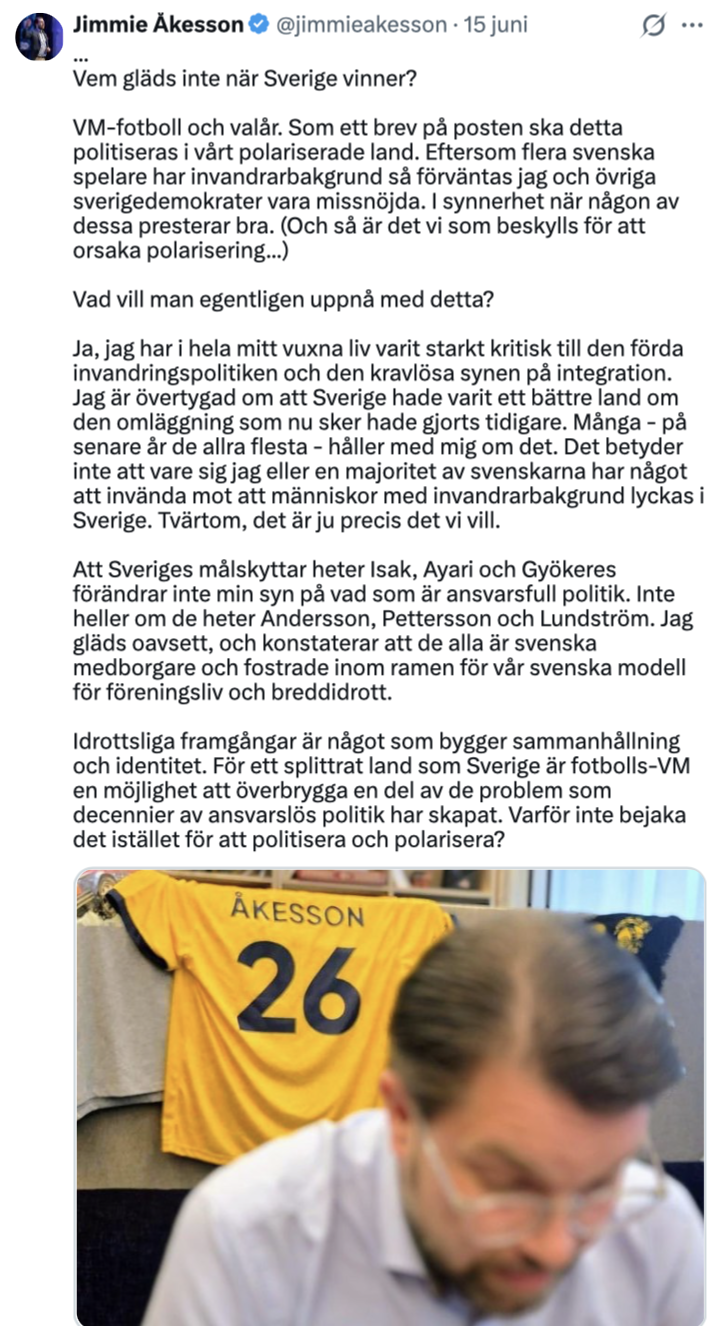
In a social media post, Jimmie Åkesson responds to the criticism directed at him and the Sweden Democrats after the match. He begins by questioning why sporting success is repeatedly tied to political conflicts.
“World Cup football and election year. Like clockwork, this is politicized in our polarized country,” he writes and asks what left-liberal media hope to achieve with their campaign.
Åkesson notes that there are expectations for the Sweden Democrats to be negative towards successes where players with immigrant backgrounds are involved—something he rejects outright.
At the same time, Åkesson emphasizes that his criticism of previous immigration policy does not stand in opposition to welcoming successful Swedes with diverse backgrounds.
“Yes, throughout my adult life I have been strongly critical of the immigration policy and the uncritical view of integration. I am convinced that Sweden would have been a better country had the policy changes now underway happened earlier,” he writes, and continues:
“Many—especially in recent years, most—agree with me on this. That does not mean that either I or a majority of Swedes object to people with immigrant backgrounds succeeding in Sweden. On the contrary, that is exactly what we want.”
“I’m Happy Regardless”
Åkesson stresses that the trio of players—Isak with immigrant heritage from Eritrea, Ayari from Tunisia, and Gyökeres with Hungarian roots in the family—are all Swedish citizens and part of the Swedish sports system.
The SD leader argues that their names or backgrounds do not alter his perspective on what constitutes good policy or national unity.
“I’m happy regardless—regardless of whether they are named Isak, Ayari, or Gyökeres,” he states.
Åkesson also notes that football itself can act as a unifying force in a society divided by rifts. He believes international tournaments can help bridge social and political oppositions rather than reinforce them.
“Why not embrace that instead of politicizing and polarizing?” asks the SD leader.
Åkesson: Revealing Themselves
The SD leader has also published a video statement on the topic this Tuesday, where he says the previous text post was intended as a test to gauge reactions when he reached out.
At the same time, he believes that his statements have not had an impact on the broader media coverage, which, according to him, continues to focus on the issue with a critical tone.
– In part also as a test to see if these self-proclaimed knights of tolerance would choose to take my hand for unity and national pride, or continue their war. And unsurprisingly, it became more war, he says and continues:
– War and conflict are the lifeblood of these people. Nuance does not exist at all. They are totally incapable of listening to those who think differently and then responding to arguments at a reasonable, substantive level. They are not in the least interested in trying to understand.
See the full video statement: