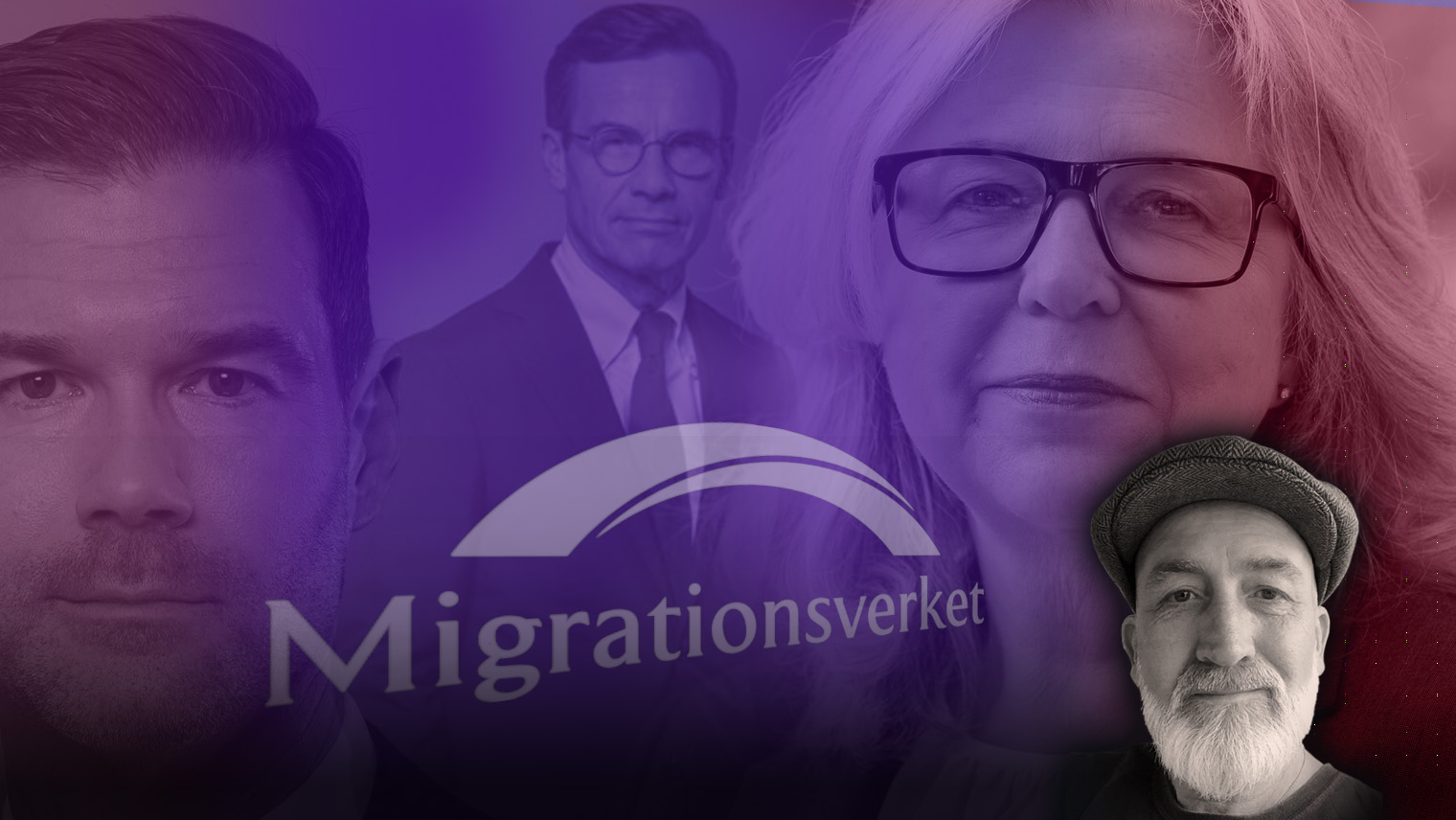
NEWS COLUMN • The silence from the leadership of the Swedish Migration Agency is in itself an answer. Not to the questions I asked, but to how the Swedish state in practice reacts when confronted with serious internal criticism – with words, procedures, and administrative caution, rather than self-examination, accountability, and real action.
One of my sources at the Migration Agency recently told me that Director General Maria Mindhammar, after my article series here at Samnytt, sent out information to all 6,000 employees.
The gist was essentially that the agency was now under scrutiny – and that the whole matter had reached the government offices – but that she basically was unaware of any ethnic groupings within the organization, and that if such existed, it would be taken up with the staff disciplinary board, the so-called PAN.
The Migration Agency from the Inside
Don’t miss Samnytt’s article series on the Migration Agency:
-
▶ Part 1 – The inside of the Migration Agency: Clans, Swedes as a minority, and a culture of silence
-
▶ Part 2 – Testimonies from inside the Migration Agency: “The Tidö government is the enemy”
-
▶ Part 3 – Voices from the Migration Agency: “It’s not just corruption – it’s serious criminality”
-
▶ Part 4 – The Migration Agency refuses to answer Samnytt – dismisses staff testimonies and denies interview
It’s a strange response, not least because the information I published is based precisely on internal testimonies from employees describing how such structures have developed over a long period.
Either this means that the Director General lacks insight into her own organization, or that she has chosen not to acknowledge the information that actually is available. Both alternatives are problematic.
Silence as Leadership
Let us recall that neither Mindhammar nor anyone else in the Migration Agency’s management found it necessary to answer the questions I, as a journalist, posed—even though they were based on very serious claims from internal whistleblowers and concerned issues of power, accountability, and legal security—in other words, precisely the kind of issues that should trigger action, not silence.
READ ALSO: Samnytt’s revelations about the Migration Agency pressure the government
More and more, I am struck by how this incapacity and complacency in the face of real problems not only affect the agency’s staff, but in practice the entire future of Sweden.
And this is also where the Tidö government’s responsibility is impossible to ignore. Ultimately, it is the government that appoints directors general, sets the framework for the agencies’ activities, and bears the political responsibility for who is given power over institutions vital to society.
Jonas Andersson
The feeling is reminiscent of when National Police Chief Petra Lundh, with tears in her eyes, appears to be thoroughly powerless in her role as the highest ranking police official—a role she herself stated she would only exercise within normal working hours, regardless of how serious the situation might be.
“I have always been very clear that I want to have plenty of time for my family. I basically never work weekends and I usually go home on time,” she told SvD in an interview.
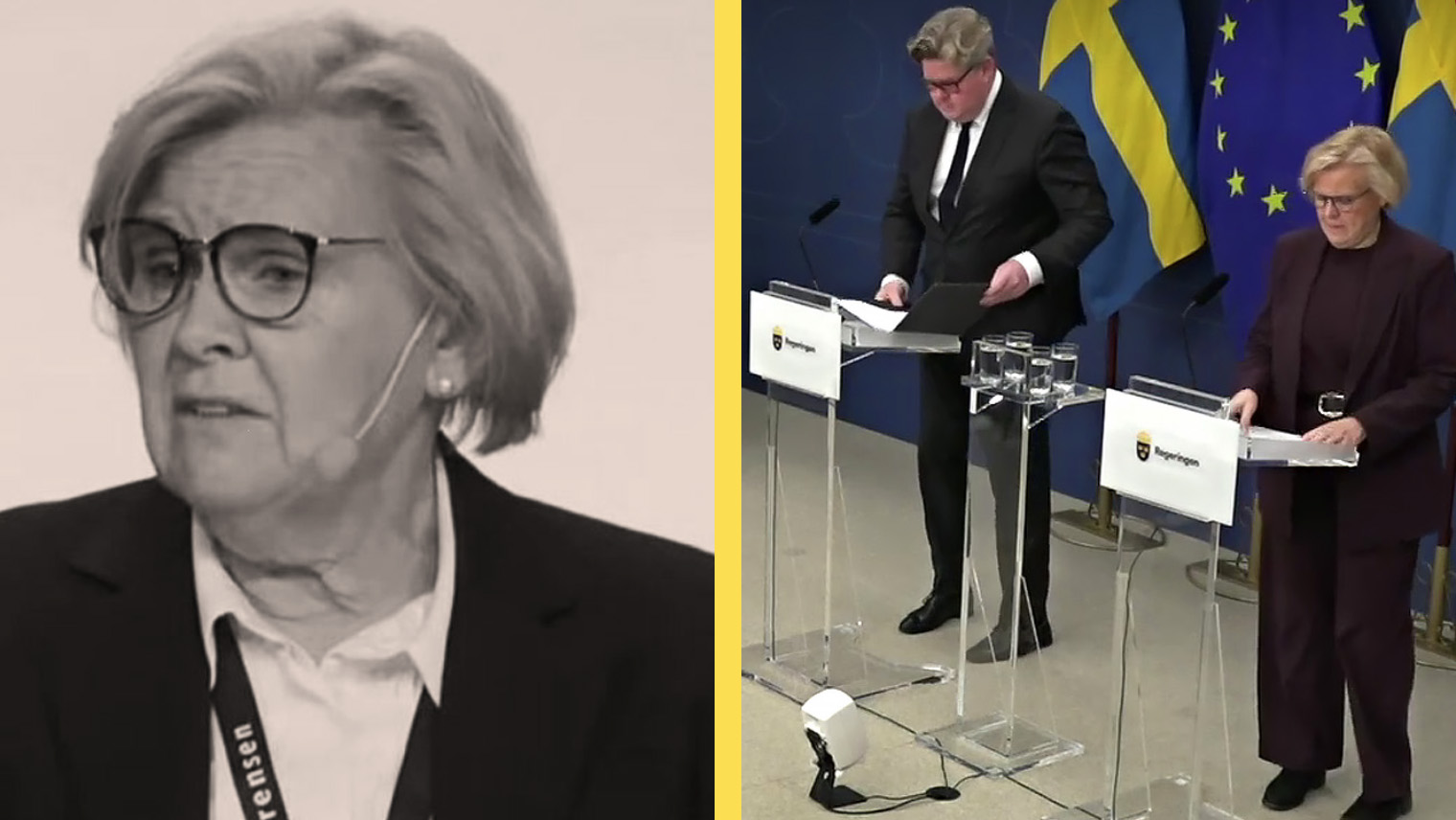
There is something deeply amiss in the relationship between the weight of the problems and the language, pace, and presence of the leadership. Conversations about power, responsibility, failures, and systemic defects are conspicuously absent, while processes, collaboration, and long-term work fill the void.
The Soft State
In my previous texts, I have used the term “the soft state,” borrowed from Professor Erik J. Olsson and his wife Catharina Grönqvist Olsson’s book title “Den mjuka staten – Feminiseringen av samhället och dess konsekvenser.” I have interviewed Erik J. Olsson several times on what this means.
READ ALSO: More female police chiefs take positions – professor explains how the legal system is changing
It is a state where leadership increasingly revolves around signaling values, empathy, and the right tone, and less and less about bearing conflicts, making uncomfortable decisions, and being in direct confrontation with reality. A state governed through emotion and communication rather than the exercise of power, and which therefore also becomes extremely sensitive to criticism.
It is also striking that several of the most senior positions in today’s Swedish state apparatus—the Police Authority, the Migration Agency, and other central agencies—are led by individuals with precisely this type of communicative, consensus-driven, values-based leadership.
This can lead to serious problems, even in agencies where Sweden’s future is not at stake.
For my part, perhaps the most difficult information to digest concerns the open antisemitism within the agency. According to my internal sources, slogans like “From the river to the sea” have appeared in break rooms and shared spaces, uttered without any intervention from those in leadership positions.
Jonas Andersson
We remember the Work Environment Authority under Erna Zelmin-Ekenhem’s tenure as director general. An agency tasked with protecting the work environment and preventing ill health, but which under her leadership itself became subject to extensive internal criticism, calls for resignation, and repeated reports of a destructive workplace culture.
In the media, employees and union representatives described a leadership characterized by vagueness, internal frustration, and an organization where critical voices were marginalized. The criticism was fundamentally not about individual issues, but about the absence of present leadership—at precisely the authority that is to intervene when workplaces collapse.
A similar pattern of internal conflict and absent effective leadership is also evident at the Swedish Gender Equality Agency, something Samnytt has previously reported on.
READ ALSO: Chaos at the Gender Equality Agency – staff feel discriminated against and offended
According to a recent employee survey, the staff experienced, during the autumn, both lower confidence in the management, higher stress levels, and that discrimination and abusive treatment occurred—both due to gender and age—even though the agency’s mission is to counteract precisely such problems.
The authority, which is strongly female-dominated and received a new director general during the year, failed to improve the poor working environment previously reported, and several staff members testified to internal competition and that communication from management did not reach through.
READ ALSO: The Gender Equality Agency – a left-ideological institution where 8 out of 10 are women?
This internal turbulence, where the management in practice failed to instill confidence or handle basic work environment issues, illustrates how even an agency with an explicit equality mandate can be marked by precisely the kind of leadership deficiency and conflict aversion I’ve noticed elsewhere in the state apparatus.
I myself consider the Gender Equality Agency both costly and unnecessary – and a politicized agency – that should be shut down immediately. The problems might therefore seem marginal in a broader perspective. This is not the case for the Migration or Police agencies.
The Migration Agency from the Inside
Don’t miss Samnytt’s article series on the Migration Agency:
-
▶ Part 1 – The inside of the Migration Agency: Clans, Swedes as a minority, and a culture of silence
-
▶ Part 2 – Testimonies from inside the Migration Agency: “The Tidö government is the enemy”
-
▶ Part 3 – Voices from the Migration Agency: “It’s not just corruption – it’s serious criminality”
-
▶ Part 4 – The Migration Agency refuses to answer Samnytt – dismisses staff testimonies and denies interview
”The Tidö government’s responsibility becomes impossible to ignore”
Sweden today is not governed by hard power structures, but by soft personalities in hard positions. People who may be excellent administrators, skilled communicators, and well-meaning leaders, but who lack the strength to lead in situations where the systems are already starting to fracture.
Where the problems are no longer technical but existential. Where it’s not enough to talk about values, but someone actually needs to confront structures, incentives, and established truths.
When it comes to the Migration Agency, the criticism is not about organizational psychology or abstract leadership models. It’s about concrete information on abuse of power, informal structures, legally uncertain case handling, and a system in which internal—and foreign—loyalties risk outranking both the law and public trust.
And perhaps that’s where my investigation has ultimately landed. Not in the Migration Agency as an isolated authority, but in a state that has become so preoccupied with appearing good, empathetic, and well-functioning that it has slowly lost the ability to handle real problems and systemic criticism.
Jonas Andersson
This is an authority that ultimately determines who may stay in the country, on what grounds, and with what consequences – and where each structural error has direct consequences for people, society, and the state.
This is why the silence from the leadership becomes so telling. Not as a communication strategy, but as an expression of something deeper: a reluctance or inability to take on the kind of criticism that cannot simply be packaged in value statements, flow charts, or internal policy documents.
When one of Sweden’s most powerful authorities responds to serious internal testimonies with administrative silence, it says less about a leadership style – and more about how the state actually works. Or fails to work.
For my part, perhaps the most difficult information to digest concerns the open antisemitism within the agency. According to my internal sources, slogans like “From the river to the sea” have appeared in break rooms and shared spaces, uttered without any intervention from those in leadership positions.
READ ALSO: Testimonies from within the Employment Service: Antisemitism and special privileges for immigrants
This is not about private opinions expressed on social media, but about political slogans with clear extremist overtones in the everyday life of a government agency. For me, this is not a peripheral detail, but a moral and institutional failure—a government agency that is ultimately supposed to apply Swedish law and safeguard the rule of law seems simultaneously to tolerate a language that in practice legitimizes ethnic cleansing and political violence.
And this is also where the Tidö government’s responsibility becomes impossible to ignore. Ultimately, it is the government that appoints directors general, sets the frameworks for the agencies’ work, and bears the political responsibility for which individuals are granted power over society’s core institutions.
READ ALSO: Dagerlind: Tidö should learn from Trump – if you want to win the election
To speak of a systemic or paradigm shift and regaining control, while permitting the same types of leadership to persist in key positions—where we have been told that other languages, cultures, and loyalties than the Swedish have taken hold within the Migration Agency—shows a lack of judgment that can no longer be dismissed as temporary or naive.
As I reported in the first part about the clans: “It’s not just linguistically that this has an impact, that people don’t understand each other or what is said, but it leads to various groups forming within the agency, clans engaging in bringing over their own clan members or relatives from their home countries. The clan mentality of the Middle East has been brought into the agency.”
READ ALSO: Residence permits: Unchanged number under the Tidö government
And perhaps that’s where my investigation has ultimately landed. Not in the Migration Agency as an isolated authority, but in a state that has become so preoccupied with appearing good, empathetic, and well-functioning that it has slowly lost the ability to handle real problems and systemic criticism.
A society that prefers to talk about values instead of power—and therefore risks standing completely powerless when values are no longer sufficient.
Pause for a moment!
Samnytt exists thanks to its readers.
– Not a subscriber? Try completely free all winter ⛄❄️
Samnytt is entirely dependent on our readers – we have no government support and few ads.
Try for free and see if you appreciate our Plus material.
Enter the code:
Januarirabatt26
- ✔ Save over 200 SEK
- ✔ Exclusive content every day
- ✔ Absolutely free for 3 months
After the free period, charged at 69 SEK/month.
You can cancel at any time.