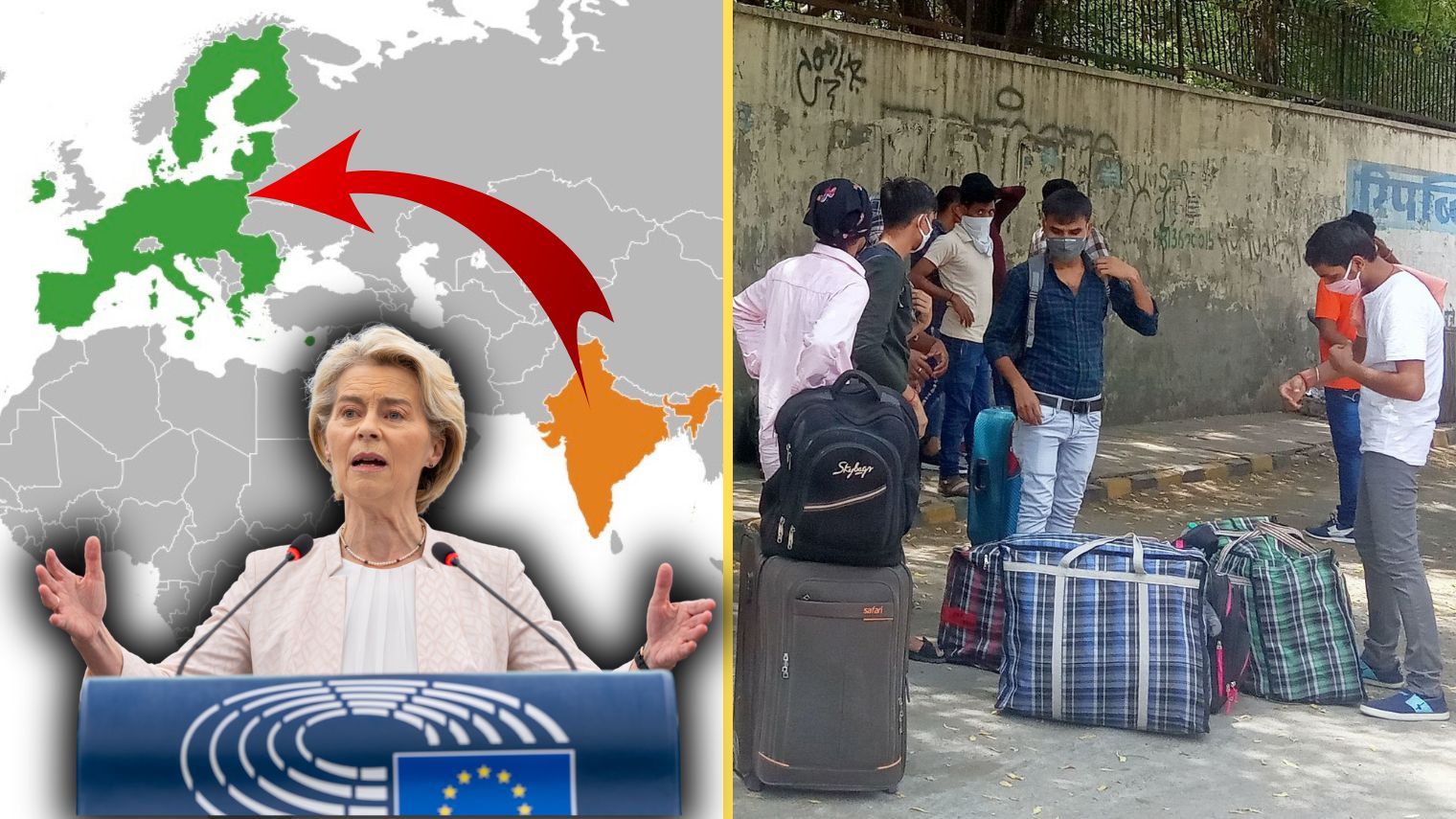
This week, a summit is being held between the EU and India in the Indian capital New Delhi. After ten years of talks, the aim is to finalize the details of a free trade agreement. While the focus is on issues such as tariffs, cars, and wine, it also involves extensive labor immigration.
Present in India are EU Commission President Ursula von der Leyen, Council President António Costa, and Thomas Byrne, Ireland’s Minister for European Affairs and Defense. In July, Ireland will take over the EU presidency.
According to the EU’s chief trade negotiator Maroš Šefčovič, a trade deal with India is “very close,” with the intent to reduce high tariffs for European companies in one of the world’s fastest-growing yet highly protected markets. In some sectors, India maintains tariffs at 150 percent, effectively shutting European exporters out of large parts of the economy.
READ ALSO: EU countries unite – want to send more migrants home
If the agreement is reached, it would create a free trade zone covering two billion people and eliminate Indian tariffs on imports from Europe. However, not all sectors will be included.
– We decided to keep the most sensitive sectors for both sides outside of this agreement so we can really focus on the positive outcome, says Šefčovič to Euronews.
« The mother of all trade deals »
We are closing in on the ???????????????? Free Trade Agreement.
See you soon in Delhi. pic.twitter.com/gfiLv2eEam
— Ursula von der Leyen (@vonderleyen) January 24, 2026
Labour Mobility
According to the Commission’s figures, about 6,000 European companies are currently active in India and the trade in goods between the EU and India has increased by almost 90 percent over the last decade. In 2024, the value of goods exports was nearly 50 billion euros.
– This is the largest trade agreement ever, says Šefčovič.
The agreement also contains a chapter on “labour mobility,” described as a “collaborative framework” for highly skilled labour. While the EU focuses on talent, India’s focus is broader mobility, allowing for temporary labor without local recruitment requirements. This includes faster visas, streamlined work permits, and recognition of qualifications.
READ ALSO: Eastern European ‘no’ to the EU migration pact
Reports mention multi-year business visas for IT specialists, reduced processing times for EU Blue Card (by up to 40 percent), and recognition of qualifications in healthcare, IT, and architecture. It also covers mobility for seasonal workers, students, researchers, and highly skilled professionals.
India sees this as a chance to export its “demographic dividend,” but the EU emphasizes that it is limited to specialists. The agreement is binding under international law, which means that future governments cannot unilaterally change it without violating it.
Mass Immigration a Dead End
In Germany, the number of Indian citizens rose from 86,000 in 2015 to 280,000 last year. On an EU-wide basis, in 2024 the number stood at 931,607 Indian nationals. In Sweden, Indians were one of the largest immigrant groups in 2024, with about 59,000 individuals. However, many also leave.
At the World Economic Forum’s annual meeting, Palantir CEO Alex Karp warned that mass immigration and AI development are incompatible, and countries that invest in AI instead of immigrant labor will prevail long-term.
Previously, BlackRock CEO Larry Fink also noted that countries with restrictive immigration policies and shrinking populations will have a higher standard of living in the AI era as they invest in automation instead of imported labor.
READ ALSO: EU wants more legal pathways to Europe for migrants