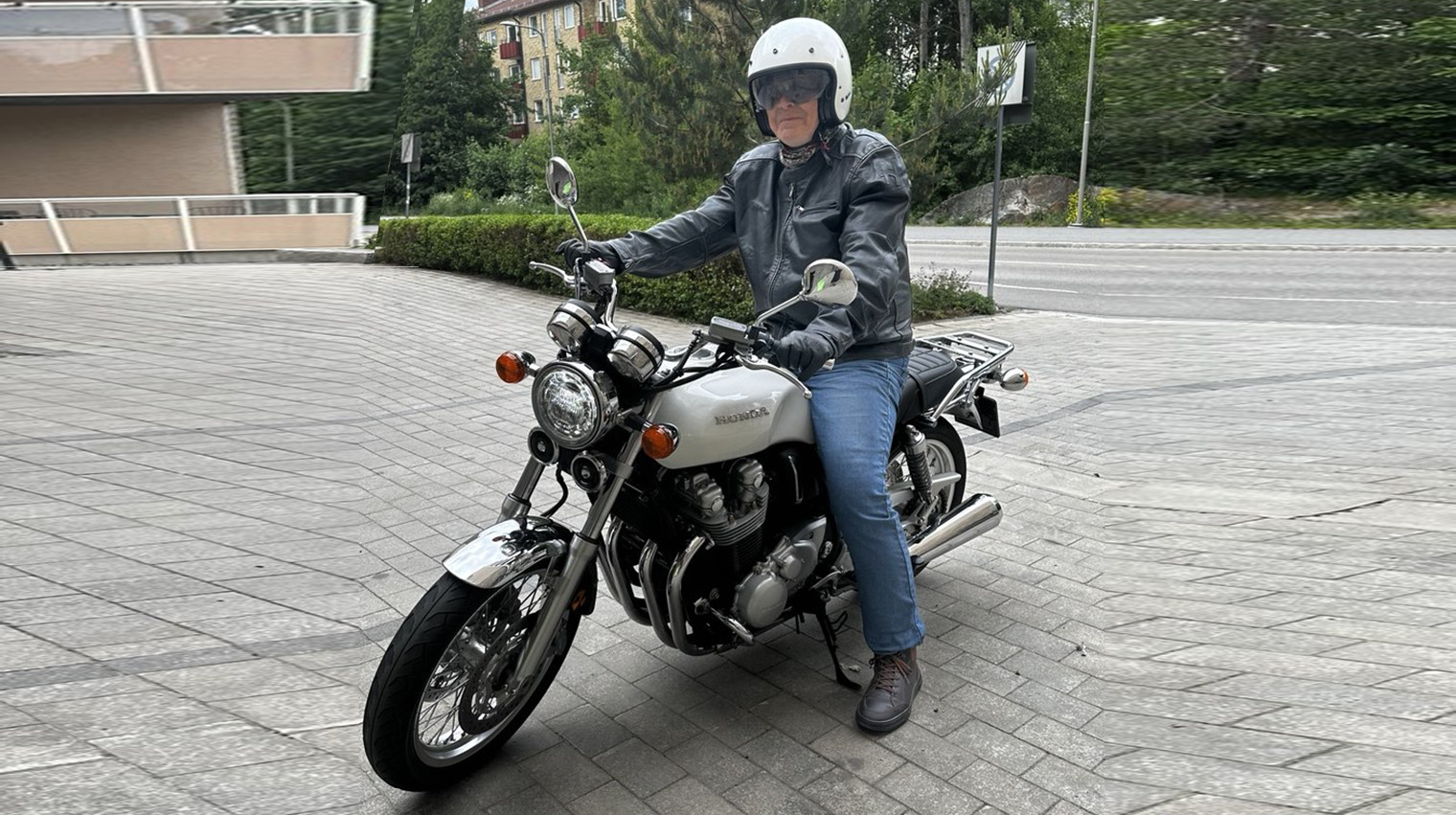
MC COLUMN • I must have been nine or ten years old when I saw it for the first time. Honda CB750. Four gleaming exhaust pipes, an engine that looked like a piece of the future, and a name that sounded more like the space age than a motorcycle. Right then and there I decided – I’ll have one of those when I’m grown up. Today, I’m a new owner of a Honda CB1100EX – a combination of the best from the ’70s and the essentials from the 2000s.
It was at the turn of the 1960s and ‘70s. “Made in Japan” was still an expression many used with a wrinkled nose. It meant cheap, copied, unreliable. But something was happening. Transistor radios, cameras, cars, and motorcycles from Japan began to show that cheap didn’t have to mean bad. Quite the opposite, in fact. On the motorcycle front, the Japanese arrived with precision, finish, electric start, tight engines, and an almost provocatively high reliability.
After a long break from the saddle, I recently bought a 2017 Honda CB1100EX. It’s not a copy of the CB750, but it carries the same soul – (mostly) air-cooled inline four, chain drive, spoke wheels, classic lines. In the ’90s I managed to ride Honda’s six-cylinder CBX, Kawasaki’s likewise six-cylinder Z1300 – both insanely expensive to acquire today but affordable back then – and owned two Kawasaki Z1000s from the late ’70s and early ’80s.
HD Attempts that Faltered
For a while, just before the millennium, I was also heading into the Harley-Davidson world with a custom build from Calles Chopperdelar in Moheda. But then came the Muslim Nine-Eleven terrorist attacks, the translation market where I worked collapsed, and the build had to be sold before it was even finished.
Making another HD attempt today, as a newly-minted retiree, would feel a bit old-mannish, almost pathetic. Besides, you need to be something of a nail-biter (enthusiast) if you ride Harley – able to use the jargon: panhead, shovelhead, knucklehead, evo, hardtail, softail, bobber, dresser, café-racer, ape hangers, sissy bar, and so on. That’s not me.
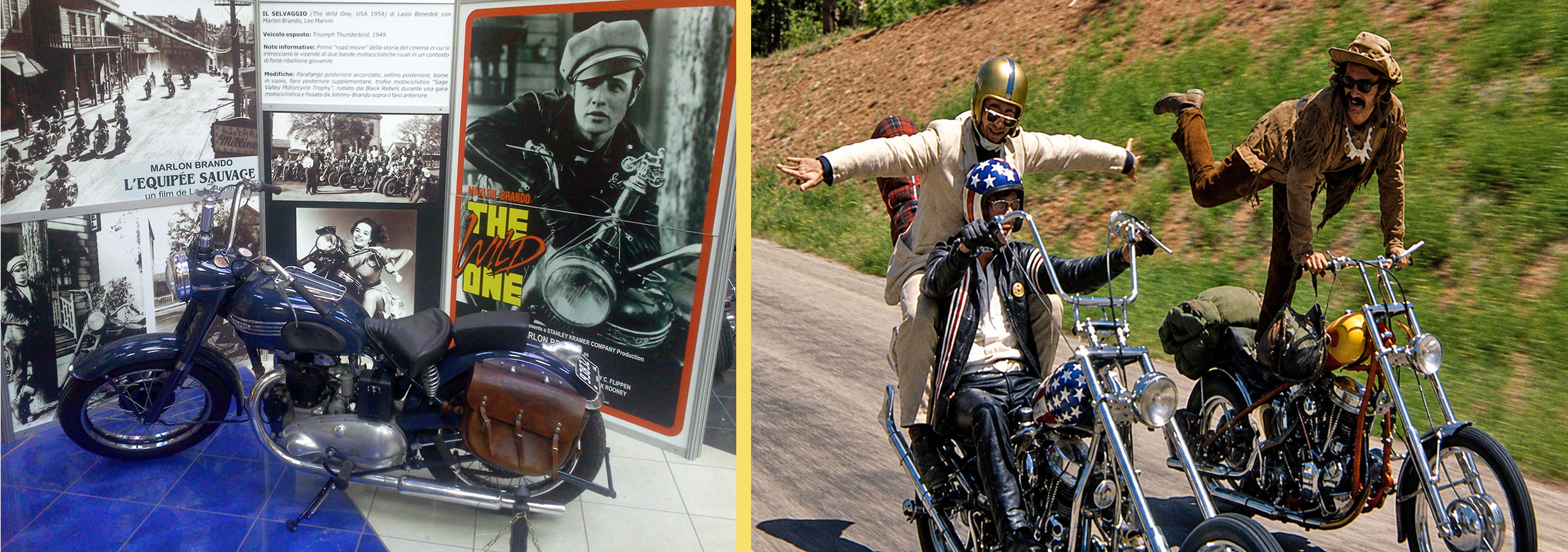
You should also preferably have a passion for the outlaw biker culture. I did, but not anymore. Sure, I fondly remember movies like The Wild One with Marlon Brando (Triumph, admittedly, not Harley) and Easy Rider with Peter Fonda, Dennis Hopper, and Jack Nicholson, and I have binge-watched Sons of Anarchy recently. But criminal biker gangs are not what they once were – like everything else, the immigrants (*editor’s note: some offensive wording related to criminal gangs omitted) have taken over and the allure is gone. It’s the same as the mafia – very little Godfather and Sopranos, much more Kurdish foxes and “strawberries”.
Japan as Phoenix Rising from Atomic Ashes
So this story will mainly focus on the arrival of Japanese motorcycles in the West. Not only machines, but also dreams, identity, shifting markets, industries that fall asleep, and new players no one really took seriously – until it was too late.
In the 1950s, the motorcycle world was still largely Anglo-American and European. In the USA, Harley-Davidson was the big survivor, while Indian, once Harley’s most powerful rival, folded in 1953. In Europe there were BMW, Moto Guzzi, Norton, Triumph, BSA, Matchless, AJS, and many other names that had both racing glory and industrial tradition. A motorcycle could be British, German, Italian, or American. But Japanese? That long seemed difficult to take seriously.
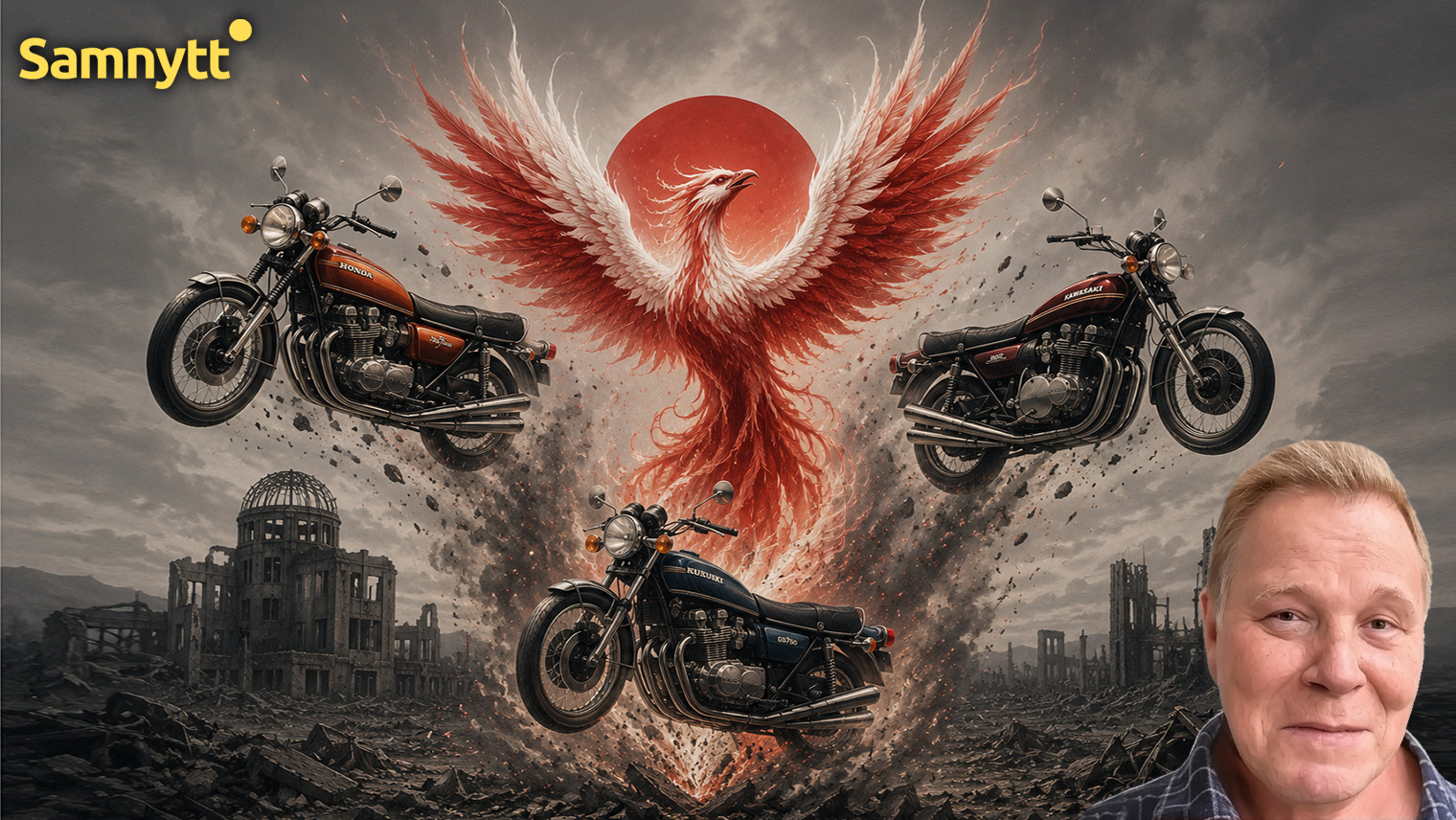
But Japan rose as a Phoenix from the atomic ashes after Hiroshima and Nagasaki. After the war, the country rebuilt its industry with an energy that combined necessity, engineering, and mass production. Honda began with small engines and bicycles. Suzuki came from the loom industry. Yamaha’s roots were in musical instruments. Kawasaki was a heavy industrial company with airplanes, ships, and machinery in its blood. They would soon become “The Big Four” and together change the entire motorcycle world.
“Nice People” and the Beach Boys
The first great stroke of genius wasn’t the superbike. It was the small motorcycle. Honda Super Cub did something that Harley, Triumph, and Norton never managed – it made the motorcycle respectable. In the USA, Honda launched the campaign “You meet the nicest people on a Honda” and the moped-like bike was celebrated in song by the pop group Beach Boys as a “groovy little motorbike”.
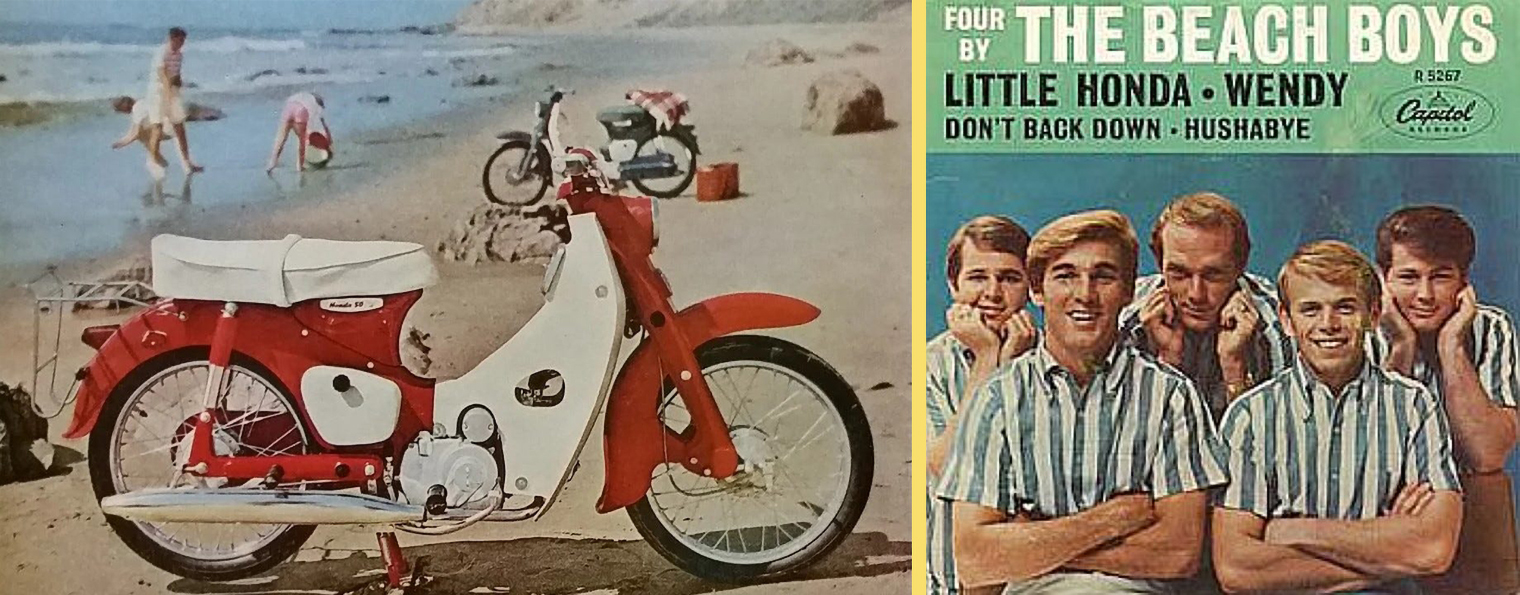
It was a bullseye. Suddenly the motorcycle was not just an attribute for leather jackets, oily fingers, and a rebellious, marginal culture. It could be something for students, office workers, housewives, and young families. Honda didn’t just sell machines. They sold a new social image of what motorcycling could be.
The Honda CB750 Shock
Then came the CB750. When Honda displayed it at the end of the 1960s, it was a shock. It had an inline four-cylinder engine, front disc brake, electric start, high speed, smooth performance, and a reliability that made much of the competition look obsolete overnight. It wasn’t cheap as in simple. It was affordable as in superior. It looked like what a motorcycle should, but worked like something entirely new.
It’s easy in retrospect to credit the CB750 as a solitary revolution. The truth is more interesting. It was the culmination of a Japanese method – listen, improve, test, mass-produce, and then deliver at a price competitors couldn’t match. Honda had learned from racing, from the U.S. market, from failed export attempts, and from customer demands. The CB750 wasn’t just a motorcycle. It was an industrial manifesto.
The Brits and Yanks Were Caught Off Guard
The British should have seen the warning signals blinking. Triumph Bonneville, Norton Commando, and BSA’s big twins and triples had charm, sound, and soul. But they also suffered from vibration, oil leaks, aging designs, and factories often working with yesterday’s methods. Meanwhile, the Japanese came with motorcycles that started with the push of a button, were properly sealed, and could be used every day. For romantics, it was sad. For customers, the choice was easy.
In the U.S., the situation was different but just as dramatic. Indian was already gone as a real manufacturer. Harley-Davidson lived on, but the 1970s were hard times. During the AMF years, production and quality were squeezed while Honda, Kawasaki, Yamaha, and Suzuki filled the market with everything from small commuter bikes to large four-cylinder road machines. Harley didn’t survive by beating the Japanese technically. Harley survived by finally figuring out its own value – the sound, the V-twin, the myth, the club, the feeling of the American road.
Japanese Cruisers that Came and Went
Still, the Japanese made a fresh attempt to challenge Milwaukee with a range of cruisers or “customs”. In the 1980s and especially the 1990s, Honda Shadow, Kawasaki Vulcan, Suzuki Intruder, and Yamaha Virago and Drag Star were launched, all clearly inspired by the American V-twin tradition. Honda’s Valkyrie, with its six-cylinder boxer engine borrowed from the touring giant Gold Wing in a cruiser chassis, might have been the boldest attempt of all.
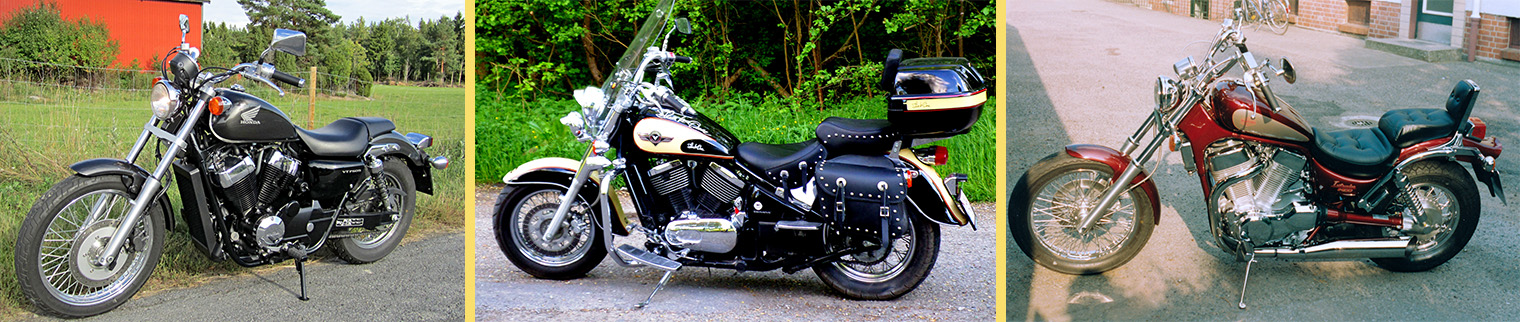
The motorcycles were often cheaper, faster, and more reliable than their American counterparts, but they never managed to conquer Harley’s core. The Japanese could copy the form, but not the history. When the cruiser boom faded in the 2000s, much of the interest in the Japanese challengers disappeared, while Harley-Davidson retained its position as one of the strongest lifestyle brands in the motorcycle world. The Gold Wing, however, remained.
Three Motorcycle Cultures
Maybe that’s where the difference between the USA, Europe, and Japan finally became clearest. Harley-Davidson managed to become more than just a motorcycle manufacturer. They became a culture. The British brands also had culture, but their industrial base collapsed. Norton, Triumph, and BSA became names that reappeared, disappeared, came back again, and were acquired. Moto Guzzi survived with Italian stubbornness and uniqueness. BMW found another path – technical seriousness, touring, boxer engines, and a loyal audience not necessarily chasing Japanese performance per dollar.
But even the Japanese created their own motorcycle culture. When Honda, Kawasaki, Suzuki, and Yamaha in the ’70s presented their great original designs, it wasn’t about copying anyone else. Then, they were the ones setting the agenda and defining the future.
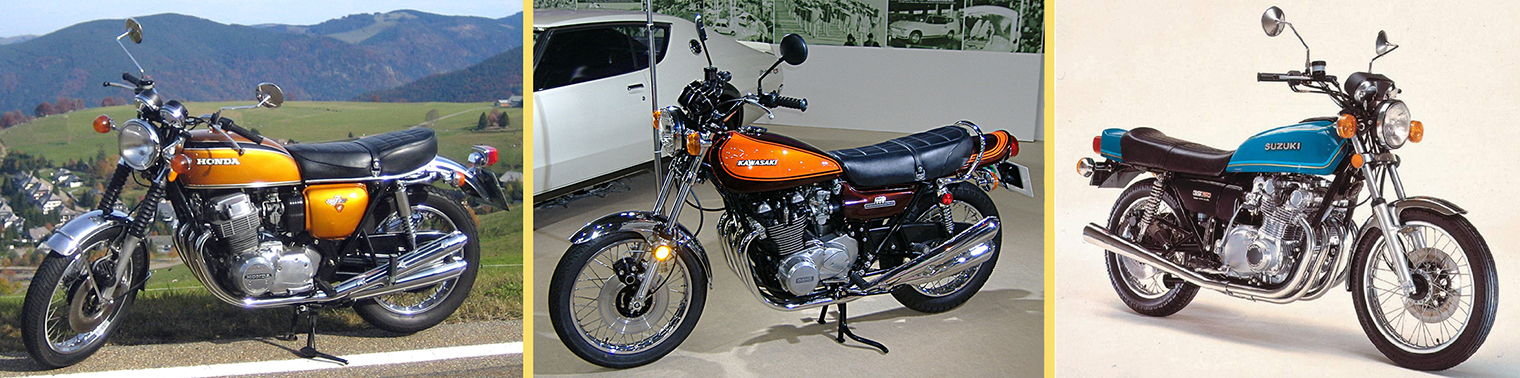
Kawasaki Z1 continued where the Honda CB750 had started and turned up the volume. The Suzuki GS series showed that performance and everyday usability could be combined. Yamaha refined both two-stroke and four-stroke concepts, while Honda kept pushing the limits with machines like the six-cylinder CBX. Just like Harley, Triumph, and Moto Guzzi, the Japanese created models that became more than vehicles. They became icons. Culture.
Perhaps that’s why a well-preserved CB750, Z1, or CBX still commands respect and enthusiasm in a way that the Japanese Harley-copies of the 1990s never could. A first-production-year Z1 in top condition recently sold for the equivalent of over half a million SEK.
For those of us who grew up then, these became more than model names. CB750, Z1, Z1000, CBX, Z1300 – the names sounded like passwords to adulthood. They stood for speed, freedom, and a kind of modernity that no longer came from Birmingham, Munich, Mandello del Lario, or Milwaukee, but from Tokyo, Hamamatsu, Iwata, and Akashi.
And somewhere along the way the meaning of “Made in Japan” changed as well. What had been a derogatory term became a mark of quality. Cameras, watches, stereos, and cars made the same journey. But perhaps motorcycles made the change most visible, audible, and physical. You could see it in the parking lot. You could hear it at idle. You could feel it in your hands as the engine responded without coughing, leaking, or mechanical excuses.
An Echo of the Boyhood Dream
Today, as I sit on my newly acquired Honda CB1100EX, it’s not just a modern retro bike I’m riding. It’s an echo of that boyhood dream from the turn of the ’60s and ’70s. An echo of the CB750 and of the era when Japan not only entered the international motorcycle market but redrew it completely.
The nice thing is that the story didn’t end with the old brands dying. Harley is still around. Indian has been resurrected. Triumph now builds motorcycles with soul and quality again. BMW is stronger than ever. Moto Guzzi continues to do its own thing. But none of them is the world’s obvious center anymore. That world disappeared when the Japanese four showed that tradition isn’t enough if it isn’t followed by progress.
The Honda CB750 was therefore more than just the motorcycle I dreamt of as a child. It was the moment when the future rolled in on two wheels, with four transverse cylinders and four exhaust pipes that shone like a promise.