
The issue of the Nobel Center is not just about a building. It is about what kind of civilization we want to be – a society that builds with care for people, their everyday lives, and their need for beauty, coherence, and dignity, or one that settles for function, large scale, and technical efficiency. At its core, it is about something greater than architecture – it is about whether we see our cities as living environments for human life or as systems that merely need to function. It is a question of ambition, responsibility – and respect for those who will actually live with the result.
The plans for a new Nobel Center in Stockholm are not just another construction project. They are a symbol of something greater – our era’s strange indifference to beauty and to humanity’s needs for it.
In one of Europe’s most sensitive and historically charged urban environments, yet another building is planned that represents the aesthetic poverty of our time. Large, harsh volumes. Smooth surfaces. Anonymous largeness. Buildings that could just as well stand in an industrial area from the 1970s. Houses that do not try to communicate with their surroundings, do not attempt to refine the place, not even try to be liked. They are simply supposed to stand there. Functional. Efficient. Contemporary.
And ugly.
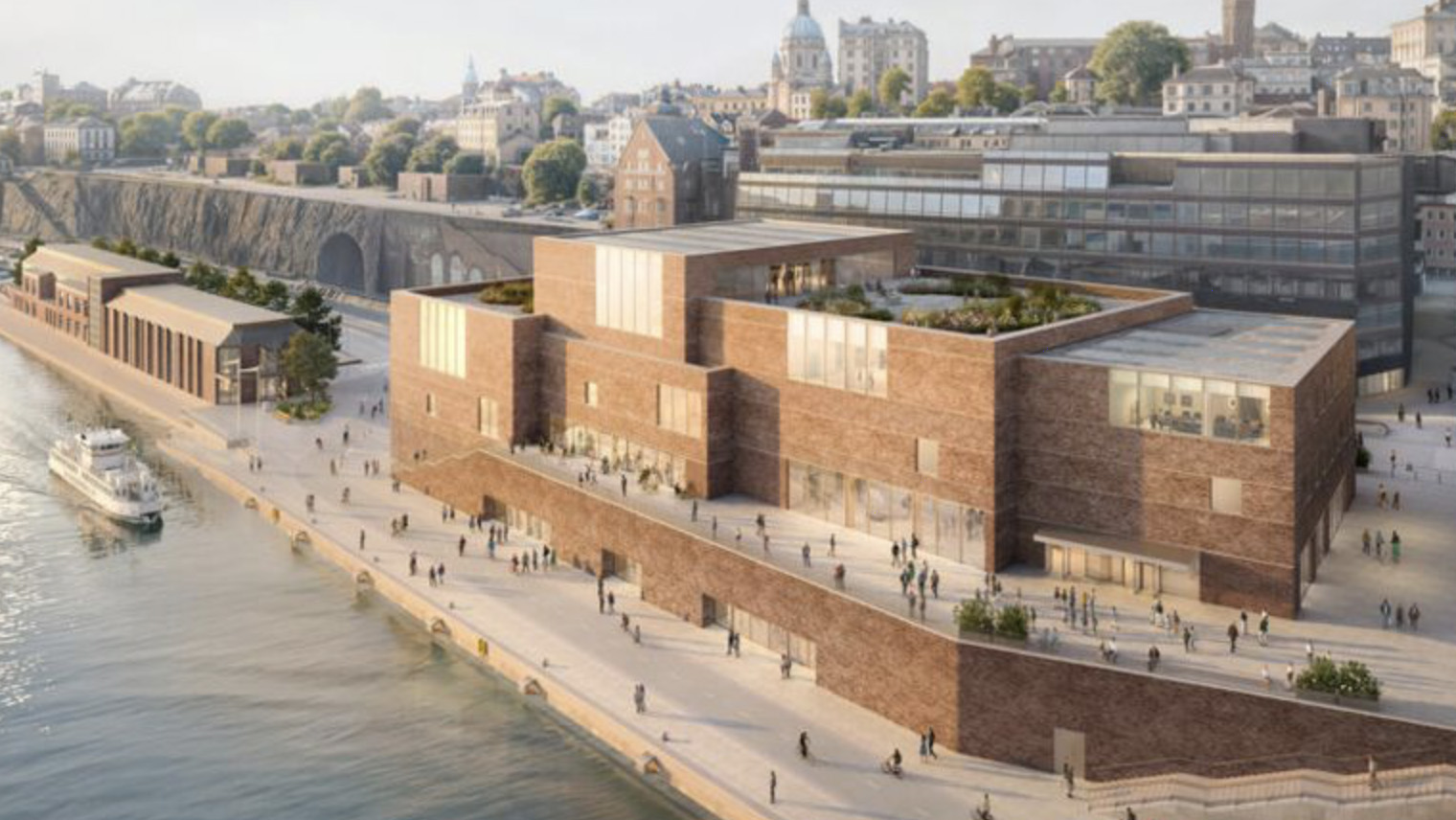
This is no exception. The same architectural logic and the same political decision patterns repeat time and time again. Despite clear public opinion, environments are being built that people do not like. When people are asked, they prefer classical proportions, variety, detail, natural materials, and buildings in a human scale. They want urban environments that feel warm, vibrant, and harmonious. Yet the opposite is built, year after year.
It is as if decision-makers and the architectural elite consistently do the opposite of what people actually want to have around them in their lives. They raise a middle finger at the people. The people they despise.
Because it is not only about taste. It is about something deeper – the innate human need for beauty, order, and meaning.
For most of history, this was self-evident. Cities were built not only to function but to be beautiful. Churches, squares, residential houses, and bridges were designed with the ambition to uplift humanity, not just provide a roof over one’s head.
In Stockholm, Ferdinand Boberg’s carefully designed gasometers in Värtan are a clear example of how even industrial buildings could be given architectural dignity and beauty.
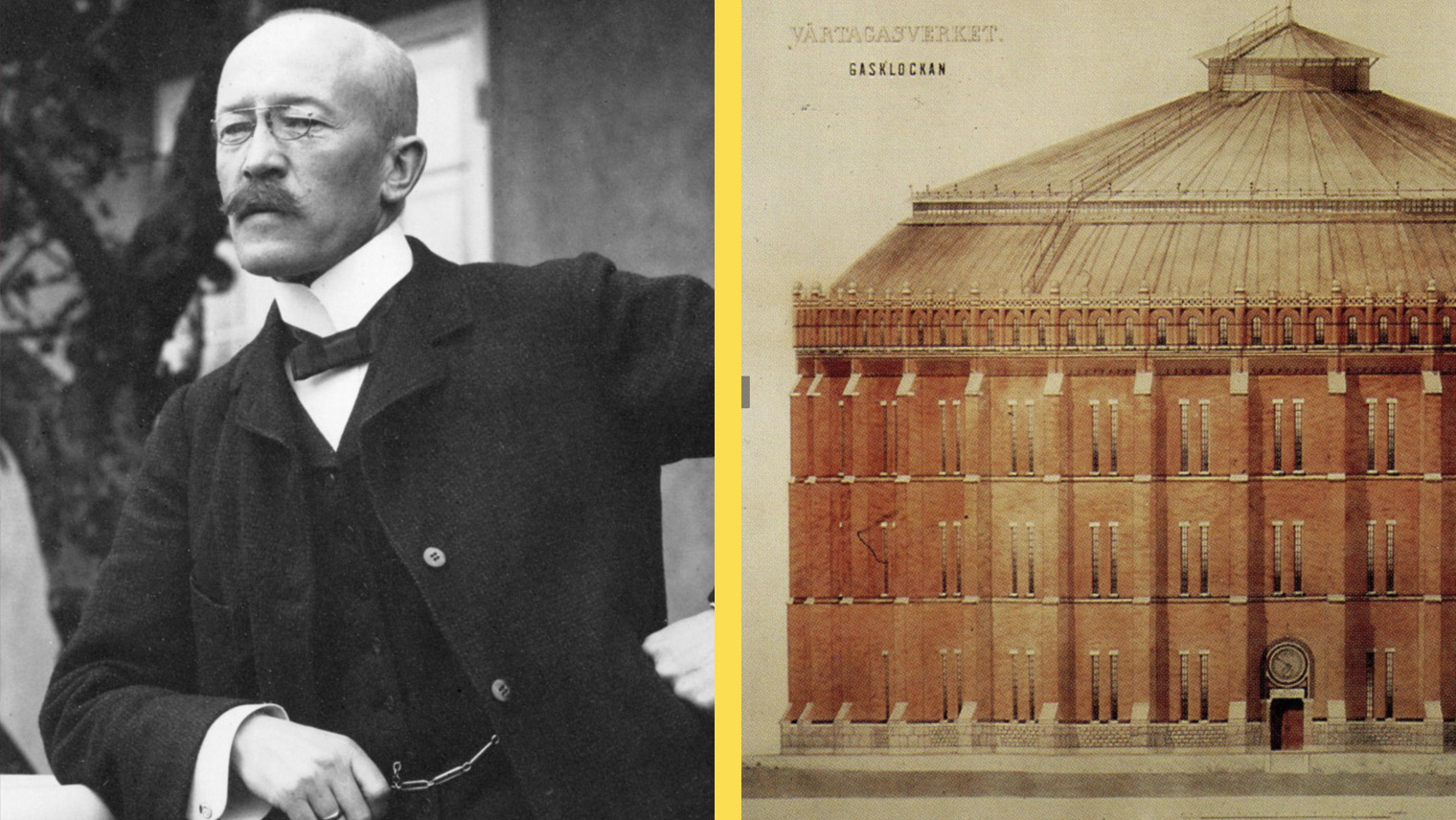
Beauty was not regarded as a luxury, but as a natural part of the good life. A society that took itself seriously built with care – and with respect for those who would live in it.
In Stockholm, large parts of one of Europe’s most coherent city centers were demolished. Environments that had emerged over centuries were replaced with concrete, office complexes, and transport solutions that drained the inner city of life. The same process was repeated in city after city throughout the country. The Social Democrats were behind this rape of Sweden.
Jonas Andersson
A beautiful society signals something to its citizens. That someone cared. That the place is worthy of being preserved. That the people who live there are worth more than the cheapest, quickest, and most standardized option. When that ambition disappears, something happens, both in the environment and in the human being.
READ ALSO: Here is the winner of the prize for Sweden’s ugliest new building 2025
Yet, beauty is not only about buildings and urban environments. It is also found in the human being. Look at Ingrid Bergman. When you see her in Hitchcock’s Spellbound from 1945, it is still striking. The look, the presence, the natural dignity.
It is a beauty that is about more than proportions – about vitality and charisma. At the same time, it contains its own opposite. She has long since gone. All that remains are the images and the memory. Therein lie the conditions of beauty: it blooms for a short time, is taken for granted while it exists, and then disappears. Perhaps that is why it touches us so deeply. It reminds us of life – and its transience.
Research shows that monotonous and lifeless environments increase stress and insecurity. People move faster through ugly environments, linger less, and feel less attachment. It is not hard to understand why. When your surroundings signal impermanence, indifference, and low quality, people also begin to feel temporary and replaceable. The public space becomes a passageway instead of a place to live in.
READ ALSO: Study shows: People prefer traditional architecture
The uglification of our cities is not a random development. It has been going on systematically for over seventy years. Historic environments have been demolished. Small scale has been replaced by large scale. Ornament and detail have been replaced by flat facades and standardized elements. The modernist idea of the house as a machine for living has come to dominate.
In Stockholm, large parts of one of Europe’s most coherent city centers were demolished. Environments that had emerged over centuries were replaced with concrete, office complexes, and transport solutions that drained the inner city of life. The same process was repeated in city after city throughout the country. The Social Democrats were behind this rape of Sweden.
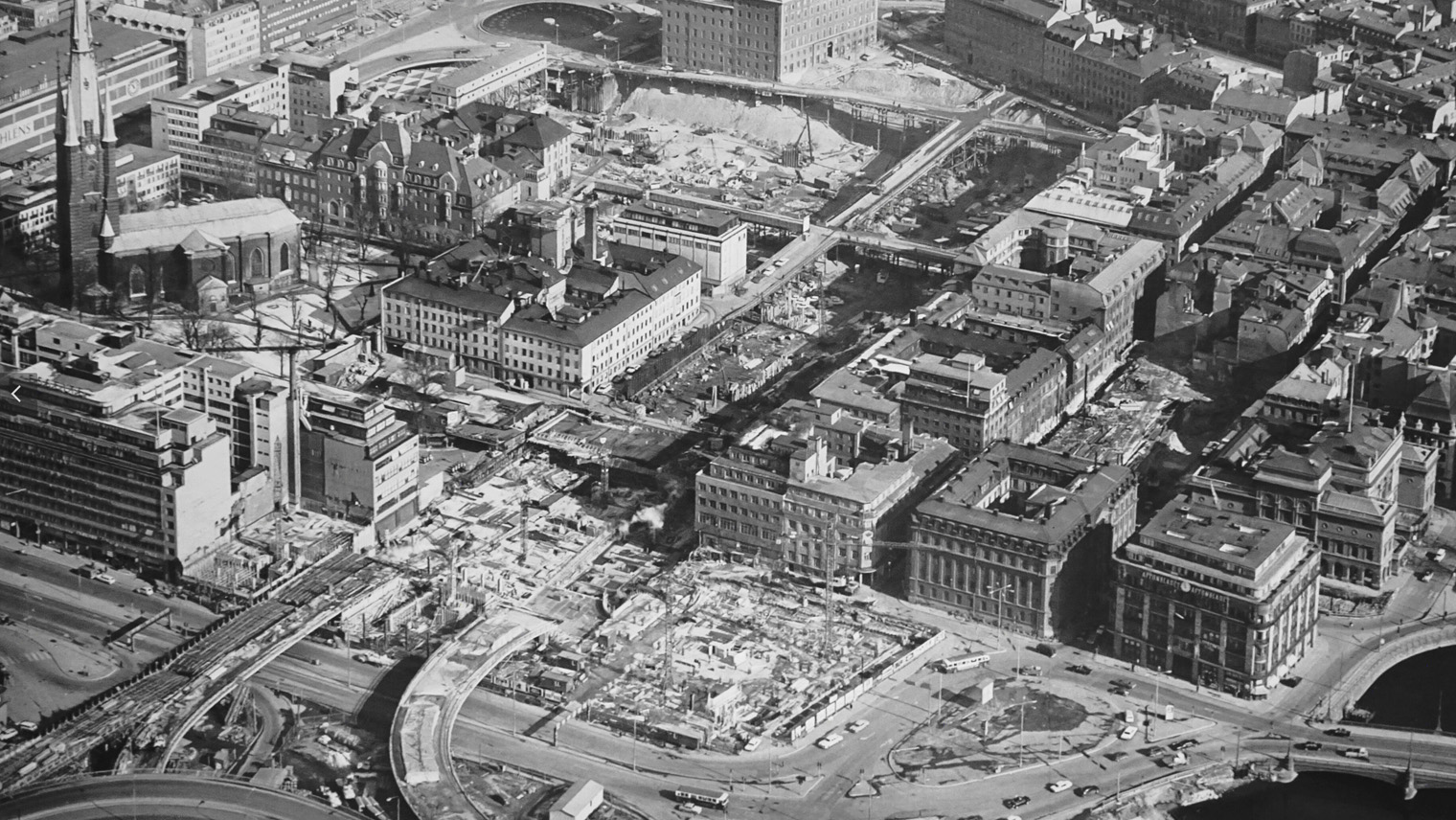
This happened despite protests. Despite people intuitively understanding that something valuable was being lost.
The development has also long been surrounded by ideological legitimacy. Beauty has been made suspect. Tradition has been called backward. Harmony has been described as reactionary. In some cultural circles, the beautiful has even been depicted as “fascist,” while the raw and brutalist is celebrated as progressive.
To me, this did not appear to be a random development, but an expression of the left’s view of humanity – a contempt for the human need for something greater than the everyday, something that transcends oneself and gives existence direction and dignity.
Jonas Andersson
As a former lecturer at the University College of Arts, Crafts and Design (Konstfack), I watched with growing dismay how something had shifted. What had once been art’s natural driving force – the pursuit of form, skill, depth, and the shaping of something greater than the immediate – was more and more often replaced by its opposite.
READ ALSO: Art gallery named the year’s ugliest new building
The provocative, the vulgar, and the deliberately ugly were prioritized, not as occasional artistic expressions but as the norm. Craftsmanship and sense of form were made suspect as traditional or irrelevant, while ideas about breaking norms and conceptual statements carried more weight than the work itself.
Instead of seeking what uplifts, deepens, and refines the human experience of the world, art more and more often seemed to want to break down, provoke, or reject that very innate longing for beauty, meaning, and context that it has historically carried.
To me, this did not appear to be a random development, but an expression of the left’s view of humanity – a contempt for the human need for something greater than the everyday, something that transcends oneself and gives existence direction and dignity.
READ ALSO: Research: Most people do not feel at home in modern architecture
At the same time, we live in a culture where aesthetics on the individual level have never been more important. People spend enormous resources on their homes, their bodies, their clothes, and their digital images. Social media is built on visual selection. Design and form are central to nearly every private choice. The beauty industry is growing :censored:6:cdd6bbaa89:ly.
A society that stops caring about beauty has effectively stopped caring about the inner life of its people. That is why the Nobel Center question is bigger than a single building. It is about what kind of civilization we want to be. Do we want to build environments people feel pride in and want to preserve?
Jonas Andersson
But in public spaces, beauty seems unimportant. It is a strange contradiction.
Beauty is not superficiality. It fulfills a biological and psychological function. People respond intuitively to proportion, symmetry, rhythm, materials, and light. We seek environments that signal life, care, and permanence. Ugliness signals the opposite – decay, impermanence, and indifference.
This applies not only to people but to landscapes, buildings, objects, and entire living environments. And ultimately it is about something existential.
Human beauty is admittedly temporary. It blooms, shines, and disappears. We are here for a short time, and that is precisely why our surroundings become so important. In the limited time we have, we want to be surrounded by something that says life is more than function and survival. That there is value, meaning, and dignity.
READ ALSO: Strong support for Sweden Democrats’ proposal for buildings in classic style
A society that stops caring about beauty has, in practice, stopped caring about the inner life of its people. That is why the Nobel Center question is bigger than a single building. It is about what kind of civilization we want to be. Do we want to build environments people feel pride in and want to preserve? Buildings that age with dignity and that future generations see as an asset? Or do we want to continue producing anonymous volumes that are demolished when the next architectural trend takes over? By the way, modernism has long since become a pastiche.
There are, nonetheless, signs that something is changing. When Notre Dame burned, resources from around the world gathered to restore the cathedral to its original form. No one suggested replacing it with an experimental glass box. Instinctively, the Western world understood what was at stake.
Perhaps we are now at the end of an era of functionalism, standardization, and aesthetic indifference. Perhaps the longing for the humane, small-scale, and harmonious is making a comeback.
READ ALSO: Alingsås builds a new area in local classical tradition
For fundamentally, the question is simple. Beauty is not decoration nor luxury. It is an expression of care, respect, and ambition. A society that consistently builds ugly, despite people wanting something else, signals that efficiency and systems weigh more heavily than people’s experience of their own lives.
But the longing for beauty never disappears. It can be ignored and denied, but not abolished. Sooner or later, it makes itself known. And when it does, the rebuilding begins.
READ ALSO: Ekeroth: “The woodlouse in Lund exposes worthless and nonchalant politicians”
Less than 1% of our readers support us
Hundreds of thousands read Samnytt, but only 1 out of 100 contribute. Help us grow and continue delivering in-depth reports and investigations.
Without your support, Samnytt would not exist.
No advertisers. No government support. Only our readers. Thanks to you, Samnytt has published over 33,000 articles that have challenged the curated narrative in Sweden.
123 083 33 50
Swish any amount
Thank you for reading and supporting Samnytt