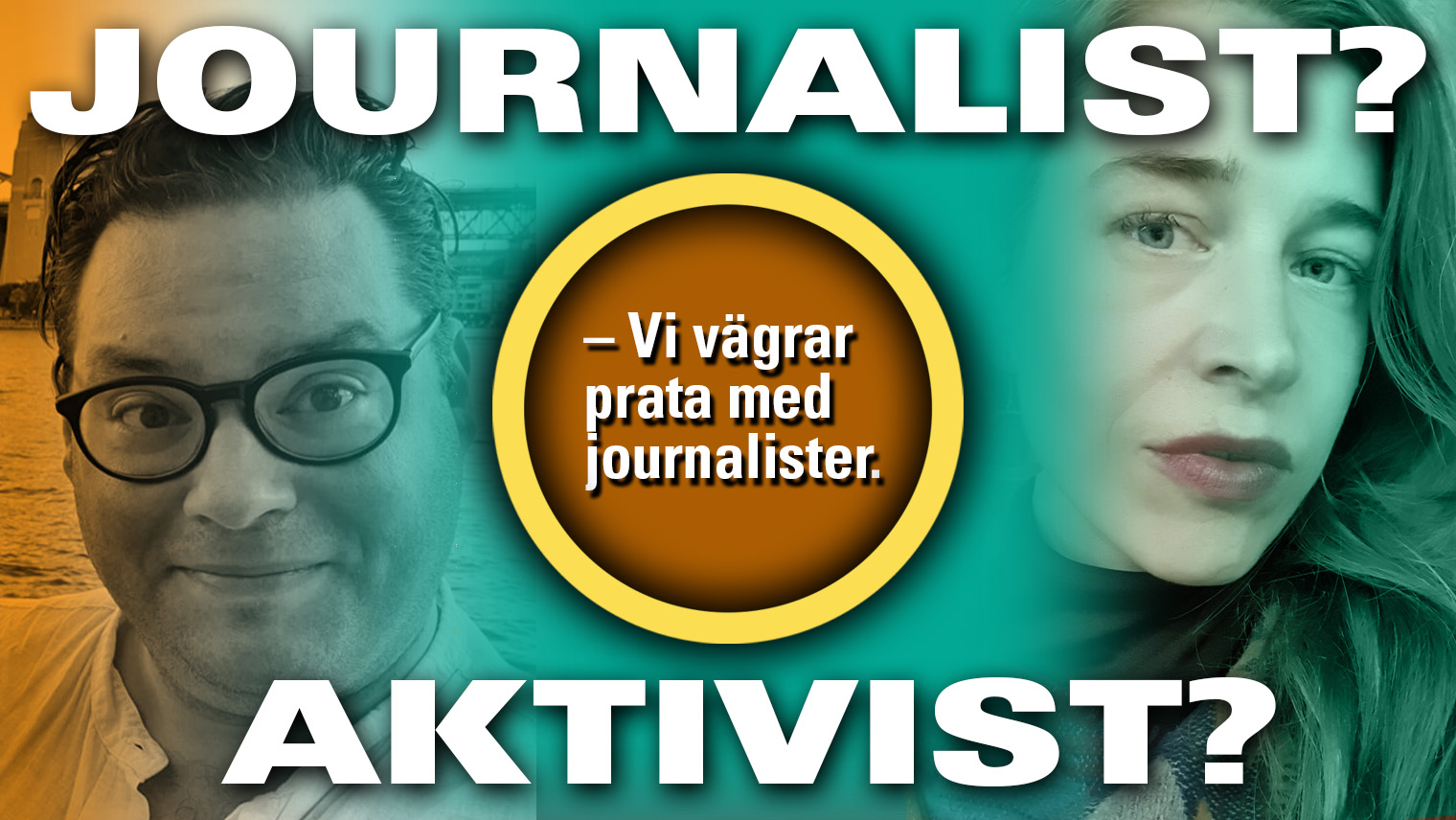
When Samnytt’s former responsible publisher, Mats Dagerlind, was put on trial for defamation, the process was covered by both the trade magazine Journalisten and the local newspaper Mark-posten. But after the district court dismissed the charges entirely, neither editorial team reported on the acquittal. The lack of follow-up raises questions about news values—and how the media image is shaped when accusations resonate more strongly than legal outcomes. Samnytt has contacted Journalisten and Mark-posten.
When a climate activist filed charges against Samnytt’s then-responsible publisher, several media outlets reported on the legal process. In their reporting, both Journalisten and Mark-posten labeled Samnytt with political tags, referring to it as “far-right” and “right-wing populist.”
When the case was later settled, the district court found that the publication did not constitute defamation. The charges were completely dismissed, and the former publisher was acquitted on all counts.
READ ALSO: They shaped the false narrative – now the truth is decided in the election
In a comment after the verdict, Mats Dagerlind described the outcome as a clear vindication and said it was “incredibly gratifying” to be acquitted after the process.
I will not answer any questions from Samnytt, because you are not a serious publication.
Csaba Bene Perlenberg, responsible publisher Mark-posten
Despite the legal process having come to an end, neither Journalisten nor Mark-posten have published any follow-up on the outcome.
READ ALSO: Mats Dagerlind on the victory against the climate activist: “Incredibly gratifying”
“I’m dealing with something here, so I have to hang up”
Reporting on accusations but not on acquittals can have consequences for how an actor is perceived by readers. The media image is shaped not only by what is published—but also by what is left out.
Especially in cases where reporting includes political labels, questions arise regarding the responsibility to provide an accurate and complete picture when the legal situation changes.
Why do you want me to answer that?
Hanna Lundquist, journalist at the trade organization’s magazine Journalisten
Samnytt contacts journalist Hanna Lundquist at the trade organization magazine Journalisten and asks the question:
You reported when Samnytt was sued for defamation. Why did you choose not to report when the court later acquitted on all counts?
– I’d have to look that up, because I don’t recall it. So I can’t answer offhand why we didn’t do it. I haven’t deliberately left it out, but I honestly don’t remember.
As a matter of principle, if you publish a story that someone is suing a newspaper for a substantial sum, and the newspaper is later acquitted, isn’t there a news value in reporting that it was cleared on all points?
– I need to review the case. It’s not fresh in my mind.
READ ALSO: Samnytt acquitted of defamation of climate extremist
But it’s not more complicated than that. One party sued, and the other party won.
– But I still need to review it.
It sounds like you don’t want to answer the question.
– Why do you want me to answer that?
READ ALSO: Prosecutor seized journalist’s computer and phone – blocked by court and now reported for misconduct
I’m writing a lot about journalism at the moment, and there’s a debate about slants…
– Then I would refer you to our publisher about the priorities we make. I’d need to look into it, because I don’t recall this case.
You don’t want to answer?
– I’m busy with something else, so I’ll have to hang up now.
“You are not serious”
When Samnytt contacts the responsible publisher Csaba Bene Perlenberg at Mark-posten, the unwillingness to respond becomes even more apparent.
READ ALSO: When public service and DN rot – and are replaced by free speech
Csaba Bene Perlenberg has a background primarily as an opinion journalist and has worked at several newspapers: Hallandsposten, Dagens Nyheter, GT and Expressen/Kvällsposten, Gefle Dagblad, Jönköpings-Posten, and several other editorial offices throughout the country.
Most recently, he served as deputy political editor at Helsingborgs Dagblad / Sydsvenskan. For five years, he was also chairman of the southern branch of the Swedish Association of Journalists.
You reported that…
– Wait, who are you writing for?
I’m a journalist and write for Samnytt, and you’ve previously published an article about…
– I will not answer any questions from Samnytt, because you are not a serious publication.
Perlenberg then hangs up the phone.
• You reported when Samnytt was sued for defamation. Why did you choose not to report when the court later acquitted on all counts?
• Do you believe it is consistent with good journalistic practice to report on allegations against an actor without following up when the legal process ends in a complete acquittal?
• You have described Samnytt as “far-right.” Given that you reported on the accusation but not the acquittal—how can readers be sure your own reporting is not ideologically biased?
Later in the afternoon, we received a brief response from Perlenberg stating that the article had been updated and placed behind a paywall. But we received no further answers or comments.
READ ALSO: Anger grows in the shadow of journalism’s betrayal
As of this writing, the trade magazine Journalisten has not yet responded to Samnytt.
At the same time, the chain of events illustrates the larger issue of how media images are formed. When allegations are given space but acquittals are omitted, suspicion remains—even when the court has given its verdict.
For the reader, it ultimately comes down not only to what is published, but to the whole picture. Trust in journalism is built on also reporting the outcome when a legal case reaches a clear conclusion.
When follow-up is lacking, it becomes possible to draw conclusions about what perspectives—and what political affiliations—may color the reporting.
Dagerlind: “The lowest demand for professional honor”
Samnytt’s former responsible publisher and now political editor Mats Dagerlind comments on the incident as follows.
“The conduct and response leave much to be desired with regard to press ethics and neutrality. One points the finger at someone as far-right and criminal, and then fails to report on acquittal. They accuse Samnytt of not being a serious newspaper, then themselves fall below the minimum standard of professional honor.
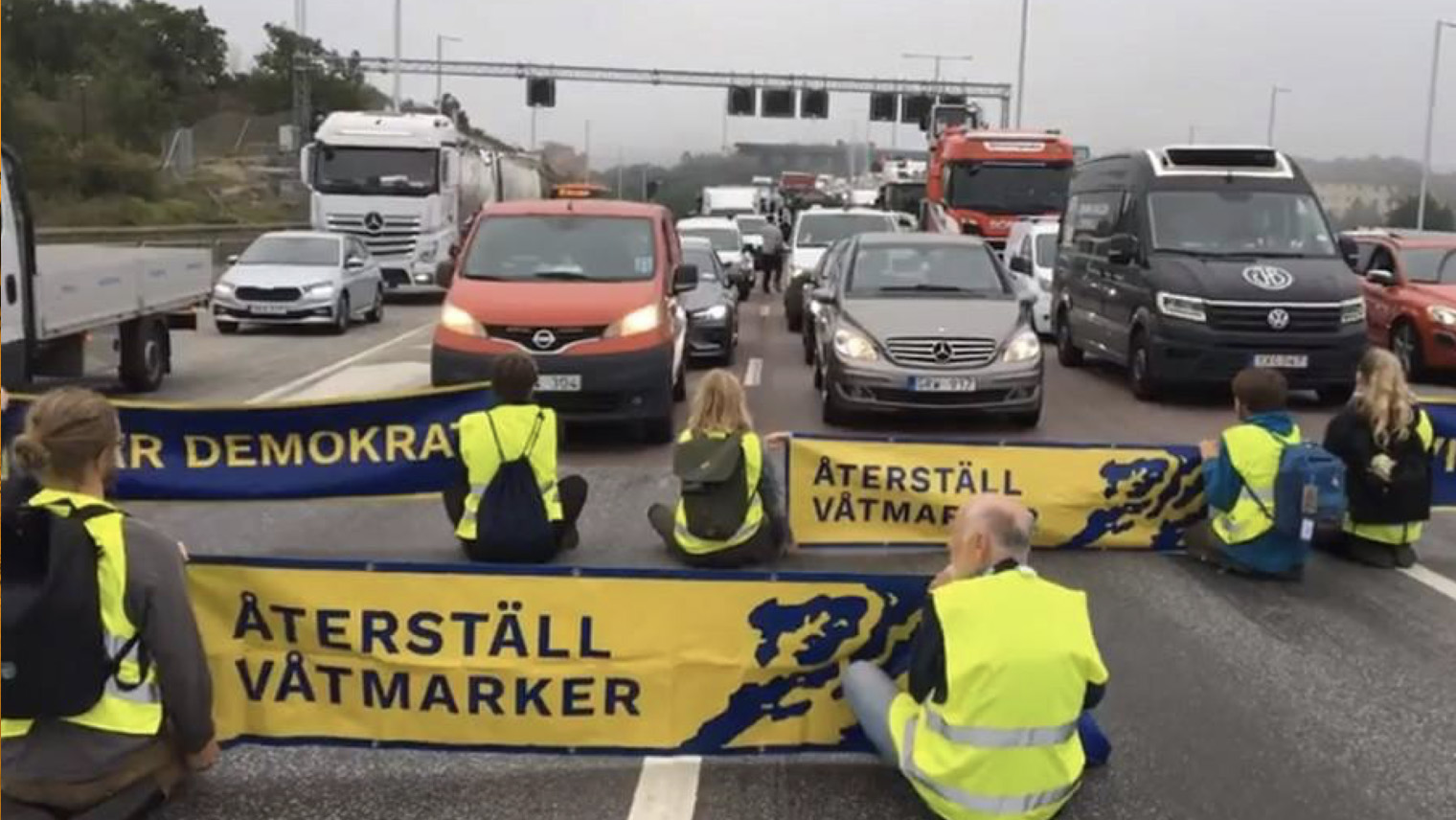
The choice to speak or remain silent and label the parties in this case also reflects a backward understanding of the law within the media establishment. I was the target of ‘lawfare’—sued in a civil case for investigative journalism by a representative of a group that has made a habit of, for example, blocking traffic as a method to draw attention to their message.”
READ ALSO: Ekeroth: “The new law could kill independent journalism”
Less than 1% of our readers support us
Hundreds of thousands read Samnytt, but only 1 in 100 contribute. Help us grow and continue delivering in-depth reports and investigations.
Without your support, Samnytt does not exist.
No advertisers. No government support. Only our readers. Thanks to you, Samnytt has published over 33,000 articles that have challenged the controlled narrative in Sweden.
123 083 33 50
Swish any amount
Thank you for reading and supporting Samnytt