The former German federal police officer and security analyst Jan Solwyn warns that European migration policy could lead to serious social conflicts. In an interview with the German newspaper WELT, he says that the EU’s migration system has effectively failed, and that Germany could face “civil war-like conditions” in major cities if the state attempts to implement a comprehensive returns policy.
Solwyn has about 15 years of experience with the German federal police and has worked both at Germany’s borders and within the European border agency Frontex. He has served, among other places, on the Greek island of Lesbos and at the Serbian-Bulgarian border.
After leaving the police, he moved to Israel and today works as a security analyst at the Institute for National Security Studies in Tel Aviv.
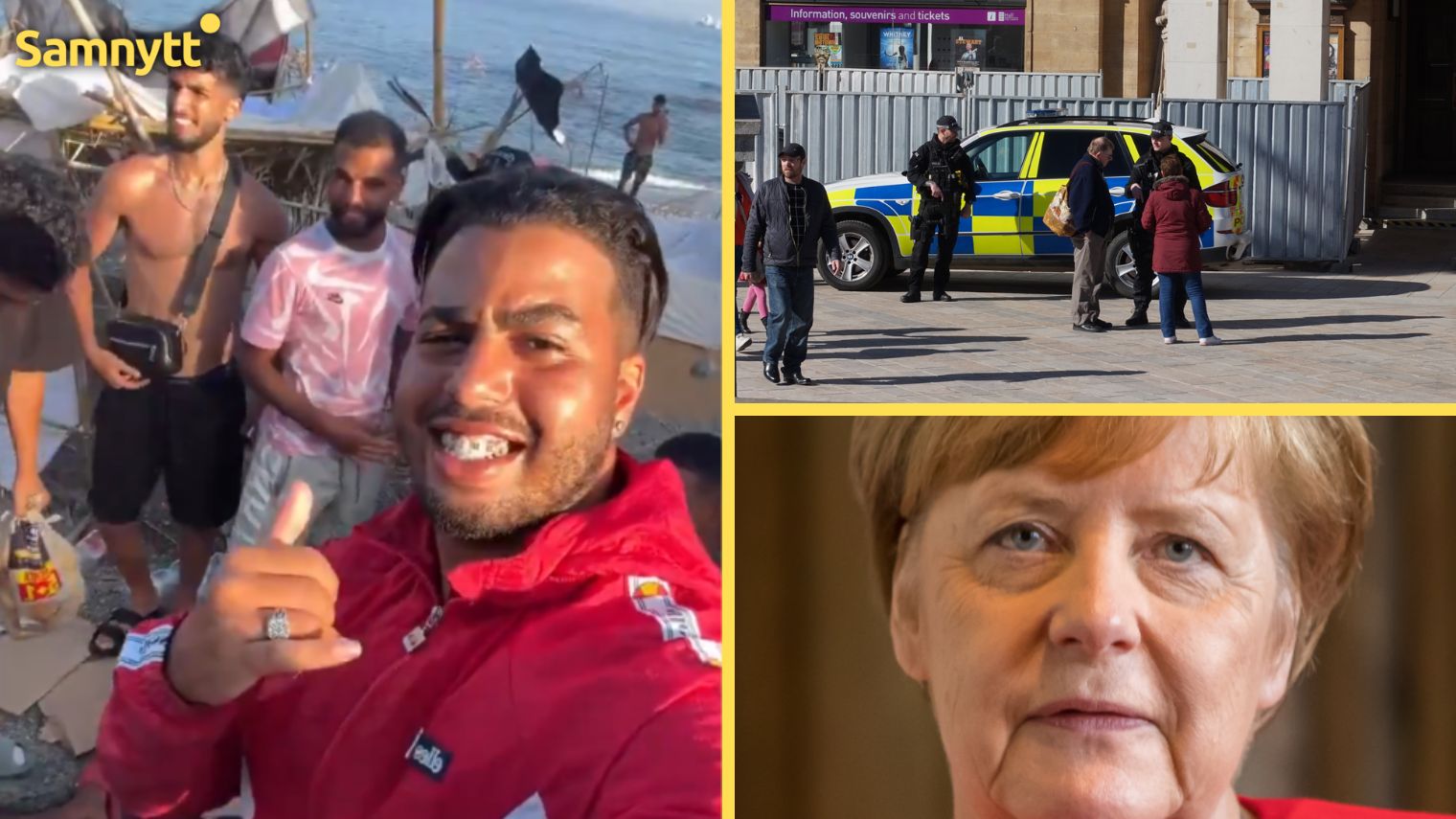
His starting point for criticism is that despite ten years of migration crisis, the EU still hasn’t solved the fundamental problems. Solwyn specifically refers to the situation in the Spanish exclave Ceuta, where a large number of migrants recently crossed the border.
For him, this development is a sign that the new Common European Asylum System (GEAS) hasn’t resolved the problems previously seen under the Dublin system. He argues that the same structural issues remain despite the new rules.
A central part of his critique concerns the Dublin Regulation itself. According to figures cited in the interview, Germany requested the transfer of around 594,000 asylum seekers to other EU countries between 2015 and 2025, since according to the rules, those countries were responsible for their asylum cases.
Only about 58,300 people were actually transferred. Solwyn uses these figures as an example of what he sees as a system that works poorly in practice.

Dysfunctional Schengen
He also describes how, during his time as a police officer, he encountered people who repeatedly managed to return to Germany even though another EU country was technically responsible for their asylum application. According to Solwyn, such cases illustrate the difference between the EU’s paper regulations and how the system works in practice.
The Schengen cooperation also receives heavy criticism. Solwyn claims that the abolition of internal borders was based on the idea that the EU’s external borders could simultaneously be controlled effectively. In his experience, this model has never fully worked. He points, for instance, to cases where migrants were able to move onwards through Europe after entering their first EU country.
Solwyn also criticizes Germany’s current border policy. He argues that national measures risk creating a chain reaction, where other EU countries do the same. If several countries start to stop or reject migrants at their borders, he believes there is a risk that people will be shuttled between member states instead.
READ ALSO: Alice Weidel: AfD will take power – here are the reforms the party leader wants to implement
His conclusion is that a real solution must occur at the EU level. According to Solwyn, the external borders need to be controlled jointly and asylum processing should more often happen at the EU’s external borders. Otherwise, he believes, the union risks being further weakened by the migration issue.
It is in this context that Solwyn brings up his most far-reaching warning. If Germany were to fully enforce existing rules and carry out extensive deportations, he believes that the level of conflict could become extremely high. He references experiences from the USA and warns of street confrontations, vandalism, and violence.
WELT summarizes his warning with the headline: “Then we have a civil war in German major cities.” In another WELT publication, his assessment is phrased as Germany possibly facing “civil war-like conditions.”
A Ticking Bomb
So, Solwyn’s argument is not that a German civil war is imminent, but that a harsh and sudden application of migration and deportation policies, given today’s situation, could, in his opinion, trigger serious violent conflicts in major cities.
He also warns that the unresolved migration issue could strengthen political extremes. If the problems persist without a functioning solution, according to his analysis, voters may increasingly turn to parties offering more far-reaching alternatives. Thus, migration becomes not only a question of border control and asylum management but also of political stability in Europe.
Jan Solwyn has previously made similar criticisms. In interviews during 2025, he described the European asylum system as dysfunctional and argued that asylum management must be concentrated at the EU’s external borders.
He has also spoken about his experiences with Afghan migrants at the Serbian-Bulgarian border and expressed concern about the frustration that can arise when expectations of life in Europe are not met.
Italians and Turks
After World War II, West Germany gradually became a country of immigration, although it did not describe itself as such for a long time. During the economic boom, foreign labor was recruited to fill worker shortages.
The first so-called guest worker agreement was made with Italy in 1955, followed by agreements with Turkey in 1961 and others. Up until the recruitment stop in 1973, about 2.6 million guest workers had come to Germany. Many stayed, and their families joined them later.
Migration then continued through family reunification, repatriation of ethnic Germans from Eastern Europe and the Soviet Union, and refugee immigration. After the fall of the Iron Curtain, large groups also arrived from the former Yugoslavia.
Thus, Germany already had a long history of migration before 2015, even though the political debate was for a long time characterized by the notion that guest workers were supposed to return to their home countries.
READ ALSO: Germany on the brink of ruin – now Germans will work until 73
The major shift came during the migrant crisis of 2015. The number of asylum seekers rose sharply, with hundreds of thousands of people, especially from Syria, coming to Europe. About 890,000 asylum seekers were registered in Germany. That same year, 476,649 asylum applications were filed while total immigration to Germany reached around 2.14 million people.
It was against this background that Chancellor Angela Merkel said the words on August 31, 2015, that would become associated with the migration policy: “Wir schaffen das” – “We can do it.”
Merkel presented the reception and integration as a great historic challenge, but argued that Germany had both the economic and demographic capacity to handle the situation. She also referred to the right to asylum and human dignity as fundamental principles.

Regrets Nothing
In retrospect, Merkel has not distanced herself from the decision. Already in 2016, she was asked if there was any decision during the crisis that she regretted. “Nein,” she replied, continuing to defend the need for a European solution and measures to address the root causes of the alleged flight.
In 2017, she again said she did not regret her policy, despite the high political price and the fact that it contributed to strong conflicts within her own party.
And as recently as 2025, ten years after “Wir schaffen das,” Merkel stood by her decision. In an ARD documentary, she said she did not regret letting migrants come into Germany, and that she had no doubt she would make the same decision again.
At the same time, she acknowledged that the decision had polarized German society and contributed to some voters turning to AfD.
A Quarter Have Migration Background
Today, about 21.8 million people in Germany have a migration background, corresponding to 26.3 percent of the population. The term encompasses those who themselves have immigrated since 1950, as well as people born in Germany with both parents being immigrants. Of this group, about 16.4 million have themselves immigrated, while 5.4 million were born in Germany with two immigrant parents.
The largest groups among those who have themselves immigrated are from Poland and Turkey, with about 1.5 million each. Next comes Ukraine with 1.3 million, and Russia and Syria with about one million each. Together, these five groups comprise about 6.3 million people.
At the end of 2025, about 14.1 million people did not have German citizenship, equivalent to about 17 percent of the population. The largest groups included Romanian and Polish citizens, followed by Italians, Bulgarians, and Croats.
Since 2005, the number of people with a migration background has increased from about 13 million to 21.8 million. At the same time, the share of the population has risen from 16 to 26.3 percent.
READ ALSO: German Christian Democrats open for cooperation with the left – to stop AfD