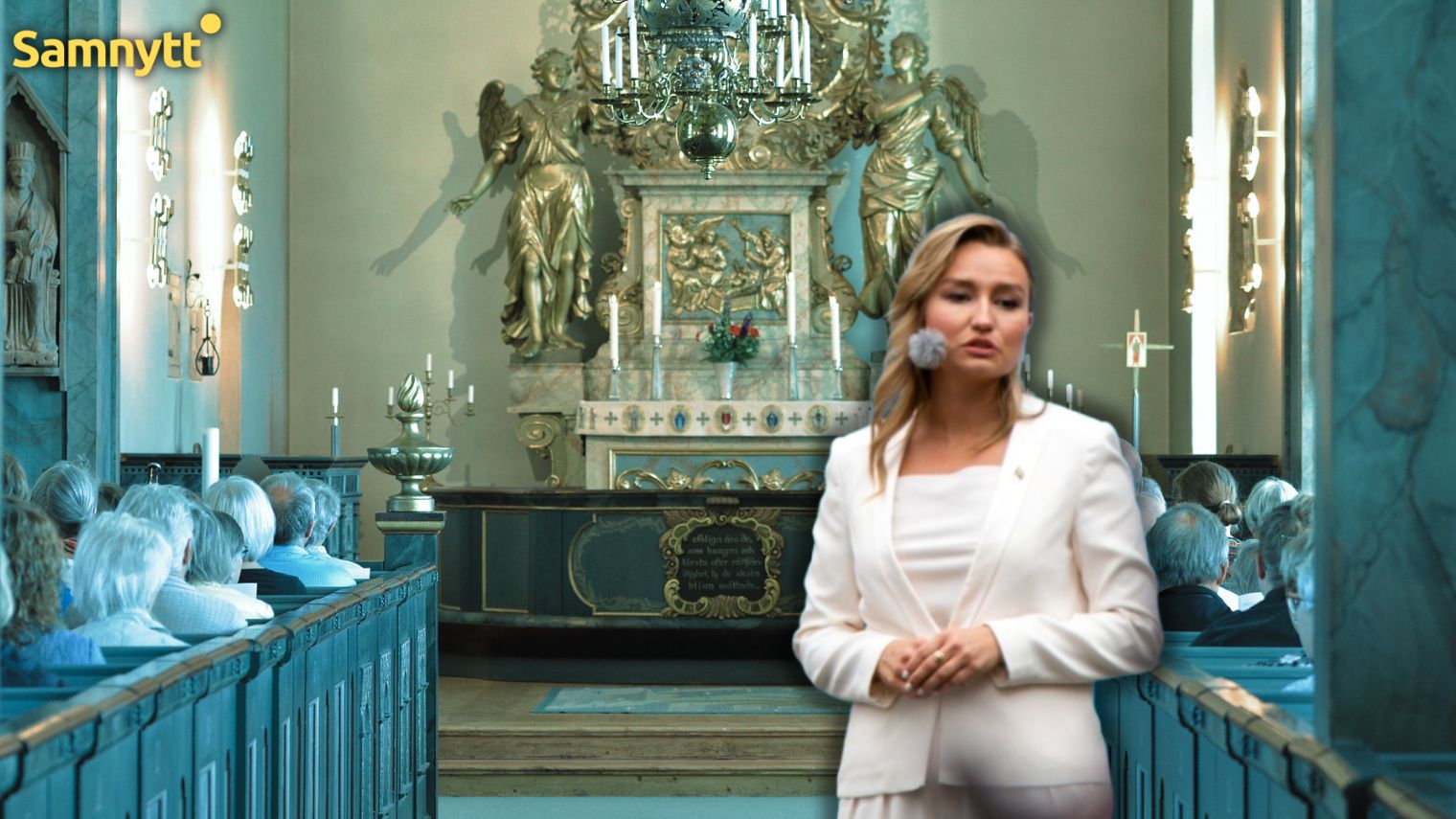
The Christian Democrats want to give the Swedish school system a clearer role as a transmitter of knowledge, order, and cultural heritage. In the party’s new school manifesto, there are proposals for behavior grades, school uniforms, and less screen usage – but also a clear message about the church. The Christian Democrats want to ensure that schools can hold traditional end-of-term ceremonies in churches and sing summer hymns.
On August 11, the Christian Democrats presented their new ten-point program “School Should Be School Again.” The party aims to shift the school debate away from issues of management and profits to what happens in the classroom: knowledge, discipline, teacher authority, and student responsibility.
One of the standout points is the view on Swedish cultural heritage. The Christian Democrats want schools to convey Swedish culture, history, and traditions to a greater extent. This includes, among other things, a literature canon and ensuring the opportunity for traditional school end-of-term ceremonies in church and singing of summer hymns.
The issue of end-of-term school ceremonies in church has been controversial for a long time. The Christian Democrats’ position is that schools should be able to use church venues for such ceremonies without the tradition disappearing due to uncertainty about the regulations. In a parliamentary motion from 2025, KD parliamentarian Kjell-Arne Ottosson argued for clearer rules regarding what should be permissible, particularly when it comes to religious elements.
READ ALSO: Ebba Busch presents action plan against Islamism: “Time for Sweden to wake up”
The Christian Democrats’ school manifesto also contains significantly more changes. The party wants teaching to be more teacher-led and to reduce the use of screens. Personal computers and tablets should not be distributed in lower and middle school, while books, handwriting, repetition, and focus should take a greater place.
The party also wants to complement today’s compulsory school attendance with a requirement for actual learning. The idea is that it shouldn’t be enough for a student to just be present in school – the student should also be expected to acquire the knowledge required. Those who do not reach sufficient knowledge should, according to the proposal, be able to remain in compulsory school, in some cases up to 18 years of age.
Order and discipline is another key element. The Christian Democrats want to introduce behavior grades where things like responsibility, respect, and the ability to follow school rules are assessed. The party also wants to expand the possibilities for detention, for example, for students who repeatedly ignore homework.

School Uniform
The Christian Democrats also want to open up for dress codes and school uniforms. Schools should be able to introduce uniforms if they wish, with the argument that it can strengthen unity, safety, and reduce social comparisons. The party also wants to try so-called No Excuses schools and Community schools, with high expectations, clear rules, and a strong focus on knowledge.
Another reform is 30 minutes of pulse-raising physical activity every school day in addition to regular physical education. The Christian Democrats also want to change school meals. Every day there should be at least one animal-based lunch option, and Swedish ingredients should be used as much as possible.
The party also wants to introduce parental contracts at all schools. The intention is to clarify what is expected from the school, students, and parents when it comes to, for instance, studies, rules of order, and conduct.
Criticism: “A Long List Without Ground Contact”
The manifesto has already faced criticism from schools. In a debate article in Vi Lärare, the Green Party’s education spokesperson Camilla Hansén and principal Markus Lindgren describe KD’s program as “a long list without ground contact.” They particularly highlight the proposals on uniforms, behavior grades, detention, parental contracts, screen bans, and No Excuses schools.
The critics argue that the policy risks micromanaging things that teachers and principals themselves should decide. Instead, they call for larger and more long-term resources, reasonable class sizes, and stronger student health.
The Swedish Teachers’ Union is also critical of behavior grades. The union’s chairperson, Anna Olskog, says that while teachers want increased order and security, behavior grades are not something that teachers have requested. She instead believes that resources and better conditions are needed to address the problems with study environment.
READ ALSO: Ebba Busch: Ban full-covering Muslim attire in public places