The UN is ramping up its demands on the Western world over the transatlantic slave trade. The United Kingdom is singled out as one of the countries that should consider extensive forms of compensation, while the UN wants to see new monuments, revised textbooks, and a public reinterpretation of history. Jamaica is now also taking the issue of British responsibility further, appealing directly to King Charles.
The transatlantic slave trade is evolving from a historical subject into an increasingly comprehensive political and legal demand placed upon today’s Western nations. In a new recommendation, the UN Committee on the Elimination of Racial Discrimination (CERD) claims that the 182 states party to the relevant UN convention have an obligation to undertake wide-ranging reparative measures for the consequences of the slave trade.
These could include financial compensation, public apologies, educational initiatives, and structural changes. This marks a clear shift away from previous discussions about whether today’s generations can be held responsible for actions committed hundreds of years ago.
The UN committee refers to the 1965 Convention on the Elimination of Racial Discrimination and argues that today’s obligations may arise from this, rather than from the international law in effect when the slave trade was ongoing. This is a significant shift.
SEE ALSO: 1.7 Million for Education on Swedish Slave Trade to Counter ‘Afrophobia’
Critics of reparation demands have long argued that today’s governments and citizens cannot be legally held responsible for actions that were not prohibited by international law at the time. CERD’s new recommendation instead seeks to establish a legal basis for compensation claims by pointing to the ongoing consequences of the slave trade.
The result could be that a historical debt gradually becomes a matter for modern state budgets, and the UK is in the crosshairs.
UN Wants to Change the UK’s Monuments
The recommendation also extends well beyond financial considerations. The UN intends for public spaces in former slave-trading countries to be transformed in order to better “honor the contributions” of people of African descent. This could mean new statues, artworks, memorials, and the renaming of public places.
School history instruction is also highlighted. According to the recommendation, textbooks and teaching materials should be reviewed to ensure what the UN describes as an accurate portrayal of the slave trade and its consequences.
In practice, this means the UN is not just discussing what Western countries should pay for their history but also how they should narrate it.
The UK Refuses to Accept Blame
The British government has so far resisted demands for financial compensation. When the UN General Assembly in March adopted a resolution describing the transatlantic slave trade and race-based slavery as “the gravest crime against humanity,” the UK abstained, as did all EU countries. 123 countries voted in favor and three against.
At the same time, London has emphasized that Britain acknowledges the brutality of the slave trade and slavery but opposes the idea that modern Britain has a legal responsibility to pay reparations for historical actions.
This is a position now facing increasing challenge.
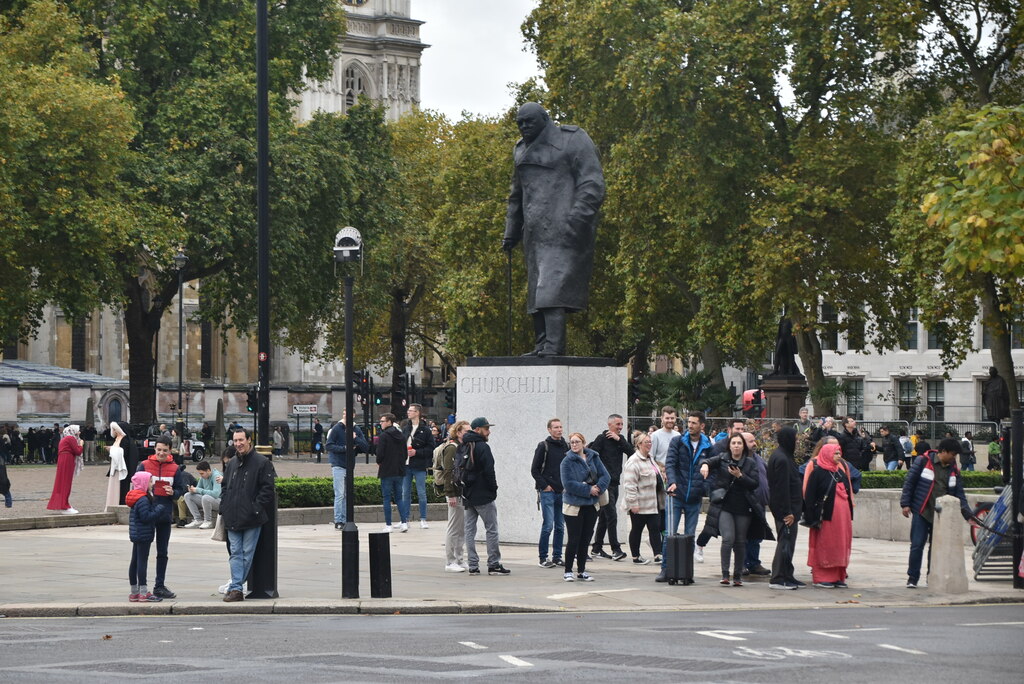
Jamaica Takes the Issue to King Charles
Meanwhile, the issue has gained a new legal dimension. This week, Jamaica submitted a petition addressed to King Charles III, demanding that three questions regarding the UK’s responsibility for slavery be referred to the Judicial Committee of the Privy Council.
Among other things, Jamaica wants to clarify whether the enslavement of Africans in Jamaica was lawful under English law, whether it constituted a violation of international law, and whether Britain today has a legal obligation to redress the damages.
SEE ALSO: Indictment: Terrorist Mother from Halmstad Sold Sex Slaves to Islamic State
According to its own statements, the Jamaican government is not asking for money through the petition itself. However, the country’s broader reparation campaign has estimated that the UK owes Jamaica about ten billion dollars.
The British resistance thus risks facing an increasingly organized international campaign—from governments, activist groups, and international institutions.
Companies and Banks May Also Be Drawn In
CERD’s recommendation does not stop at states. The UN committee has pointed out that companies, banks, insurance companies, universities, and religious organizations that historically participated in, facilitated, or profited from the slave trade should also contribute to reparative measures.
This could involve, among other things, opening historical archives and taking actions in proportion to their historical involvement. This opens the door to a much broader claim of liability than the traditional demand directed at states.
A New Front in the History Culture War
For Britain, the issue is thus no longer just about history books. It’s about money, monuments, schools, companies, national identity, and whether today’s generations should be seen as responsible for the actions of their predecessors.
The UN committee itself describes its new stance as a paradigm shift.
At the same time, it is important to distinguish between political and legal influence. CERD’s recommendation is not in and of itself a ruling that automatically forces the UK to pay reparations. But it may be used as an argument in future legal proceedings and provides new international support for governments and organizations demanding reparative measures.
It is precisely this development that makes the issue politically explosive. For the first time, it is not just historians debating what Britain did several centuries ago. The question now is what today’s Britons are expected to do about it.
Not a Western Monopoly
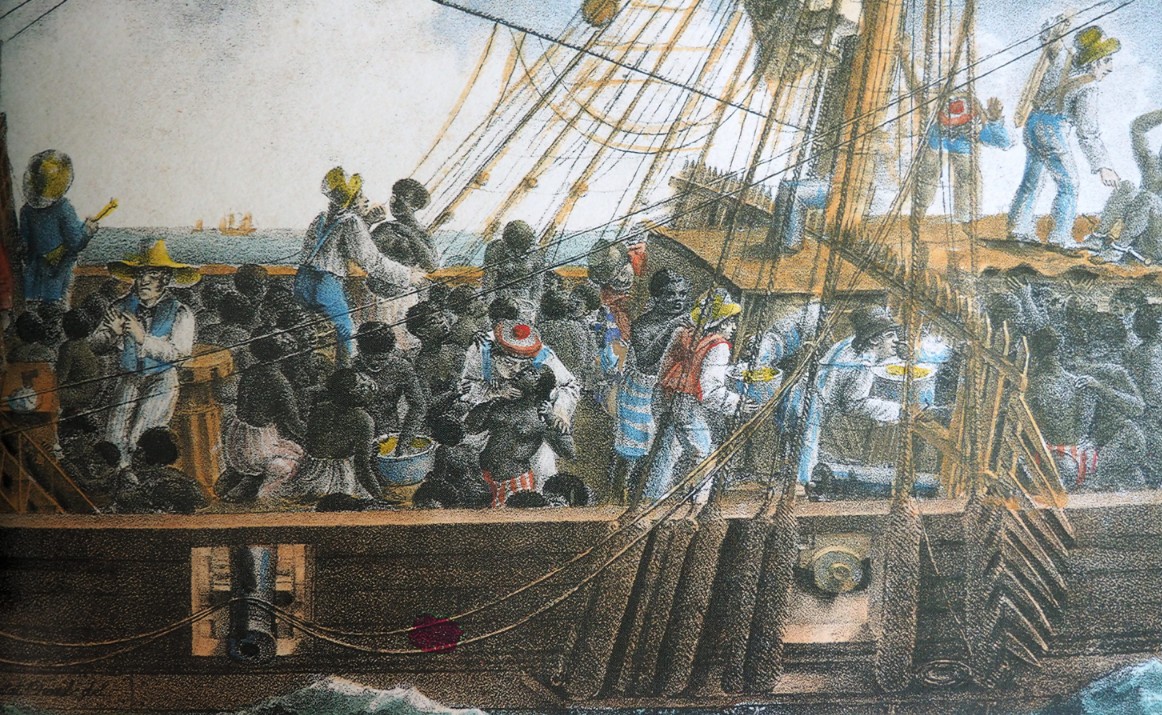
The debate about slavery also risks providing a greatly oversimplified historical picture. The transatlantic slave trade was brutal and extensive, but it was far from the only slave trade—and it did not begin with Europeans.
For centuries, African slaves were transported north across the Sahara desert, east via the Red Sea, and further across the Indian Ocean to the Middle East, North Africa, and parts of Asia. The so-called Trans-Saharan slave trade and traffic via the Red Sea and Indian Ocean formed parts of a broad network that brought enslaved people from Africa to the Muslim world.
Oxford Research Encyclopedia describes these routes as some of the oldest and most enduring systems of human trafficking in history.
SEE ALSO: After the Violence—Now London Will Be Cleansed of ‘Inappropriate’ Statues
The exact number of victims is disputed among historians. Estimates for the trans-Saharan trade, for example, run to several million people, while estimates for the East African trade via the Indian Ocean also approach several million.
A study from the London School of Economics reports estimates of about 10.6 million people transported across the Sahara between 1300 and 1880, although there remains significant uncertainty in the research.
It is therefore misleading to portray the history of slavery as a story in which Europeans alone created the system. In much of Africa, local rulers, warlords, and trade networks were involved in capturing people and selling them onwards. Enslaved Africans could then be transported to North Africa, the Middle East, the Arabian Peninsula, and other parts of the Muslim world.
Slavery Did Not Disappear Everywhere at Once
Another often-overlooked aspect is how long the slave systems survived after the transatlantic slave trade had begun to be abolished. In the 19th century, Britain became one of the most important forces behind the international campaign against the slave trade.
The Slave Trade Act of 1807 banned the British slave trade, and the Royal Navy subsequently began actively hunting slave ships. The West Africa Squadron intercepted more than 1,600 slave ships and freed about 150,000 Africans between 1808 and 1869.
Britain later abolished slavery itself in most of its empire through the Slavery Abolition Act of 1833. However, this did not mean that slavery disappeared overnight. The trade and practice of slavery continued elsewhere in the world for decades, and in some places much longer.
Still Exists in Parts of Africa and the Middle East
Modern slavery and human trafficking still occur in parts of Africa and the Middle East. In Libya, migrants have been reported subjected to forced labor, torture, extortion, and other forms of exploitation. New testimonies from migrants describe how people can be imprisoned and forced to work without pay by criminal networks and militias.
This does not mean that today’s Muslim or African populations can be collectively held responsible for historical or contemporary abuses. However, it is noteworthy how rarely that part of slavery’s history receives the same attention in Western political debate as the transatlantic trade.
As the UN now discusses reparations against European states, the historical big picture becomes particularly relevant. If today’s Western countries are to be held responsible for systems that date back centuries, then the same historical standard should reasonably be applied to all societies that participated in the slave trade—regardless of whether the trade crossed the Atlantic, the Sahara, the Red Sea, or the Indian Ocean.
The American Civil War
The American Civil War (1861–1865) was also closely connected to the issue of slavery. The secession of the southern slave states from the Union followed decades of conflict over the future of slavery, particularly the question of whether the system should be allowed to expand to new American territories.
When Abraham Lincoln was elected president in 1860, many southern leaders feared that slavery would eventually be restricted and abolished. Eleven slave states then left the Union and formed the Confederacy.
That slavery was a central issue is also apparent from the southern states’ own declarations of secession. For example, Mississippi explicitly stated that its position was “thoroughly identified with the institution of slavery.” Texas likewise described slavery as a central part of the social order it wished to defend.
Although “states’ rights” are often cited as a rationale for the war, the concrete right at issue was, to a significant extent, the right to preserve slavery.
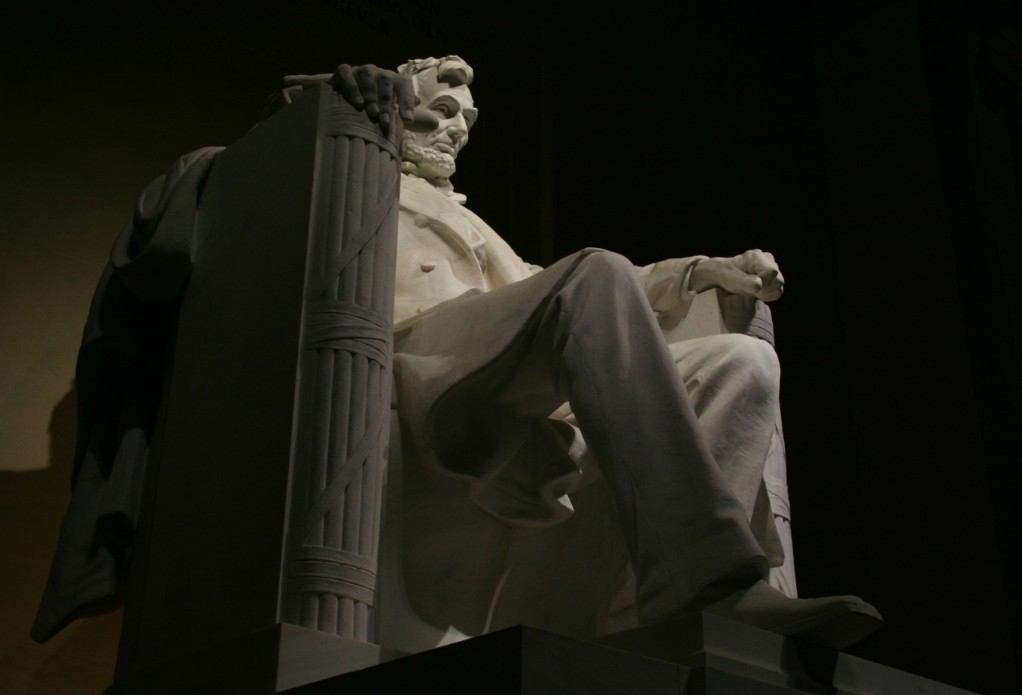
The war’s end was a historic defeat for this system. Abraham Lincoln’s Emancipation Proclamation of 1863 was a decisive step, and after the Union’s victory, the Thirteenth Amendment to the U.S. Constitution was adopted in 1865, abolishing slavery throughout the country.
The American experience thus also illustrates the distinction between the slave trade and slavery itself: the transatlantic slave trade had already been forbidden in the U.S. as of 1808, while the actual slave system continued to exist and became one of the key causes of the conflict that ultimately led to its abolition.
SEE ALSO: Ekeroth: Why Does No One Talk About the Arab Slave Trade?