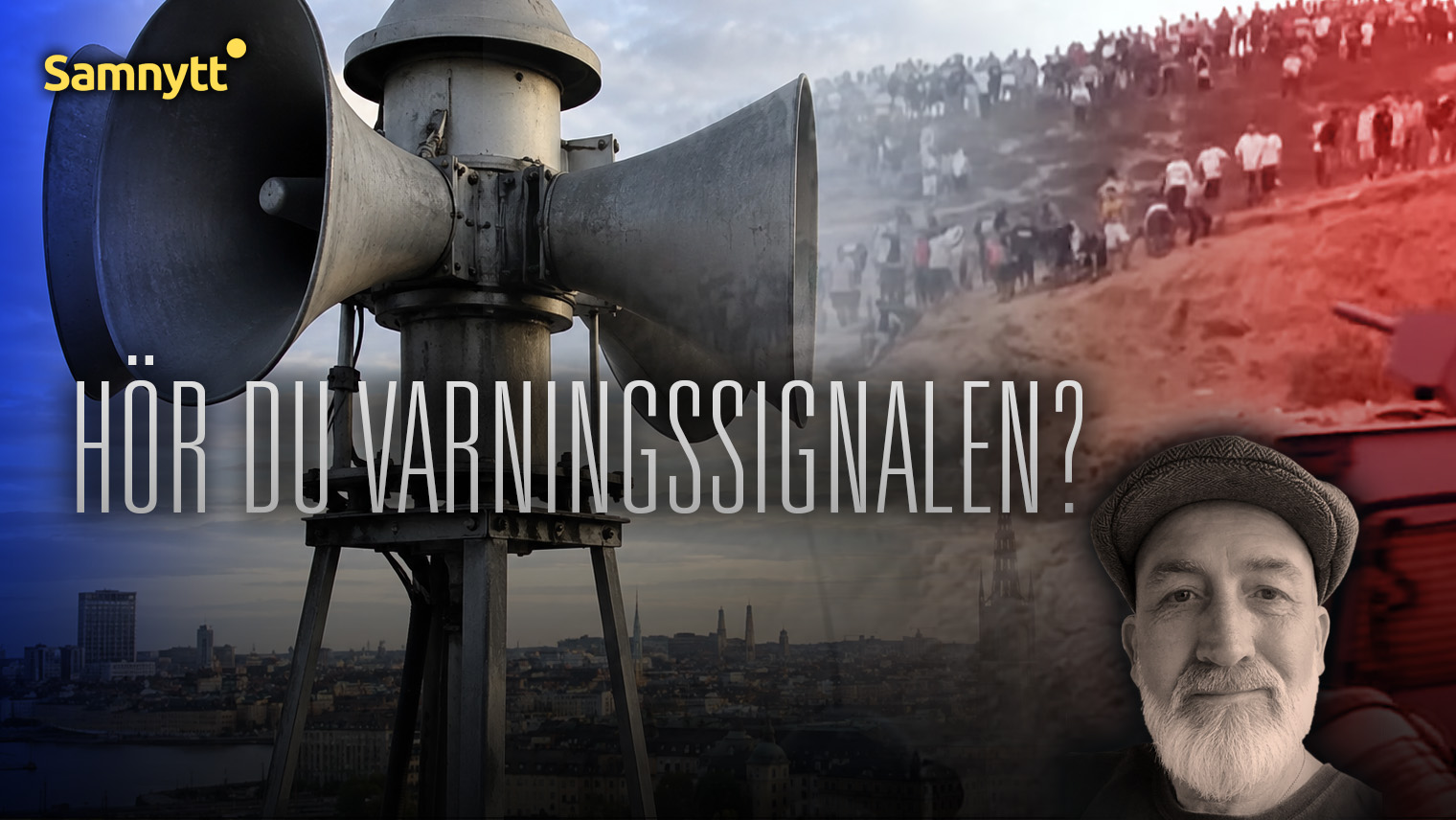
Four times a year, Hesa Fredrik wails across Sweden. The siren was built for a country that understood there were things worth defending—its borders, its territory, its people, and ultimately the nation itself. But while the sirens are still tested according to the calendar, Sweden has been subjected to an invasion that not only have our own leaders refused to warn us about—they have enabled it themselves.
Four times a year, Sweden starts to wail. At 3:00 PM on the first non-holiday Monday in March, June, September, and December, the signal sounds across the country. It’s a reminder of an old Sweden that still lingers.
I can hear it myself now, echoing over the heights of Södermalm today.
A Sweden that built bomb shelters, stockpiled supplies, and operated on the self-evident principle that the state’s main duty was to protect its people and its territory.
The signal once had a simple meaning—the danger could come. Be alert. Sweden must be defended. But today, the message feels almost reversed.
The Sirens Remain
There’s something almost touching about Hesa Fredrik. It belongs to the same Swedish social structure as preparedness storage, conscription, total defense, and the idea that the state actually had certain elementary duties toward its citizens.
The enemy could come across the Baltic Sea. The air raid alarm could go off. War could come to Sweden. Therefore, people needed to know what to do. Shelters were built. Evacuations were planned. Food, medicine, and fuel were stockpiled.
An entire society was organized around the insight that Sweden was something concrete. A territory with borders, a people, a history, and a future that it was the state’s damned duty to defend.
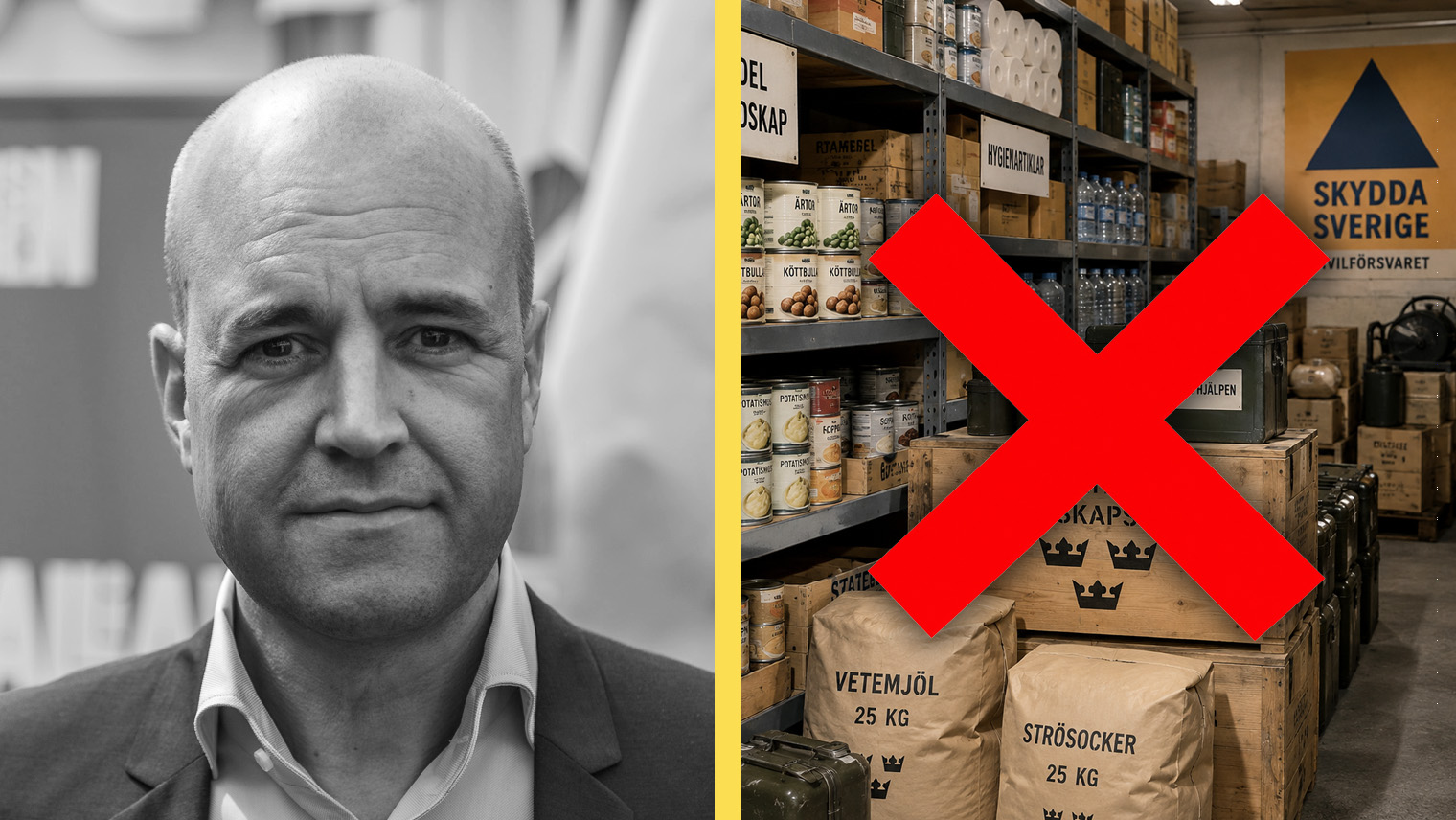
Then something strange happened. Sweden kept the sirens. But lost the understanding of what a border is for. And Hesa Fredrik Reinfeldt destroyed the preparedness storage and protections we had.
The Invasion That Wasn’t Allowed to Be Called an Invasion
Within just a few decades, Sweden has undergone a demographic and cultural change unparalleled in modern Swedish history—or anywhere in the world, for that matter.
Millions of people have come from countries and cultures far from Sweden. Entire residential areas have been transformed. Parallel societies have emerged.
We only need to look at Spain to understand what a border really means. At the end of July, nearly 80,000 people from Morocco entered the Spanish enclave Ceuta in just two days, almost exclusively young men. Now Spaniards are protesting against the government’s handling, while residents in Ceuta have marched right up to the border and demanded control and deportations. These events show the brutal simplicity of what Europe’s political elite have tried for so long to make abstract—a border that is not enforced eventually ceases to be a border.
Jonas Andersson
Clan structures have been established. Islamism has taken root. Mosques and Islamic organizations have become political power players. Gangs have taken over drug markets, blown up residential buildings, and shot people on streets and squares.
READ ALSO: Over 67,000 People Linked to Gang Crime in Sweden – Government: “Serious Situation”
And yet, for decades we were told there was really nothing to worry about. On the contrary, those who raised the alarm were the problem.
Those who asked how many people Sweden could actually take in were xenophobic. Those who talked about cultural conflicts were racist. Those who warned about Islamism were suspected of being Islamophobes.
Those who pointed out the link between migration, segregation, and crime were accused of pitting groups against each other. It became a strange kind of inverted air alarm.
READ ALSO: US Secretary of Defense: Europe’s Beaches Are Being Stormed by Migrants
We need only look at Spain to understand what a border really means. At the end of July, nearly 80,000 people from Morocco entered the Spanish enclave of Ceuta in just two days, almost exclusively young men.
Now Spaniards are demonstrating against the government’s handling, while residents of Ceuta have marched right up to the border and demanded control and deportations. These events show the brutal simplicity of what Europe’s political elite have long tried to make abstract—a border that isn’t maintained eventually ceases to be a border.

It becomes just a line on the map. And when tens of thousands of people can cross it in a few hours, the question of who actually rules the territory suddenly becomes far from academic.
Do Not Fear the Development – Fear Those Who Describe It
Don’t distrust the politicians who opened the door. Distrust the person who asks where the door leads. Don’t worry that your country is changing before your eyes. Worry that someone calls the change a problem. Just stay put and keep quiet!
The same political system that now wants to teach me how many liters of water to keep in my closet in case Vladimir Putin comes across the Baltic Sea has, for decades, pursued a migration policy where Sweden’s own population structure has changed to a historical extent. One is called a potential attack. The other was long called enrichment. I call it invasion.
Jonas Andersson
That’s why Hesa Fredrik has become such a perfect symbol for our time.
READ ALSO: Professor’s dark forecast: Swedes in the minority within a few decades
The siren still wails over rooftops. The authorities tell us to be alert. Brochures are sent out. We are encouraged to stock up on water, canned food, batteries, and hand-crank radios. We are told to be ready if the Russians come. And we should be.
Russia is a real security threat, and a country that cannot defend its borders is ultimately not an independent country. But it’s hard not to see the irony.
The same political system now wanting to teach me how many liters of water to keep ready in case Vladimir Putin comes across the sea has, for decades, carried out a migration policy where Sweden’s own population composition has changed on a historic scale.
READ ALSO: The elite hides behind walls—the people pay the price for their multiculturalism
One is called a potential attack. The other was long called enrichment. I call it an invasion.
Not because the people who came here marched over the Öresund Bridge in uniform. Not because there was a foreign general at the front. And not because every immigrant is an enemy.
I use the word because the result must be described, even when the method differs. A country can change through war. It can be conquered with tanks and soldiers. But a country can also be invaded when its own political class refrains from defending its borders and over a long period allows migration on a scale that changes the country demographically, culturally, and socially.
The latter is, in some ways, even stranger. Because then no enemy needs to break down the border barrier. We open it ourselves. And that’s what the politicians have done, entirely against the will of the Swedish people. Not least against the invasive ideology of Islam.
READ ALSO: Police officer Maria Rosander warns of Islamization: “Society is being eaten from within”

Who Actually Warned Sweden?
And here lies perhaps the most disturbing part of the story. Sweden did not lack warning signals. They blared everywhere. Teachers spoke of schools where the Swedish language disappeared. Police officers spoke of clans and criminal networks.
READ ALSO: The societal shift no one voted for – the concrete traces of Islamization in Sweden
Social workers spoke of honor culture. Paramedics spoke of threats and violence. Dental specialists sounded the alarm about migrants’ age deception. Women spoke of insecurity. Jews spoke of anti-Semitism. Entrepreneurs spoke of extortion, theft, and crime.
Hesa Fredrik was once the state’s signal to the people that danger was here. Today, it is the people trying to warn the state. On Sunday, it’s election day. My advice is therefore simple—listen carefully to Hesa Fredrik. But also understand its new meaning. Don’t just listen for the enemy who may one day come across the Baltic. Also see the forces that have already entered our borders—and the politicians who for decades opened the door for them.
Jonas Andersson
Ordinary people saw their neighborhoods change before their eyes. The warning system worked perfectly well.
The problem was that those in power didn’t want to listen. And while people were warned not to listen to those sounding the alarm, the developments continued. That’s why I now hear something completely different when Hesa Fredrik begins to wail over Stockholm.
I no longer hear just the old civil defense signal. I hear the echo of a country that once knew it had something to defend.
READ ALSO: Eva Vlaardingerbroek to Samnytt: “Remigration is Europe’s last peaceful opportunity”
A country that built bomb shelters for its people, but decades later seemed to forget why it had borders at all. And I hear the modern Swedish authority’s perhaps most important message—everything is under control and don’t look too closely at what is happening around you.
And above all—don’t trust your own eyes.
Hesa Fredrik was once the state’s signal to the people that danger was here. Today, it is the people who try to warn the state.
On Sunday, it’s election day. My advice is therefore simple—listen carefully to Hesa Fredrik.
READ ALSO: Demographer to the Parliament: “Only remigration can save Sweden”
But also understand its new meaning. Don’t just listen for the enemy who may one day come from across the Baltic Sea. Also, recognize the forces already inside our borders—and the politicians who, for decades, opened the door for them.
Because Hesa Fredrik was once the state’s warning to the people. Today, it should be the people’s warning to the state.