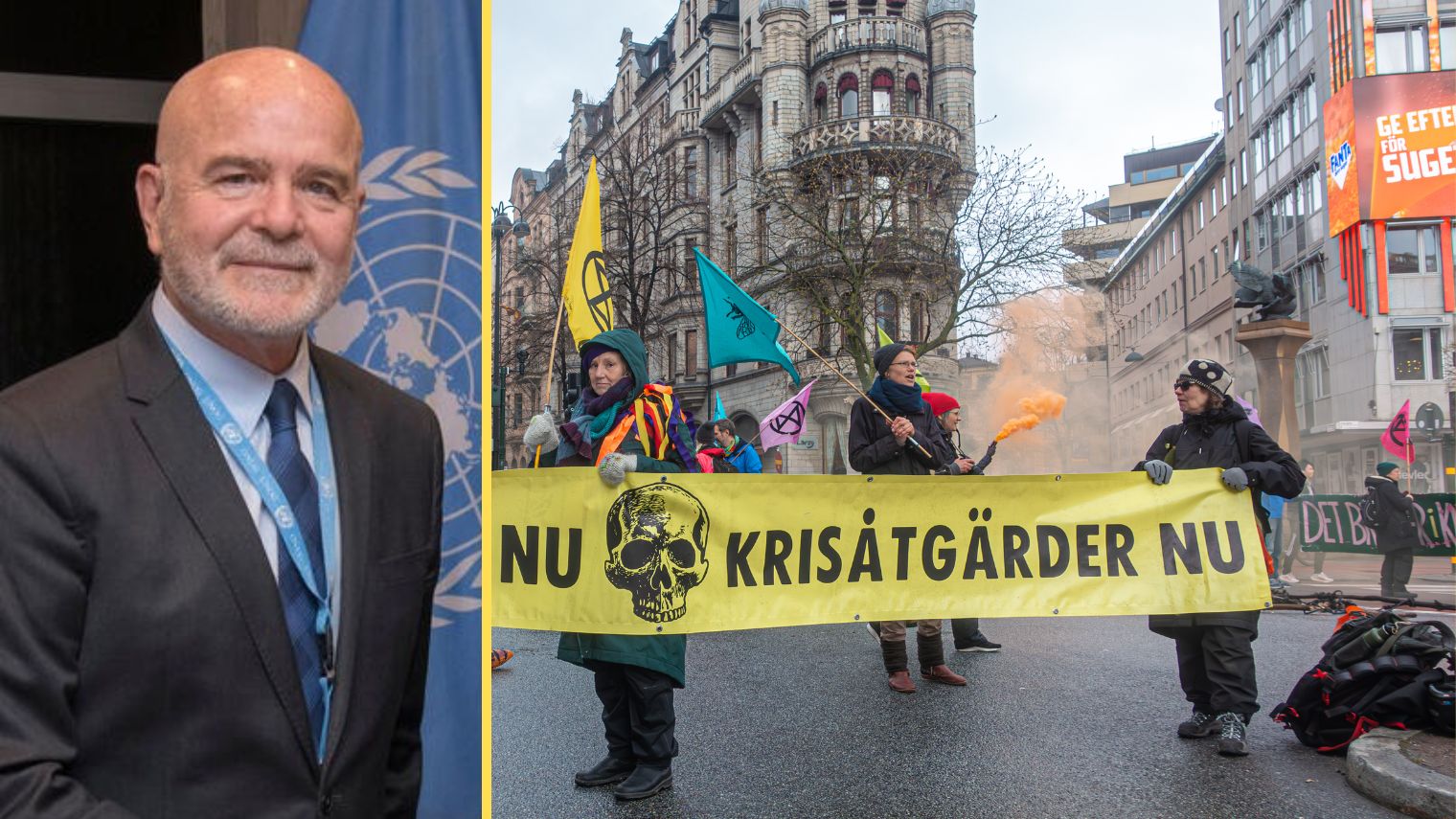
As the trial in the case known as “Rebel Mother vs. the State” approaches, international attention is now being drawn to how the case has been handled in Sweden—both politically and in the media. A UN representative argues in a submission to the court that media reporting risks creating “negative narratives” about climate activists and that Sweden must counteract this.
The case, which will begin in Stockholm District Court on May 18, concerns a former employee of the Swedish Energy Agency whose security clearance was revoked, after which she left her position. The woman is represented by the ST union, which claims that the state violated her rights connected to freedom of expression and freedom of assembly.
The background to the conflict is a report in the magazine Fokus which revealed that a person connected to the climate network Rebellmammorna—a branch of the broader climate extremist movement Extinction Rebellion—had held a security-classified position with access to information regarding Sweden’s gas supply.
ALSO READ: Climate extremists infiltrate the Swedish Energy Agency
The revelations quickly attracted attention, as security-classified positions normally have strict requirements for vetting and suitability. Shortly after the report was published, the woman’s probationary employment at the Energy Agency was terminated.
The event quickly triggered political reactions and led to debate about security checks in government agencies, especially those managing critical infrastructure. The issue was also highlighted in several other media outlets, including Svenska Dagbladet, and developed into a broader discussion about the line between political engagement and security-clearance within the public sector.
ALSO READ: Chancellor of Justice: Right for the Energy Agency to fire “the rebel mother”
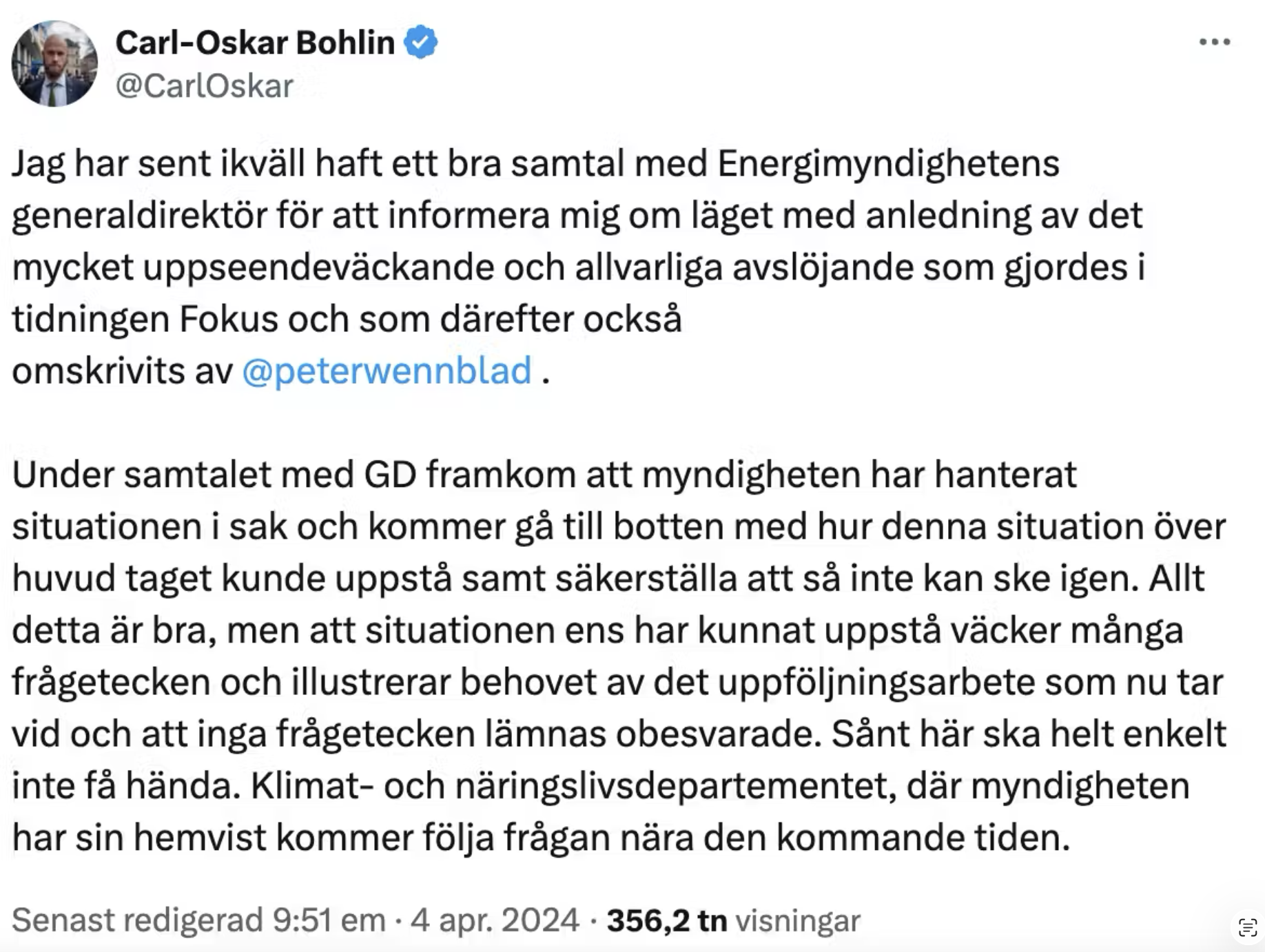
The Minister for Civil Defence, Carl-Oskar Bohlin, also commented on the case publicly on social media, which later resulted in accusations of ministerial interference and a constitutional complaint from the Left Party.
UN Attempts to Influence Sweden
Ahead of the legal proceedings, Michel Forst, the UN Special Rapporteur for the Aarhus Convention—a UN agreement that, among other things, regulates the public’s right to insight and participation in environmental matters—criticizes both political statements and media coverage. In a submission to the court, he points to reporting in Fokus and Svenska Dagbladet, among others, according to Fokus in a new article.
Forst refers to Article 3.8 of the Aarhus Convention and argues that activism within the scope of peaceful climate protests is protected from reprisals. He also states that Swedish authorities and courts have a responsibility to ensure redress in cases where individuals have been subjected to improper measures.
ALSO READ: Top UN official: Sweden harasses climate extremists
In his analysis, Forst goes further, writing that both media coverage and political statements have helped create “negative narratives” about climate activists, which he claims can have consequences for their safety and influence. He also raises the possibility that this could conflict with the Aarhus Convention.
Criticism Against the UN: “Bizarre Reasoning”
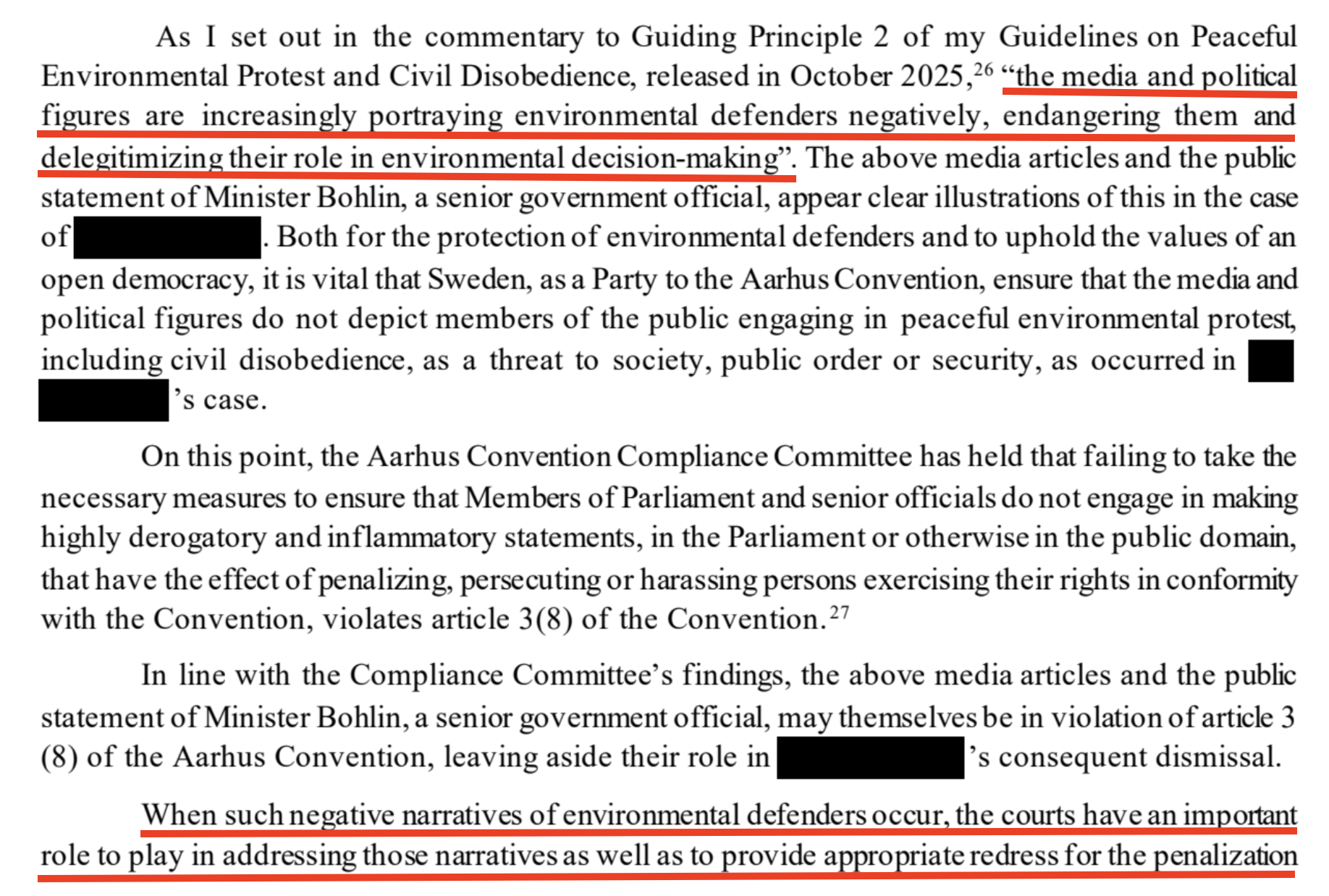
The statements have attracted sharp criticism from several quarters within the media and politics, as well as from freedom of expression expert and lawyer Nils Funcke. He dismisses the arguments, saying that the UN rapporteur confuses issues of agency decisions with journalistic scrutiny.
– It is almost bizarre how the UN representative reasons. He wants to protect her freedom of expression—but simultaneously attacks the freedom of expression belonging to Fokus and Svenska Dagbladet. It’s unprincipled, Funcke tells Fokus.
Funcke further emphasizes that the central point in the case is the agency’s actions regarding how the employment ended, not media coverage.
The freedom of expression expert also rejects the idea of state intervention in media content, as the UN rapporteur calls for, suggesting it resembles the approach of authoritarian regimes. He underscores that the state cannot step in and control media content.
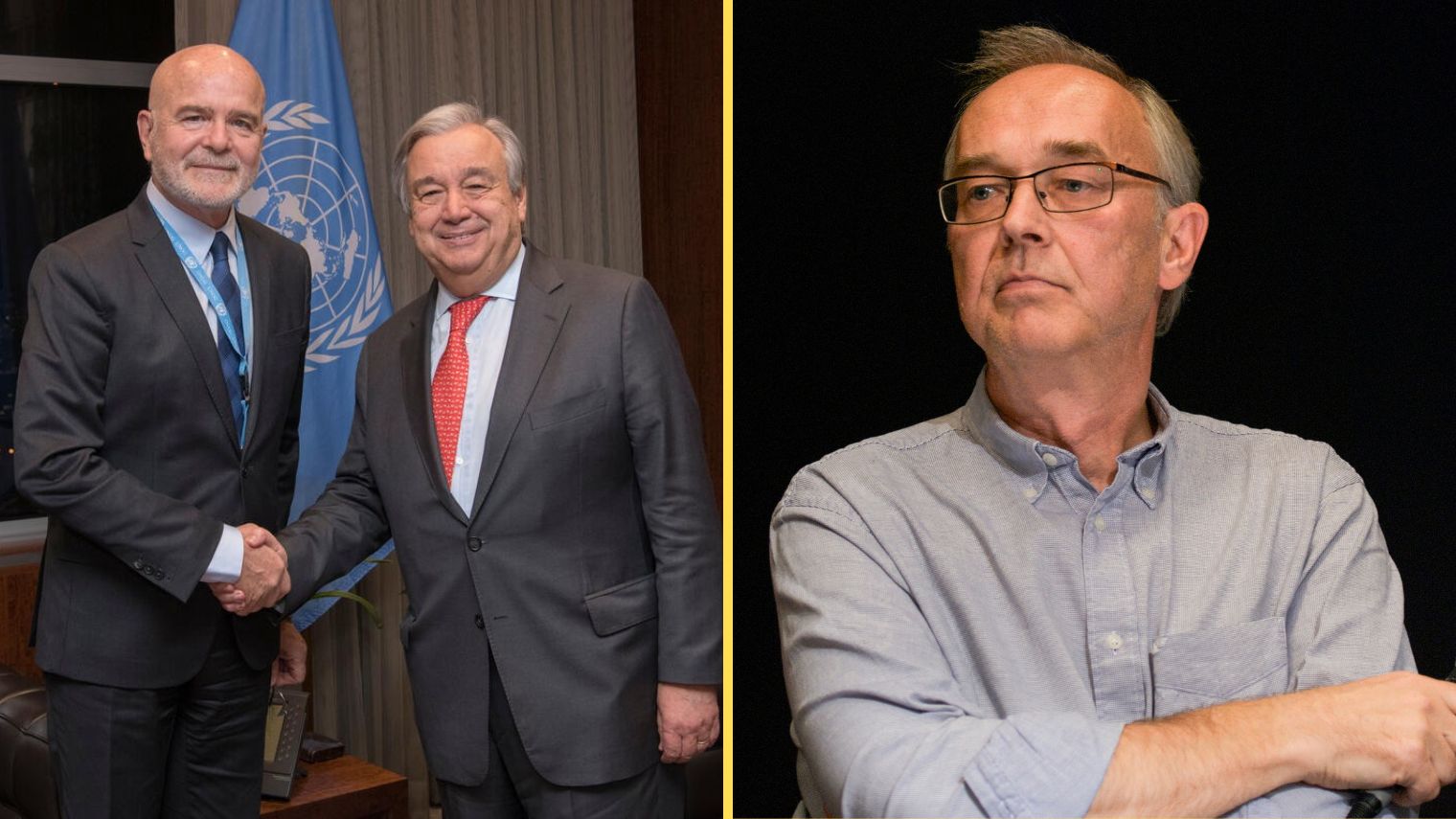
Thomas Mattsson, former Editor-in-Chief of Expressen and now CEO of the industry organization Utgivarna, also criticizes the UN rapporteur’s conclusions, arguing that they lack legal basis. He also describes the statements as problematic for trust in international institutions.
– Of course, constitutionally protected Swedish media such as Fokus and Svenska Dagbladet are allowed to report on possible security risks within the Energy Agency.
Minister for Civil Defence Carl-Oskar Bohlin likewise dismisses the arguments put forward by UN top official Michel Forst, saying they contradict Sweden’s constitutional view of freedom of expression.
ALSO READ: Ekeroth: “The Supreme Court’s acquittal of the climate extremists is a legal disaster”