Many university teachers feel that students’ reading and writing proficiency in Swedish has deteriorated. At the same time, more and more students are using AI tools to replace traditional reading of course literature. These are some of the conclusions in a couple of new reports.
Last year, Statistics Sweden (SCB) and the Swedish Higher Education Authority (UKÄ) were tasked with mapping how university students’ reading comprehension has developed. SCB’s report reveals that four out of ten university teachers feel there has been a decline in Swedish reading and writing competence over the past five years.
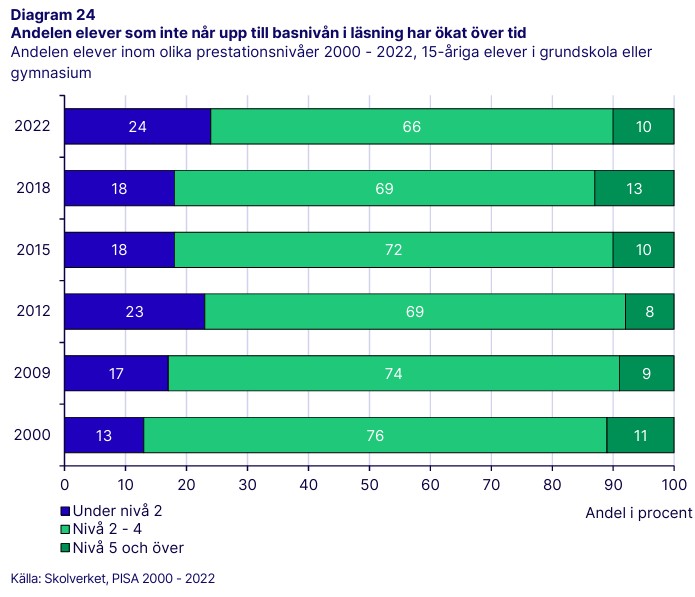
However, no significant deterioration in reading comprehension is seen when it comes to grades, university admissions tests, or performance levels over time. Nor do international studies (PIAAC and PISA) show any decline over time—instead, there is a significantly increased spread in student results and diminishing equality.
READ ALSO: Report: Swedish students most exposed to threats and violence in school
A significant proportion of teachers also state that they have adapted their teaching in response to students’ difficulties in absorbing information.
– Even among university students, the reading crisis is becoming increasingly apparent, as many teachers testify. This is a concerning development because it risks affecting students’ knowledge development and their ability to use course literature, says Minister for Upper Secondary Education, Higher Education and Research Lotta Edholm (L).
AI Tools
UKÄ’s report shows that the role of course literature at universities is undergoing a major transformation, as students use more alternative sources of knowledge, including AI tools, which replace traditional reading. At the same time, the report shows that course literature is still important for achieving a deep understanding of the subject, and that future adaptations of course literature will be required.
– UKÄ’s mapping points to a decrease in students’ habit of reading longer texts, and required reading seems to be completed to a lesser extent as well. Overall, I conclude that we need to meet this development early, already in preschool and primary school, to ensure that future students can benefit from their education in a good way. Schools must get back to basics, says Minister Lotta Edholm.
Worrying Development
Marcus Falk Johansson is program director for the Social Work program at Dalarna University.
– I think this is a worrying development, he tells public radio, and believes that it is not only about education but also about democracy.
To turn things around, he believes that more cooperation with upper-secondary schools is needed.
Immigrant Girls More Ambitious
According to SCB statistics from 2024, it is young women with immigrant backgrounds who continue their studies after upper-secondary school to the greatest extent.
In a summer 2024 feature, public television spoke with 24-year-old Sabad Mohammed, who was illiterate when she came to Sweden from Somalia at the age of ten and has since earned a social work degree.
– When you are under a lot of pressure, it leads to not wanting to disappoint your parents or let down your family, said student Fayoo Kasim.
According to Carina Mood, professor of social research at Stockholm University, it takes longer for students with foreign backgrounds to complete their university education, something she believes may be due to them often making tougher educational choices based on their grades.
READ ALSO: Muslim students not allowed to pray at school – file complaint