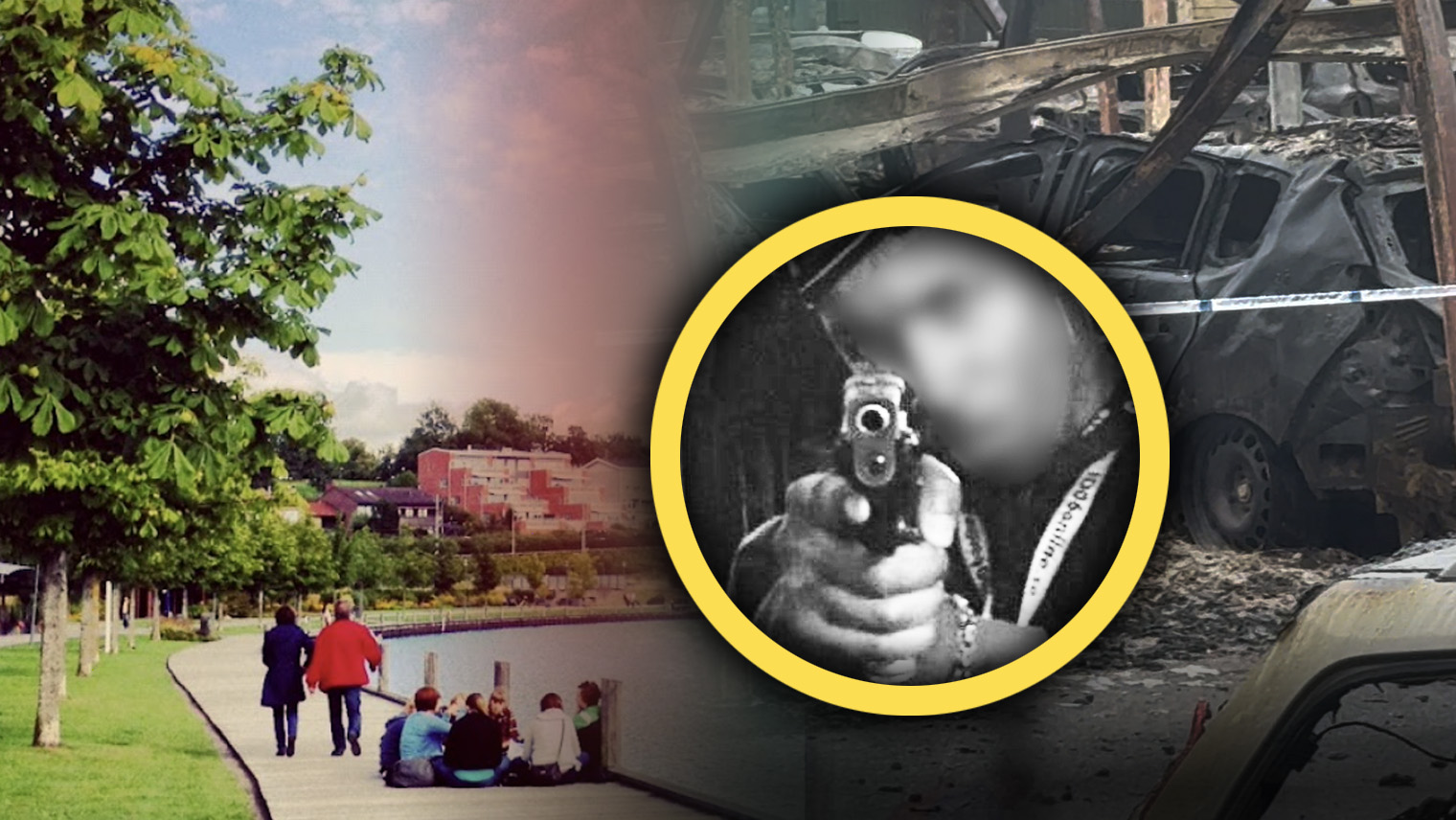
On Furutåvägen in Teleborg, Växjö, residents describe an everyday life that has, in a short time, become something entirely different from what it once was. Fires, slashed car tires, drugs in storage rooms, and young gangs acting in a threatening manner have prompted residents to react. One of them is David Madlin, who has lived in the area for over 20 years. Another is Viktor Skog, who started a petition and gathered neighbors in protest. But when the residents’ accounts meet the police, a clear divide emerges—the residents speak of fear and decline, while the police talk about improved statistics, safety surveys, and a development that is not heading in the wrong direction.
When Samnytt contacts David Madlin, a chef originally from Lebanon who has been living in the Växjö suburb Teleborg for over 20 years, he doesn’t hesitate to describe the situation.
– It’s an unsafe area, he says.
He has lived on Furutåvägen for a long time and says the development has been dramatic. Before, he says, you could move freely in the area even late at night. The door could even be accidentally left unlocked without any problems. Today, it’s a different story.
– I don’t know if we live in Sweden anymore.
ALSO READ: Interview with police: “Many areas are TOTALLY lost”
What made him react particularly strongly was an incident about a month and a half ago. He and his wife were on their way home late at night after visiting relatives and had stopped for food on the way. When they parked the car and were about twenty meters from the entrance, several young men came running towards them.
– There were five guys. Young, I guess 17 to 20 years old.
According to Madlin, they acted aggressively and seemed to be under the influence.
– I could see it in their eyes. They were completely gone.
Were they aggressive towards you?
– Yes, I tried to shield my wife and back away from the situation. At the same time, I got the sense that the men knew who I was. They shouted that I was the one who had called the police.
He called the police that night as well, but didn’t feel he received any real help from the authorities. That’s exactly the kind of experience that comes up again and again in his story—that the problems are concrete, persistent, and visible, but the response from above does not match the seriousness.
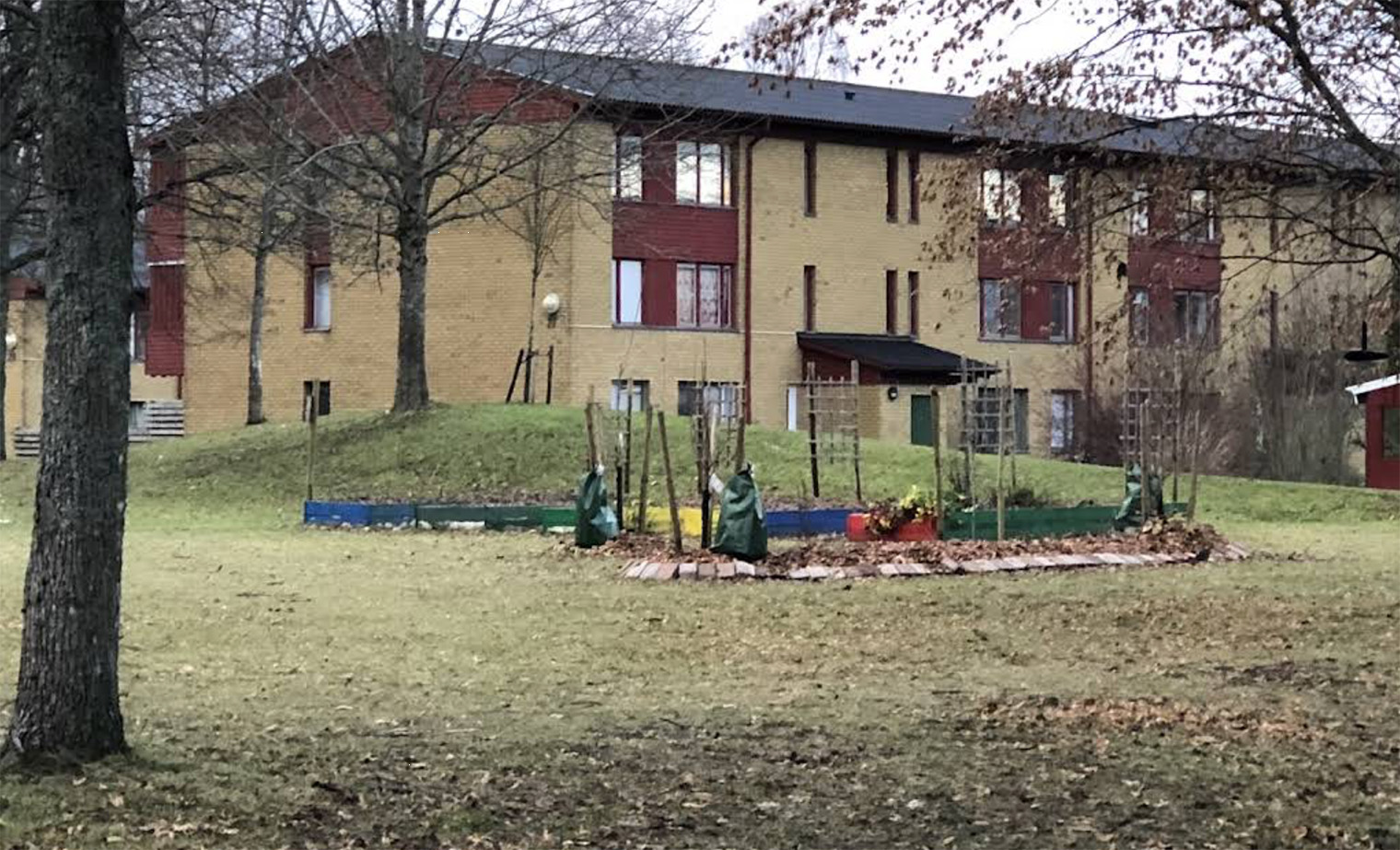
Drugs in the basement and young people getting drawn in
Madlin also describes how crime in the area isn’t just about isolated fights or rowdy evenings, but an environment where drugs have become a part of daily life.
– When you go down into the basement you smell it. I smell regular cigarettes, but also marijuana or hashish.
He says that young people in the area are strongly affected by this. In the interview, he repeatedly brings up how teenage boys are attracted to quick money and status, while the adult world stands weak.
– Young people are being exploited, he tells Samnytt.
ALSO READ: Gang source to Samnytt: How much the Kurdish Fox pays for the deeds
He tells about a neighbor with a 13-year-old son who has already started to notice the kind of money criminal environments can offer.
– His friend shows him: “Look what I make, 5–10,000 a week.”
My wife, who comes from the USA, has lived here almost 16–17 years. She has never been as scared as now.
David Madlin, Växjö
For families with limited finances, he says it’s easy for young people to be lured in by things they otherwise can’t have.
– They can’t afford the things he wants. So it becomes tempting.
In his description, the area emerges where crime doesn’t just create insecurity in the here and now, but also risks perpetuating itself into the future.
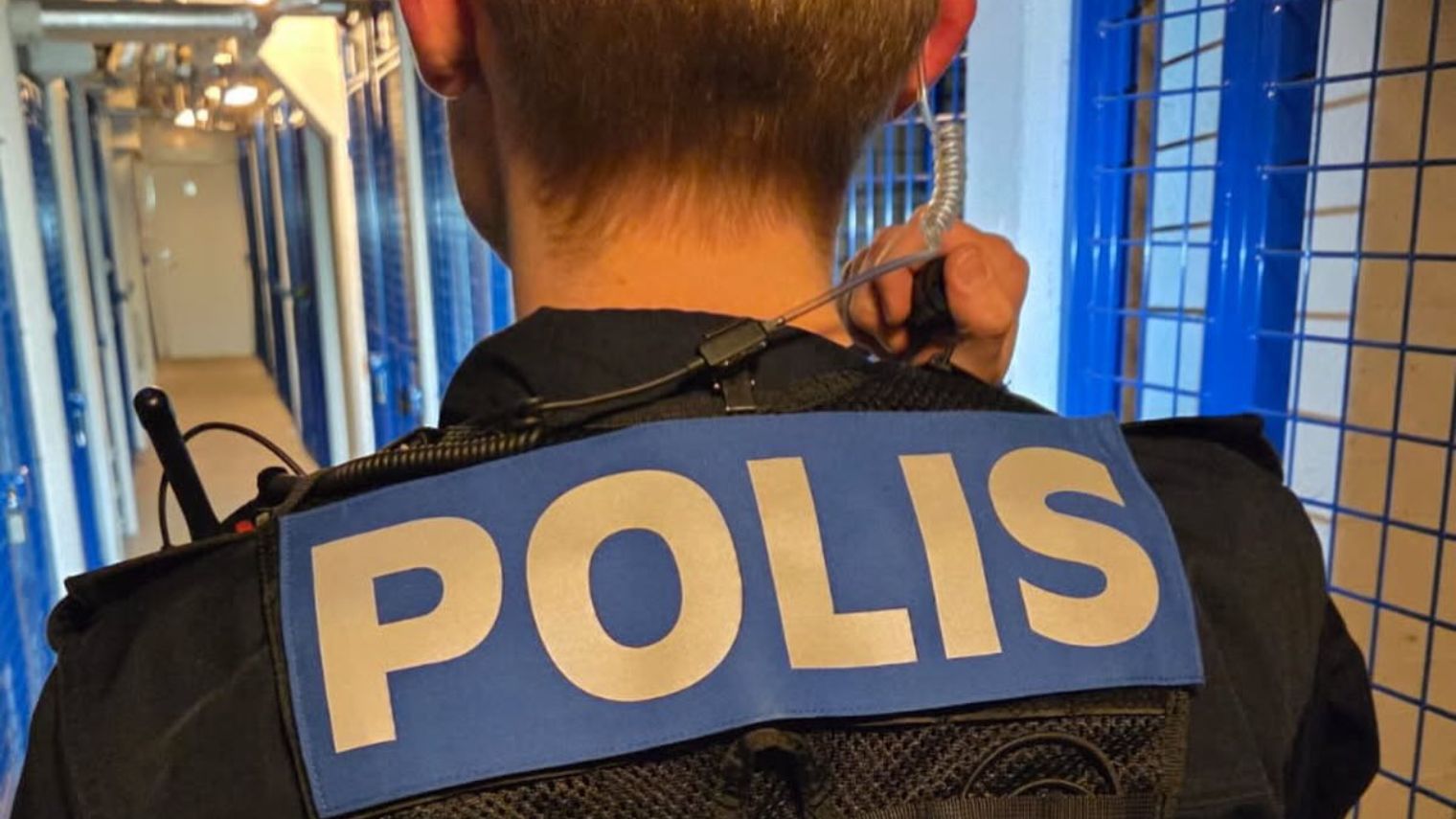
Fires, tire sabotage, and escalation
Madlin doesn’t mention just threatening groups and drugs. He also describes recurring vandalism and fires.
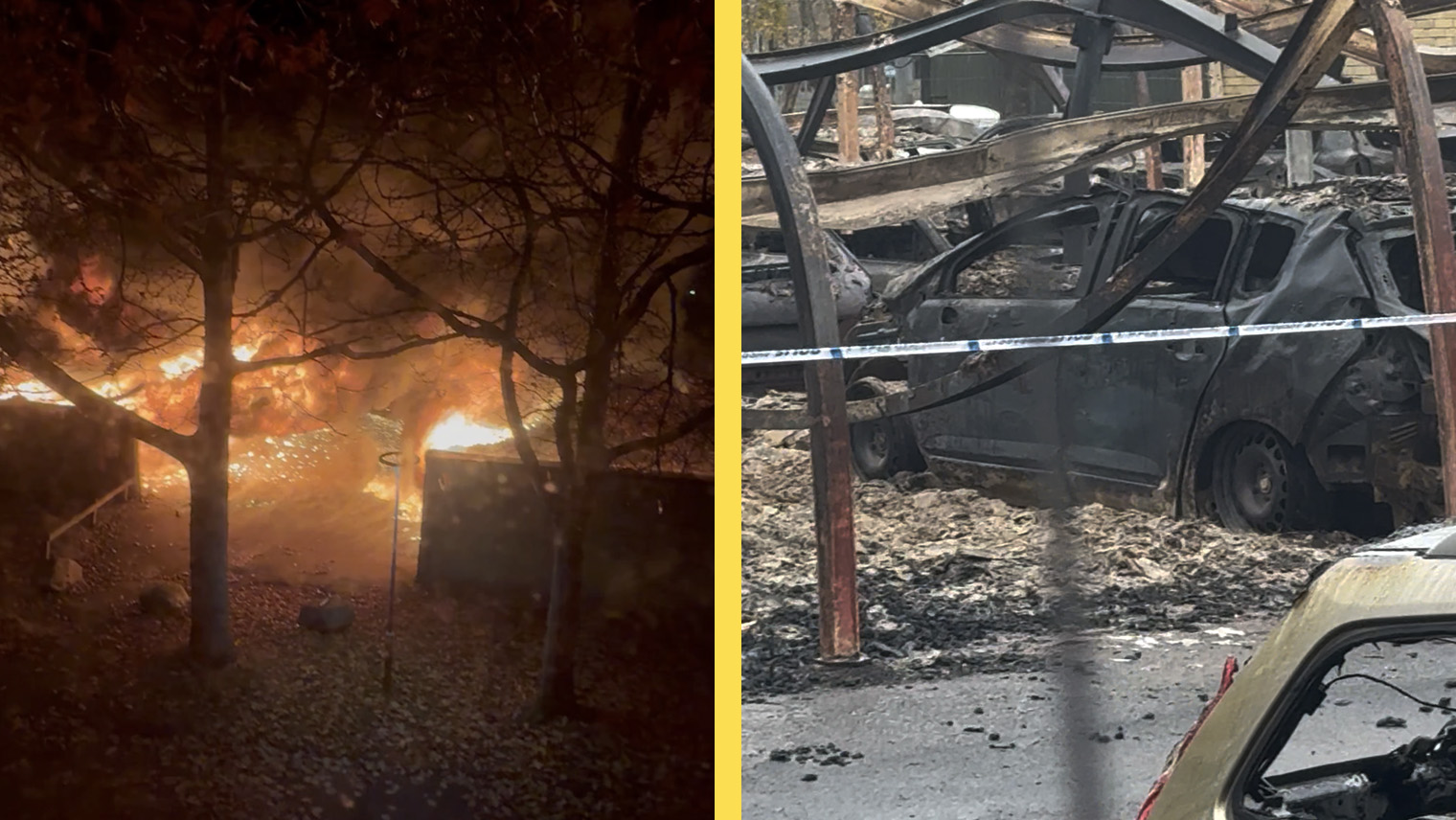
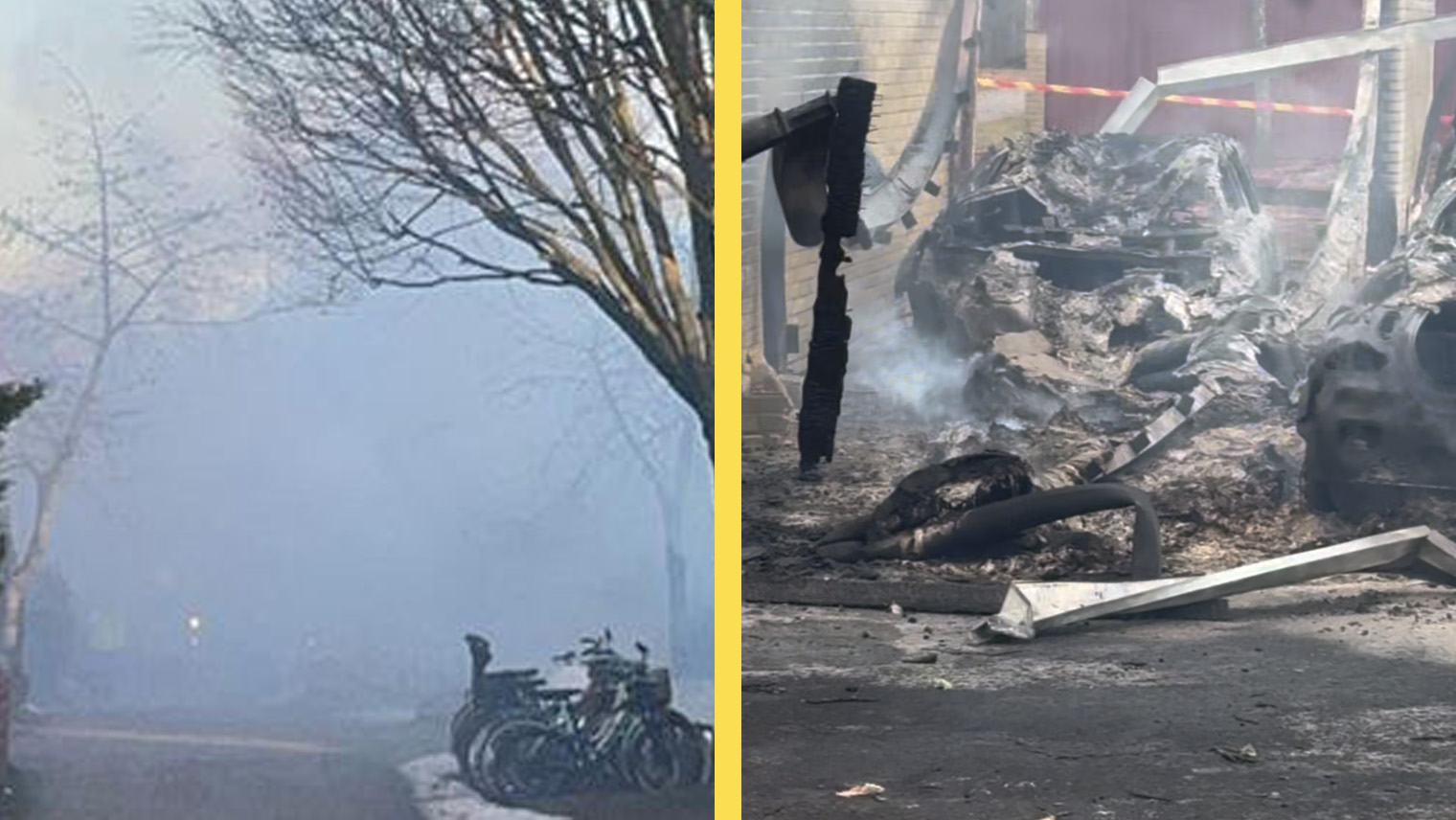
He recounts how a fire in the parking lot destroyed a large number of cars. He says almost 50 cars burned, though his own car was parked on the other side and escaped the flames. After that, he says, the vandalism continued in other ways.
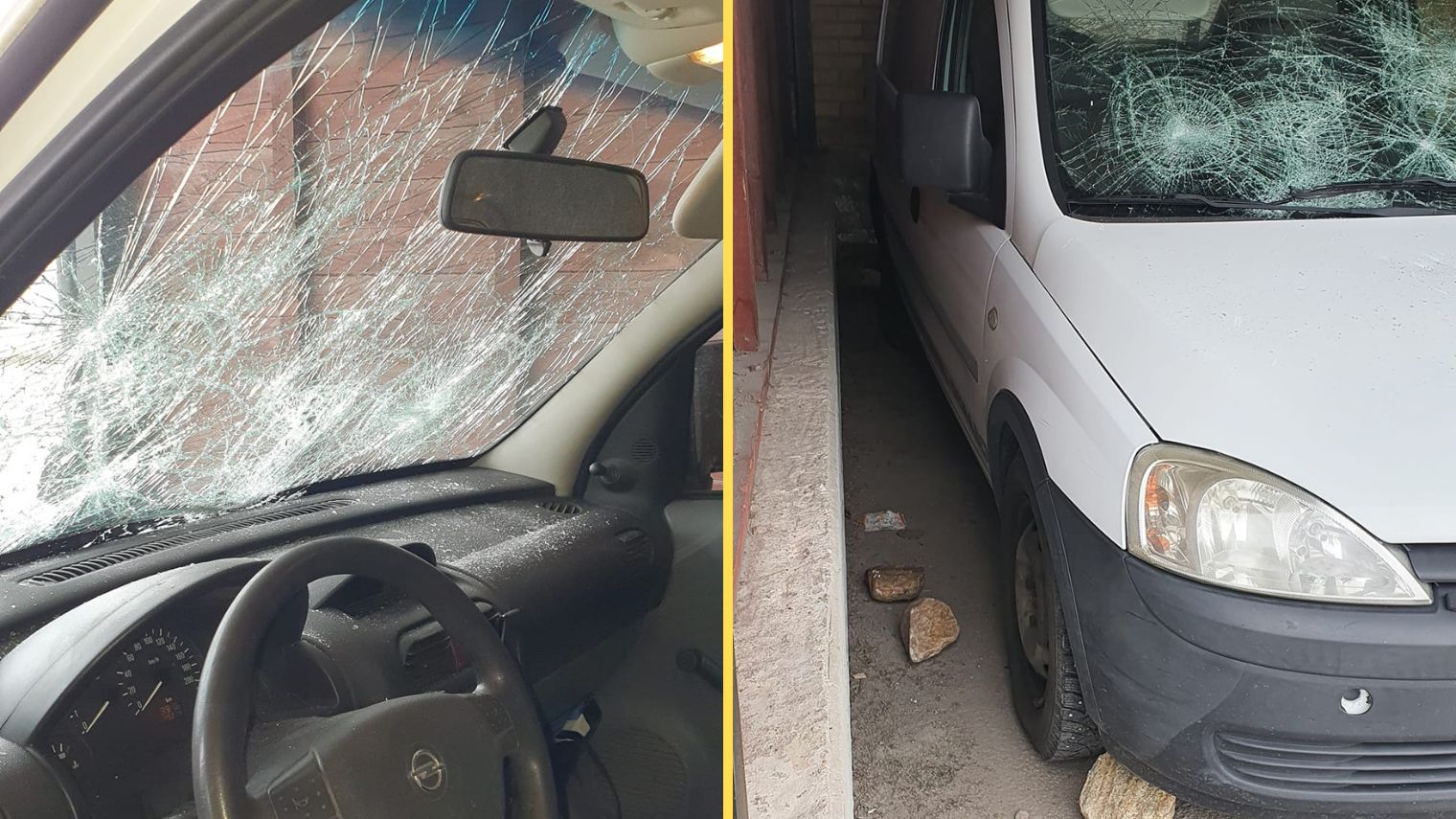
– Then they came to our parking area and slashed the tires on our cars.
His own car was one of those affected. Neighbors too had their tires destroyed. He reports that he has reported it to the police. He also talks about garbage rooms that have burned and about an area where people have gotten used to something always seeming about to happen. The central part of his story is that this doesn’t feel like isolated episodes, but as a changed everyday life.
“My wife has never been so scared as now”
Perhaps the strongest part of Madlin’s interview is about how the situation affects everyday life on a small scale.
Madlin’s wife is from the USA and has lived in Sweden for many years. He says she has never before been scared in the way she is now.
– My wife, who comes from the USA, has lived here almost 16–17 years. She has never been as scared as now.
ALSO READ: Kista: Here Sweden was to build the future—now businesses and Swedes are fleeing
He describes how she reacts when they get home late and see people standing outside. Then she goes straight to him.
– She comes directly to me.
He tries to comfort her, he says, but behind that is a clear point—the everyday sense of security is gone. It’s not just about crime statistics or isolated reported incidents, but about how people move, think, and feel when coming home to their own front door.
He repeatedly comes back to how the area has changed gradually but clearly, and that the old calm is no longer there.
“People know who they are—but keep quiet”
Madlin also expresses something that recurs in many areas where crime has taken root—the residents often know more than they publicly say.
– People know who they are—but they keep quiet.
He hints that there is a local code of silence, where some choose to say nothing, either out of fear or because they in some way benefit from not disturbing the order.
ALSO READ: Vivalla and the special elephant in the room
The Lebanese chef expresses himself roughly and somewhat unfiltered, but the basic point is clear—the residents feel that there are things that ‘everyone knows’ but which are rarely said outright in public.
In his description, it’s mainly about young groups, drugs, influence from people with criminal connections, and a sense that some adults don’t want to see what’s going on.
What you are describing sounds like gang crime?
– Yes, absolutely. Växjö has become a central place for drug and illegal weapons transport in Sweden.

Viktor Skog gathers the neighbors
Against this backdrop, 26-year-old Viktor Skog has stepped forward as one of the most visible voices from the area in an attempt to get politicians to react. In reporting from other media he has described how residents on Furutåvägen have grown tired of burned cars, gangs selling drugs, and lighting that does not work.
He has also said that people are afraid and that “it’s not very nice to live here.”
ALSO READ: Police speak about Sweden’s development: “It will only get worse”
Skog has started a petition that has collected over 188 signatures at the time of publication, to show that the concern is not just about a few dissatisfied individuals, but a broader discontent among the residents.
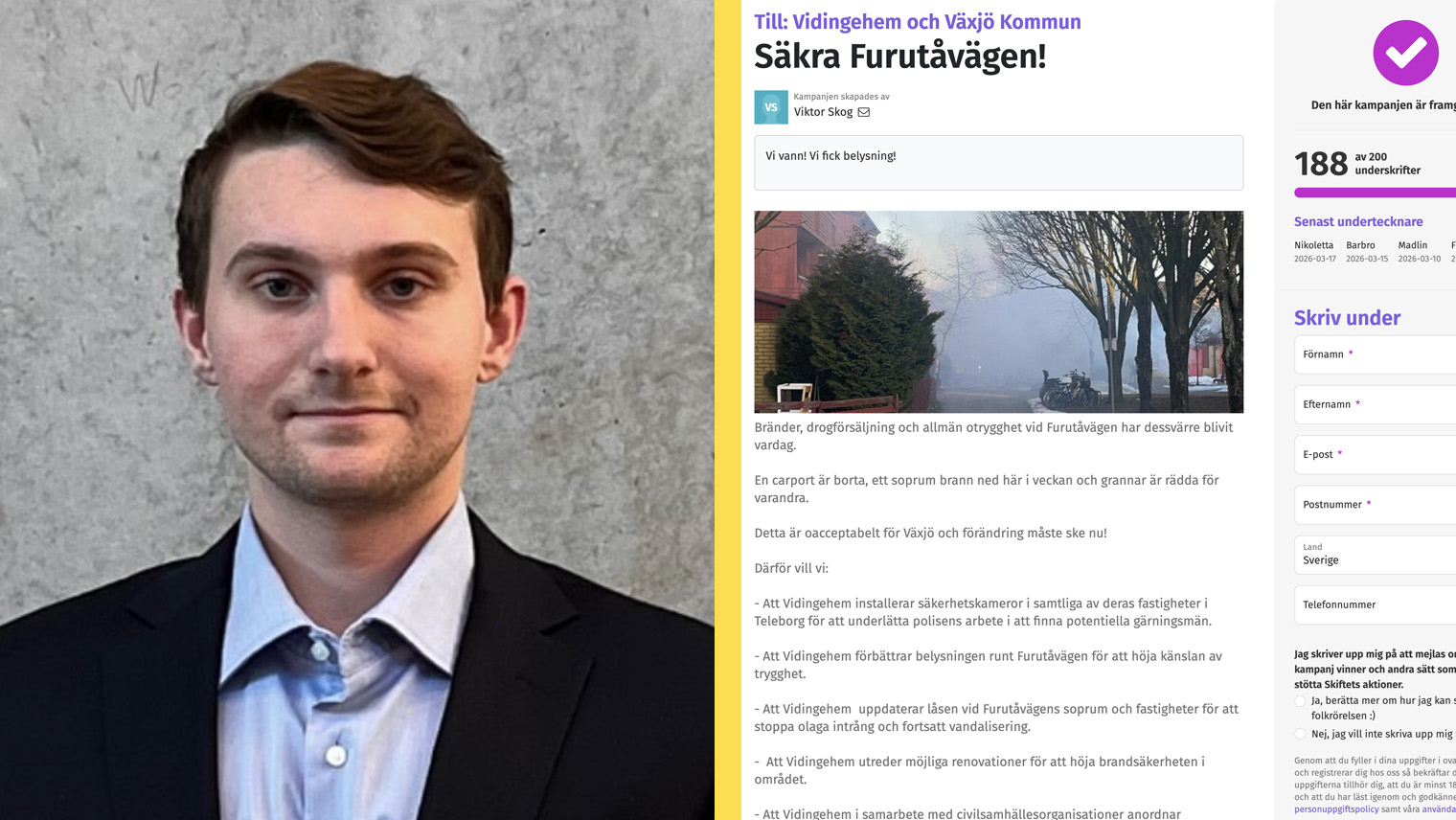
When residents, the police, the fire brigade, and the municipal housing company met in the area, Skog described the meeting as emotional, but also said that the response from those responsible was unserious and divided.
According to him, residents often heard that the authorities couldn’t do much, or that the situation had already improved.
It’s precisely that contrast that makes the issue so charged. Residents feel that their reality is being diminished. They are given answers that things have improved, while they themselves see drug dealing, people running in stairwells and laundry rooms, broken lighting, and recurring incidents.
ALSO READ: Walking in the future we never chose—the Sweden that has become a foreign land to its own people
Skog has also described the initiative as a grassroots movement that wants to make the area safer and make it clear that those who commit crimes are not welcome there.
Viktor Skog is not alone. In the same reporting, more residents speak out about an everyday life where children encounter things that shouldn’t exist in a residential area.
A couple in the area talk about syringes in the sandbox, youths throwing stones, and people with blood on their heads. The family says that in the end, they chose to move away.
This reinforces the image that it’s not just about general discontent, but an area where several residents feel that everyday life has changed in ways that directly affect children’s safety, families’ decisions to stay, and people’s willingness to spend time outdoors.
Police: “What you are describing now are individual incidents”
When Samnytt interviews municipal police officer Harald Breide, a completely different tone emerges.
Already at the outset, he prefers to have questions sent in advance so he can look at statistics and examine the background. He describes the work based on collaboration models, situational pictures, and regular reporting from different parts of society.
Teleborg, he says, is an area that has at times struggled with insecurity and crime exposure, but also at times been pretty good. He says that the police saw improvement in the autumn, both in crime statistics and in various resident surveys.
– We saw during the autumn that there was an improvement.
ALSO READ: Police officer bothered by critical questions about his glossing over gang violence—attacks Samnytt
When he hears of residents’ stories of attacks, threats, fires, and fear, he still comes back to it being “individual incidents.”
– What you are describing now are individual incidents.
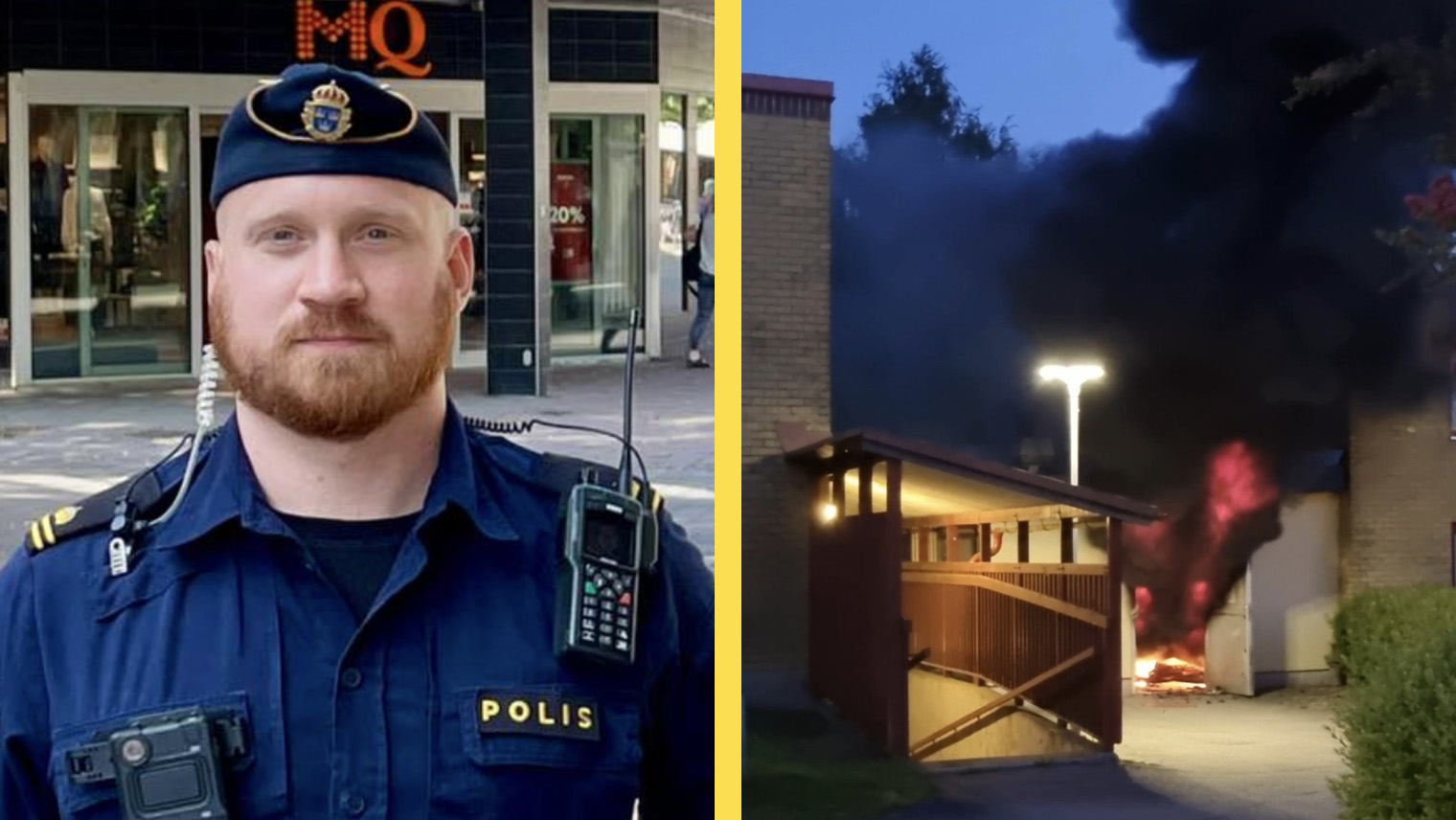
This is where the difference between perspectives becomes most apparent. Where residents describe a pattern, police see separate incidents. Where residents experience ongoing decline, police point to statistics that say the trend is not negative.
No, but then it could be a car that catches fire. Now I don’t know how that investigation went, but if a car catches fire in an old garage row and it spreads, well, then you can probably imagine it goes fast until everything is burning.
Municipal police Harald Breide, Växjö
One of the most remarkable answers comes when Breide is asked how he sees the bigger picture.
– For me, it becomes hard to understand the bigger picture or the concern out there. He adds that he himself does not live in the area.
Breide also says the police have worked a lot against open drug sales and that they felt the problem was more or less eliminated at Teleborg center by Christmas.
– We have more or less gotten rid of the open drug dealing out there.
ALSO READ: Many Swedes want to flee gang crime Sweden
But instead of meeting concrete witness accounts with equal specificity, he repeatedly returns to the idea that certain events need not be connected to something bigger.
It is in this gap that the residents’ frustration visibly grows. For if those who live in the area feel their reality is reduced to “individual incidents” while the authorities continue to talk about improvement, the question also arises of what is actually required before warning signs are taken seriously.
A garbage room that caught fire, for instance, he speculates, could be due to batteries in a recycling container. A car fire can spread quickly if a car “starts burning.” He also says he’s not familiar with all the details of older investigations.
Surely it can’t have been broken batteries that caused around 30 cars to burn in the area?
– No, but then it could be a car that starts burning. Now I don’t know how that investigation went, but if a car starts burning in an old garage row and it spreads, well, then you can probably imagine it goes fast until everything is burning.
ALSO READ: The lost districts: “You barely see any Swedes here”
It sounds a bit strange when you say a car can just start burning?
– I don’t know if it was classified as arson out there, it was before my time as municipal police. Most of the time cars don’t just catch fire, but it does happen.
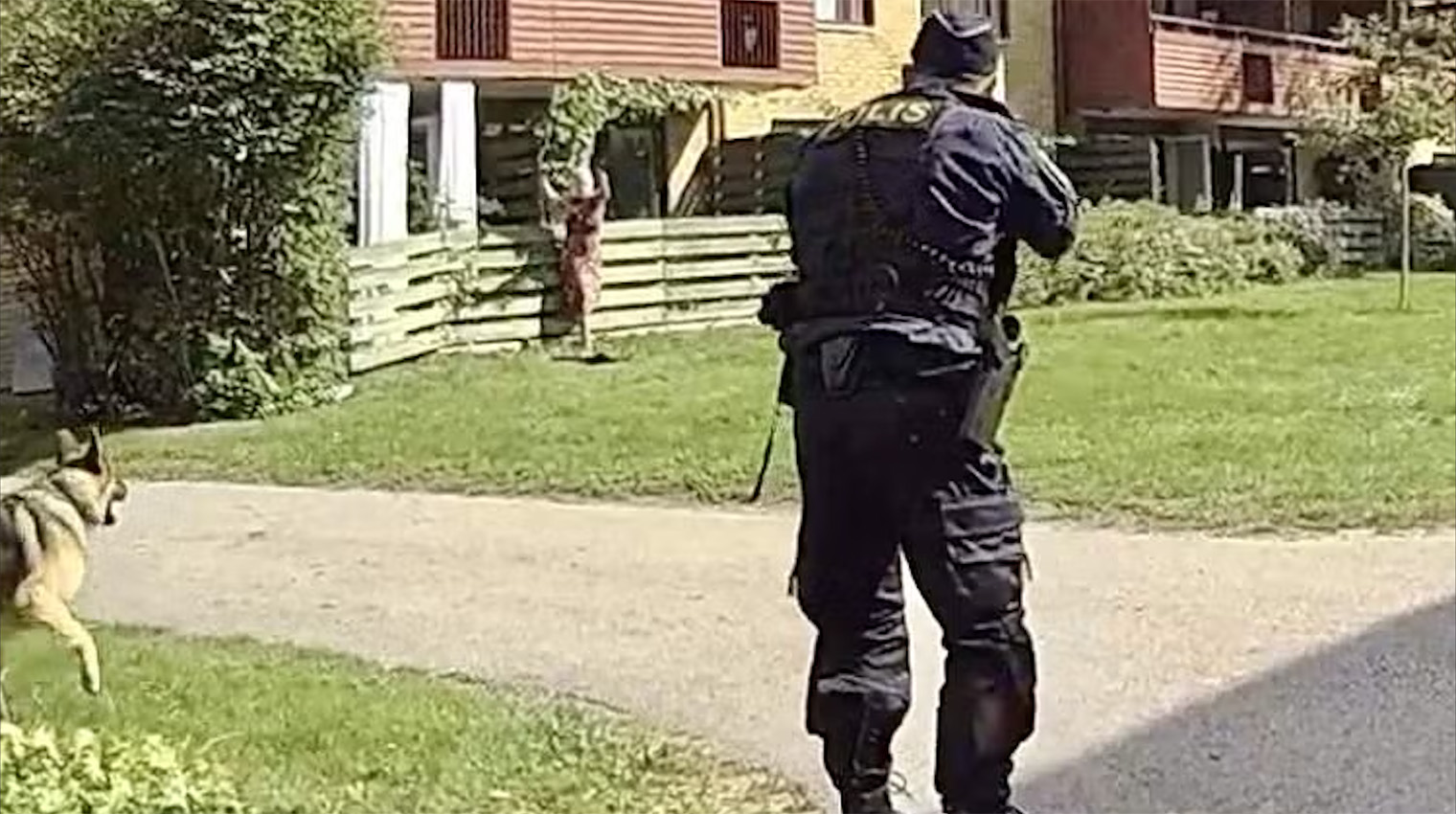
But you are the municipal police now, so shouldn’t you know if this was arson or not?
– Not if the investigation isn’t finished. Then I’m not involved in the preliminary investigation either.
When asked what it would take for the area to become permanently safe, he refers again to statistics and safety surveys.
ALSO READ: Why the police printed thousands of business cards ahead of Ramadan: “Their great holiday”
– There is nothing in the data that indicates things are going in the wrong direction in Teleborg. On the contrary, the safety survey indicates that people feel safer out there.
Two realities
What emerges are two almost irreconcilable images of the same place. In one are people who have lived in the area for a long time and say that something has broken. They describe young groups, drugs, fires, slashed car tires, fear, and an everyday life where women no longer feel safe walking home late.
The other is the police perspective, where situational images, collaboration models, and safety surveys show that the trend is rather positive, and where many of the events brought up by residents are seen as isolated incidents without clear connection.
ALSO READ: National Police Commissioner bothered—passes responsibility for gang crime onto the citizens
It is in this gap that frustration among residents visibly grows. For if those living in the area feel their reality is reduced to “individual incidents,” while authorities continue to talk about improvement, the question also arises what it really takes before warning signs are taken seriously.
For residents, the surveys don’t matter
David Madlin expresses himself more bluntly than an authority might, but his words reflect the feeling that many residents’ testimonies seem to carry—a sense that something fundamental has changed.
He speaks of an area where people could previously move about freely, where security was a given, and where contact with the police was mostly about renewing a passport. Now, he says, he calls about threats, vandalism, and things he sees around him.
SAMNYTT TV: The security that disappeared
And perhaps that’s exactly why the gap between residents, politicians, and the police has become so clear in Teleborg. One side speaks of experienced reality. The other of measured development.
But for the residents of Furutåvägen, it seems to matter less what the surveys say if people no longer feel safe on their way home to their own front door.
⚠️ SAVE SAMNYTT ⚠️
Hundreds of thousands read – few contribute.
34,000 ARTICLES
Help us continue scrutinizing
Without your support, we may not be here this year.