
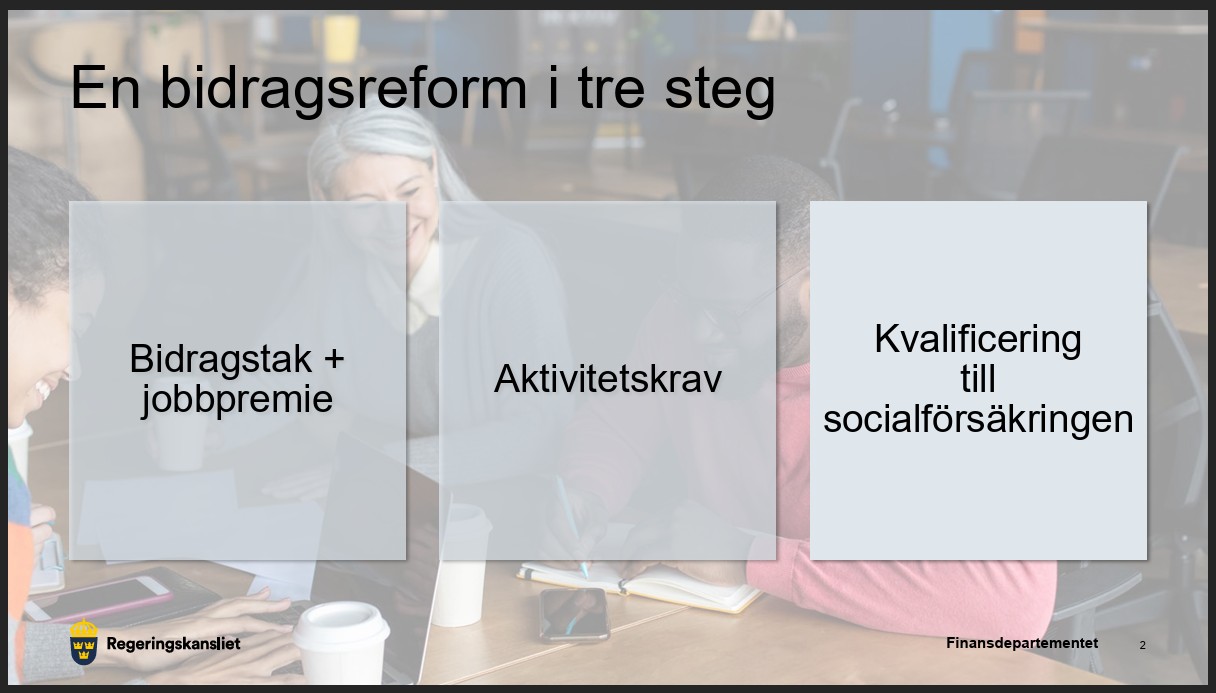
As part of the government’s and Sweden Democrats’ sweeping benefits reform, new rules are being proposed that introduce requirements for qualification through time or work in order to access certain residence-based social insurance benefits. The aim is to strengthen the work-first principle, break social exclusion, and reduce the risk of long-term dependency on benefits.
Currently, people who settle in Sweden can gain access to residence-based benefits immediately, without any previous connection or work. According to the Tidö government, this risks undermining both the legitimacy and financial sustainability of the welfare systems, as well as reducing the incentives to find work and become self-sufficient.
READ ALSO: Åkesson: This Autumn’s Election Will Be Yet Another Immigration Election
“It’s not obvious that someone immigrating to Sweden should have access to all parts of our social insurance system from day one. On the contrary, we think it’s reasonable that they shouldn’t,” said Finance Minister Elisabeth Svantesson (M) at a press conference.
The proposed qualification can be met by having lived in Sweden for five years, within a fifteen-year timeframe, and includes a fast track through employment. This can be achieved via two different income levels: employment income of 40,032 SEK per month for at least six consecutive months, or employment income of 20,850 SEK per month for twelve of the last 24 months.
“Due to EU law, we also have to count residence in other EU countries. So, the requirement applies regardless of citizenship, but will naturally affect third-country nationals the most,” says the Sweden Democrats’ spokesperson on migration, Ludvig Aspling.
“With this, we are also sending a signal to asylum seekers wanting to access the benefits so they don’t have to support themselves: Please choose another country.”
The specific benefits affected are:
– residence-based parental benefits at the basic and minimum level
– child benefit, including multiple child supplement
– care allowance
– sickness compensation and activity compensation in the form of guarantee compensation
– additional cost allowance
– elderly support
– housing allowance
– housing supplement
Only Legal Residence Counts
Only individuals legally residing in Sweden will be eligible for the residence-based social insurance benefits. For those who have “a strong, established, and lasting connection to Sweden,” there will be an option for exemption from the qualification requirement.
The proposal is part of the government’s broader welfare reform aimed at breaking prolonged dependency on benefits and increasing incentives to work. The goals are that everyone who can work should work, that employment should pay more than living on benefits, and to prevent the social insurance system from acting as a pull factor to Sweden.

Green Party Outraged
According to Malte Tängmark Roos (Green Party), a member of the Social Insurance Committee, the reform will lead to a “new level of poverty in Sweden.”
“It will cause tens of thousands of children to face a much more difficult situation and risk falling deeper into poverty and social exclusion. And that is totally unacceptable,” he told Swedish public television.
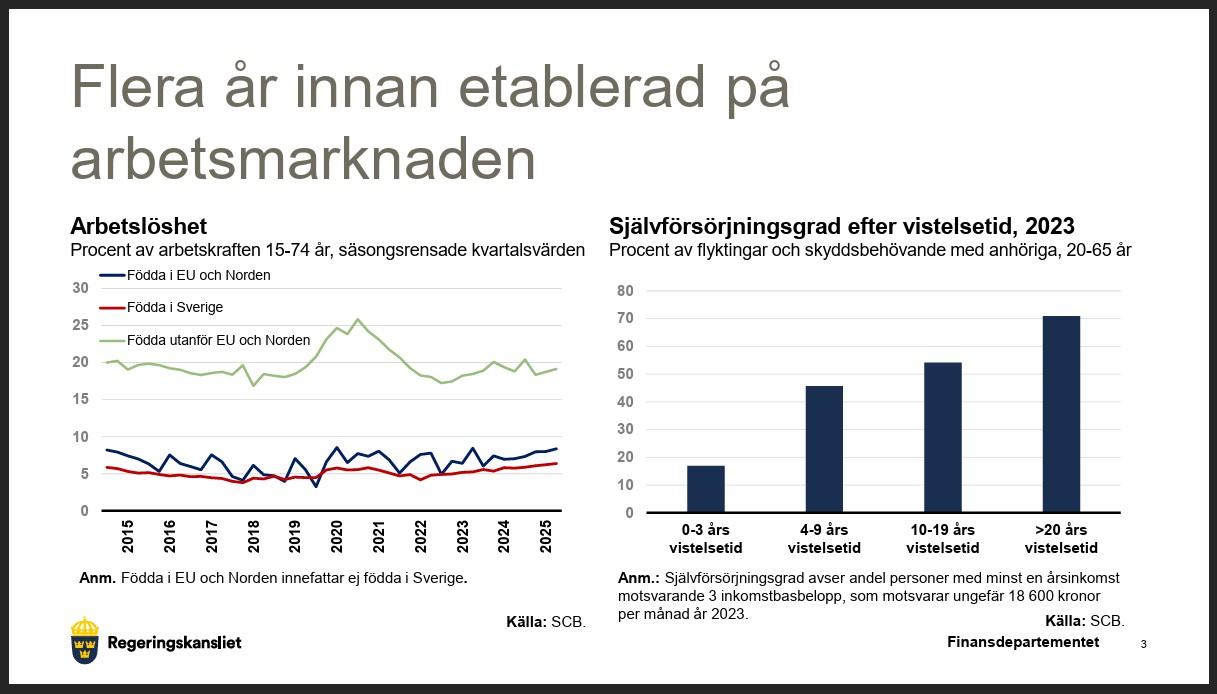
The Green Party representative argues that there is no evidence that incentives to work are lacking. Instead, the main problem is that there are insufficient pathways into the labor market.
The press conference:
READ ALSO: Business Organization Wants Fast Track to Visas for Certain Immigrants