According to new figures from Statistics Sweden (SCB), Sweden had 10,605,500 registered residents at the turn of the year. This is an increase of nearly 18,000 people compared to the previous year and is mainly explained by more people immigrating than emigrating.
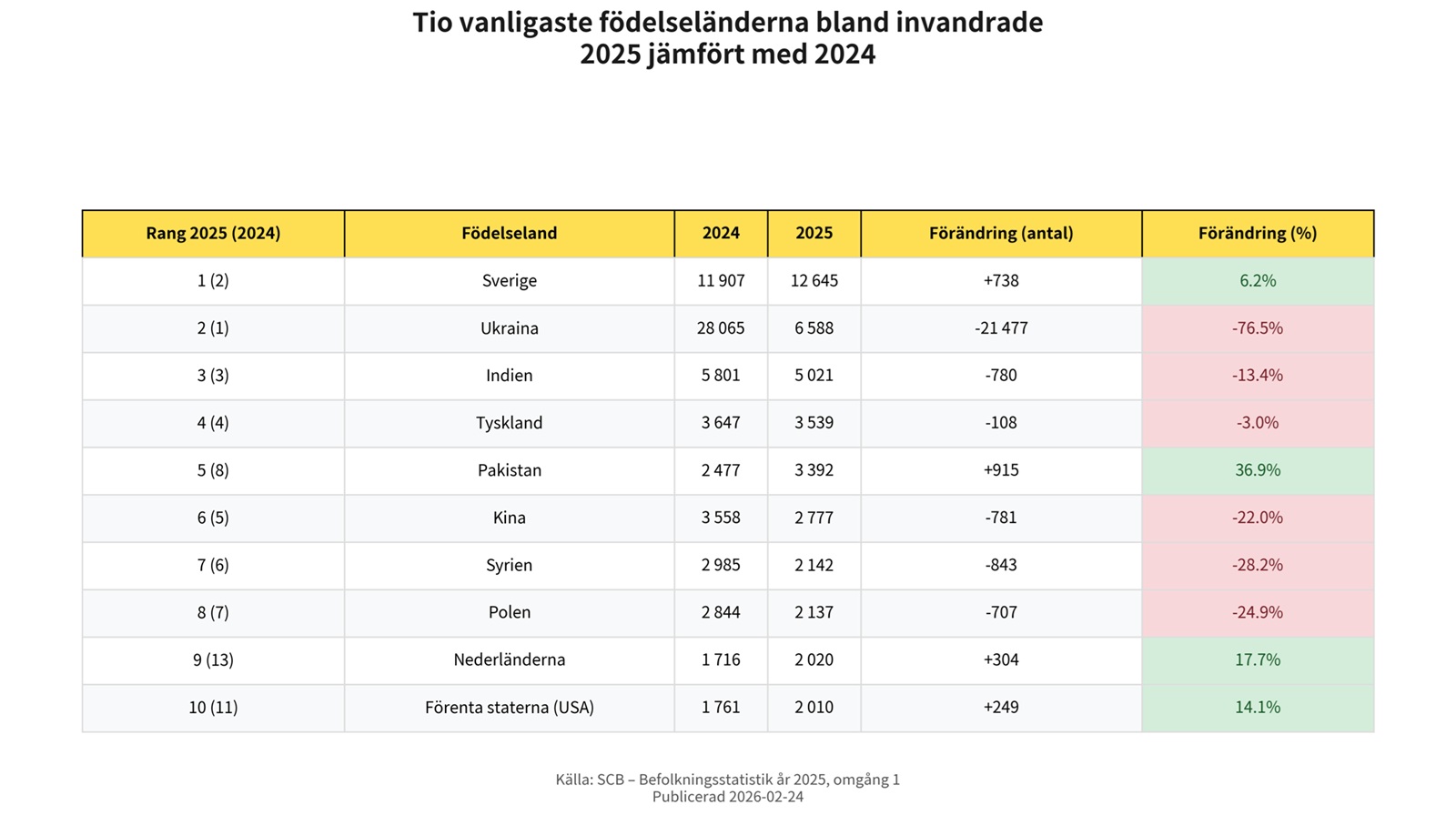
During the past year, 89,400 people immigrated to Sweden, a decrease of 23 percent compared to 2024. This is attributed to a decline in the number of Ukrainians. Despite the reduced immigration, Ukraine was still the most common country of birth among foreign-born individuals who immigrated in 2025. The largest group of immigrants were returnees born in Sweden, totaling 12,600 people.
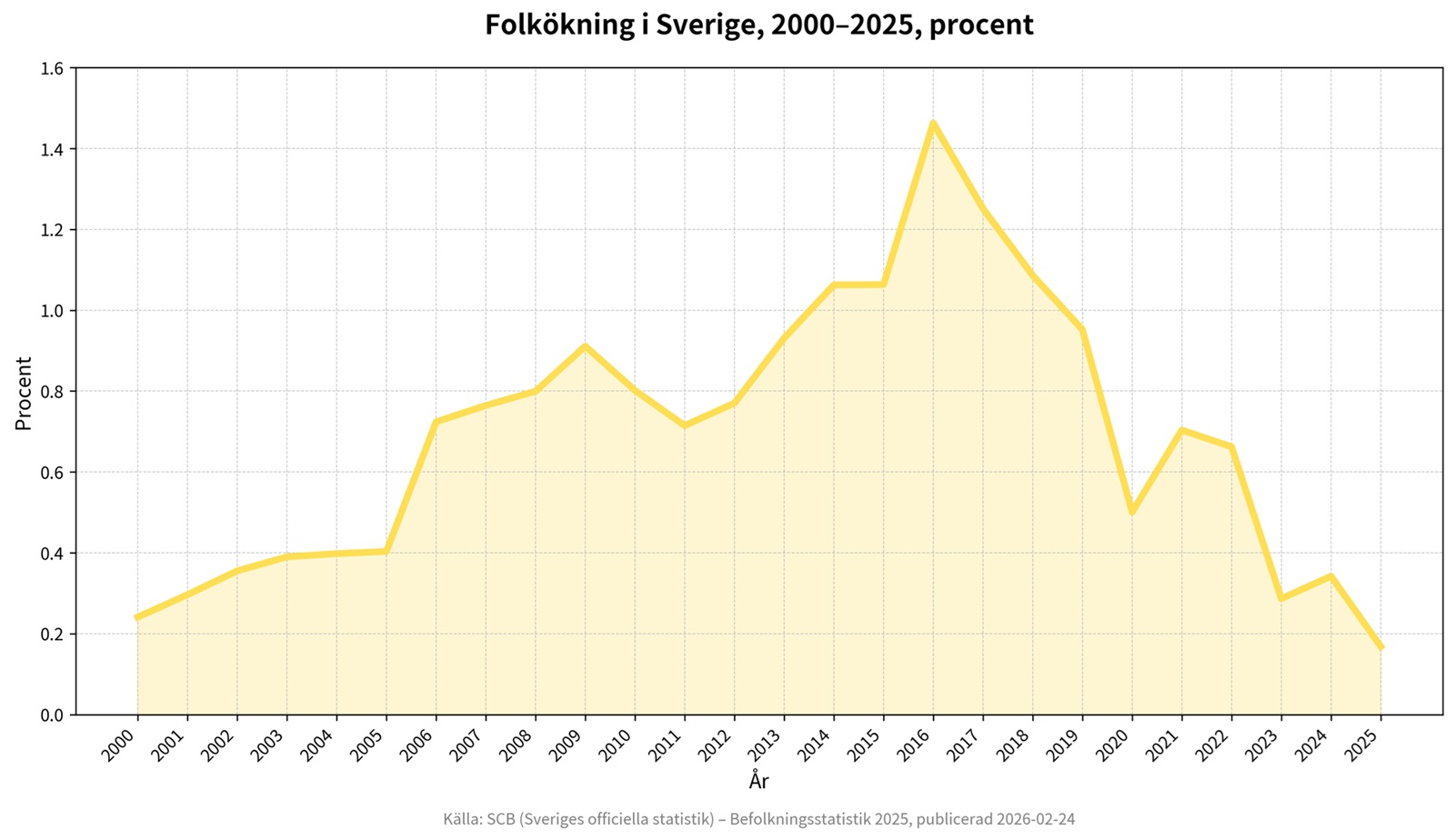
A population increase of 0.2 percent is the lowest recorded in the 21st century. The number of children born—97,500—was also at its lowest level in 23 years.
READ ALSO: Tidö government tightens citizenship requirements: “Reasonable and fair”
— Overall, childbirth rates have been on a downward trend since 2010, when the total fertility rate was 1,985 per 1,000 women, but the decline now appears to have stopped, says Ann-Marie Persson, population statistician at SCB.
In 2025, 6,700 people sought asylum in Sweden, a decrease of 30 percent. The most common citizenship among asylum seekers was Afghanistan. A total of 703 citizens of Afghanistan applied for asylum in Sweden.
READ ALSO: Lawyers attack the Tidö government – want to continue profiting from the migration industry
Last year, 77,500 people emigrated, which was a decrease of ten percent compared to the previous year.
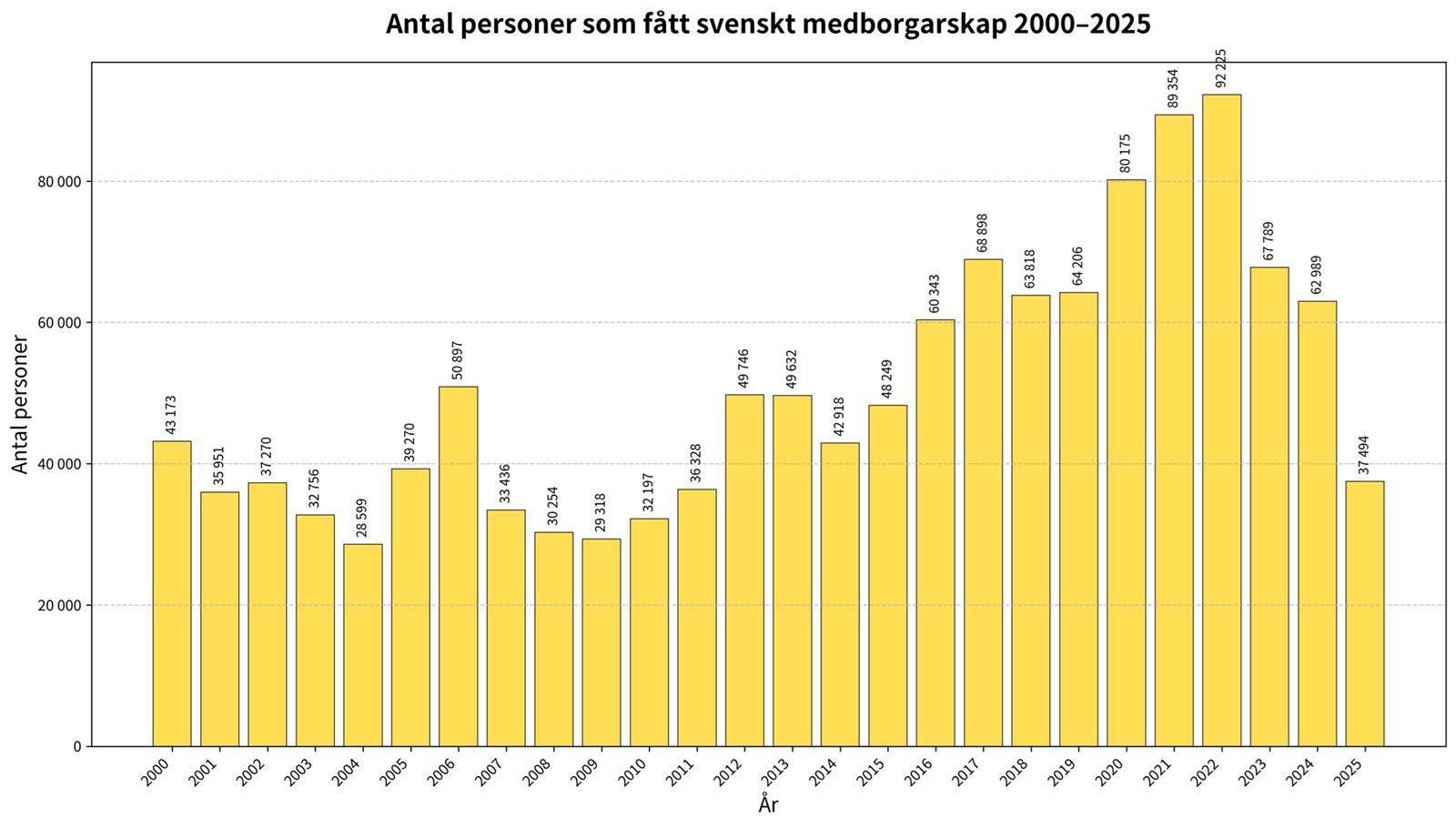
In 2025, 37,500 people received Swedish citizenship. That is 25,500 people, or 40 percent, fewer compared to 2024. The decrease is largely due to the Migration Agency being tasked with increasing security in citizenship reviews. The enhanced security measures have also meant increased processing times.
Stockholm County had the largest population increase last year with 13,000 people, which corresponds to an increase of 0.5 percent. Among the municipalities, Gothenburg had the largest population increase (4,300), followed by Stockholm (3,700) and Malmö (2,300).
READ ALSO: Staff at the Migration Agency are not Swedish citizens