The government is reducing the budget for the Swedish aid agency Sida by SEK 4 billion and at the same time making a broad reallocation of aid totaling SEK 5.5 billion. Minister for Development Cooperation and Foreign Trade, Benjamin Dousa (M), points to the :censored:6:cdd6bbaa89: situation and increased needs related to Ukraine—but also defends a clearer policy where aid can be made conditional, for example towards Somalia.
At a press conference on Friday, the government presented further changes to Swedish aid, in addition to previous announcements of ending long-term aid to Tanzania, Mozambique, Zimbabwe, Liberia, and Bolivia.
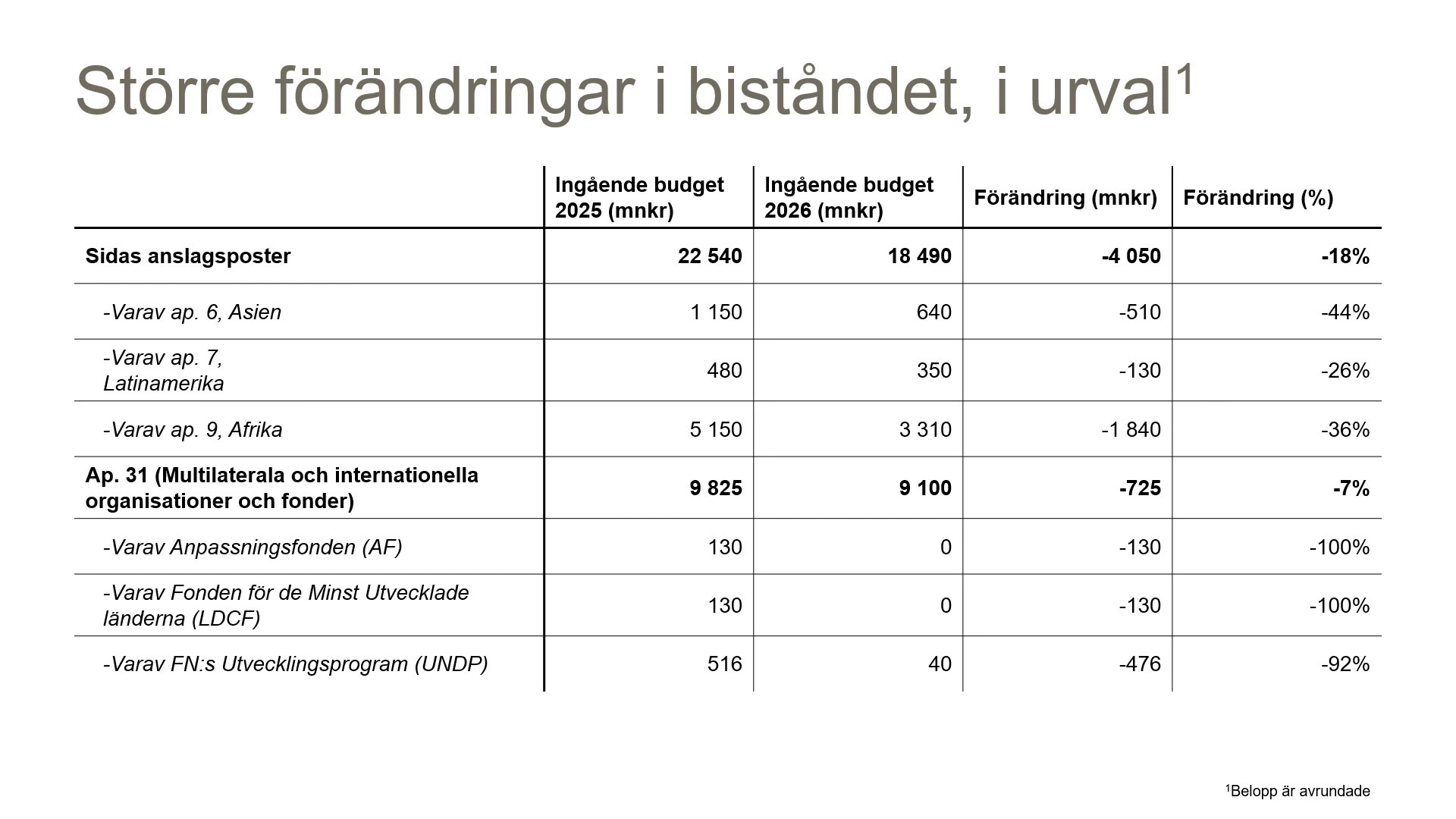
The largest single item in the new announcement concerns Sida: the appropriation is reduced from SEK 22.5 billion to SEK 18.5 billion—a decrease of SEK 4 billion, nearly 20 percent. Beyond the reduction in Sida’s bilateral development aid to Asia and Africa (over two billion), parts of the agency’s growth-promoting work are also being cut.
Dousa justified the reallocations with a heightened security situation and the need for more support related to Ukraine.
The government’s shift also means reductions in support through the UN and other organizations, including two climate funds. Dousa emphasized that the government wants to prioritize humanitarian, “life-saving” efforts—for example, via UNHCR, UNICEF, and the World Food Program.
Watch the full press conference below.
Dousa: Conditional Aid Is Normal Internationally
In an interview on TV4, Dousa elaborated on the government’s view of placing requirements on aid, with Somalia as an example. The government has made continued cooperation conditional on Somalia accepting its own citizens who are deported from Sweden after serious crimes—something it previously refused to do.
Dousa emphasized that these are people convicted of crimes who have been deported after, for example, fraud, aggravated assault, and child sexual abuse. He mentioned that the number of enforced deportations has increased significantly as a result of the negotiations.
READ ALSO: Tidö government concludes deportation agreement with Somalia—then C objects: “Very serious”
He also addressed criticism from the left against mixing aid and migration/return issues, describing conditions as an internationally established practice.
– It is not a human right to always benefit from Swedish taxpayers’ money, Dousa stated.
He pointed out that Sweden has historically been more restrained with counter-demands than other European countries and described how a Danish minister was surprised that Sweden is only now starting to make such demands—something they have done there for decades.
Growing Criticism of Sida: Oversight, Corruption, and “Activism”
The cutbacks come against a backdrop of recurring criticism against Sida—both concerning how aid money is followed up and regarding the agency’s internal culture.
This includes reports of suspected corruption in a significant proportion of projects and demands for stricter routines against conflicts of interest, corruption, money laundering, and terror financing; criticism of inadequate oversight and questionable reporting of results, as well as reports of a Sida employee who has been detained on suspicion of serious corruption offenses.
READ ALSO: Report: High Risk of Conflict of Interest at Sida
The criticism from the Sweden Democrats has been even sharper. SD figure and former Deputy Speaker of Parliament, Björn Söder, has described Sida as permeated by activism and advocated that the agency be shut down and rebuilt from scratch.
Overall, the government’s announcement means both an economic tightening for Sida and a clearer political direction where aid is more closely linked to Swedish priorities—while the debate about oversight, results, and governance of aid continues.
READ ALSO: Björn Söder criticizes Sida for being full of activists: “Should be shut down”