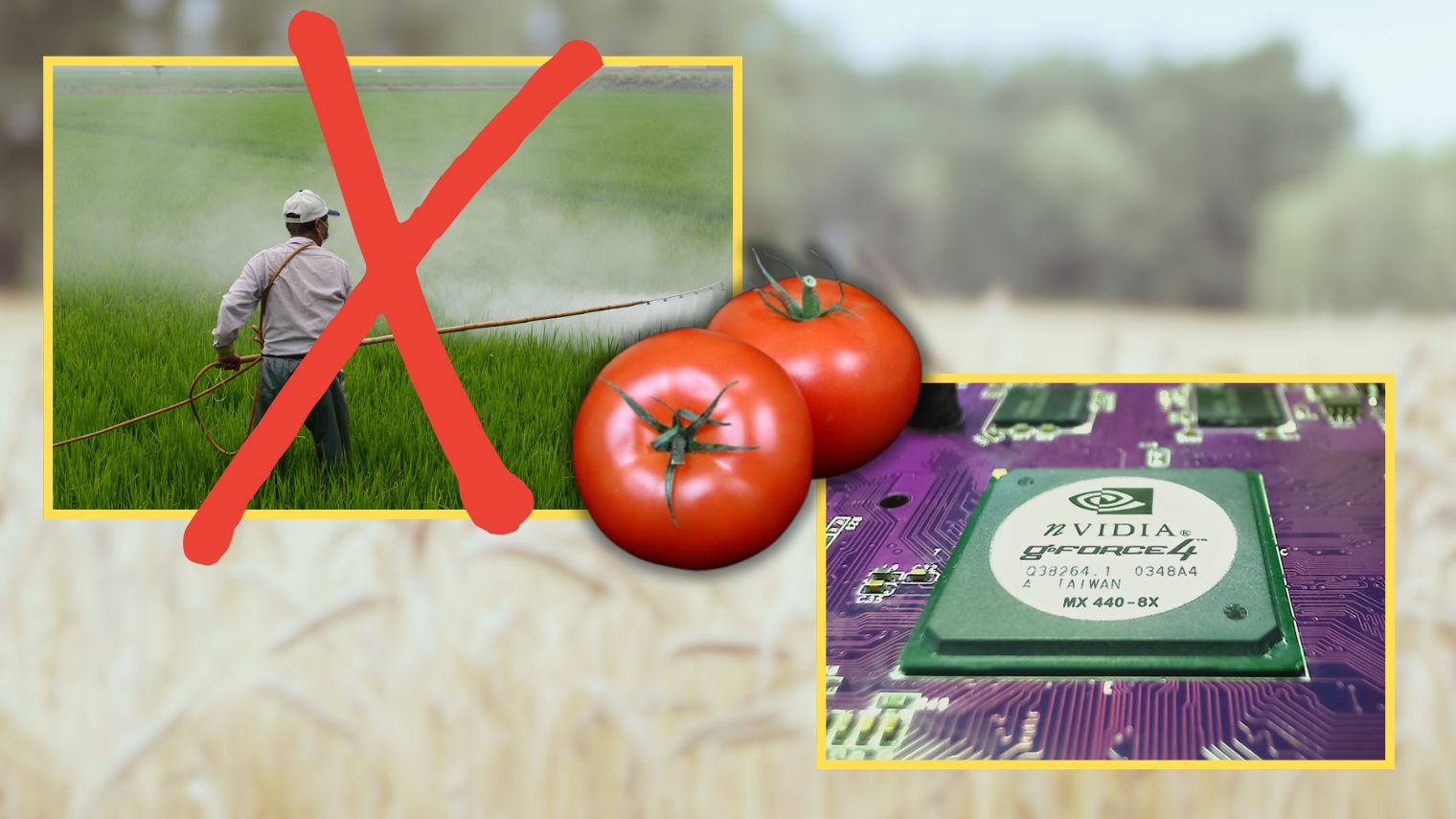
Artificial intelligence is most often associated with data and information, but is increasingly being used in areas such as healthcare. Now, the technology can also lead to cleaner food and improved public health.
With the ambition to tackle one of agriculture’s biggest problems – weeds – Nvidia has entered into a collaboration with Carbon Robotics. Together, they have created the LaserWeeder G2, a six-meter-wide machine powered by two dozen Nvidia graphics processors.
The machine is designed to be towed across fields behind a tractor and employs raw computing power paired with 36 high-resolution cameras to identify and burn weeds on contact using 24 240W diode lasers.
SEE ALSO: The EU is now set to confiscate LARGE amounts of Swedish farmland
The device weighs 3,100 kg and requires a tractor with at least 145 horsepower to tow it. It comes with a one-year warranty including software and 24/7 remote support.
Already last summer, it was reported that the system had been successfully used on hundreds of farms, and according to Carbon, more than 150 units had been delivered to farmers in 14 countries since 2018.
An NVIDIA powered farming machine uses Al vision and precision lasers to eliminate weeds in milliseconds without herbicides and without harming crops, a potential shift toward chemical free agriculturepic.twitter.com/aIbDWseMjD
— Massimo (@Rainmaker1973) March 4, 2026
Equivalent to a Team of 75 People
The latest version can identify and eliminate up to 10,000 weeds per minute (about 167 per second or 600,000 weeds per hour), all without the use of harmful chemicals. Switching from chemical crop protection to lasers offers several advantages. In addition to being safer, weeds cannot develop resistance to lasers as they can with traditional herbicides.
Customers can expect to cover 1.5 to 3.0 acres per hour, and the machine can outperform a manual team of 75 people with accuracy within less than a millimeter. When used correctly, it’s rated to kill up to 99 percent of weeds.
Carbon is also tackling another issue in agriculture – labor shortages. Data shows that more than 25 percent of edible crops in the US go unharvested due to workforce gaps. The company’s AutoTractor, an autonomous retrofit for existing agricultural equipment, allows machines to run around the clock and be monitored remotely.
SEE ALSO: Dietary advice to reduce meat consumption criticized