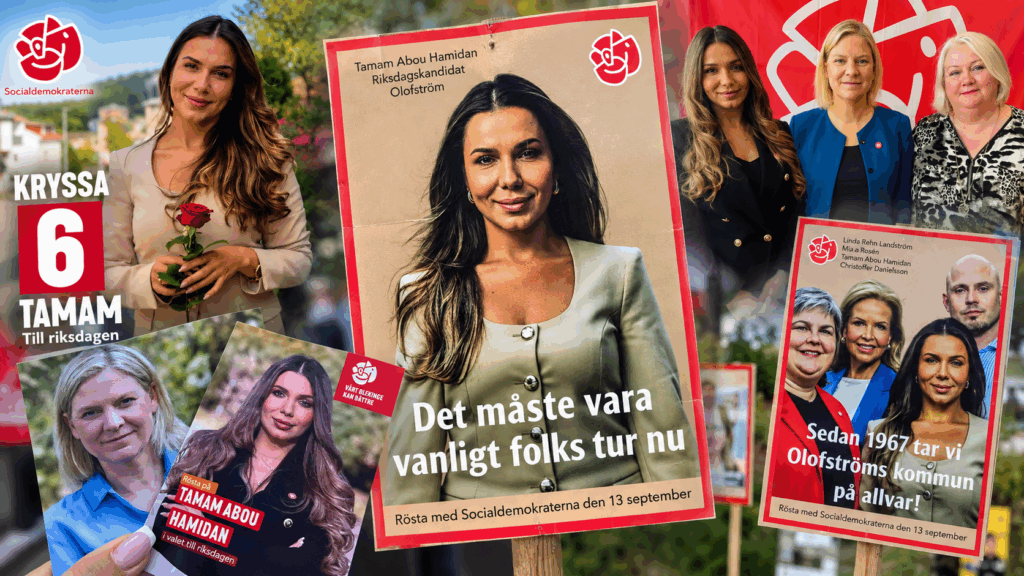
Six days before the election, Gaza-born S-profile Tamam Abou Hamidan was removed from the party’s parliamentary and regional lists. Officially, it was due to an unlawfully privately funded personal election campaign. Now much more serious information has emerged – Region Blekinge is investigating suspicions that a healthcare employee disclosed patients’ contact details so that Abou Hamidan could solicit personal votes.
Social Democrat Tamam Abou Hamidan, 38, was set to make another attempt to get into parliament through personal votes when the Blekinge party stopped her candidacy just six days before the election. The explanation then communicated was that she conducted a personal election campaign funded by private company money.
But according to new information from Blekinge Läns Tidning (BLT), there were additional circumstances behind the decision. Among them were claims that healthcare patients were contacted as part of her effort to garner personal votes. Region Blekinge has now launched an investigation.
Patients Reportedly Received Phone Calls
Suspicions are directed in part at a male healthcare worker in western Blekinge. After several reports, the region is investigating whether the man passed on patient contact details to Abou Hamidan.
The purpose, according to the information, was political – so that patients could be persuaded to cast their personal vote for the S politician. The method was reportedly that people first came into contact with the employee during healthcare visits and were subsequently phoned by Abou Hamidan.
BLT claims to have spoken with one of the affected patients. However, the man does not want to be further involved and says he does not want to be drawn into the matter.
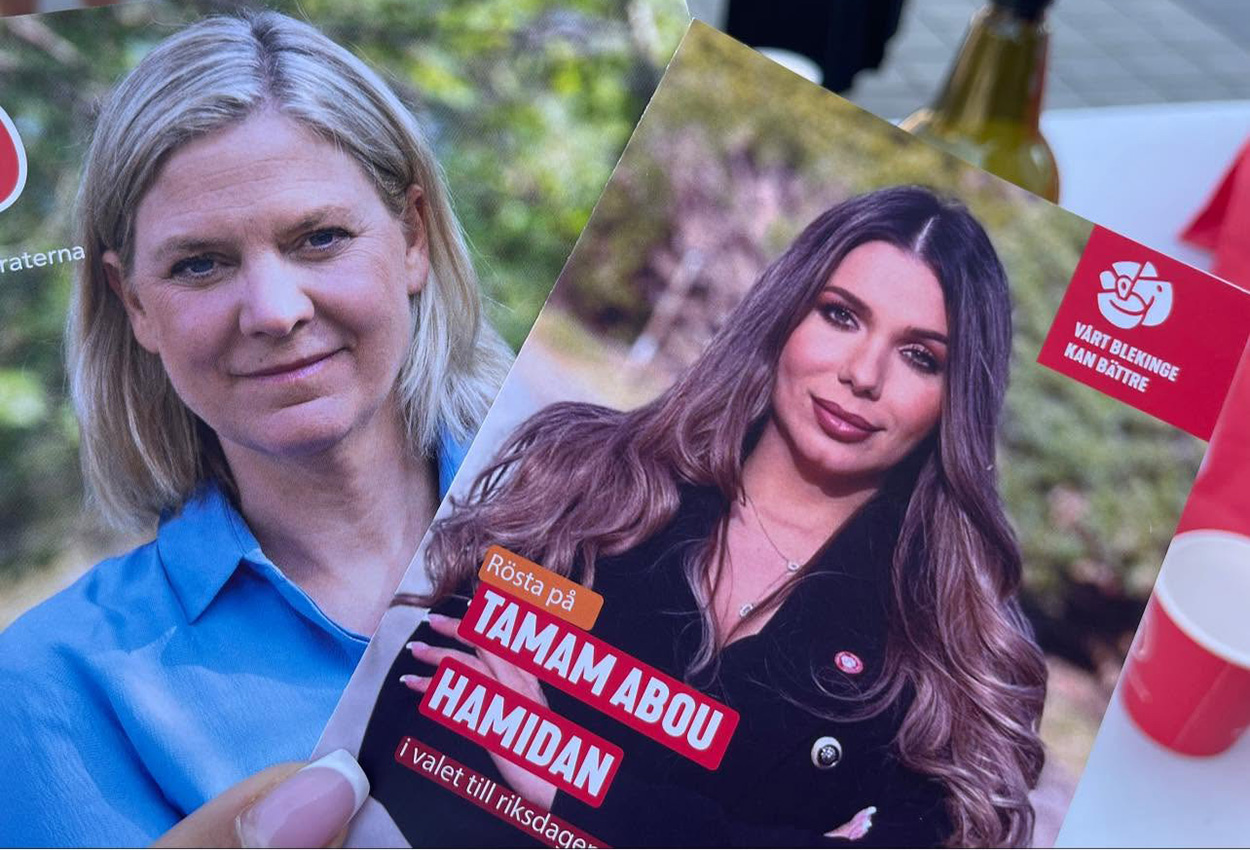
Region Blekinge’s head of primary care, Maria Hilberth, confirms that an investigation is ongoing.
– The investigation is based on the materials and the information we have received, and it is linked to both patient safety and work routines, she tells BLT.
The accused healthcare worker is still employed. His identity and background have not been made public.
Abou Hamidan Also Under Investigation
Tamam Abou Hamidan’s actions are also under review by Region Blekinge. This is particularly significant as she is not only a politician but also works within the same region. She is the department manager for the 1177 health care advice line.
Abou Hamidan denies that she used patient information to chase personal votes and points to the fact that the region’s data system logs all staff activities.
– The information is of course untrue, and the investigation will show that. We who work in healthcare have a system that tracks everything we do, so why would we look up and spread information? I plan to file my own police report, she tells BLT.
Blekinge’s first party secretary, Hampus Engquist, states that the party had already before the election received information about the matter and had also reviewed material claimed to substantiate the accusations. The information was passed on to the region.
Engquist emphasizes at the same time that the party itself has not been able to determine whether the accusations are accurate.
– If true, it is of course a very serious credibility issue, but we have neither been able to investigate nor confirm if the allegations are actually correct. We are a party, not a law enforcement authority, he says.
Private Funds Were Not the Whole Explanation
When Abou Hamidan was removed from the Social Democrats’ parliamentary and regional lists on September 7, a different explanation was given publicly. She had launched a major personal campaign to surpass higher-placed candidates on the parliamentary list through personal votes.
The campaign received 100,000 kronor from Nordic Care Clinic, a family-owned beauty company where Abou Hamidan herself is the head. According to the party district, the funding violated the Social Democrats’ candidate rules.
Abou Hamidan and the party organization in Olofström have disputed the district’s interpretation. BLT now reports that the sponsored campaign was only part of the background to the drastic decision.
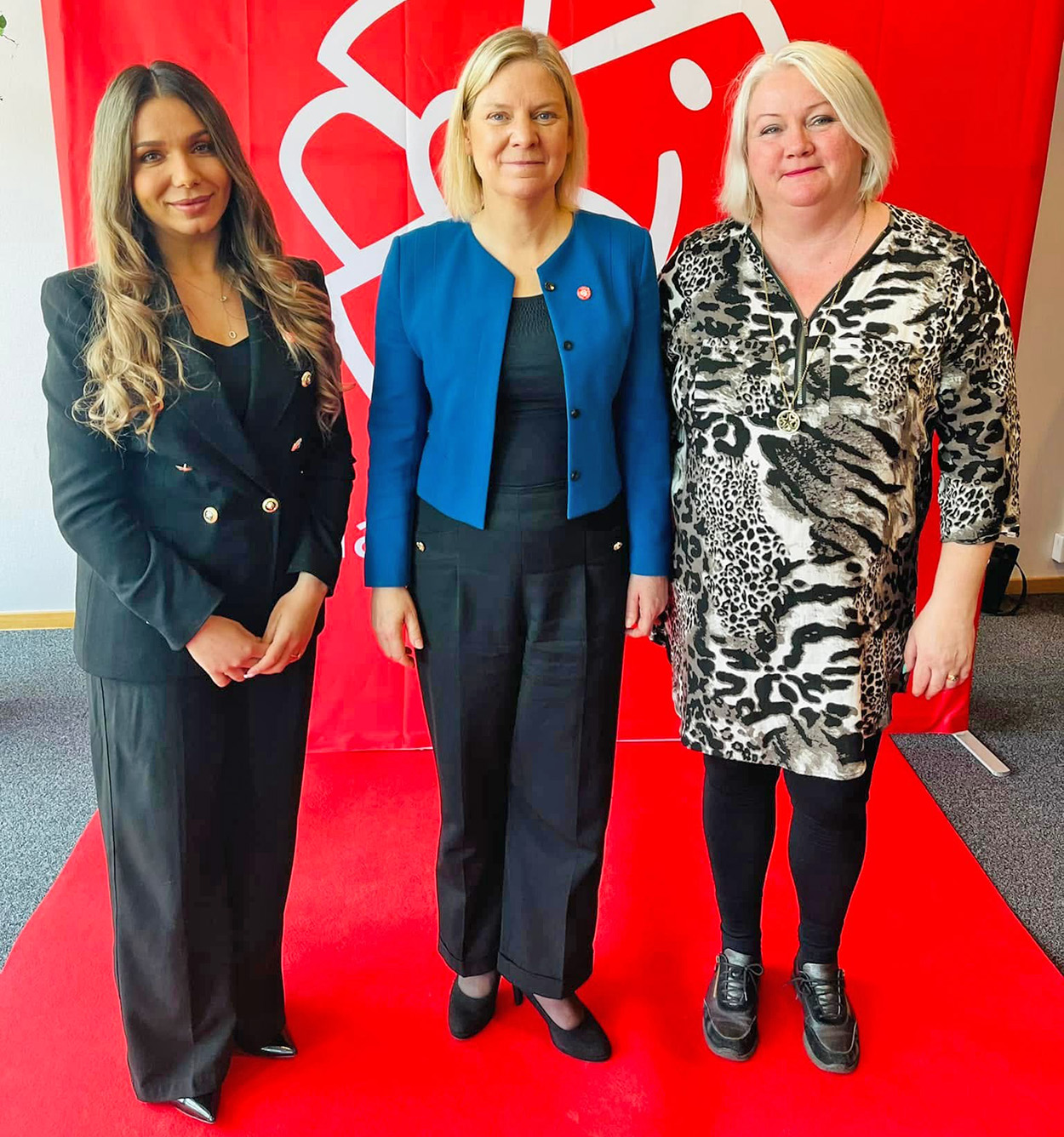
The district reportedly received recurring information over the summer that Abou Hamidan was running her own campaign activities outside Olofström without coordination with the joint election organization.
Among other things, the campaigning was reportedly targeted at residential areas with a high proportion of foreign-born residents and took place in connection with city festivals in Karlskrona and Karlshamn. This was in addition to the information about the patient contacts.
Engquist says that before the election the party chose to publicly refer to the circumstance that could be substantiated – the privately funded campaign – but that the decision was in fact based on a broader assessment.
Olofström Strikes Back
The affair has also caused a deep internal conflict within the Social Democrats in Blekinge. Olofström’s workers’ association, which had supported Abou Hamidan’s personal campaign, does not accept the party district’s action.
In a letter to the party board, the local organization demands an independent review of how the candidate rules were applied when she was removed. The district’s position is much harsher. According to Engquist, trust in Abou Hamidan has been exhausted.
She herself claims that the conflict actually stems from other Social Democrats realizing that her personal campaign could take her all the way to parliament.
– I have done everything “by the book” and have backed down immediately if something was wrong. All this started when the district realized I had a chance to make it into parliament, she tells BLT.
From Gaza to Political Top Positions
Abou Hamidan was born in 1988 and grew up in Gaza. She came to Sweden in 2014 and settled in Olofström but still identifies as Palestinian.
Her political career then progressed rapidly. She joined the Social Democrats and in 2020 became chairwoman of the municipal council in Olofström. After the 2022 election, she received several important assignments. She is today, among other things, chair of the education committee and the youth council as well as a member of the municipal council.
At the regional level, she became first vice chairman of the Blekinge Regional Council, a position she still holds.
Already in the 2022 parliament election, Abou Hamidan aimed for personal votes – to become a so-called “personal vote rocket”. She was then fifth on the Social Democrats’ list in Blekinge but received nearly 1,000 personal votes. After the election, she became the third alternate for the Social Democrats in Blekinge to the parliament.
Ahead of this year’s election, she made a new and considerably more aggressive attempt to get in through personal votes. That attempt came to an end when the party district removed her from the lists.
Widespread Suspicions of Electoral Influence After the Election
The new information from Blekinge comes as suspected improper electoral influence after this year’s election is being investigated in several parts of Sweden. A total of 58 police reports of suspected electoral fraud had been submitted nationwide by the end of September, while around 4,000 incident reports were registered.
Among the most notable cases is Borlänge, where reports of, among other things, pre-filled voting slips, voter transport, and suspected vote buying have led to a police investigation. No one had yet been formally suspected of a crime.
SEE ALSO: Stockholm City reports suspected electoral fraud – linked to Somali Left candidate
Borlänge Municipality’s own review has so far not been able with one hundred percent certainty to prove systematic or organized electoral fraud took place in the municipality’s polling stations, but the police investigation continues.
In immigrant-dominated Järva outside Stockholm, a preliminary investigation is also underway after the election office reported allegations of undue influence. The suspected crimes are undue action during voting and taking undue rewards during voting.
The case surrounding Tamam Abou Hamidan, however, is distinct because of the possible connection to confidential medical records. If the accusations are proven true, it would mean that personal information patients provided in healthcare could have been used for a completely different purpose – to identify and contact potential voters.
Region Blekinge’s investigation is expected, according to BLT, to be completed shortly. Only then will the region present its consolidated assessment of what happened.