After a long period of falling interest rates, Swedish households now risk facing a new economic shock. The Riksbank is expected to raise the key interest rate again, while rising prices for electricity, fuel, and imported goods are putting pressure on household finances. For mortgage holders across the country, this could mean thousands of kronor in increased costs each year.
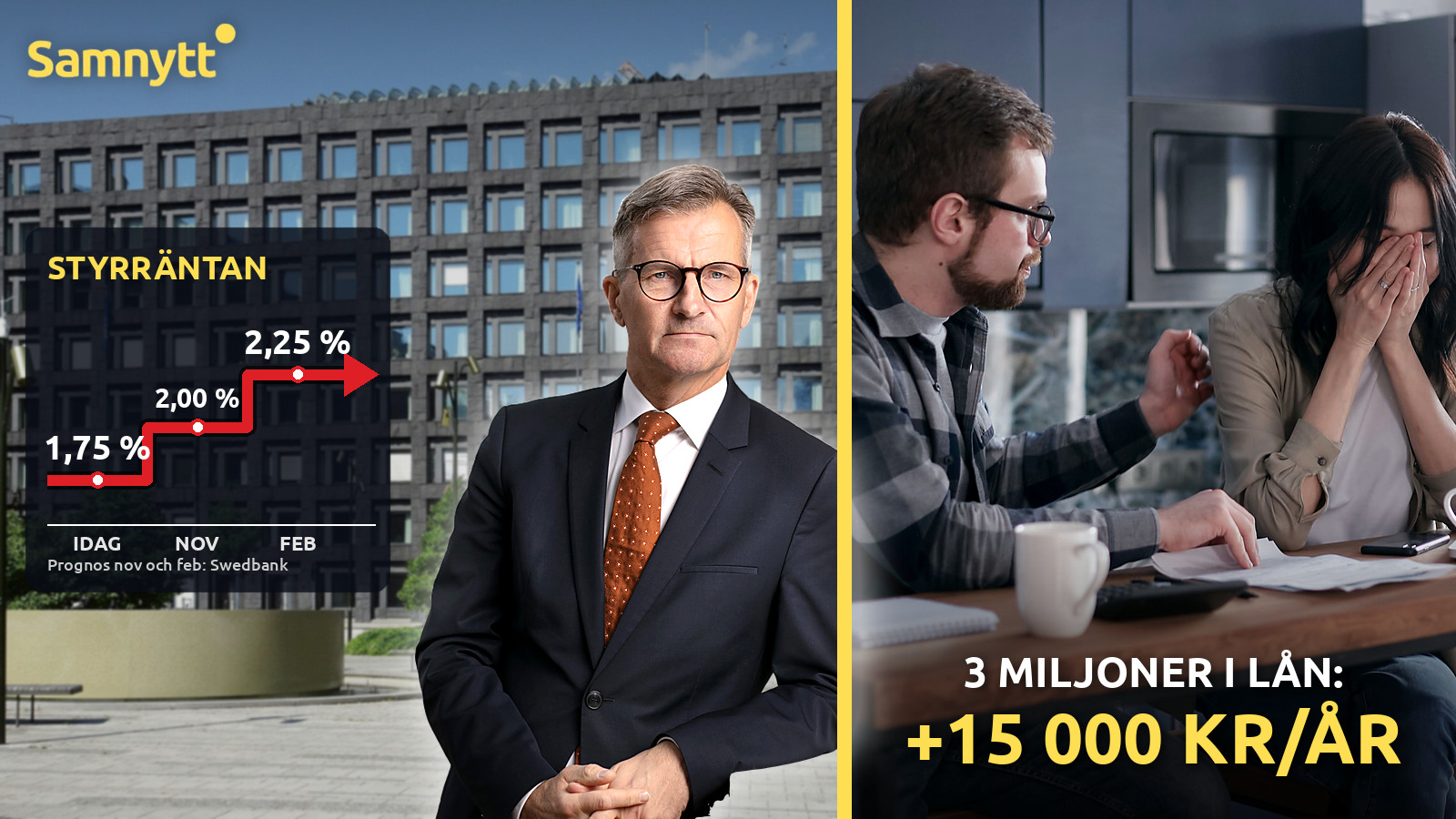
On November 4, the Riksbank will announce its next interest rate decision. After the key rate has remained at 1.75 percent for just over a year, several economists expect Riksbank Governor Erik Thedéen to present the first rate hike since September 2023.
That time, the Riksbank had raised the policy rate to 4 percent in the fight against inflation. This was followed by a period of rate cuts that gradually eased the pressure on Swedish households.
But now forecasts are once again pointing upward, and according to the Riksbank’s own assessment, a hike could come as early as before the end of the year if the economic trends continue as expected.
Oil Crisis and Inflation Could Mean More Expensive Mortgages
Several factors are behind the turnaround. The Swedish economy showed signs of recovery during the summer and autumn, while inflation has started to rise again.
Above all, it is about higher energy prices, but the weakening of the Swedish krona also contributes to making imported goods more expensive. Since the turn of the year, the krona has lost almost nine percent against the US dollar.
READ ALSO: A Tank for 1,800 Kronor? Expert Warns of Diesel Price at 30 Kronor per Liter
This means that Swedish households risk being hit twice: first by higher prices for energy, fuel, and consumer goods, and then by increased mortgage costs as the Riksbank tries to prevent inflation from taking further hold.
This could be particularly tough on households with large mortgages and small financial margins. Since a large proportion of Swedish mortgages have variable rates, changes in the policy rate often have a relatively rapid effect on households’ monthly expenses.
Several More Rate Hikes Could Be Ahead
Swedbank’s private economist Arturo Arques told Expressen that he expects the Riksbank to raise the key rate by 0.25 percentage points in November, and then make another increase of the same size in February next year.
READ ALSO: SBAB Predicts Three Rate Hikes in a Row
If the forecast proves correct, the policy rate would rise from today’s 1.75 to 2.25 percent. For a household with three million kronor in mortgages, an interest rate increase of 0.5 percentage points corresponds to approximately 15,000 kronor in increased annual interest costs before deductions, provided the entire increase is passed on to the mortgage rate.
After tax deductions, it’s just over 10,000 kronor more per year. For households with even larger loans, the cost increase could be significantly higher.
At the same time, inflation is expected to continue upward during the winter and spring. Swedbank’s forecast indicates inflation could peak at around 2.7 percent in April next year.

Warnings of Multiple Simultaneous Cost Shocks
It’s not just mortgage interest rates that are worrying economists. The combination of higher energy prices, more expensive fuel, rising import prices, and increased interest costs risks creating a particularly tough situation for households during the winter months.
For those already with small margins, it could mean that a growing share of their income goes to fixed expenses, while the ability to save or consume declines.
Swedbank’s private economist Arturo Arques urges households in his interview with Expressen to review their finances now and consider how they would cope with further cost increases.
– That’s why we keep nagging about having a savings buffer, and not being overly indebted. Simply to build resilience against these changes and reduce your interest rate sensitivity, he tells Expressen.
Locking your mortgage interest rate to protect against coming hikes is, however, not necessarily an economic advantage. Several banks have already raised their fixed rates in anticipation of the Riksbank starting to hike the policy rate.
For households with limited margins, a fixed rate can still be an option. Even if it’s more expensive in the short term, it provides greater predictability and protects against further rate increases during the fixed period.
READ ALSO: Expert: Electricity Bill Could Be 10,000 Kronor More Expensive This Winter