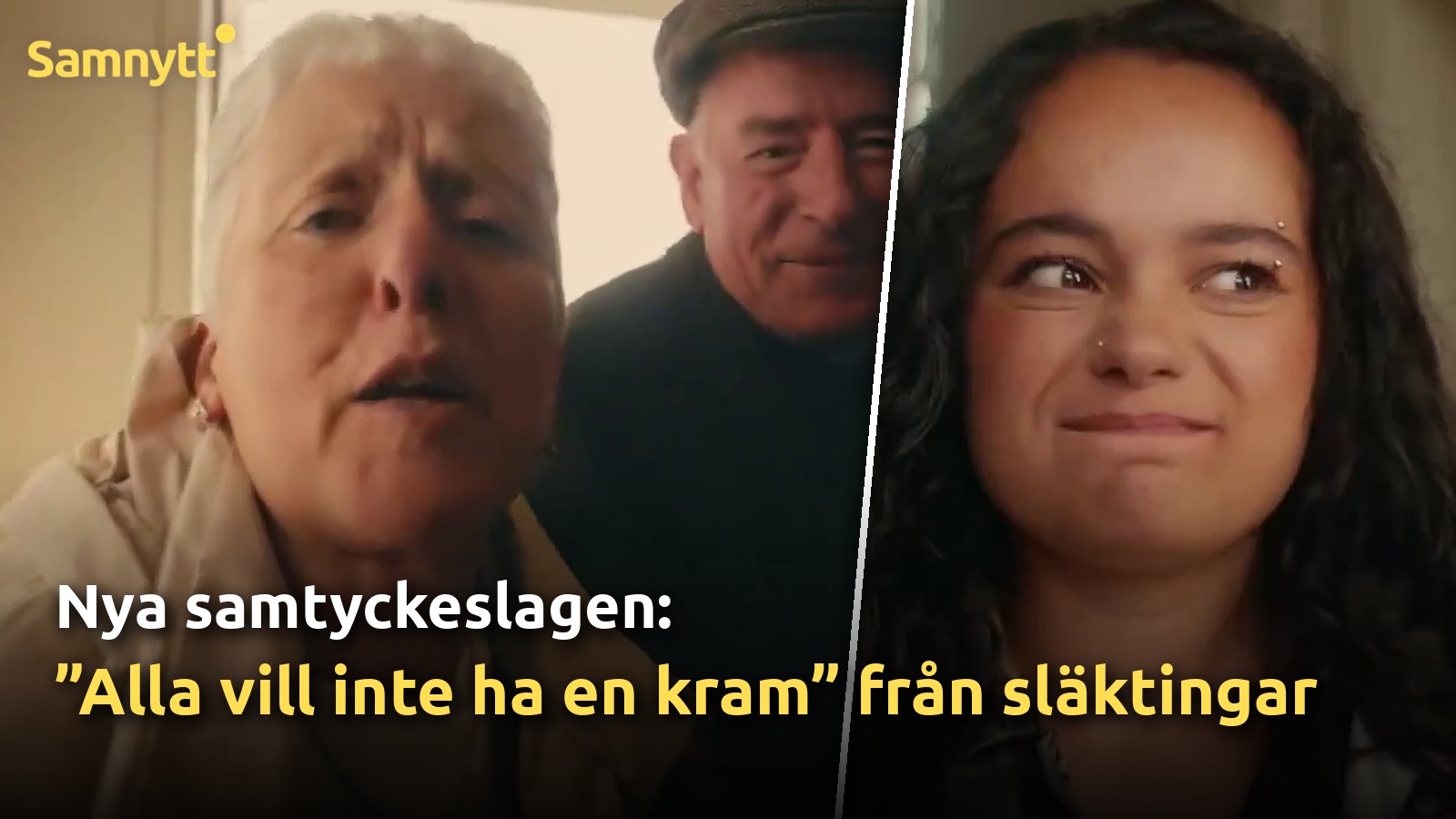
A consent campaign in Ireland, backed by state funding, was forced to withdraw a film that depicted grandparents’ hugs as something grandchildren might want to avoid. The message was that not everyone wants a hug, not even from those who love them. After a storm of criticism and an intervention by justice ministry officials, the film has been removed, and now the government is distancing itself from a campaign it helped finance.
The film is 25 seconds long. A front door opens, and an elderly couple enters, enthusiastically hugging a small boy. When they then lean toward the teenage girl standing behind him, she looks uncomfortable, and the film cuts to a sign with the campaign’s logo.
“Not everyone wants a hug. Not even from the people who love them. Embarrassing? Maybe. Important? Absolutely,” says a voice-over at the end of the film.
The campaign is called We-Consent and is run by the Dublin Rape Crisis Centre (DRCC), a nonprofit organization that supports victims of rape. It is supported by Ireland’s Department of Justice and the Department of Children, Disability, and Equality, as RTÉ reports.
In the film’s final shot, the logo of Cuan—the state agency against domestic and sexual violence—appears. According to the Irish Independent, Cuan has provided 275,519 euro for the campaign’s national rollout.
According to the conservative news site Gript, which reviewed the organization’s annual reports, DRCC received nearly 1.3 million euro in state funding for consent work between 2021 and 2025.
The Logo Reveals the Link
The government and Cuan claim the film was made cheaply by volunteers, that it is not a government campaign, and that Cuan did not fund the films specifically. But it is the agency’s logo that appears at the end of the film, and the agency’s money supports the campaign it belongs to.
The film was uploaded on DRCC’s social media already in mid-September. Only when it went viral this week, and caught the attention of outlets such as the New York Post, did the government respond.
Justice Minister Jim O’Callaghan wrote on X that the film was both inappropriate and demeaning to grandparents, and that it was removed after contact with his officials.
“It goes without saying that loving grandparents are an incredibly positive part of a child’s life—something to be cherished, not something to campaign against,” wrote Jim O’Callaghan.
Health Minister Jennifer Carroll MacNeill called the film a mistake. Foreign Minister Helen McEntee, who herself founded Cuan when she was Justice Minister, said that telling grandparents to ask permission before hugging grandchildren is not a government priority. Prime Minister Micheál Martin admitted that many grandparents were likely offended.
Consent Forms at the Airport
The criticism has been fierce. Paul Lawless from the Aontú party asked in parliament what the film had cost and why the state was asking grandmothers and grandfathers to think twice before hugging their grandchildren.
Party leader Peadar Tóibín called the film “completely crazy” and said it plants the idea that a grandparent’s hug is something sinister and suspicious. He believes the state owes grandparents an apology.
Gareth Scahill, senator for the ruling Fine Gael party, called the film a waste of public money and wondered if the Irish will need to sign consent forms in the airport arrivals halls before greeting relatives this Christmas.
Political scientist Eoin O’Malley at Dublin City University told the BBC that the film is the latest example of state overreach, and that the idea of grandparents having to ask permission before hugging grandchildren appears absurd to most ordinary people.
Organization Blames the Attention
The DRCC states that the films are based on experiences from more than 20 consent workshops, and that the film was withdrawn due to the negative attention it received in the past day.
Two additional films have been removed pending review. In one, a group of teenage boys watch TV as a mother enters during a love scene; in the other, a girl asks her father where babies come from.
From the opposition, Social Democrats’ Gary Gannon defended the campaign and accused the justice minister of leading a witch-hunt against the organization.
READ ALSO: Dagerlind: The State Should Not Protect Women from Bad Opinions