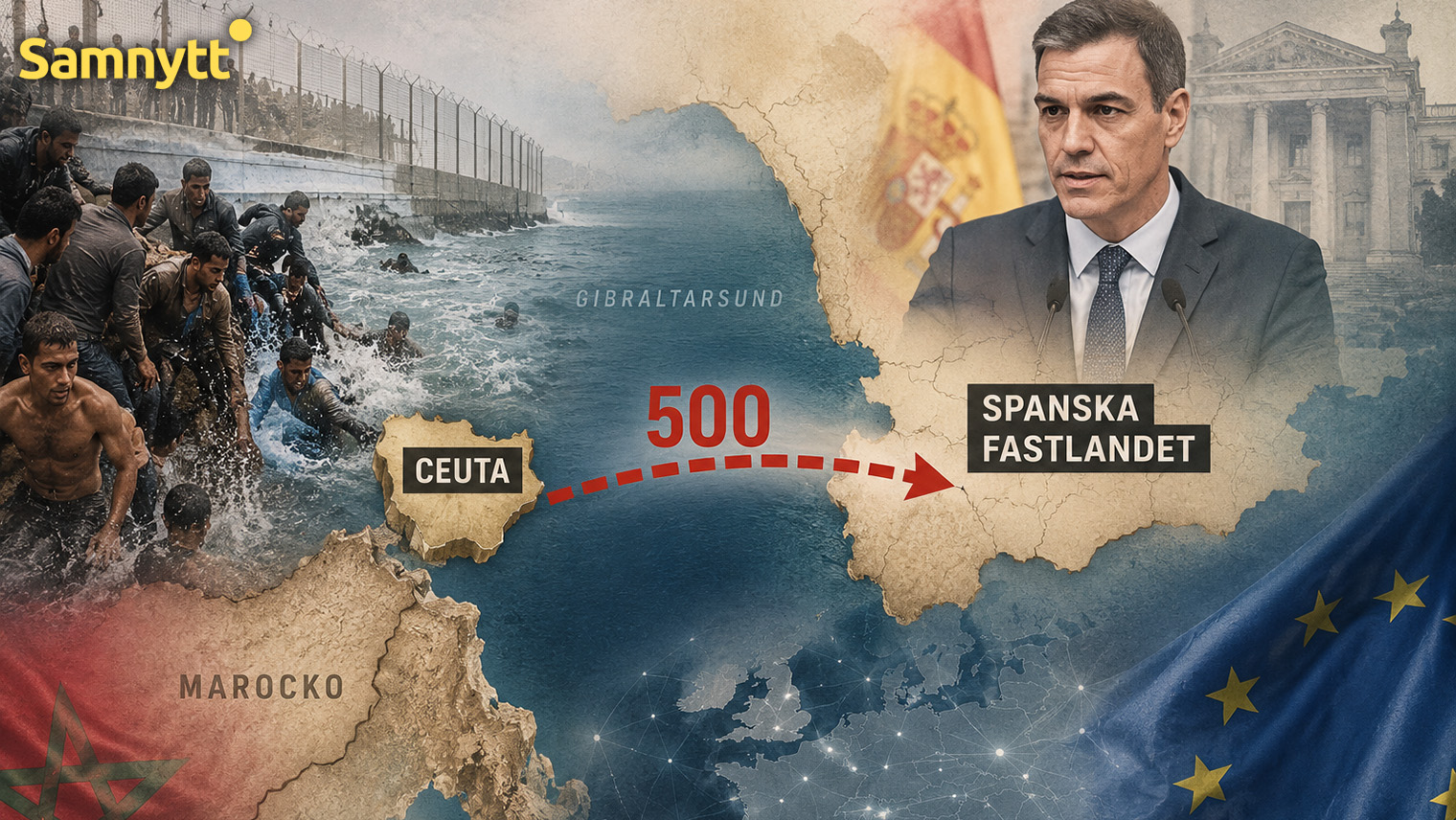
Many of the approximately 70,000 people who illegally crossed the border from Morocco to the Spanish enclave of Ceuta have returned. But several thousand still remain, and the humanitarian problems are growing. At the same time, Spain’s earlier statement that no one would be transferred to the mainland has begun to unravel. The development provides new fuel for the Swedish political debate that followed the migrant influx, where Prime Minister Ulf Kristersson (M) warned of a repeat of 2015, while leading Social Democrats dismissed the comparison as alarmist.
The acute border crisis in Ceuta is over in the sense that most of the migrants who entered the Spanish enclave on July 30 have returned to Morocco. But the picture of a crisis essentially being resolved becomes more complicated when considering those who still remain on Spanish territory and refuse to return.
According to Spanish estimates, about 70,000–72,000 people crossed the border during the dramatic day. Spain’s Interior Minister Fernando Grande-Marlaska estimated as recently as last week that about 5,000 people are still illegally in Ceuta, the vast majority young men without grounds for asylum but with “a dream of Europe.”
Meanwhile, France 24 reports much higher estimates of the number of young migrants. Local organizations state that nearly 4,000 young men may remain, while the Spanish government estimates that about 2,500 of these are living on the streets. The numbers are uncertain and partly contradictory, both regarding the total and the proportion said to be minors.
Refuse to Return to Morocco
Among those who remained are many young Moroccans who do not want to return despite harsh conditions in Ceuta. France 24 describes how hundreds sleep in warehouses, on streets, and on beaches. The lack of toilets, hygiene facilities, food, and medical care has become a growing problem.
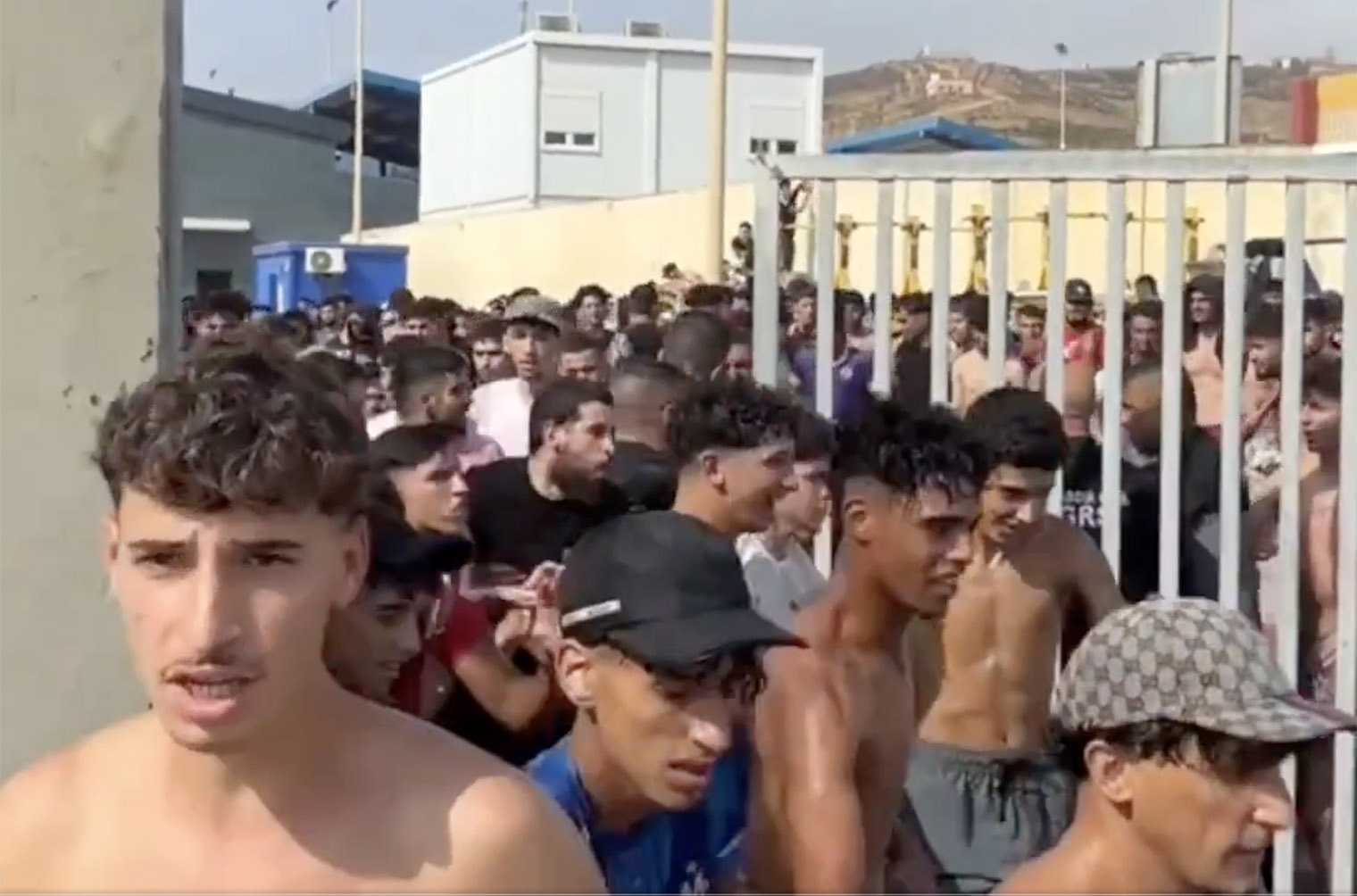
The migrants interviewed by the channel mainly express a desire for a better economic and social life in Europe. Several explicitly say they have no intention of returning to Morocco. The situation thus is not just about people seeking international protection from persecution. Asylum grounds must be assessed individually, but the motives several of those interviewed cite are primarily prospects for the future, jobs, and economic opportunity.
READ ALSO: After Spain’s Mass Amnesty for Illegals: Now Thousands of Africans and Arabs Are Pouring into the EU
The claims that the remaining group contains many minors makes the situation legally complicated. Under Spanish law, unaccompanied minors cannot be collectively sent back. Identity and family relationships must be investigated individually and the best interests of the minor must be considered.
However, images from the storming do not provide strong reasons to believe that the proportion of minors is large. The concept of “unaccompanied refugee children” has previously been subject to widespread abuse, not least in Sweden.
The EU Commission has meanwhile taken a clear stance. Commission spokesperson Markus Lammert said on Tuesday that Spain and Morocco should ensure the quick return of people staying illegally in Ceuta and that EU regulations also contain provisions for the return of minors without accompanying guardians. Morocco, for its part, has stated that it is prepared to cooperate on returns.
Spain Changes Course – 500 to Be Moved to the Mainland
At the same time, the previously tough Spanish stance is starting to soften. On August 13, Interior Minister Grande-Marlaska categorically stated that those who entered Ceuta or Melilla illegally would be sent back and neither reach the Spanish mainland nor remain permanently in the enclaves.
Less than a week later came a different message. The leftist government in Madrid has decided that about 500 migrants claimed to be minors can be transferred from Ceuta to the Spanish mainland. And no one knows if it will stop there.
The background includes, among other factors, the increasingly difficult humanitarian situation and the state’s special obligations towards minors. Hundreds are said to be living on the street and depending on help from locals and aid organizations. The main reason is that they do not want to return home, not that they cannot.
The plan is politically sensitive even in Spain. Several regions governed by the conservative Partido Popular together with Vox oppose taking in more migrants. The promised amnesty has shown that as many as three million people are staying illegally in the country.
READ ALSO: Spain’s Amnesty for Illegals Grows: 3 Million Migrants
The government is therefore trying to structure the transfer so that aid organizations and child protection authorities can assume responsibility for what are described as particularly vulnerable persons, without automatically transferring guardianship to the regions.
The policy reversal also came just hours after the EU Commission emphasized that people illegally staying in Ceuta should return to Morocco, even though the rules concerning minors require special handling.
This does not mean that Spain has opened up for a general transfer of the remaining illegal migrants to the mainland. But the previous categorical principle—that no one would move on from Ceuta—no longer clearly applies without exception.
Ceuta Became a Swedish Election Issue
The development is also interesting from a Swedish perspective. The events quickly took on domestic political dimensions ahead of the upcoming parliamentary election. Prime Minister Ulf Kristersson (M) drew parallels to the European migration crisis of 2015 and demanded that Spain protect the EU’s external border.
“2015 must not happen again,” wrote Kristersson, stating that, together with European colleagues, he had appealed to the EU leadership. Spain must use the European instruments available, he emphasized: “Because this is about Europe’s borders. We saw what happened when they weren’t protected, and we should never go back there.”
READ ALSO: Social Democrats File Parliamentary Complaint Against the Migration Minister After Ceuta Statements
The reaction from the Social Democrats was harsh. Former Justice Minister Morgan Johansson (S) called the Prime Minister’s statement “very strange” and argued that Kristersson was creating an unnecessary conflict with Spain.
“The situation was never even close to the 2015 migration crisis. This is happening in Africa, and now it seems most have returned,” wrote Johansson, ending with the question: “Has the Sweden Democrats now completely taken over foreign policy as well?”
Even the former Social Democratic Foreign Minister and UN profile Jan Eliasson criticized the government’s reaction. He described it as “clearly premature” and emphasized that the majority of migrants had returned to Morocco.
Majority Have Returned – But Problems Remain
Johansson and Eliasson found some support for the central fact—the majority have returned to Morocco. Spanish estimates speak of about 72,000 border crossings on July 30, while approximately 5,000 were still believed to be staying illegally in Ceuta last week. But developments also show that the issue cannot be reduced to how large a proportion have returned.
Thousands of people may still be in the small enclave, authorities are struggling with registration and individual assessments, and the humanitarian issues have become so severe that Madrid is now making exceptions to the earlier principle that no one should be transferred to the mainland.
READ ALSO: Ceuta at Breaking Point—Rapes and Fear Among Locals
The central question going forward, therefore, is what will happen to those who refuse to return—and whether the transfer of 500 minors will be a limited exception or the start of a broader relocation from Ceuta to the rest of Spain, and what signals that in turn sends to others aspiring for a better economic life in Europe.
There is as yet no direct equivalent to 2015. The Spanish government has not opened the border or offered a general residence permit to the newly arrived, in addition to the promised amnesty for already existing illegals. And the EU Commission still advocates for returns.
Therefore, based on current information, it cannot be said that a new “2015 effect” has emerged. But the Spanish policy shift shows that the highly sensitive political question of what happens once people have illegally crossed the EU’s external border remains very much alive. And thus, the Swedish debate about Ceuta is also likely to continue as part of the election campaign.