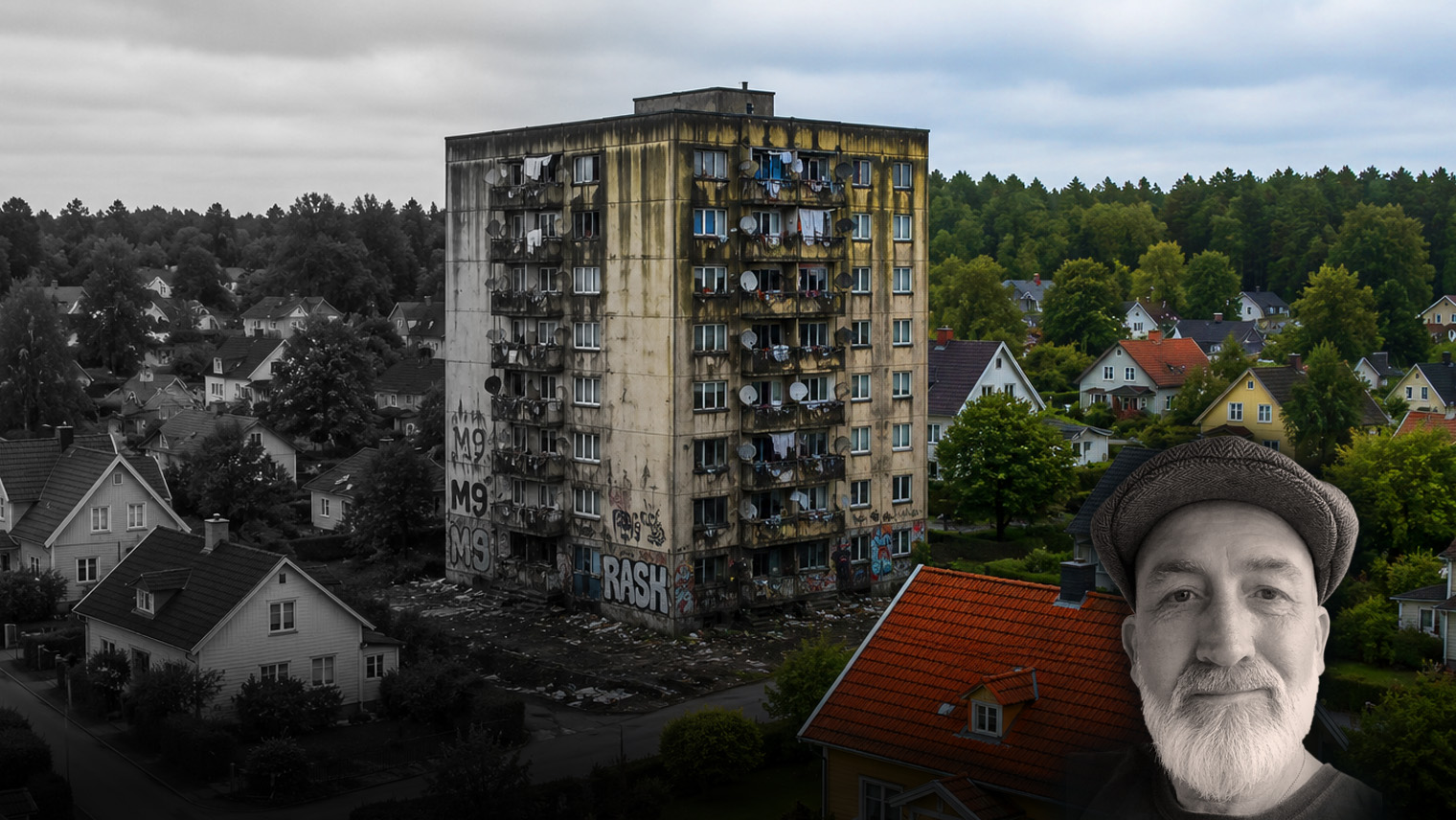
COLUMN • For decades, Swedish authorities have pursued a social experiment without historical precedent. Through mass immigration, urban planning, education policy, and political moralizing, they have tried to dissolve Swedish togetherness and create new forms of community – as if people, cultures, and national identity were things that could easily be reshaped from above. The assumption has been that security, trust, and social cohesion will arise automatically simply by placing people close enough together. But people do not function as interchangeable components in an ideological project.
For many years, Swedish debates on migration, integration, and urban planning have been characterized by an almost reflexive idea of “mixing”, most recently through the Social Democrats’ clear ambition to forcibly mix the Swedish people with the mass immigration and marginalized misery they themselves have created (together with the Moderate Party’s Fredrik Reinfeldt).
If only people are placed close enough to each other – in the same neighborhoods, the same schools, and the same social environments – then new harmonious communities are supposed to emerge.
This has been presented as modern, progressive and almost a moral given – which it neither is nor ever has been. For behind this whole idea lies a view of humanity that very few actually dare to discuss openly.
It is the delusion that people are fundamentally interchangeable. That culture, history, language, identity, and social trust are mostly external constructs that can, without major difficulty, be dismantled and replaced with something new.
ALSO READ: Social Democrat to Homeowners Opposed to Forced Mixing: “Move”
This pathological idea has permeated much of Swedish politics in recent decades, mostly driven by the parties of the left, but also by so-called bourgeois parties.
On Samnytt, Mats Dagerlind has previously written about perhaps the most revealing aspect of the entire project – that many of its strongest advocates have never wanted to live with the full consequences of their own ideas.
People naturally seek environments where they recognize themselves. Where there are shared codes, a common history, and mutual understanding. This is true for all groups around the world. It is as true for Swedes as for anyone else.
Jonas Andersson
Politicians, opinion-makers, architects, and journalists have argued for multicultural “mixing” while themselves choosing safe and prosperous areas marked by high social stability, strong schools, and low crime rates – in other words, Swedish areas.
ALSO READ: Dagerlind: Why Do Architects Never Live in Their Own Social Experiments?
There is, of course, a reason for this. Because deep down, almost everyone understands how societies actually function. Security does not arise automatically just because people happen to live close to each other.
Trust is built slowly. Shared norms develop over generations. Social cohesion is not something that can be legislated through municipal integration plans or architectural visions.
Still, for a long time Swedish politics has treated humanity’s deepest, most fundamental needs for belonging as a problem to be broken up.
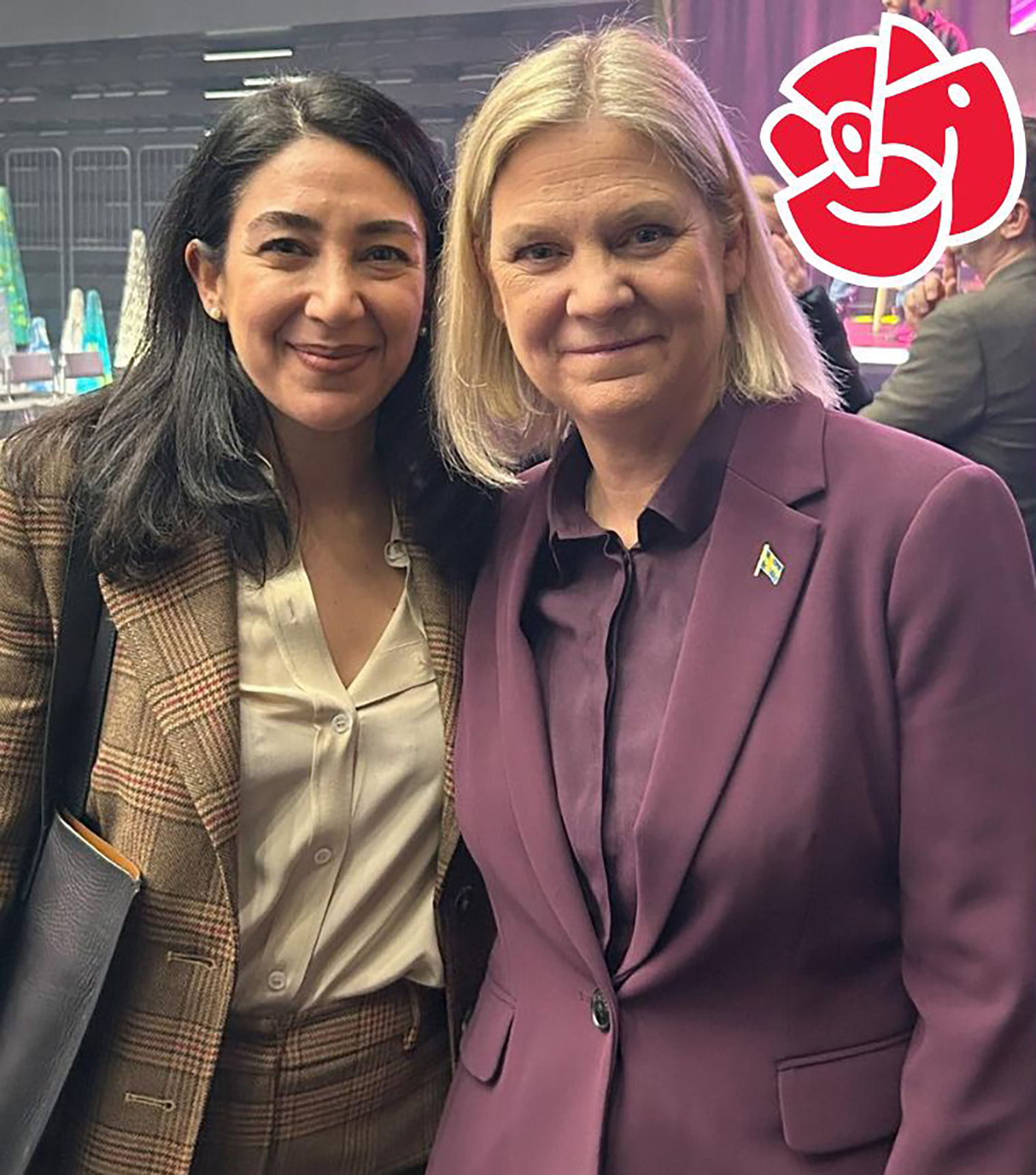
People who have wanted to live in peaceful and culturally cohesive environments have often been viewed with suspicion. Swedes’ desire to live among people who share their language, norms, and frames of reference has been described as “segregation” – almost as a moral failing.
At the same time, the dissolution of these environments has itself been presented as something to strive for. But the strange thing is that nearly all of human history points in the opposite direction.
People naturally seek out contexts where they recognize themselves. Where shared codes, common history, and mutual understanding exist. This is true across all ethnic groups in the world, including Swedes.
Place Matters – People Matter
This does not mean that societies never change or that people must live isolated from one another. Sweden has always been influenced by the outside world. But there is a crucial difference between gradual historical development and the reckless social experiment that has been carried out in Sweden in recent decades – by reckless politicians.
ALSO READ: Lawen Redar (S) on Forced Mixing: “The Opposite of Mixing Is Segregation”
For what has emerged here is not only about mass immigration and its catastrophic consequences. Behind the madness lies an ideological view of humanity.
They notice that schools become rowdier, that Swedish youths are subjected to humiliation robberies or assaulted, that shared reference points break down, and that people ultimately no longer recognize their own neighborhoods.
Jonas Andersson
A perspective in which roots and cultural continuity are viewed as suspect – at least if they are Swedish. Where the nation is reduced to an administrative area and people are expected to function roughly the same regardless of whatever social, cultural, or historical conditions exist.
This is why the whole discussion about forced mixing often seems so detached from reality. For ordinary people notice that place matters. Culture matters. Norms matter. They see that some neighborhoods change rapidly and that security, well-being, and trust often disappear at the same time.
ALSO READ: From Selfie Trial to Political Struggle – Jan Emanuel Criticizes Forced Mixing Policy
They see that schools become more chaotic, that Swedish youths are subjected to humiliation robberies or assaults, that shared points of reference are broken down, and that people ultimately no longer recognize their own neighborhoods.
But instead of discussing this openly, the establishment has often responded with moralizing. The problem has not been seen as the development itself – but that people react to it.
And perhaps that is where the greatest conflict lies. Between ordinary people’s perception of reality and an elite that for a very long time has tried to shape society according to theories of how people ought to function rather than how people actually do. An elite that has also made sure to settle themselves at a safe distance from the misery they’ve created.
ALSO READ: A Walk in the Future We Never Chose – The Sweden That Has Become a Foreign Land for Its Own People
This is why so many today feel that something fundamental has been lost. Not just security or order, but the very feeling of belonging and community.
Because a country is not just an economy. Not just housing, jobs, and statistics. A country is also memories, norms, history, language, and a deep human need for continuity. That cannot be engineered away by social planning.