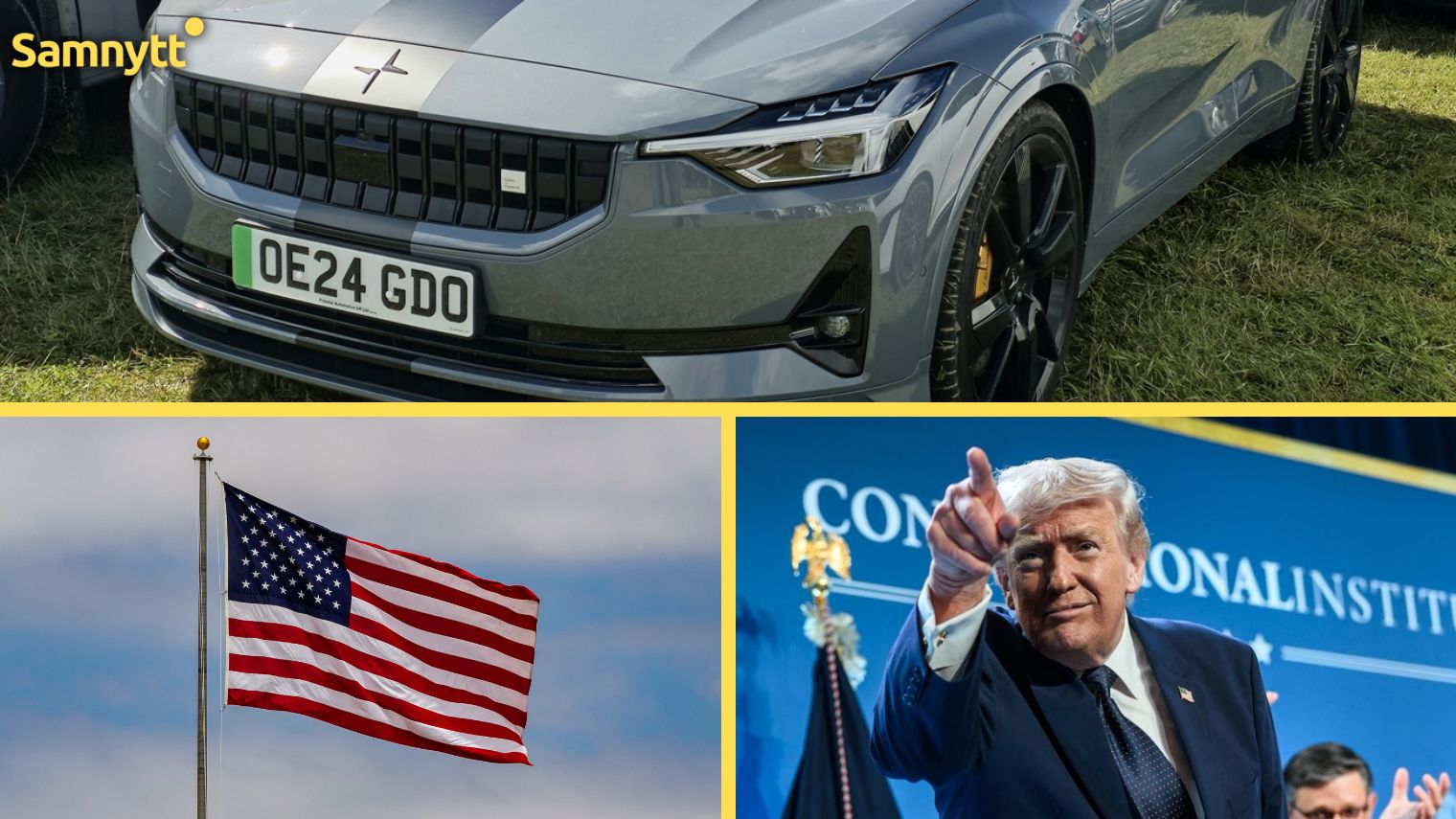
The Swedish electric car manufacturer Polestar is being blocked from selling new cars in the US starting with the 2027 model year. The decision comes after the US Department of Commerce denied the company the special permit required under the country’s new regulations for connected vehicles.
The measure is a heavy blow for Gothenburg-based Polestar, which, despite its Swedish profile, is controlled by the Chinese automotive group Geely. American authorities have ruled that the company does not meet the requirements to sell vehicles with software and connected systems linked to China.
The background is the so-called “Connected Vehicle Rule,” a regulatory framework aimed at preventing vehicles with Chinese or Russian technology for communication and connectivity from being sold on the US market. Authorities argue that the technology could pose national security risks, such as data collection via GPS, mobile connectivity, Bluetooth, Wi-Fi, and other connected functions.
READ ALSO: Volvo abandons goal of 100 percent electric
The regulation was finalized under the previous Biden administration but is now being enforced by the current US government. The ban applies from the 2027 model year and covers car manufacturers that are not granted exemptions.
Even though both Polestar and Volvo are part of the Geely group, the companies were treated differently.
Earlier this year, Volvo was granted permission to continue selling its cars in the US after demonstrating how it meets American safety requirements. Polestar, on the other hand, had its application denied and is thus forced to leave the US market for new models.
Existing Cars Not Affected
The decision does not mean Polestar will immediately disappear from the US. The company will continue to sell remaining stock of the Polestar 3 and Polestar 4 models, as well as offer service and spare parts to existing customers. However, the launch of future models on the US market is halted as long as the regulations remain in place.
Even models partially manufactured in the US are affected. The Polestar 3, for example, is built in South Carolina, but authorities have determined that the links to Chinese software outweigh the importance of the production site.

Europe to Become the Company’s Most Important Market
Polestar has announced that it now intends to put greater focus on Europe, where the majority of its sales already take place. The company’s management has previously identified the European market as the primary growth engine going forward and also plans to build the upcoming Polestar 7 model in Europe.
In recent years, the US has accounted for a relatively small part of Polestar’s :censored:6:cdd6bbaa89: sales, but the market has still held great strategic significance for the company’s international expansion.
Part of a Broader US Strategy
The halt of Polestar is so far the most high-profile example of how the US is tightening its stance against Chinese influence in the automotive industry. In addition to increased tariffs on Chinese electric cars, US authorities have introduced comprehensive rules that limit the use of Chinese software and electronics in future connected vehicles.
According to the US, the aim is to reduce the risk of foreign actors being able to collect sensitive information through modern cars that increasingly function as Internet-connected computers on wheels.
READ ALSO: Volvo executive predicts bright future for combustion engines