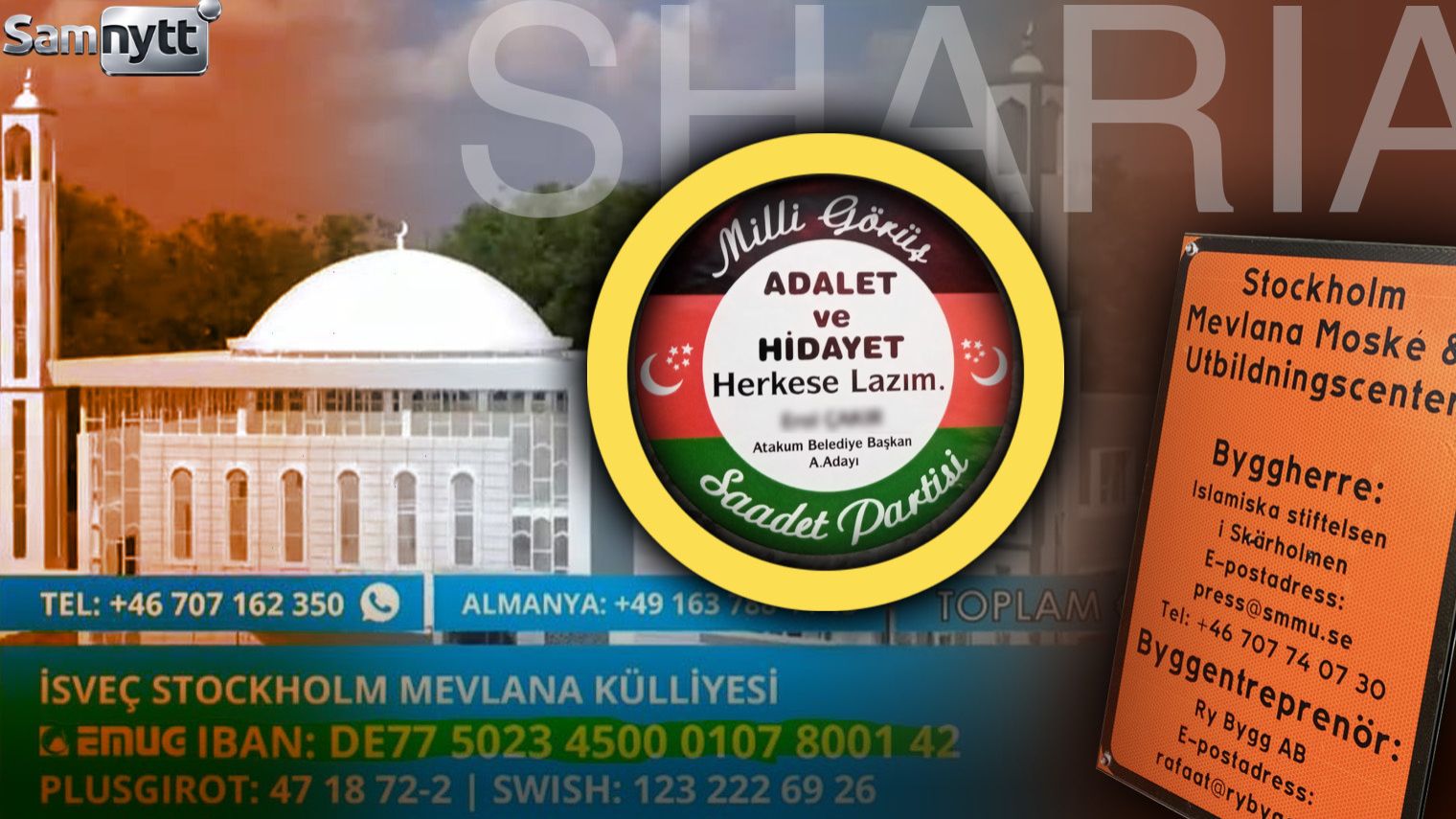
The City of Stockholm has already contributed millions to the construction of the mosque in Skärholmen through land-related efforts and decisions that have enabled the project. New information now suggests that the remaining financing can be traced to the infamous Islamist movement Millî Görüş, via fundraising linked to its European network. This further deepens the picture of a project where public funds and external actors converge—and puts additional pressure on responsible politicians to explain what checks have been carried out, what has been known, and what responsibilities the city has actually taken.
The plans for the megamosque in Skärholmen, previously reported by Samnytt, have been the subject of debate for several years. The issue is now being brought up again following new information about the project’s financing.
READ ALSO: The Megamosque in Skärholmen: Secret Funding, Islamist Connections—and Concern Among Residents
A German IBAN account linked to KT Bank AG in Frankfurt appears in both Skärholmen mosque’s own advertisements and in video material from Hasenat TV, a Turkish-language online media channel that produces and distributes content with a clear Islamist profile.
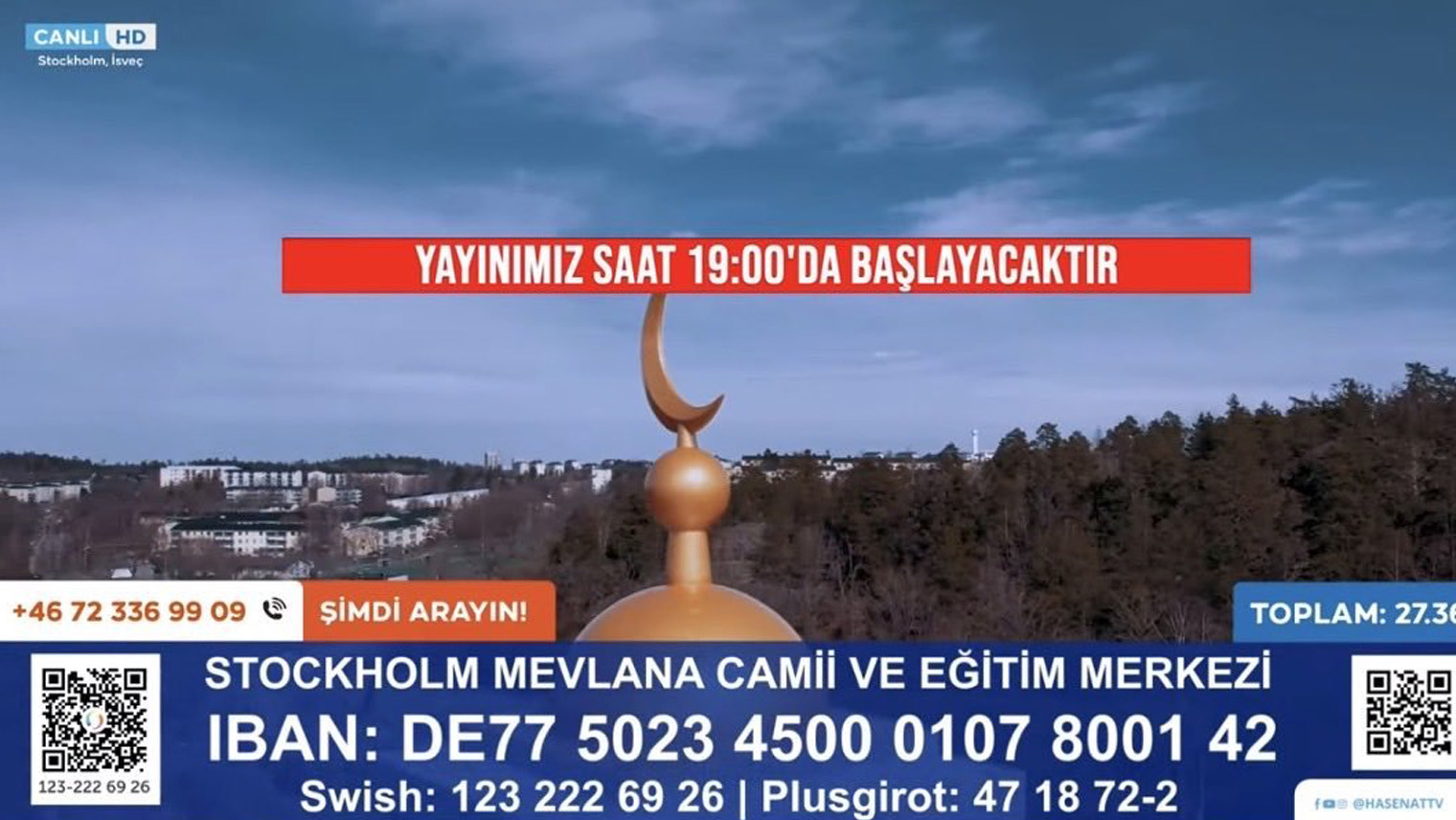
The channel has, in several contexts, been linked to circles around Millî Görüş and serves as a platform to reach a broad diaspora in Europe.
The content often consists of religious programs, sermons, and informational segments—but also calls for involvement in various Islamic projects, including mosque constructions.
READ ALSO: Shocking Numbers: 4200% Increase in Mosques in Sweden—in Less Than 25 Years
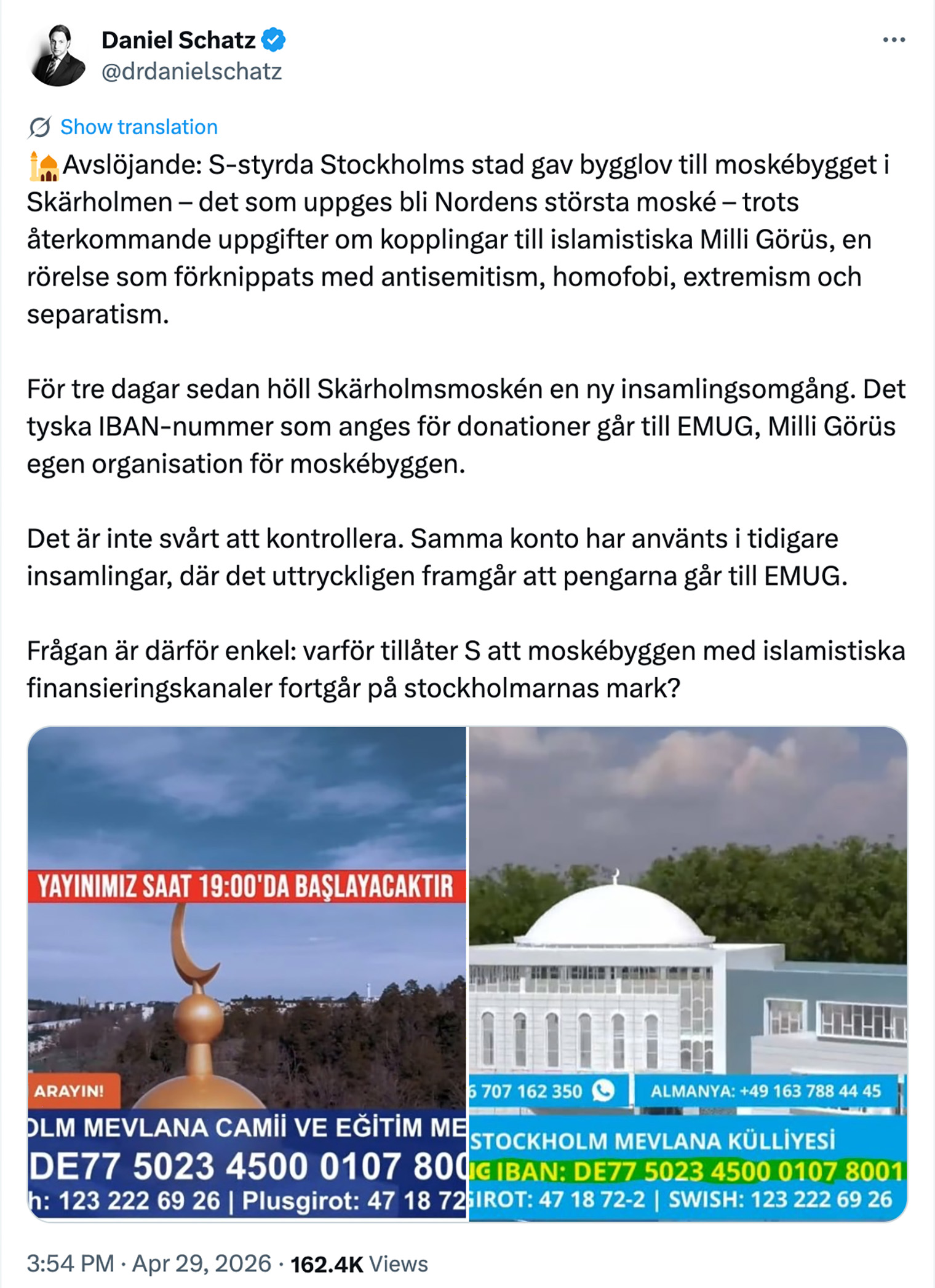
Political scientist Daniel Schatz was the first to point out in a recent tweet that fundraising for the Skärholmen mosque is connected to the organization EMUG, “Europäische Moscheebau- und Unterstützungsgemeinschaft e.V.,” which is part of the European structure surrounding the Islamist movement Millî Görüş.
International analyses and research studies consistently describe Millî Görüş as part of political Islamism, with roots in the Turkish Islamist leader Necmettin Erbakan. In European security and research contexts, the movement is identified as a religious-political actor with ideological ambitions, and in several countries it has been the subject of government scrutiny.
In sum, international sources provide a relatively unified picture of Millî Görüş as more than just a religious organization—but as part of a broader Islamist network.
A Conflict Present from the Start
Even when the mosque plans first became public, they provoked strong reactions. The project, which consists of a building with space for around 1,200 visitors—separated by gender—and activities beyond just the prayer hall, was highlighted by advocates as a benefit to the area.
READ ALSO: New Megamosque Under Construction—When Will It Be Finished?
At the same time, residents expressed concern about how the establishment would affect the district. Questions about segregation, impact on the local environment, and which actors were actually behind the project kept recurring.
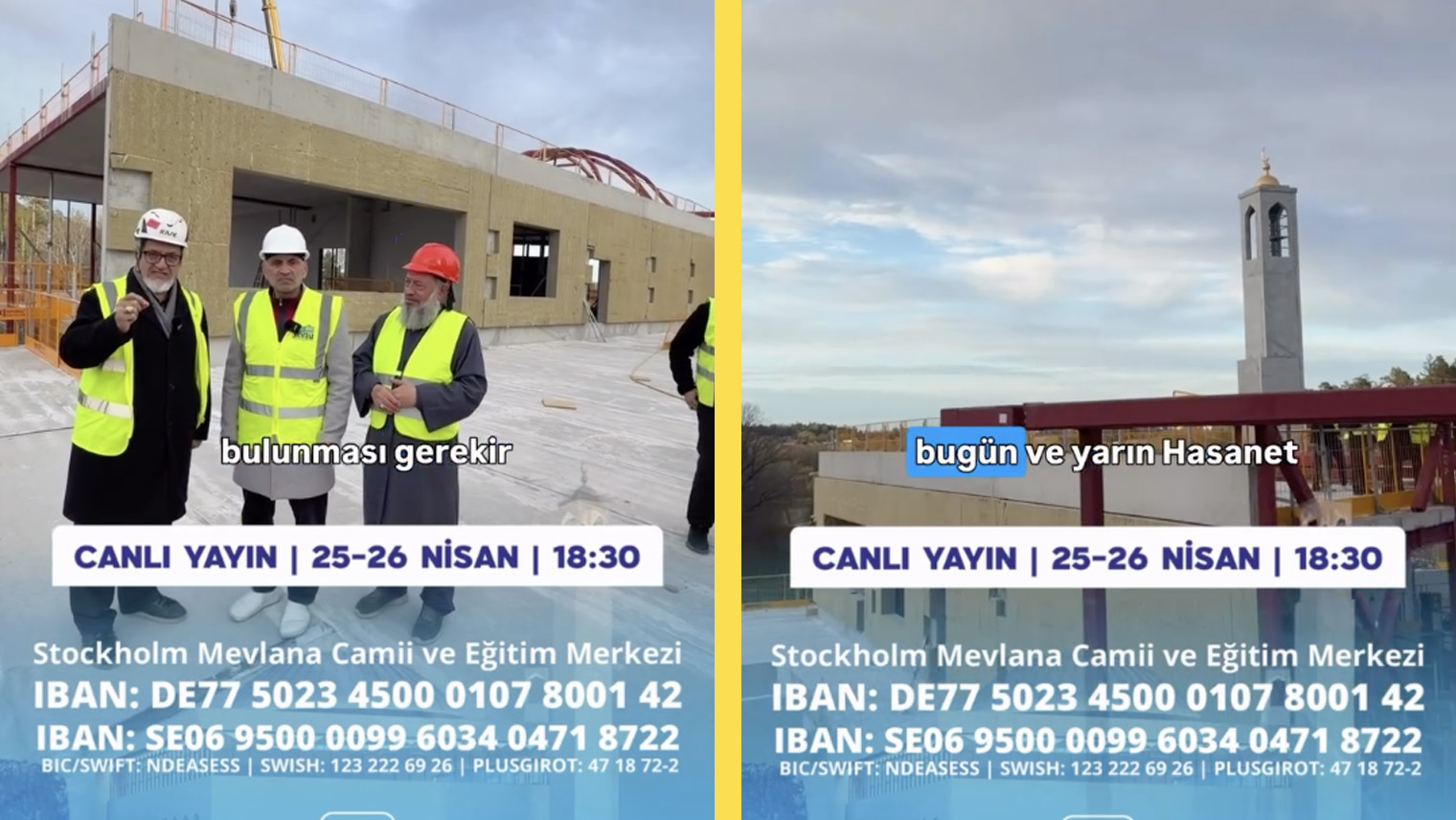
This was also the stage when reports began circulating about links to Millî Görüş. Representatives of the mosque have consistently denied that the activities have political or ideological aims, instead emphasizing that it is a matter of religious and social work.
READ ALSO: Confirmed: New Megamosque To Be Built in Kalmar
Despite objections, the project proceeded and Stockholm City approved the detailed plan. The decisions have since been criticized, not least regarding how thoroughly the background of the involved actors has been examined.
Previous reporting by Samnytt has also pointed out that public funds were used for land-related measures in the area, which has further fueled the debate on the municipality’s role.
READ ALSO: A Walk Into the Future We Never Chose—The Sweden That Has Become a Strange Land for Its Own People
The entire process has also been questioned, with the division of responsibilities described as unclear. The criticism has thus not only concerned the building itself, but the process leading up to the decision and what checks were actually conducted.
The Remaining Questions
The new information does not change the fact that the project has already been formally approved, but it shifts the focus of the debate. From mainly ideological ties, the discussion is now increasingly about financing and the Islamist structures being built within Swedish society.
Representatives from the Swedish Agency for Youth and Civil Society (MUCF) do not wish to comment, instead referring queries to be sent via email. MUCF has today taken over the area of responsibility previously held by SST, The Board for State Support to Religious Communities.
At the same time, it is said to be unclear whether the case even falls under the agency’s responsibility, that no direct comments can be given, and any response—if there is one at all—might be an admission that the agency cannot answer.
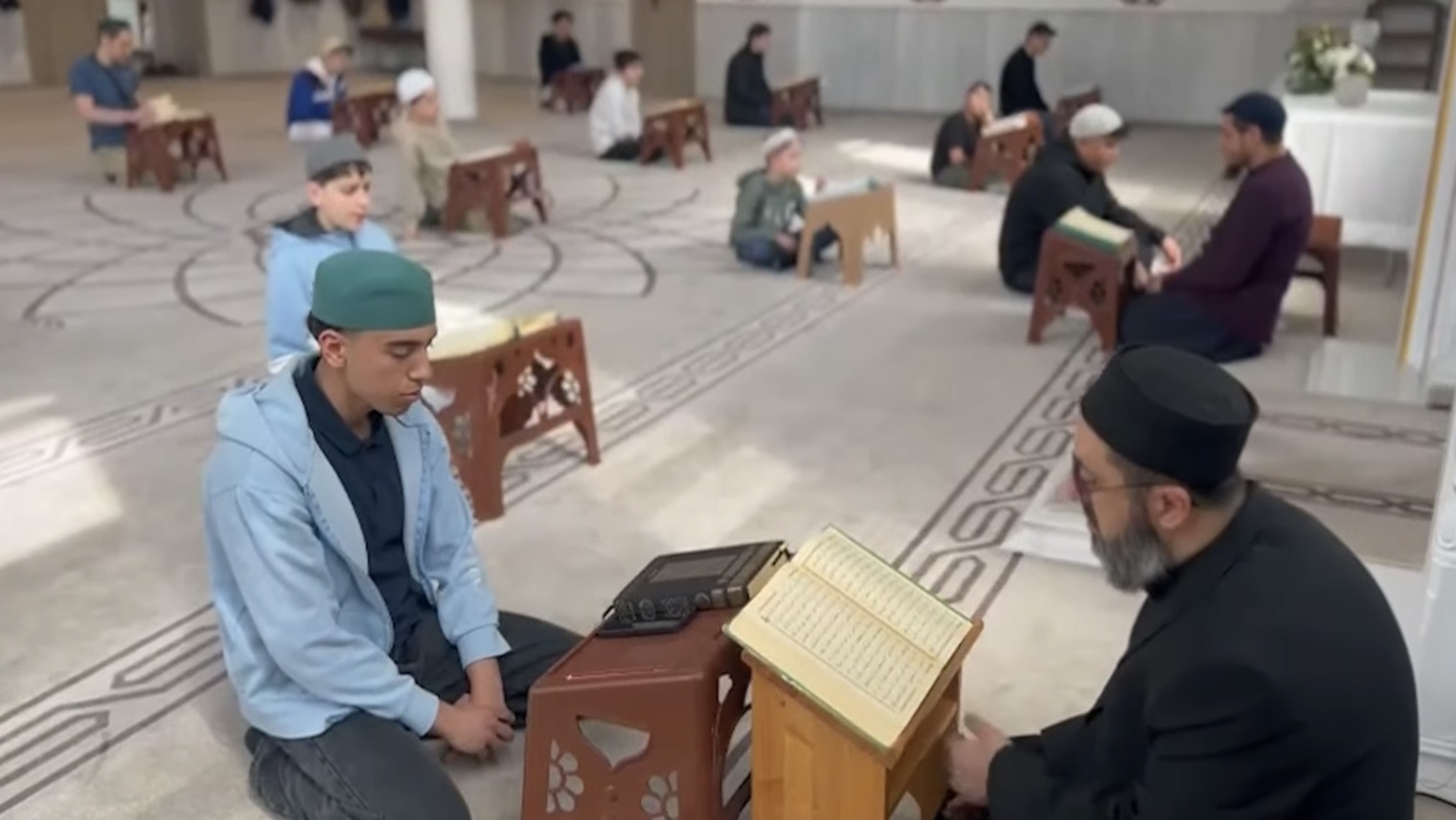
The result is that no concrete information is being provided at present, while neither a clear division of responsibilities nor a willingness to clarify the matter is apparent.
If fundraising for the project is channeled through organizations linked to Millî Görüş, serious questions are raised about transparency, accountability, and oversight.
The construction of the mosque in Skärholmen has thus become more than a local building issue—it is a case where several major societal issues converge and where answers are still largely lacking.
READ ALSO: Mona Walter on the Silent War of Islamism Against Sweden
Samnytt has also contacted responsible Social Democratic politicians in the City of Stockholm and the Exploitation Office, to get answers to questions about financing, oversight, and accountability. None of those asked have been available to comment on the information.
Thus, perhaps the most central question remains—how can it be that a project of this scale is in practice being funded by a combination of public funds from the City of Stockholm and collections linked to the Islamist and ultranationalist movement Millî Görüş—and what does this say about the roles and decision-making processes of the responsible politicians?