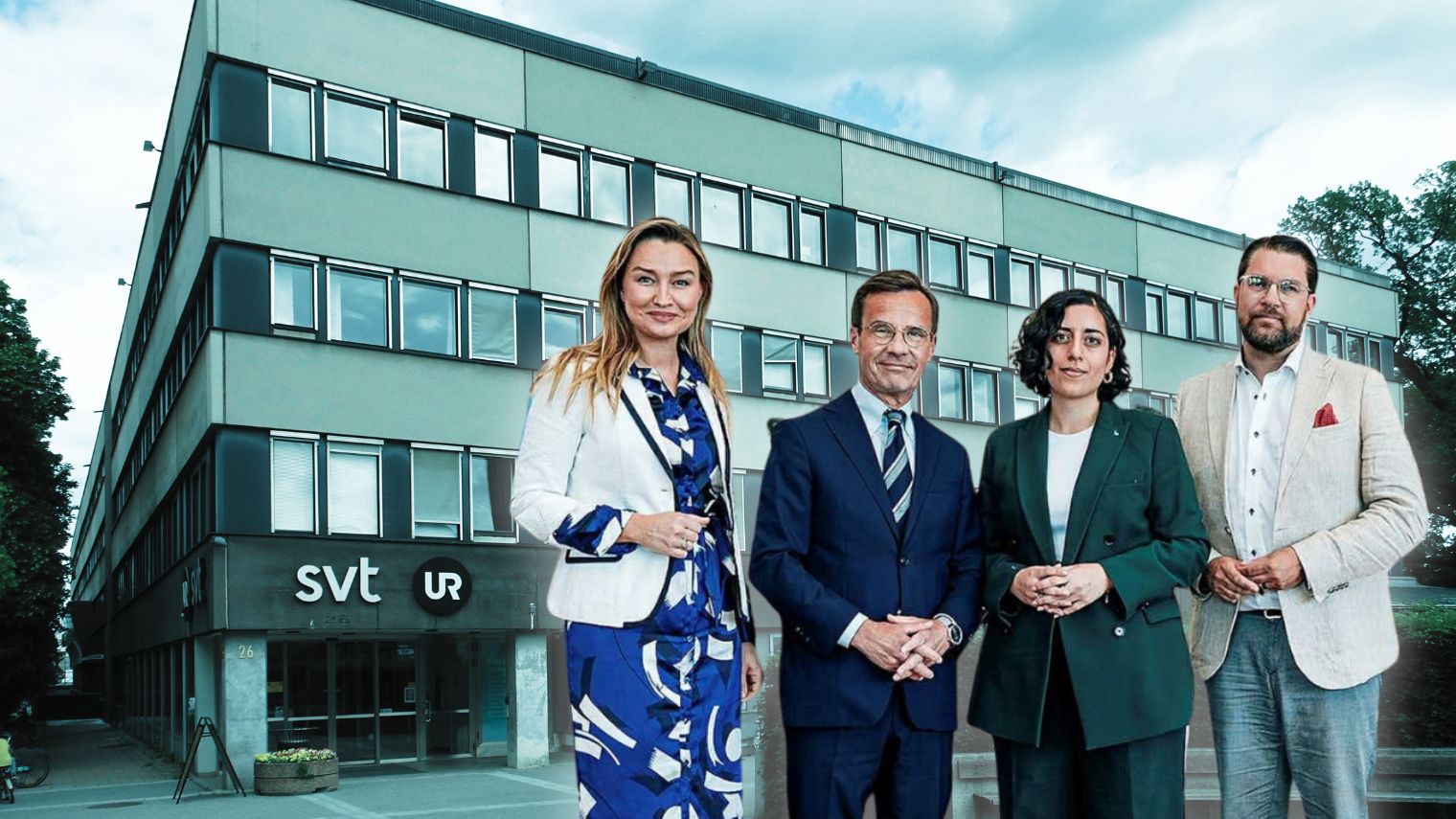
The government wants to provide an extra financial supplement to the state media companies Sveriges Television (SVT) and Sveriges Radio (SR) after the costs for the terrestrial TV network increased when TV4 left at the beginning of the year. The decision comes after an extended influence campaign in which state media have openly lamented being forced to make substantial cutbacks.
In a proposal now being sent out for consultation, four different options for structuring the compensation are presented. The largest option means that SVT will receive SEK 383 million and SR SEK 82 million, corresponding to the estimated additional costs in 2026 and 2027.
Furthermore, the Tidö Government also presents alternatives where the companies are compensated with 75, 50, or 25 percent of the amounts. Minister of Culture Parisa Liljestrand (M) says the matter requires careful handling since it constitutes an exception from the regular model for public service financing.
– I am keen to ensure that this process is carried out thoroughly and correctly and that at every stage we do our utmost to safeguard the independence of the public service companies, especially now since it involves departing from the principle that budget allocation is decided only once ahead of a new licensing period, she states.
READ ALSO: State media demand several billion extra – want to compete with Spotify
State television CEO Anne Lagercrantz also comments on the government proposal. She believes it is positive that the issue is moving forward but says that the protracted process creates uncertainty.
– It is good that there is movement on the issue, but this brings further waiting and uncertainty, which negatively affects the range of services. I still assume that Parliament will decide on full compensation; all political parties have previously agreed that the additional costs should not affect the public service companies, the SVT boss has stated.
According to the government, the purpose of the extra funding is to cover the increased costs incurred since other TV operators left the terrestrial network, while a long-term review of the network’s future organization and financing is underway.
READ ALSO: Dagerlind: SVT’s real problem isn’t the Tidö Government – it’s a dead terrestrial network