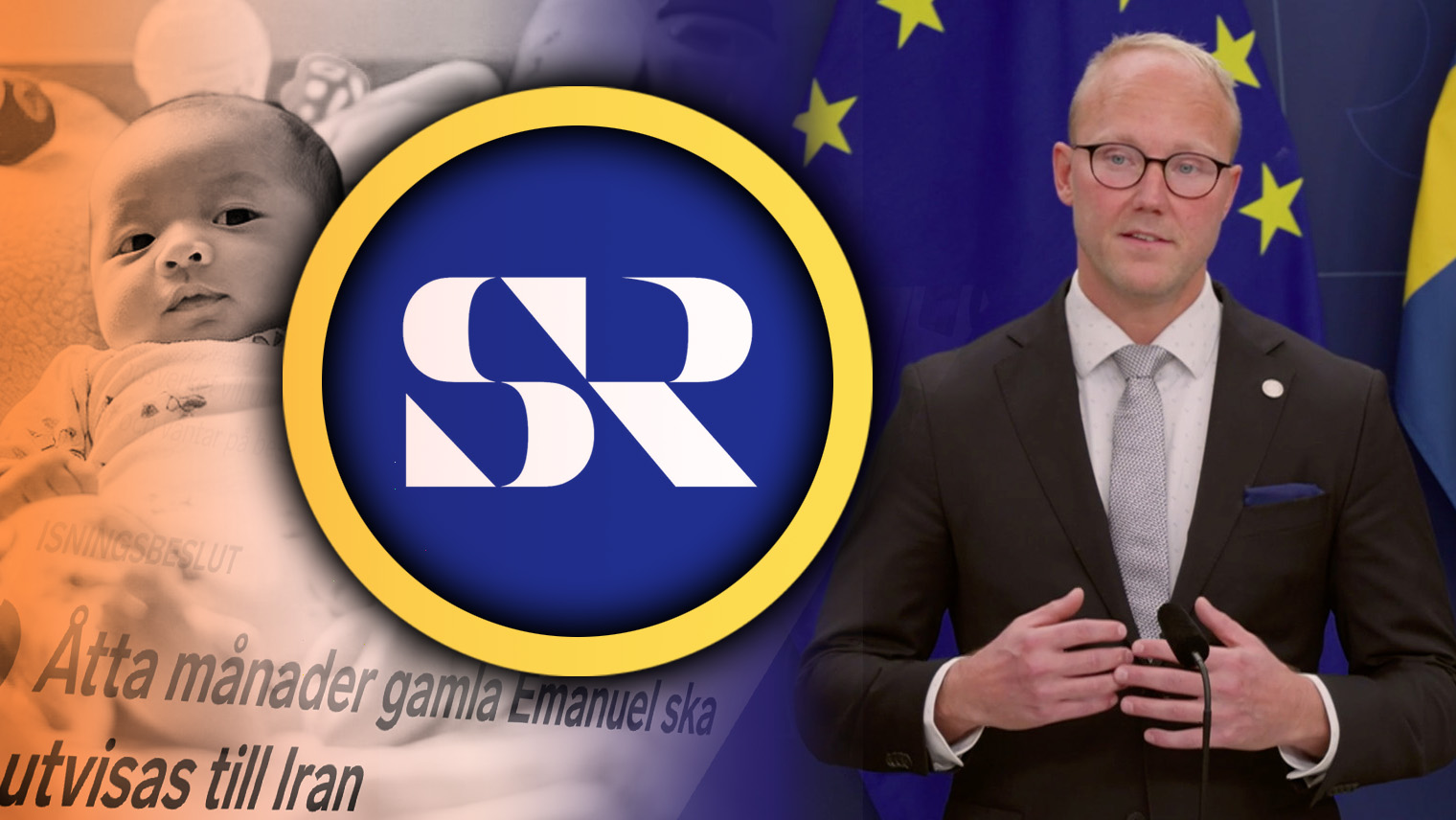
When reports spread that the Swedish Migration Agency had decided to deport an eight-month-old baby, it triggered strong reactions and quickly became an example in the debate about Sweden’s tighter migration policy. But behind the headlines lies a more complex case. According to both politicians and internal sources at the agency, the decision had no practical significance—and could have been handled differently. At the same time, Swedish Radio admits to Samnytt that the reporting could have been phrased differently.
The case concerns a child whose parents are in Sweden through so-called track-switching—which means a previous asylum application has been replaced by a work permit. After legislative changes that have limited the possibilities for family immigration in such cases, the family applied for a residence permit for the child.
The Migration Agency rejected the application and simultaneously made a decision to deport.
READ ALSO: SR Spreads Disinformation About Baby Deportation
The background to the family’s situation stretches back several years. The child’s mother, Masoumeh Ghorbani, first applied for a residence permit in 2019 but was rejected in 2020.
The decision was then upheld at all levels—first by the Migration Agency, then by the Migration Court, and finally by the Migration Court of Appeal. Such a legally binding rejection normally means the person must leave Sweden.
Through new applications and a later track-switch to work, her stay in the country has instead been extended in several steps. She currently has a time-limited work permit valid until October.
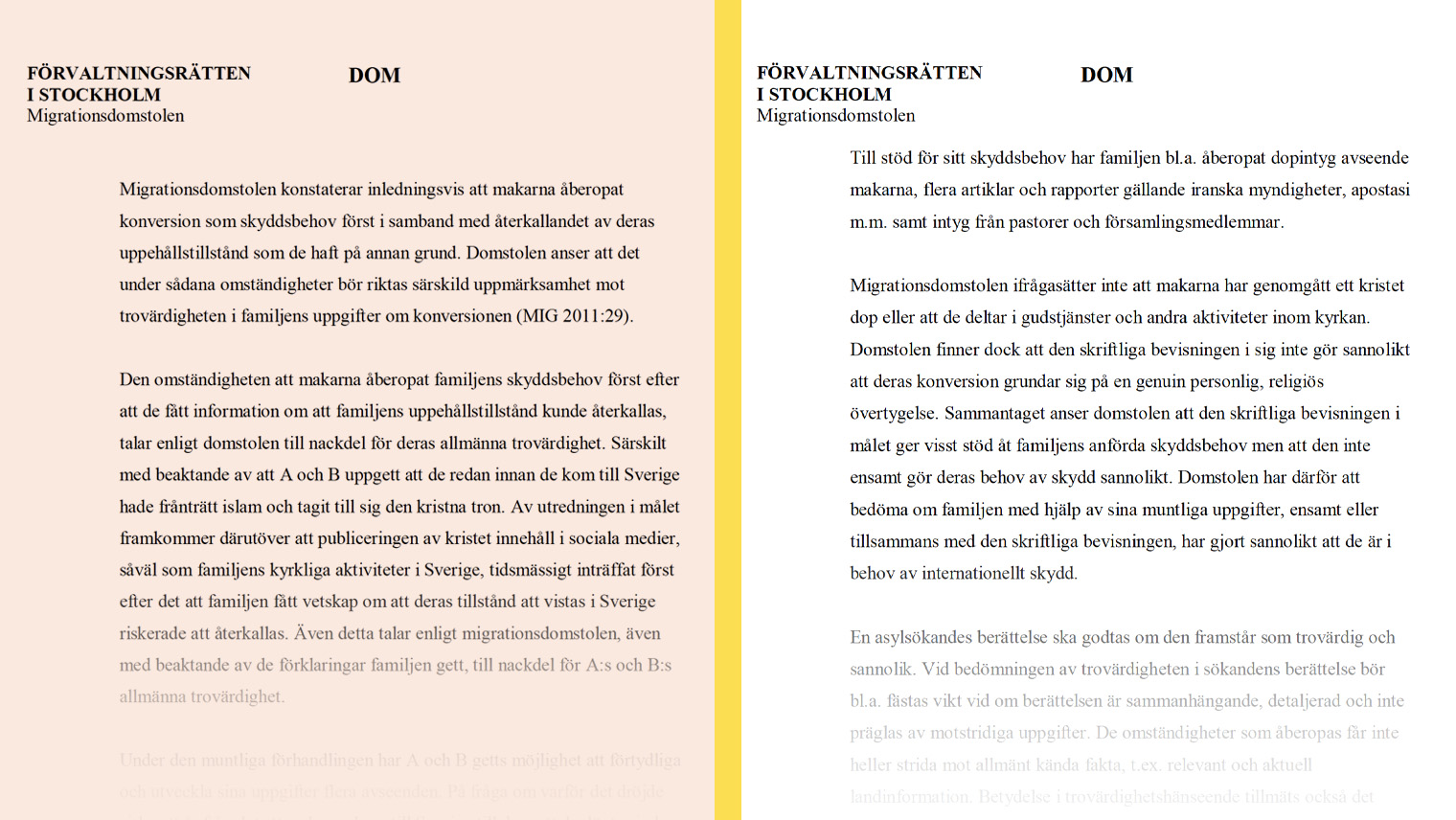
The child’s father, Hassan Alidoust, has a similar case history. He was first granted a residence permit in 2019 but had his permit revoked later and a deportation order confirmed after a court review and after the Migration Court of Appeal denied leave to appeal.
READ ALSO: Professor Leaves Migration Agency’s Ethics Council—in Protest Against Tidö Government’s Deportations
Afterward, he filed new applications and was granted time-limited residence permits again. He currently has a work permit valid until October 2026. His stay in Sweden has thus also been extended step by step after a previous legally binding rejection.
Information about the decision concerning the baby spread quickly following Swedish Radio’s reporting and was followed by headlines in several media outlets claiming an eight-month-old baby would be deported.
I can agree that this could have been formulated differently in the headline, since the decision will not be enforced as it has been appealed.
Helena Björk, journalist, Swedish Radio
The case came to be used as a concrete example of the consequences of the shift in migration policy carried out within the framework of the Tidö Agreement. The reactions were strong—even from political circles.
The case quickly became a concrete example of the consequences of the migration policy overhaul under the Tidö Agreement. The reactions were strong, including from politicians.
Christian Democrat party leader Ebba Busch commented on the case in social media and signaled that the legislation should be reviewed—something she did before the full background and legal circumstances were clarified.
READ ALSO: Inside the Migration Agency: Clans, Swedes in Minority, and a Culture of Silence
But at the same time, the decision has been appealed to the Migration Court and is therefore not enforceable. In addition, the mother is expected to have her work permit reviewed in four to five months, which would change the child’s legal position.
Previous Criticism of Application and Precedent Cases
Samnytt has previously reported on internal information from the Migration Agency describing an agency culture where parts of the organization view the Tidö government’s migration policy shift as problematic.
Testimonies have pointed to tensions between political decisions and their practical implementation, as well as concerns about how individual cases can have significance far beyond the individual processing.
READ ALSO: Voices from the Migration Agency: “It’s Not Just Corruption—It’s Serious Crime”
Against that background, the current case has taken on special weight. A formal deportation order—which, according to both politicians and internal sources, was of no practical effect and was also appealed—quickly became a media symbol case.
“Ineffective Decision”
Samnytt has contacted the Sweden Democrats’ migration policy spokesperson Ludvig Aspling, who feels the crucial context has been missing in the coverage.
Several media presented it as if a baby was to be deported alone. How do you think the reporting by Swedish Radio has affected the image of the government’s migration policy?
– It is misleading. It is odd, considering SR and Public Service’s mandate to keep people informed, and here they are really doing the exact opposite. He continues:
– I don’t actually mind them reporting this decision. But what’s missing are follow-up questions: Will the decision be enforced? And the answer is no, it won’t. And further, will the child be able to obtain a residence permit when the mother receives a renewal? Then the answer is yes. Aspling continues:
– It’s the crucial context missing in the reporting. If those questions had been asked, there wouldn’t have been a story at all.
READ ALSO: Public Service Identified as the Greatest Threat to Sweden’s Democracy
It’s catastrophic, of course. It is really bad. The people who work there have no respect for the institution or for the journalistic profession. It looks really bad. Even if they aren’t lying outright, it’s ‘lying by omission.’ That’s exactly what they are doing.
Ludvig Aspling (SD), on Public Service’s reporting on the deported baby
Our sources at the Migration Agency have said there are activist elements within the agency. Could that have played a role here, that the agency wanted to show how inhumane the Tidö government’s policy has become?
– Yes, that could be an aspect of it. The Migration Agency is correct that the grounds for family members of ‘track-switchers’ to obtain a residence permit is gone, so in that respect, they are right. He continues:
– But there are other rules they could have followed in their decision, and the most natural course in this case would have been not to make a decision at all, but to wait until the mother had received a new decision in five months. He continues:
– That would have been the normal procedure. There is a significant risk that the Migration Agency will be reprimanded in this case by the Migration Court.
READ ALSO: Samnytt’s Revelations About the Migration Agency Press the Government
Given Swedish Radio’s headlines and coverage, do you see a risk these authorities and institutions have coordinated a narrative to sway opinion in the election year?
– It could have happened naturally, that the media picked up this decision, and there doesn’t need to be anything conspiratorial behind it. But that there are people who make absurd decisions to create media attention, there could be such an aspect to this. Aspling continues:
– Many have pointed out that this decision is wrong.
Aspling also emphasizes that the regulatory changes the government is implementing have clear and noticeable impact, even in an agency like the Migration Agency.
READ ALSO: Shot Classmate in Head—Presented as Example of Successful Integration by Swedish Radio
As an example of how the new rules have had an effect, Ludvig Aspling highlights the situation for so-called track-switchers—people who previously sought asylum but instead received work permits.
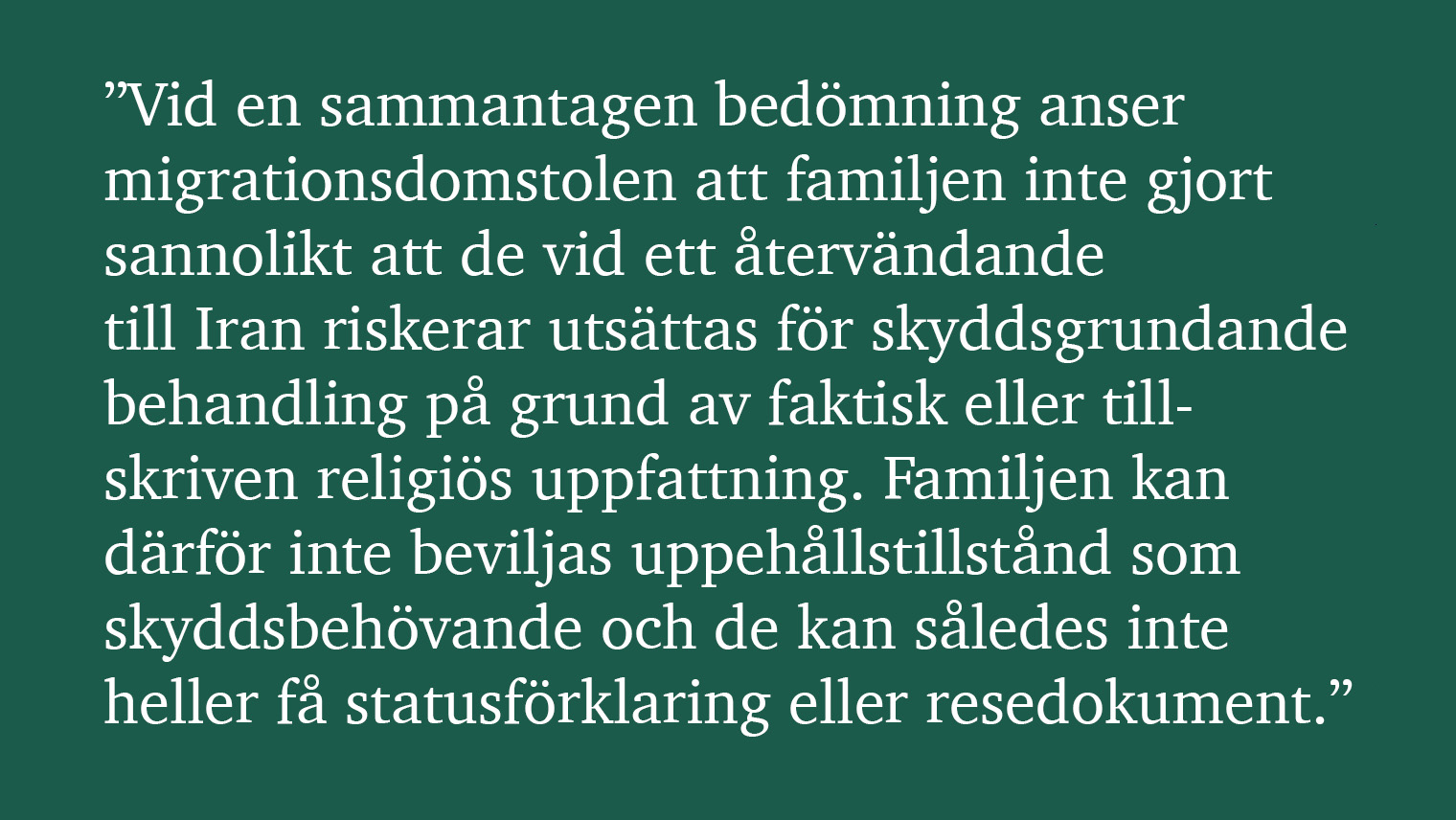
When the opportunity for track-switching was limited, the grounds for many to extend their permits disappeared. According to Aspling, this has already had clear practical consequences, with a large number of people being forced to leave Sweden when their permits expired.
At the same time, he has investigated whether the Migration Agency has instead begun using other provisions to give these individuals new reviews—which, according to him, has not increased.
READ ALSO: SVT’s Campaign When Latin American Is Deported After 20 Years
He believes this indicates that the agency generally follows the political changes, and that problems in individual high-profile cases should therefore not be interpreted as a general resistance to the new migration policy. He adds:
– I know already that there are many at the Migration Agency who see it as their mission to help people stay in Sweden. Then there is corruption aside from that. In that respect, nothing is new and I don’t think that part has gotten worse.
How would you briefly describe Swedish Radio’s reporting in this case?
– It is deliberate disinformation, that you could definitely say.
What does that say about Public Service and their mandate, in your opinion?
– It’s a disaster, of course. It’s really bad. The people who work there have no respect for the institution or the profession of journalism. It looks very bad. He concludes:
– And even if they don’t lie outright, it’s ‘lying by omission.’ That’s exactly what they are doing.
READ ALSO: SR Profile Helene Bergman: “I’m Not the One Who Has Left Democracy—It’s Public Service That Has”
Case History, Migration Agency – The Child’s Parents
Below is a summary of the case history for the child Masoumeh Ghorbani and Hassan Alidoust at the Migration Agency, including applications and decisions.
Woman: Masoumeh Ghorbani
- 2019-07-16 Application for residence permit
- 2019-08-26 Decision – Residence permit granted for the period 2019-08-26 to 2020-09-26
- 2020-06-16 Application for residence permit
- 2020-11-23 Decision – Application for residence permit rejected and deportation order issued
- 2021-06-21 Decision – Migration Court rejects appeal
- 2021-09-14 Decision – Migration Court of Appeal does not grant leave to appeal
- 2021-09-28 Application for residence permit
- 2022-10-21 Decision – Application dismissed
- 2022-10-19 Decision – Residence permit granted for the period 2022-10-19 to 2024-10-19
- 2024-09-14 Application for residence permit
- 2024-11-21 Decision – Residence permit granted for the period 2024-10-20 to 2026-10-20
Man: Hassan Alidoust
- 2019-07-16 Application for residence permit
- 2019-08-26 Decision – Residence permit granted for the period 2019-08-26 to 2020-09-26
- 2020-01-14 Case to revoke permit opened
- 2020-04-28 Decision – Residence permit revoked and deportation order issued
- 2020-06-09 Decision – Migration Court overturns appealed decision and remands case to Migration Agency
- 2020-06-16 Application for residence permit
- 2020-11-23 Decision – Application for residence permit rejected and deportation order issued
- 2021-06-21 Decision – Migration Court rejects appeal
- 2021-09-14 Decision – Migration Court of Appeal does not grant leave to appeal
- 2021-09-28 Application for residence permit
- 2022-10-21 Decision – Application dismissed
- 2022-10-19 Decision – Residence permit granted for the period 2022-10-19 to 2024-10-19
- 2024-09-14 Application for residence permit
- 2024-11-21 Decision – Residence permit granted for the period 2024-10-20 to 2026-10-20
Internal Source: “They Could Have Waited”
A source within the Migration Agency also tells Samnytt that the handling could have been done differently.
According to the source, a more natural approach would have been to await the mother’s upcoming review of her work permit instead of making a separate decision regarding the child now.
– They could have waited to see if the mother would get an extension. That would have been a more reasonable way to handle the situation, the source says.
READ ALSO: Swedish Radio Explains: This Is Why We Claimed the Afghan Rapist Was from Skövde
If the situation had nevertheless remained, the provision for ‘particularly distressing circumstances’ could have become relevant.
The source simultaneously emphasizes that the child would never be separated from its parents and that no actual deportation would occur in practice.
Swedish Radio Admits: Could Have Been Phrased Differently
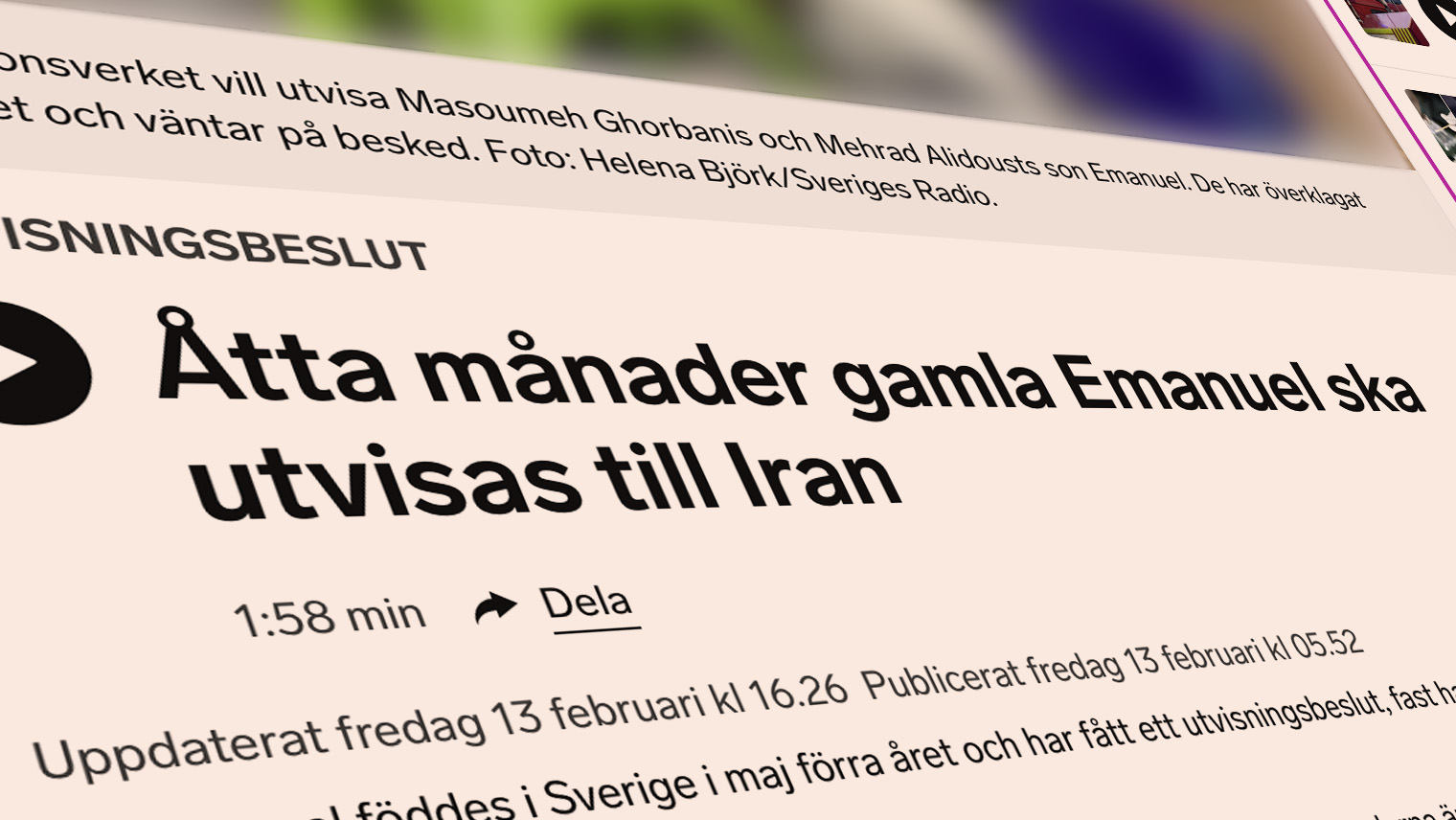
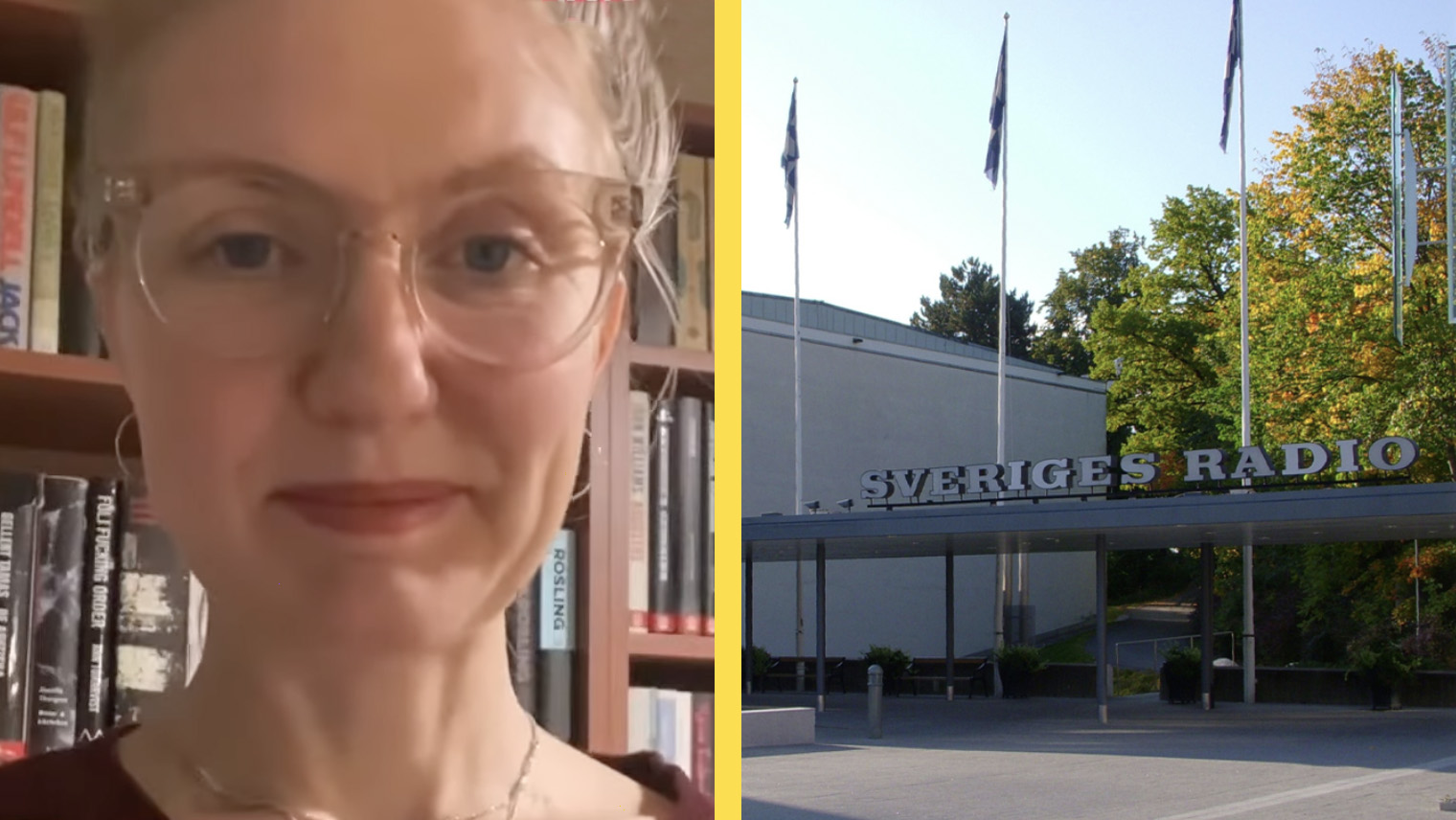
Samnytt gets in contact with journalist Helena Björk at Swedish Radio, who is responsible for the article “Eight-month-old Emanuel Is to Be Deported to Iran”.
She says the reporting was based on the formal decision made by the Migration Agency.
I think you have a point—it’s complicated because it involves several instances. And the Migration Agency’s idea of how deportation would actually be carried out is that the parents are expected to go along, since they are not in Sweden due to protection grounds, but because they have work permits.
Helena Björk, journalist, Swedish Radio
In hindsight, do you consider the wording that a baby was to be deported to be a correct and proportional description of the actual legal situation?
– There are different technicalities in the case, but the Migration Agency wrote a decision stating that the baby was denied a residence permit, then described how a deportation would proceed—that it should happen within four weeks of the decision entering into force. She continues:
– So reading the Migration Agency’s decision, that is what they write. Then the family has appealed to the Migration Court and that means the decision will now be reviewed by the next instance. But I can definitely agree—this could have been phrased differently.
Did you in this case check whether the scenario you described—that the child would be deported—was truly a realistic outcome, or whether other results were more likely, for example due to particularly distressing reasons?
– On Friday on Studio Ett, Ekot, the Migration Agency’s press manager participated and answered questions. He said there were no particularly distressing reasons in this case. And that’s also what I gathered from reading the decision. Björk continues:
– But to answer your previous question more thoroughly. I can agree that this could have been phrased differently in the headline, since the decision will not be enforced as it has been appealed.
READ ALSO: SVT Scrutinizes the Tidö Government—Asylum Activist Called an “Expert” and Criticizes Deportations
Has there been any internal discussion at Public Service regarding the risk that this reporting might create a simplified and dramatized picture of a complex family and permit case?
– When it comes to a larger discussion, I’d refer you to someone on my editorial team with a broader responsibility.
Do you stand by that it was correct to write this way?
– I already answered you on that question, and I think you have a point—it’s tricky because it involves several instances. And the Migration Agency’s idea of how deportation would unfold is that the parents are expected to go with the child, since they are not in Sweden based on protection grounds but have work permits. She concludes:
– An important discussion you’re raising, I think, is what headline you choose—whether it’s based on the initial decision or the later, not yet issued, decision. That is a good question to discuss.
When Individual Cases Become Symbols
The case illustrates the tension that can arise between formal official decisions, the actual legal process, and how individual cases are presented in public.
A decision which, according to several observers, lacks practical significance, has nonetheless had great impact and become a recurring example in the debate on the consequences of the new migration policy.
The question is whether it is an individual case—or if similar cases in the future will play a greater role in the perception of reforms.
READ ALSO: Migration Agency Refuses to Respond to Samnytt—Dismisses Staff Testimonies and Denies Interview
Less than 1% of Our Readers Support Us
Hundreds of thousands read Samnytt, but only 1 in 100 contribute. Help us grow and continue to deliver in-depth reports and investigations.
Without your support, Samnytt does not exist.
No advertisers. No state support. Only our readers. Thanks to you, Samnytt has published over 33,000 articles that have challenged the establishment narrative in Sweden.
123 083 33 50
Swish any amount
Thank you for reading and supporting Samnytt