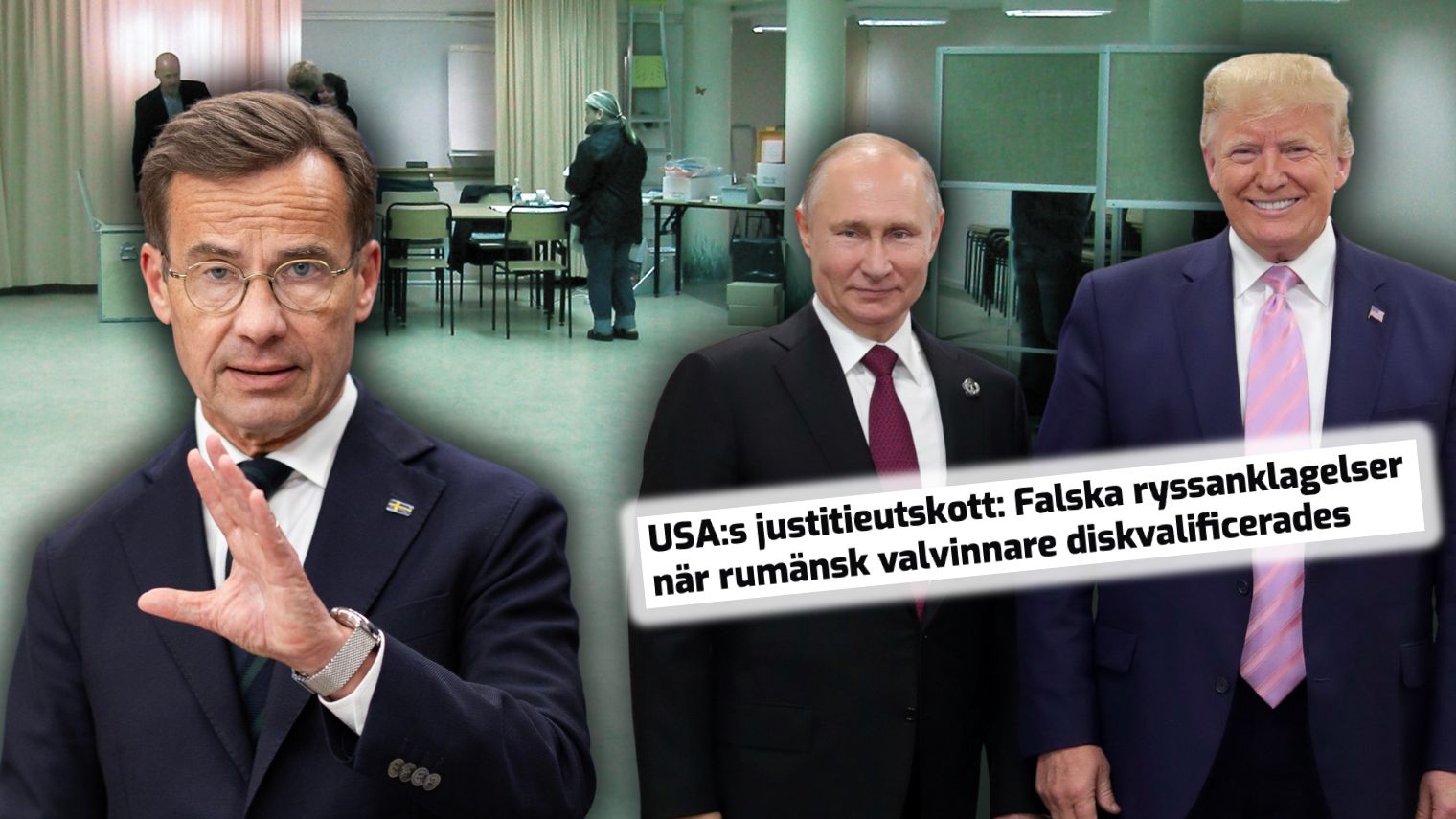
As Sweden heads towards the parliamentary election in September, Prime Minister Ulf Kristersson (M) describes the situation as more serious than it has been in a long time. Kristersson argues that Sweden is not at war — but neither is it at peace. He warns that foreign powers – particularly Russia – may attempt to influence the Swedish election. At the same time, it is his assessment and interpretation of developments that are presented; other actors, including in the US, have in some cases made different analyses of similar events in Europe.
In an op-ed in Dagens Nyheter, the Prime Minister begins by painting a broad security policy background. According to him, Sweden is going to the polls in a “clearly deteriorated security situation.”
The rules-based world order is more threatened than it has been in several decades. Major countries are claiming spheres of interest, where power trumps law. Russia shows no signs of wanting peace in Ukraine. We and our allies are repeatedly subjected to cyberattacks, information influence, economic pressure, and sabotage. Ultimately, the purpose is to create division and fear and to get us to reduce our support for Ukraine.
In this situation, he says, Sweden must do everything to “safeguard our peace and freedom.” He has therefore invited party leaders in Parliament for talks on how democracy can be protected against undue influence.
The Prime Minister simultaneously points out that Sweden has “a proud tradition of democracy extending over 100 years” and describes the Swedish election system as robust, legally secure, and hard to manipulate. The system is decentralized, transparent, and equipped with control mechanisms.
He particularly highlights the political unity around support for Ukraine as a strength. That all parliamentary parties share the same opinion and that the billions being sent from taxpayers will continue for an indefinite period is seen as a sign of strength.
A particular strength is that Sweden is united on the key area where the Russian regime seeks to sow division in Europe – here we have political unity on support for Ukraine. All parties in Parliament back both military and civilian support. It makes me proud as Sweden’s Prime Minister.
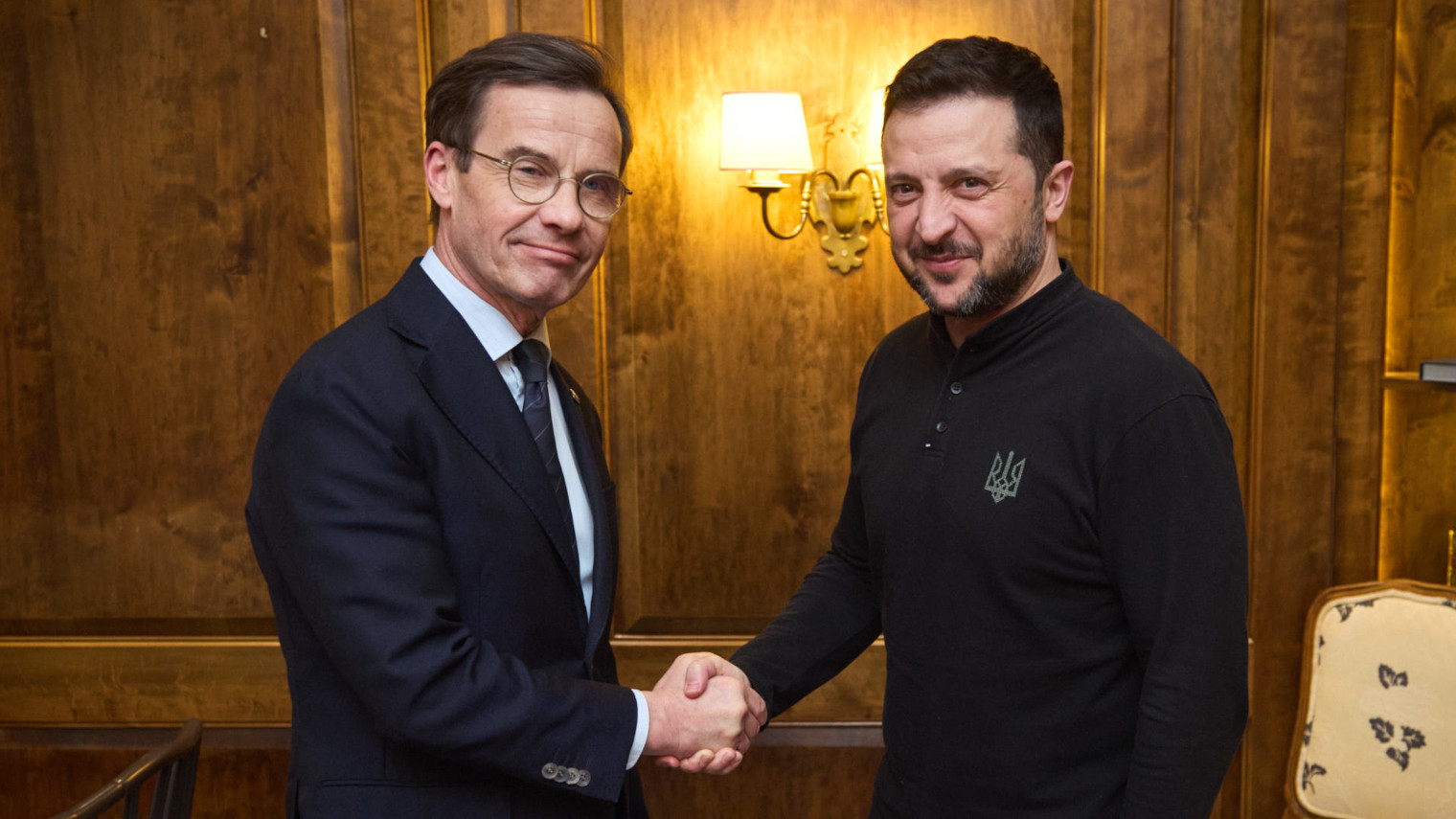
“Sweden Is Not at War — But We Are Not at Peace Either”
Despite his faith in the Swedish system, Prime Minister Ulf Kristersson believes the risks must not be underestimated. He puts it starkly, with Russia as the major enemy soon to take over all of Europe.
Sweden is not at war. But we are not at peace either. There is no true peace when we and our allies are repeatedly subjected to various kinds of hybrid attacks.
He links the threat to technological developments in society.
The Internet has made it cheap to spread false messages, and now AI has made it even cheaper to create fake content, such as texts, images, and videos.
Refers to Romania as an Example
According to Kristersson, this requires increased vigilance against disinformation and misleading content. As support for his concern, the Prime Minister cites several examples from Europe where he claims Russia tried to influence elections, most notably Romania, where the winner of the first round of the presidential election was disqualified.
In the Romanian presidential election, he claims that “Russia-initiated campaigns on social media” favored a candidate perceived as pro-Russian, and that the first round was eventually invalidated due to election interference.
READ ALSO: “Wrong” candidate won – now the presidential election in Romania is being redone
However, this description is not shared by all. For example, the US House Judiciary Committee in its review of the events presented a report with a different assessment, arguing that the allegations of widespread Russian influence were exaggerated and not sufficiently substantiated.
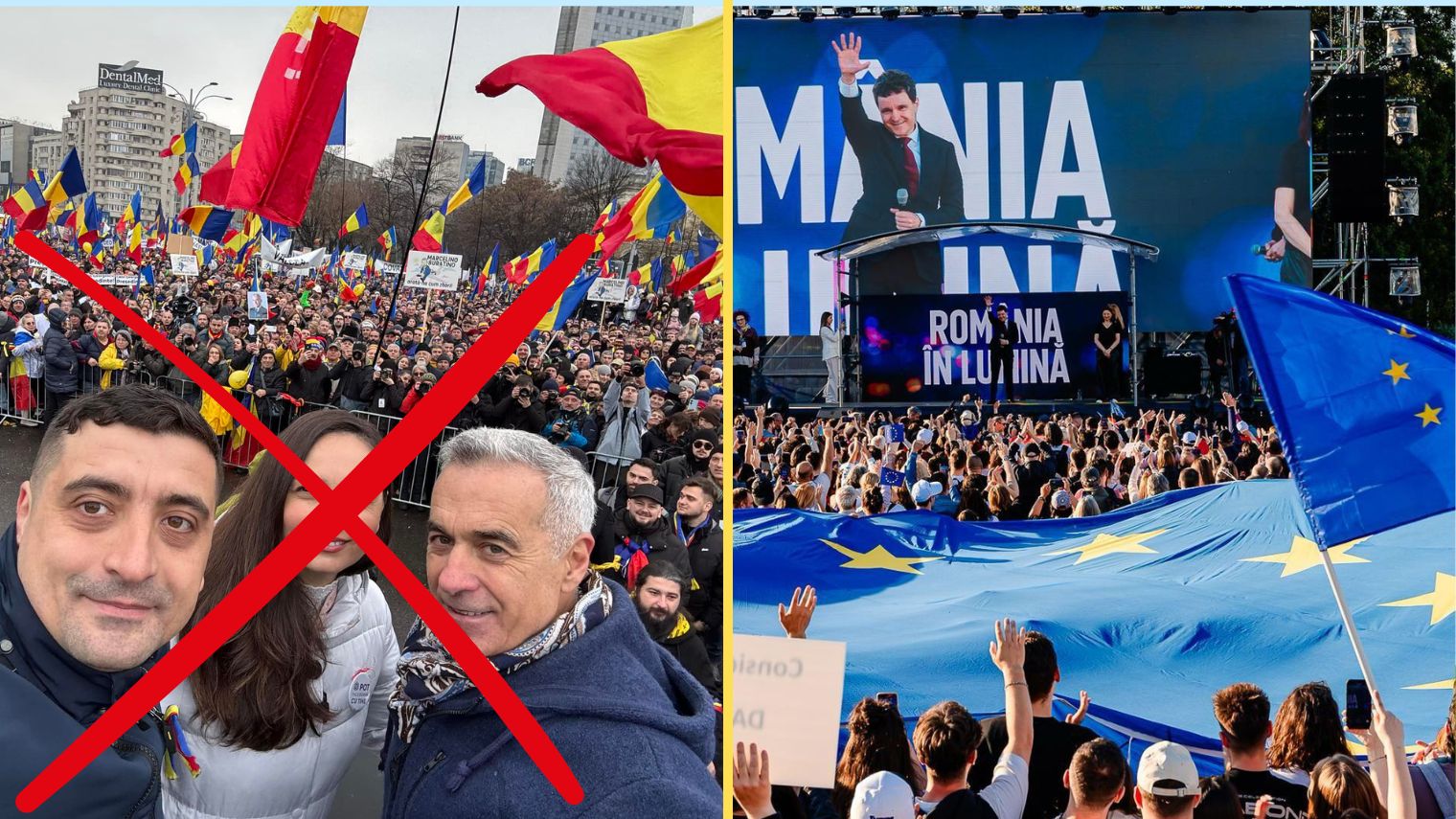
Georgescu was disqualified by the country’s Constitutional Court in December 2024 after claims from the Romanian intelligence service that he had secretly received help from Russia to spread his political message with a coordinated TikTok campaign.
At the beginning of February, the US House Judiciary Committee announced that Călin Georgescu, who had won the first round of the Romanian presidential election in 2024, was disqualified on false grounds.
READ ALSO: Romanian judge who invalidated election linked to George Soros
Nevertheless, this does not stop Ulf Kristersson from amplifying the threat and gathering all party leaders to create the impression that democracy in Sweden is in danger, depicting the threat from the East as the only one to worry about. To this end, Kristersson has also mobilized several of the country’s security agencies to alert the Swedish public and take action against what is portrayed as the great threat.
Meanwhile, the country’s domestic problems continue to grow as a consequence of the same politicians’ decisions over many years, and where the new demographics may soon make it difficult for the Tidö parties to win elections, something that former Moderate MP Hanif Bali has highlighted.
READ ALSO: Bali: Demographics could make future right-wing governments impossible
The allegations Kristersson raises have been rejected by TikTok. “TikTok has neither found nor seen any evidence of a coordinated network of 25,000 accounts linked to Mr. Georgescu’s campaign,” said a statement from the social media giant as early as November 2024.
READ ALSO: Romanian judge who invalidated election linked to George Soros
Liberals Behind Campaign
The US House Judiciary Committee has reviewed thousands of internal documents from tech giants, mainly concerning their contacts with the EU and the Union’s censorship requirements. The Judiciary Committee now joins in its report a different explanation of why the Romanian presidential candidate Georgescu could go from relatively unknown to suddenly winning the presidential election.
READ ALSO: US Report: EU Commission constitutes a “foreign censorship threat”
In autumn 2024, Romania’s liberal party PNL, a sister party to Sweden’s Moderates and Christian Democrats and led by former prime minister Nicolae Ciucă, launched a massive social media campaign ahead of the presidential election.
Through a PR front company, the hashtag #echilibrusiseriozitate (“balance and seriousness”) was launched, under which right-wing and EU-skeptical candidates were attacked on social media. Via the Fame Up app, 130 influencers were paid by the PR firm to spread liberal messages on TikTok.
READ ALSO: US State Department criticizes Romanian election coup in new report
But Georgescu supporters managed to “hijack” the campaign by creating their own, closely resembling hashtag: #echilibrusiverticalitate (“balance and candor”). And the 130 influencers who had been paid to spread liberal EU propaganda started instead to share and spread posts with this new hashtag. In this way, PNL inadvertently financed the right-wing nationalist candidate’s success.
READ ALSO: Ekeroth: Have the left-liberals staged an election coup in Romania?
After Georgescu won the presidential election, the Romanian security service discovered the coordinated TikTok campaign — which the liberal party had in fact orchestrated. But instead of blaming the former prime minister, Russia was blamed and Georgescu was disqualified even though he was heading to a clear victory in the presidential election.
Furthermore, Kristersson lists other events on social media. Regarding Germany, Kristersson writes that Russian networks spread false information about politicians and political proposals ahead of the parliamentary election, including fabricated articles accusing the then–vice chancellor of abuse.
The Moldovan election is also addressed. There, he claims Russia both tried to advantage pro-Russian politicians and smear EU-friendly forces, as well as “outright vote-buying.” Sweden and the EU, according to him, provided support efforts to Moldova, which he feels Sweden can be proud of — while the experiences provide lessons for Sweden’s own election.
READ ALSO: Tug-of-war in Eastern Europe — Moldova may get shortcut into the EU
Norway is also mentioned. Ahead of the 2025 election, according to Kristersson, the party Høyre’s website was subjected to a cyberattack by a pro-Russian hacker group. He also refers to the smaller party Fred og rettferdighet carrying out a major ad campaign with the message that Norwegian welfare should be prioritized over support to Ukraine, and that the funding came from a businessman with ties to Russia.
Despite these examples, he notes that the parties and forces advocating European cooperation and support for Ukraine won in all cases, something he describes as inspiring.
Another pattern evident in Kristersson’s statements on social media is that when a candidate or side that is not EU-friendly wins an election, he, along with other left-liberals, alleges that democracy is threatened and there is Russian influence. When the right side — the EU-friendly side — wins, the election is described as correct and well-conducted.
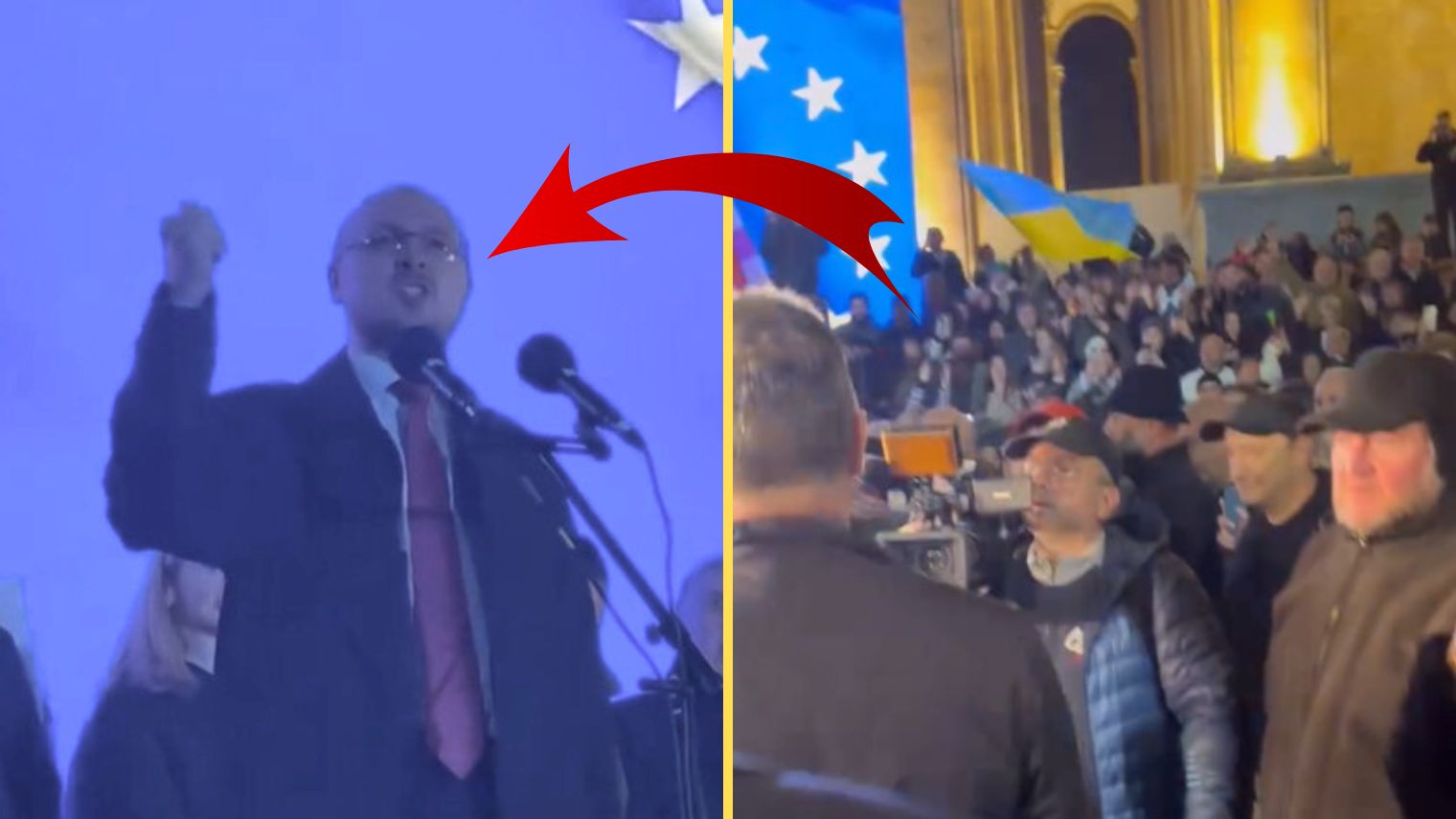
Meanwhile, it is not considered election interference when Sweden, with the Moderates, Greta Thunberg at the forefront, and other EU countries travel to countries outside the EU to protest against an election result.

An example highlighted by Samnytt at the end of 2024 is when a delegation of politicians from several EU countries traveled to Georgia to protest the election results. From Sweden, Kristersson’s party colleague, Moderate MP Erik Ottoson, can be seen speaking in the images below from Tbilisi.
READ ALSO: Sweden on site protesting the election in Georgia
Swedish Countermeasures
Ahead of the 2026 election, according to the Prime Minister, an intensive effort is now underway within Swedish authorities. The work is coordinated, among other things, through a national electoral network involving several agencies.
Kristersson has gathered the Election Authority, Police Authority, Security Service, Psychological Defence Agency, Civil Defence Agency, National Cyber Security Center, Swedish Post and Telecom Authority, Tax Agency, and county administrative boards.
We see what Russia does, and we are constantly taking measures to strengthen our resilience.
READ ALSO: US Report: EU Commission constitutes a “foreign censorship threat”
The government has also tasked the National Cyber Security Center with a special mission to support cybersecurity before, during, and after the election. All parliamentary parties will be invited to a dialogue about how they can strengthen their own protection.
The Security Service and the Psychological Defence Agency will conduct knowledge-raising initiatives for the parties. The Police Authority will staff a special phone number where elected officials can report crimes or raise security concerns.
Urges the Public to Read Establishment Media
A central part of the article does not concern the authorities, but the public. Kristersson emphasizes that resilience is ultimately built together.
He urges the Swedish people to “double check whether other media report the same thing” — a call that can be interpreted as implying that a message is not considered credible unless public television or certain left-liberal media houses have already reported on it.
Sometimes a news story may be a little too good — or maybe a little too bad — to be true. So think before you share news if it comes from a source you’re not familiar with. And before you explode with anger and write angry comments on social media — double check if other media report the same thing. Listen to Swedish authorities and remember you can find correct information about the election on val.se.
He simultaneously admits that this is harder than it sounds, especially in a polarized political climate. He ends with an appeal for “adult conversation.”
All this may sound simple, but has proven harder than you think, not least in a too-polarized political climate. Therefore, let us safeguard the adult conversation.