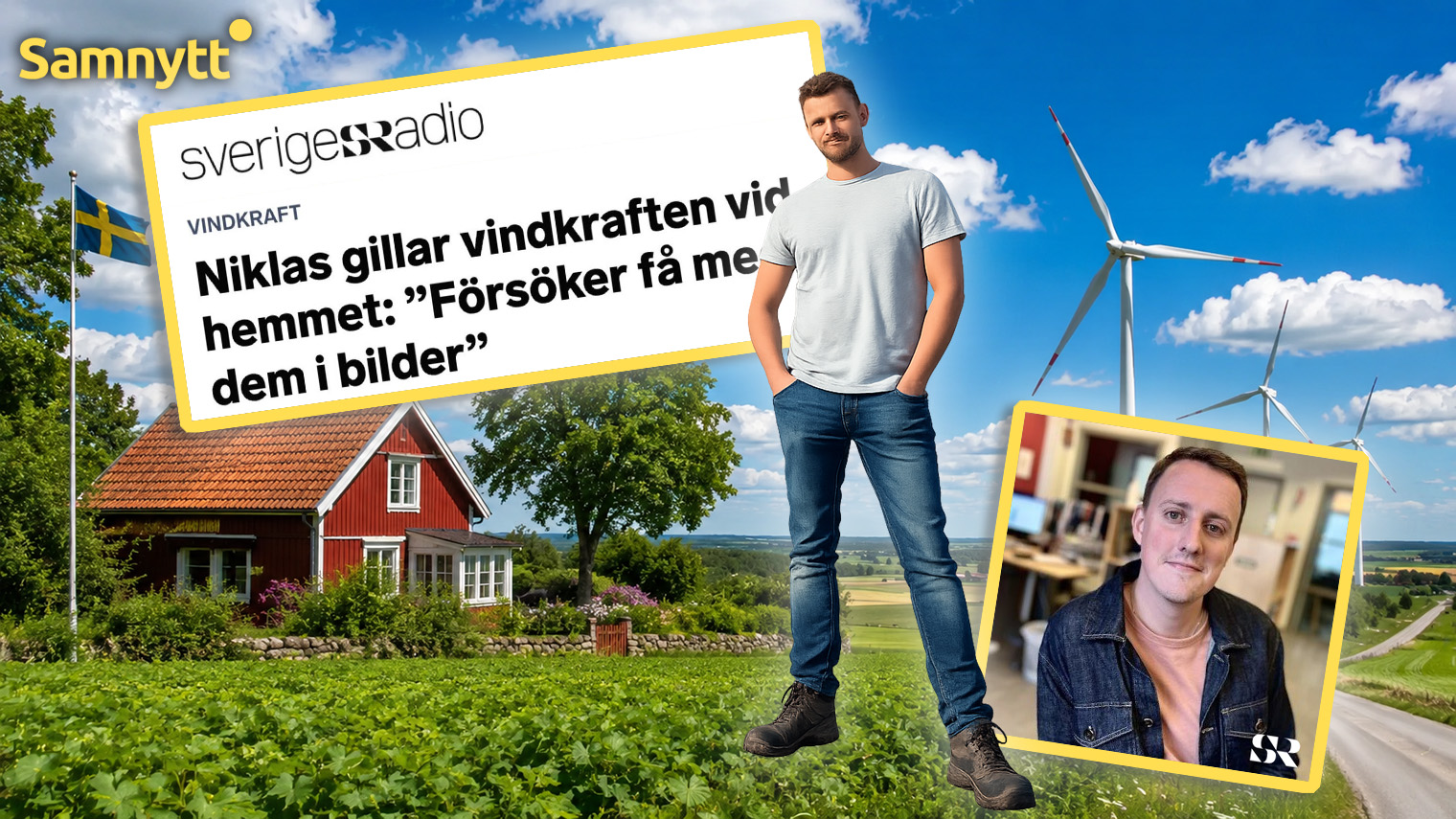
Sveriges Radio has unpublished an article about an “Öland resident” who described himself as positive towards wind power near his home. This comes after it was revealed that the man is simultaneously a board member of a wind power company. The incident has revived questions about the public service companies’ source criticism, how potential conflicts of interest among interviewees are handled, and the longstanding criticism of a left-wing political bias directed at SVT, SR, and UR.
On Wednesday, the state radio published the article “Niklas likes the wind power near his home – tries to include them in photos”, in which Niklas Petersson from Öland was interviewed about his positive attitude towards local wind turbines.
In the segment, Petersson was portrayed as an ordinary rural resident who had no objections to having wind turbines near his home. However, shortly after publication, it was revealed that Niklas is a board member of Ventlinge Vind AB – a fact that was not mentioned in either the radio segment or the subsequent article.
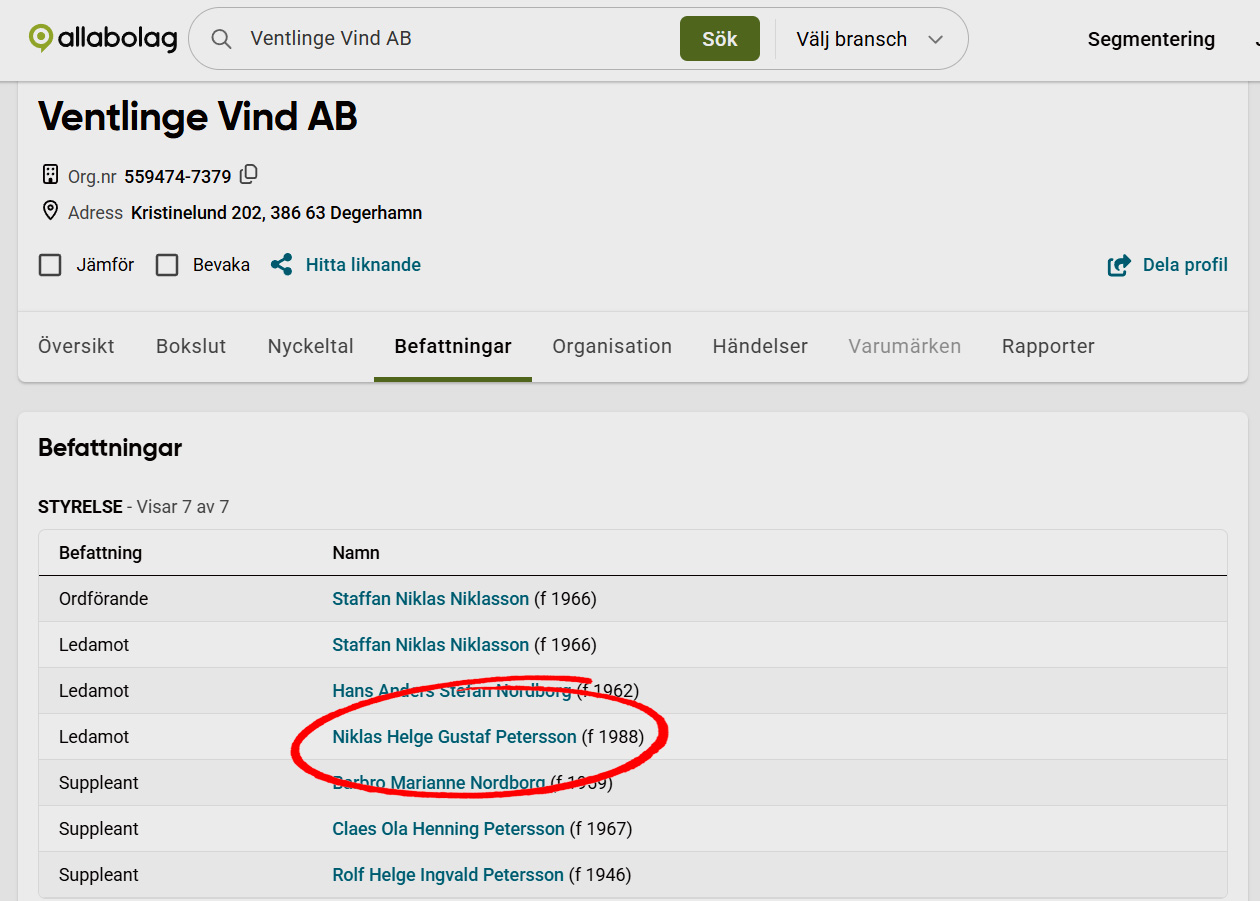
Clarification – but no explanation or apology
After the revelation, Sveriges Radio chose to unpublish the material. In a clarification SR writes:
“After the fact, it has emerged that the interviewed person sits on the board of a wind power company, something that did not appear in the radio interview or the subsequent article.”
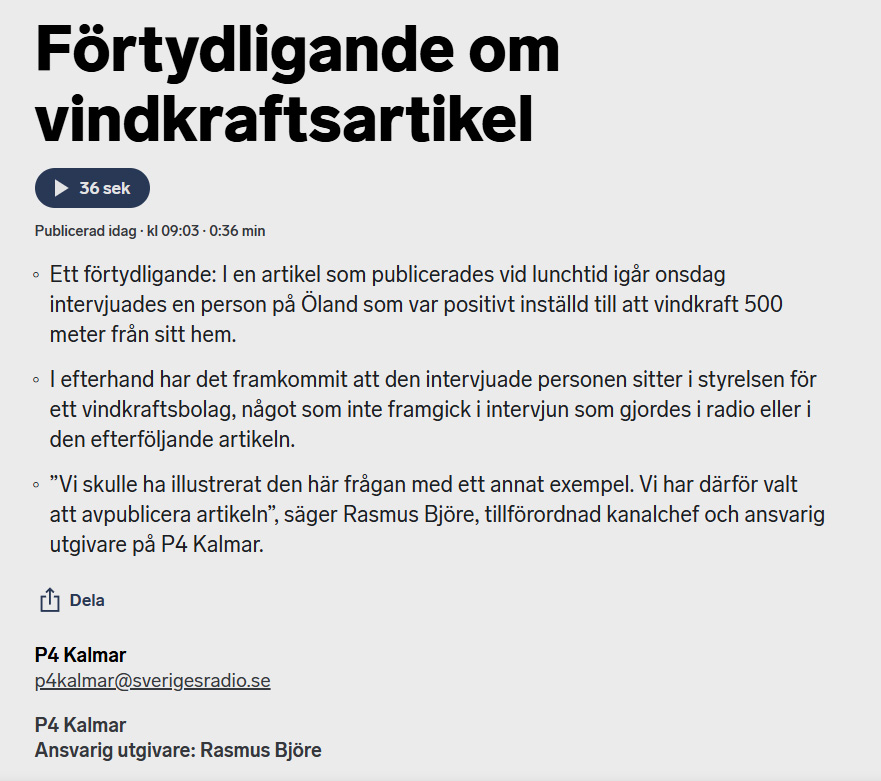
Furthermore, the acting channel manager and responsible editor Rasmus Björe says:
“We should have illustrated this issue with a different example. Therefore, we have chosen to unpublish the article.”
Questions About Source Criticism
The incident has led to criticism of Sveriges Radio’s journalistic methods. Critics argue that a simple background check could have revealed the connection to the wind power industry before publication. Was it just journalistic carelessness or was there an underlying agenda?
Samnytt contacts the responsible editor Rasmus Björe with the question whether it is not fundamental journalistic work to check if interviewees have political, economic, or other interests in the topic they are commenting on.
Shouldn’t a basic background check have revealed the interviewee’s engagement in the wind power industry?
– That’s absolutely correct. It simply went wrong here. It wasn’t done well and that’s why we chose to unpublish this article.
A Recurring Pattern
The case has also sparked a broader discussion about the impartiality of the public service companies. In recent years, several notable cases have led to criticism after people presented as ordinary citizens turned out to have political or organizational affiliations that were not disclosed to the audience.
Critics argue that such mistakes often seem to go in the same ideological direction, risking undermining trust in public service as impartial media actors. Sveriges Radio and SVT have consistently denied accusations of political bias.
What do you say to those who believe that these kinds of mistakes recur and reinforce the impression of political bias within public service?
– I can’t comment on other cases. But this type of source-critical work should of course apply to all our journalism. In this case, it wasn’t handled well and that’s why we’ve unpublished the article and issued this clarification.
Have any measures been taken against responsible staff, and how do you ensure that something similar does not happen again?
– I obviously do not want to single out any individual employee. How we handle this is an internal matter. But of course, we need to look at how we work and how our research processes function so that this does not happen again.
When asked about disciplinary action or other consequences for those involved, Björe replies:
– Some forms of disciplinary action against potential staff members have not been discussed. It has been about managing this article. Clearly, it is not good that this was published and that’s why we have also unpublished it.
Sensitive Issue Ahead of the Election
The issue of wind power’s future has become one of the clearest dividing lines in Swedish energy and climate policy. The government and the opposition have different priorities regarding future energy investments, and the debate is expected to become an important part of the coming election campaign.
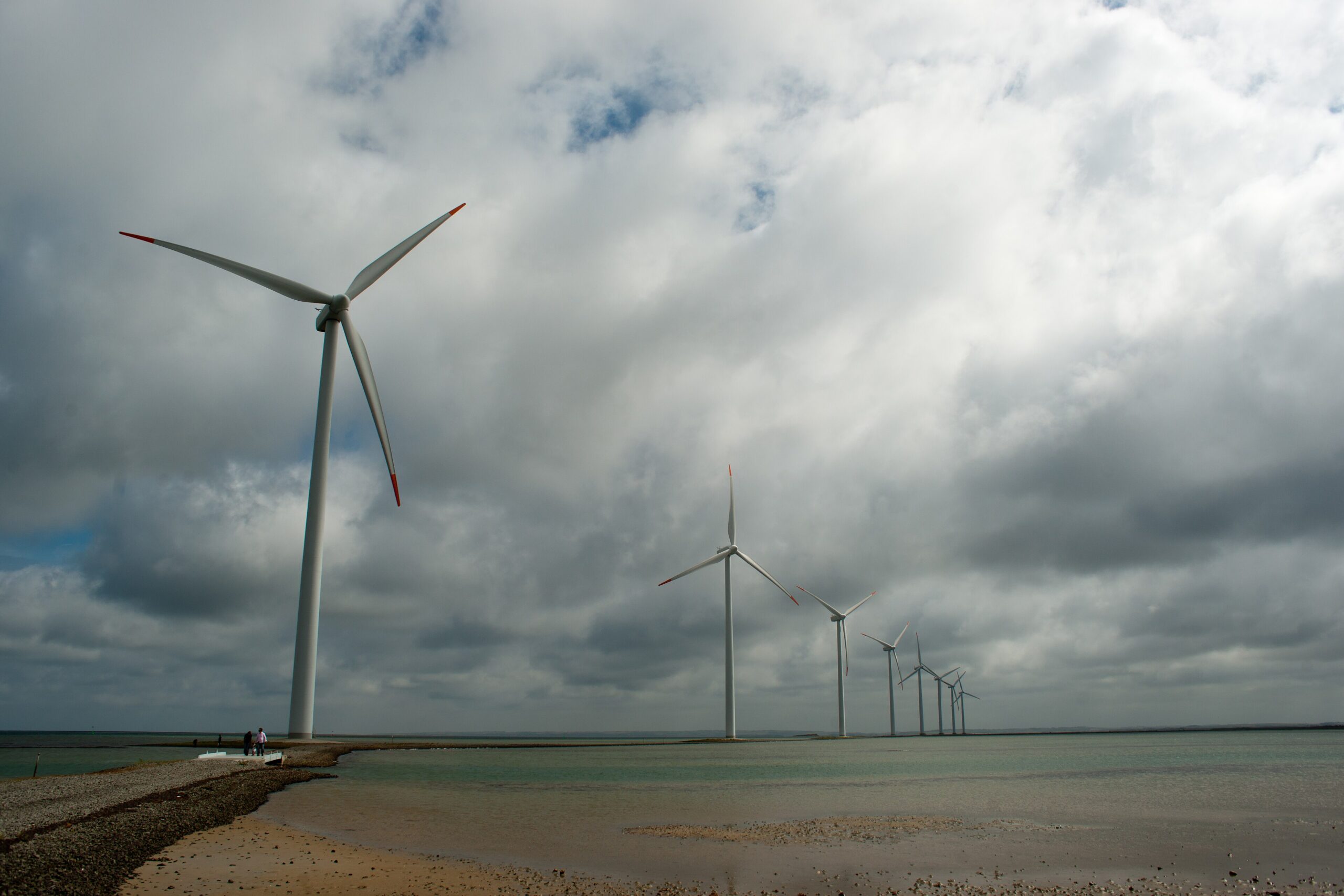
Against this background, critics argue that it is especially important for public service newsrooms to ensure that people used to illustrate controversial societal issues do not have undisclosed interests in the subject. Rasmus Björe does not fully share the view that this particular issue would be more or less serious than others when making a mistake in reporting about it.
Isn’t it especially serious when it comes to such a politically charged issue as energy policy and in the middle of an election campaign?
– I think it is important regardless of what journalism we do and regardless of the topic that what we report is correct and that all facts come out. That’s why we have taken the publishing measures we have taken. It’s not good when mistakes are made, regardless of the topic.
Questions Remain
Despite the unpublishing, questions remain about how the mistake could happen in the first place. For critics, a correction after the fact is not enough. They argue that recurring cases of this type risk eroding trust in public service and raise questions about what routines actually exist to ensure impartiality and credibility.
Below each SR article, the following can be read about the company’s journalistic policy:
“The foundation of our journalism is credibility and impartiality. Sveriges Radio is independent in relation to political, religious, economic, public and private special interests.”
READ ALSO: Dagerlind: When Facts Become Inconvenient, the Wind Power Lobby Plays the Russia Card
If you click further, you can also read the following lofty statements about how SR’s journalists should work:
“In our journalism, we prioritize credibility. We work in various ways to live up to the public’s trust and we strive to provide as broad, diverse, and nuanced a picture as possible. Our aim is to publish what is true and relevant.”
123 083 33 50