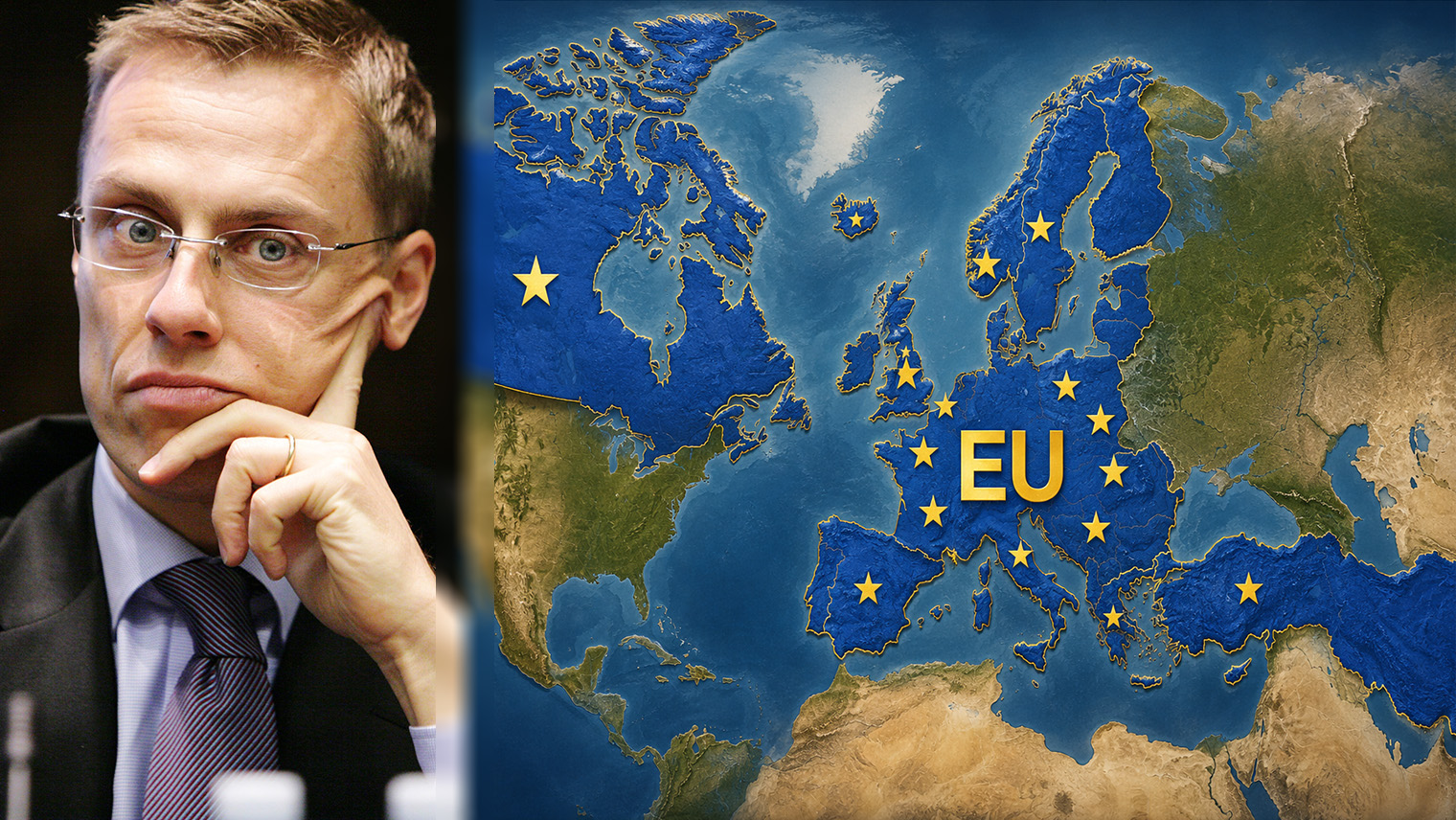
Finland’s President Alexander Stubb wants to see a sharply expanded EU with up to 40 member states. Among the countries he mentions are not only the United Kingdom, Norway, and Iceland – but also Canada and Turkey. The proposal may make the geographically minded wonder if Europe has suddenly moved across the Atlantic, but behind the statement lies a serious discussion about security, geopolitics, and Europe’s future role in the world.
At an energy conference in Helsinki, Finland’s President Alexander Stubb presented his vision of a significantly larger EU. According to him, the union should ultimately be able to encompass around 40 states to strengthen Europe’s influence in an increasingly uncertain world.
Stubb mentioned, among others, the United Kingdom (which recently left the EU), Norway, Iceland, Turkey, Ukraine, and Canada as countries that should be considered for various forms of closer integration or membership.
Including Canada – a North American country on the other side of the Atlantic – could possibly be seen as a creative way to interpret the concept of Europe. Turkey, meanwhile, lies mostly in Asia. However, Stubb’s argument is not based on geography but on security policy and strategic considerations.
The War in Ukraine Drives the Debate
The background to the statement, according to Stubb, is the changed security situation in Europe. He argues that Russia’s war against Ukraine and the uncertainty regarding the USA’s future role in Europe create an opportunity to deepen cooperation among democratic countries.
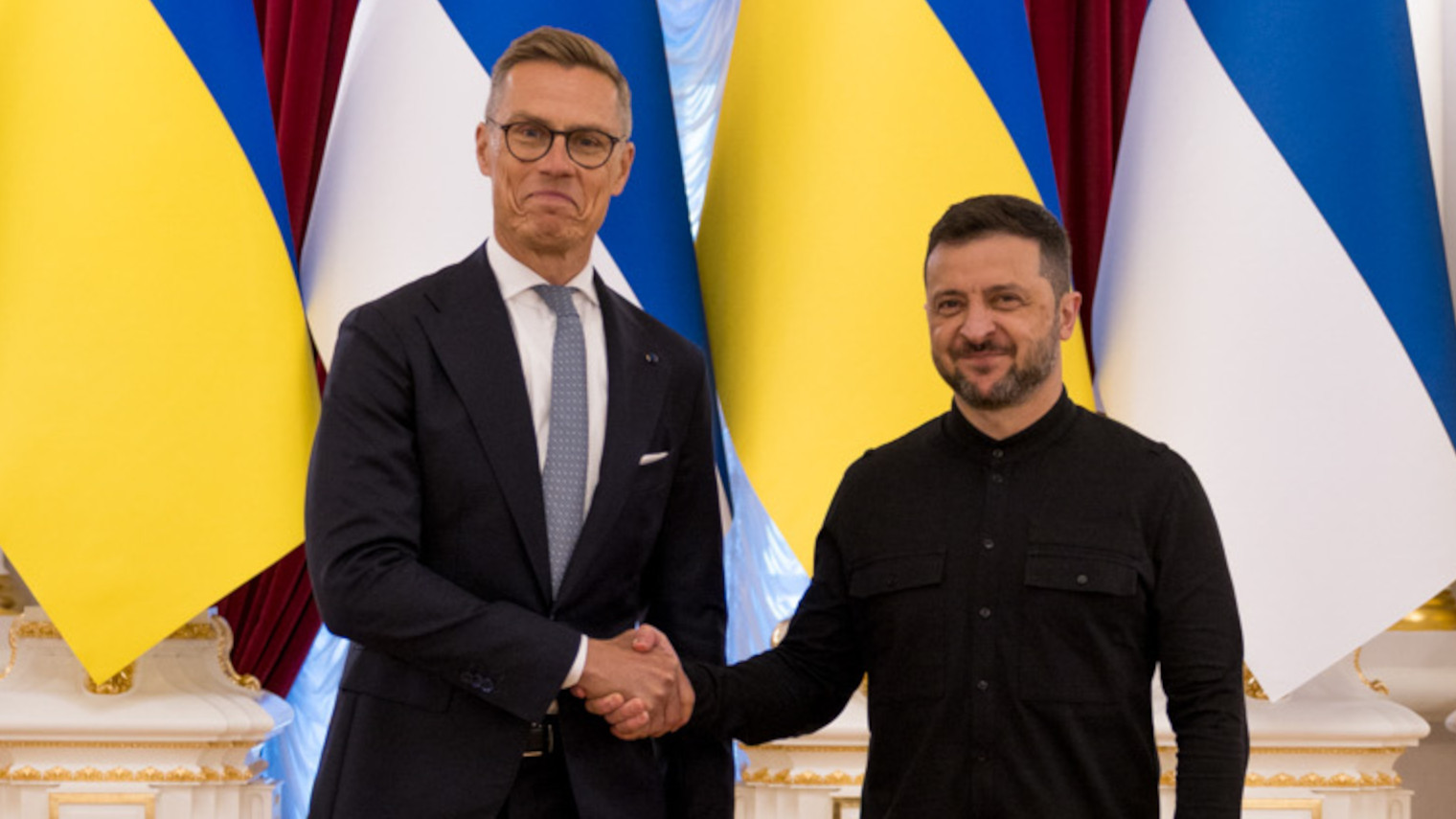
Stubb claims that Europe’s geopolitical strength largely depends on its size and that previous EU enlargements have been successful. He also believes that there is now a limited time window to implement new integration projects before political interest wanes.
Canada as an Alternative to the USA
The most notable aspect of Stubb’s reasoning is likely Canada. The Finnish President joked that it would be nicer if Canada became the EU’s 28th member state than the USA’s 51st state.
The comment referred to statements from US President Donald Trump, who has on several occasions suggested that Canada should join the United States. At the same time, Canadian representatives have recently discussed the need to broaden the country’s trade relations and reduce dependence on the American market.
Wants to Bring Turkey Closer to Europe
Stubb also argued that the EU should resume discussions regarding Turkey’s relationship with the union. According to him, there is too little talk about Turkey despite the country’s strategic importance for European security. He believes that Ankara should be tied as closely as possible to Europe, particularly from a defense and security perspective.

Turkey has long been a candidate country for the EU, but accession negotiations have in practice been stalled for many years. According to observers, under Erdogan’s rule the country has moved in an increasingly authoritarian and Islamist direction.
Ukraine and the Balkans Remain in Focus
In addition to Turkey, Stubb pointed to Ukraine, Moldova, and the countries of the Western Balkans as important future candidates for closer European cooperation. The EU is already undergoing its largest enlargement process in several decades.
Nine candidate countries are waiting for membership at various stages, with Albania, Montenegro, Ukraine, and Moldova among the most topical. For Russia and Putin, Ukrainian EU membership is a red flag.
Norway and Iceland Also Mentioned
In the north, Stubb also wants to see closer cooperation with Iceland and Norway. Iceland plans a referendum on whether the country should resume the process toward EU membership.
Norway has previously said no to EU membership in two referenda but is once again discussing its relationship with Brussels in light of increased geopolitical tensions. However, a majority of Norwegians still say no according to opinion polls.
Vision Rather Than a Concrete Plan
The Finnish president did not present any concrete road map. On the contrary, he admitted that he does not know who would carry out such a comprehensive transformation of the EU or how it would be implemented in practice.
The statement should therefore primarily be seen as a contribution to the ongoing debate on Europe’s future security, rather than an actual proposal currently on the EU’s table. But if Stubb’s vision were ever to become a reality, Europe’s map might indeed need to be redrawn – at least in the political atlas.