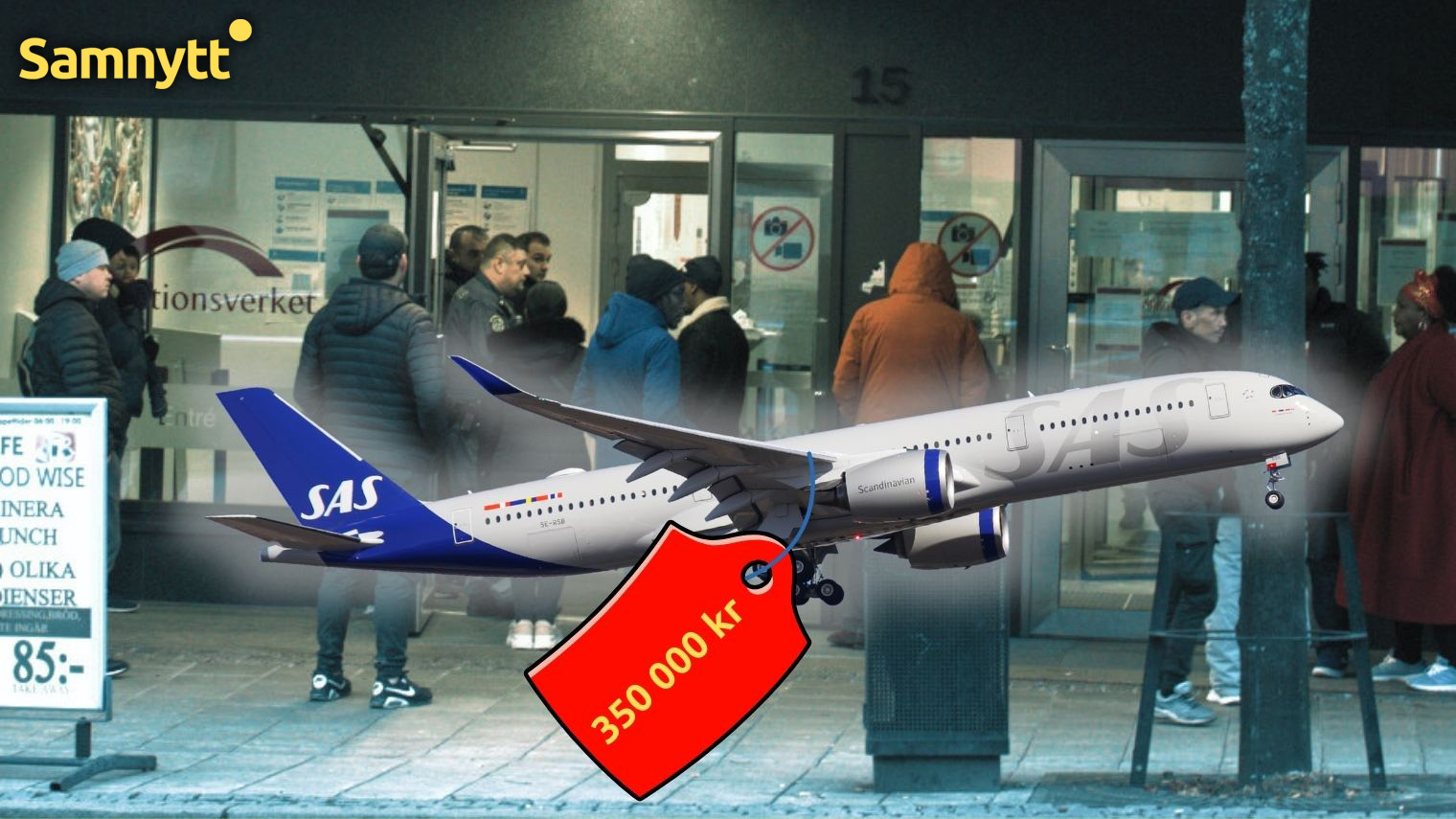
Despite significantly increased benefit levels, the remigration reform has yet to result in any substantial outflow from Sweden. So far this year, only 118 people have been granted support to return to their home countries.
At the turn of the year, the remigration allowance was increased sharply following an agreement between the government and the Sweden Democrats. The aim was to make it more attractive for people with protection-related residence permits to leave Sweden and re-establish themselves in their countries of origin.
The new levels mean that an adult can receive up to 350,000 SEK, while children can be granted 25,000 SEK. For families with children, the total support can reach a maximum of 600,000 SEK. In countries such as Somalia, this can correspond to up to 40 years’ wages and make the returnee financially independent for the rest of their life.
Since the increase, the number of applications has risen but not to a level that affects Sweden’s demographics beyond the very outer margins. During the period January–May, 118 people have had their applications approved. Meanwhile, 188 cases are still pending, while 251 applications have been rejected. This was reported by, among others, DN.
Millions Paid Out
The Swedish Migration Agency has paid out nearly 5.7 million SEK in remigration grants between January and May. The payments are not made in a single installment but are divided into several stages.
A first part is paid out after the application has been approved. There are then further payments once the person has moved to their home country and after living there for a longer period.
READ ALSO: Confirmed: How the Remigration Grants Will Work
The agency has yet to carry out a comprehensive analysis of this year’s results. A more extensive report on how the reform has worked is expected to be submitted to the government after the summer.
Ketchup Effect in the Spring
The statistics show that a large number of applications arrived immediately after the turn of the year, especially during January and February. The average processing time is around three months, which means that many decisions have only been made during the spring.
Most applicants for the allowance have citizenship from Syria, Iraq, the Democratic Republic of Congo, or Afghanistan.
Several Conditions Must Be Met
To be eligible for the remigration allowance, the applicant must meet a number of conditions. Among other things, the person must participate in a meeting with the Migration Agency. In addition, it is checked that there are no debts with the Swedish Enforcement Authority (Kronofogden) or the student loan center (CSN), and that the applicant does not have Swedish citizenship.
According to the Migration Agency, the process is often more extensive when an application is to be approved than when it is to be rejected, as more checks need to be carried out before a positive decision can be made.
Municipal Obstruction
A contributing factor to the slow progress is that a large number of municipalities – most with left-green majorities – have decided to obstruct the government’s policy on voluntary remigration. The government has responded by saying that these municipalities may lose state funding.
READ ALSO: Proposal: No State Funding for Municipalities That Refuse to Cooperate on Remigration
Despite the high levels of compensation, it remains to be seen whether the reform will ultimately lead to any significant increase in the number of people choosing to leave Sweden to return to their countries of origin.