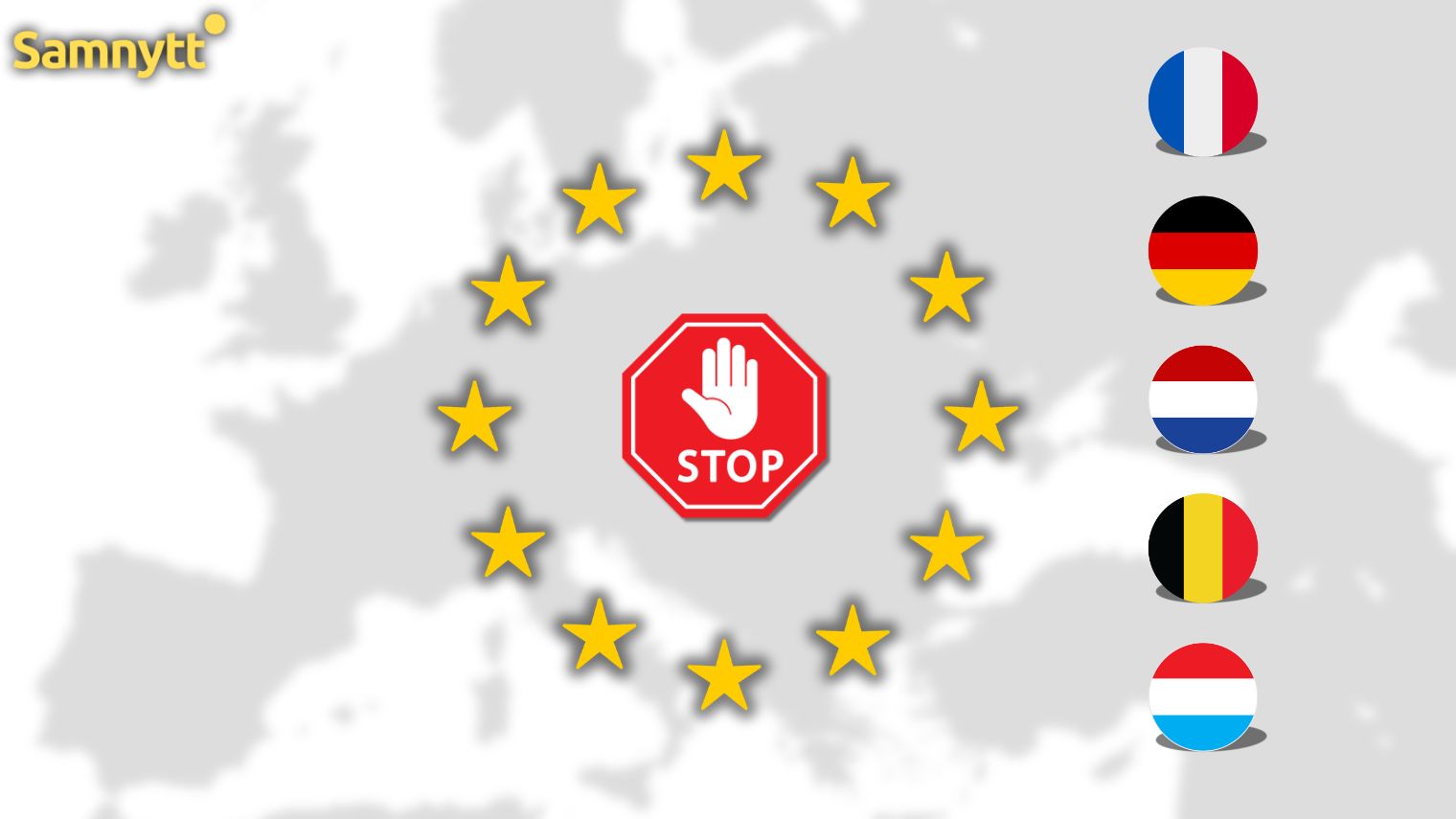
New countries joining the EU should not be allowed to vote on matters relating to the union’s budget, foreign policy, and security policy during a transitional period. This is proposed by France, Germany, the Netherlands, Belgium, and Luxembourg in a joint document developed as part of the discussions on the EU’s future enlargement.
The proposal comes as the union attempts to revive the enlargement process after more than a decade without new member states. The last country to join the EU was Croatia in 2013.
The background is that several candidate countries are now approaching membership. Montenegro and Albania are regarded as the main candidates, while Ukraine and Moldova also hope to become members in the coming years.
According to the document, the new member states would, for a limited time, lack voting rights on some of the EU’s most sensitive issues. The measure is described as both temporary and transitional. The aim is to ensure that an expanded union can continue to make decisions efficiently.
READ ALSO: EU Signs Agreement with Bangladesh – Opens Door for More Immigration
“Enlargement is a strategic tool, but only if it makes the EU stronger and not weaker,” says the Netherlands’ foreign minister Tom Berendsen to Euractiv.
He believes the time has come for a broad discussion on how a larger EU should operate in practice.
“We cannot allow enlargement itself to undermine the EU’s ability to act,” he says.
Montenegro Next
The proposal is also seen as a way to reduce the political resistance that often arises when new member states are to be approved. All 27 of the EU’s member states must give their consent to new accessions and, in some countries, referendums may be required. In both France and Ireland, such votes may be needed before future memberships can be approved.
Preparations are already underway for the next enlargement. Diplomats in Brussels have reportedly begun working on a new accession treaty for Montenegro.
In Albania’s case, the proposal of limited voting rights is not considered a major obstacle. The country’s Prime Minister Edi Rama has previously signaled that Albania may be prepared to give up its veto right when the country becomes a member.

READ ALSO: EU’s Crisis Response: Remote Work and Public Transport as Solution to High Energy Prices
In addition to the voting rights issue, the five countries also propose tougher mechanisms to handle member states that deviate from the EU’s so-called democratic principles. One proposal is to introduce a more long-term and powerful safeguard clause that would allow the union to intervene if a new member country is deemed to weaken the rule of law, limit press freedom, or roll back democratic reforms.
The document also contains wording intended to counter member states blocking joint decisions. This is seen as an indirect reference to Hungary, which earlier this year opposed a support package for Ukraine worth around 90 billion euros for several months.
Legal Measures
One of the most notable ideas, according to EU expert Steven Blockmans, is to make a so-called non-regression clause legally binding. This would mean that member states that erode democratic standards or violate the EU’s fundamental values could be subject to legal action from Brussels.
Blockmans points to developments in both Hungary and Slovakia as examples of why the issue has become topical. He also mentions the problems the EU has had with the special monitoring mechanism introduced after Bulgaria and Romania became members.
According to him, it is therefore not surprising that the Benelux countries now want to use the ongoing negotiations on Montenegro’s membership to strengthen the EU’s ability to ensure that future member states continue to live up to the union’s fundamental requirements even after joining.
READ ALSO: EU: Closing Down Nuclear Power Was a Mistake