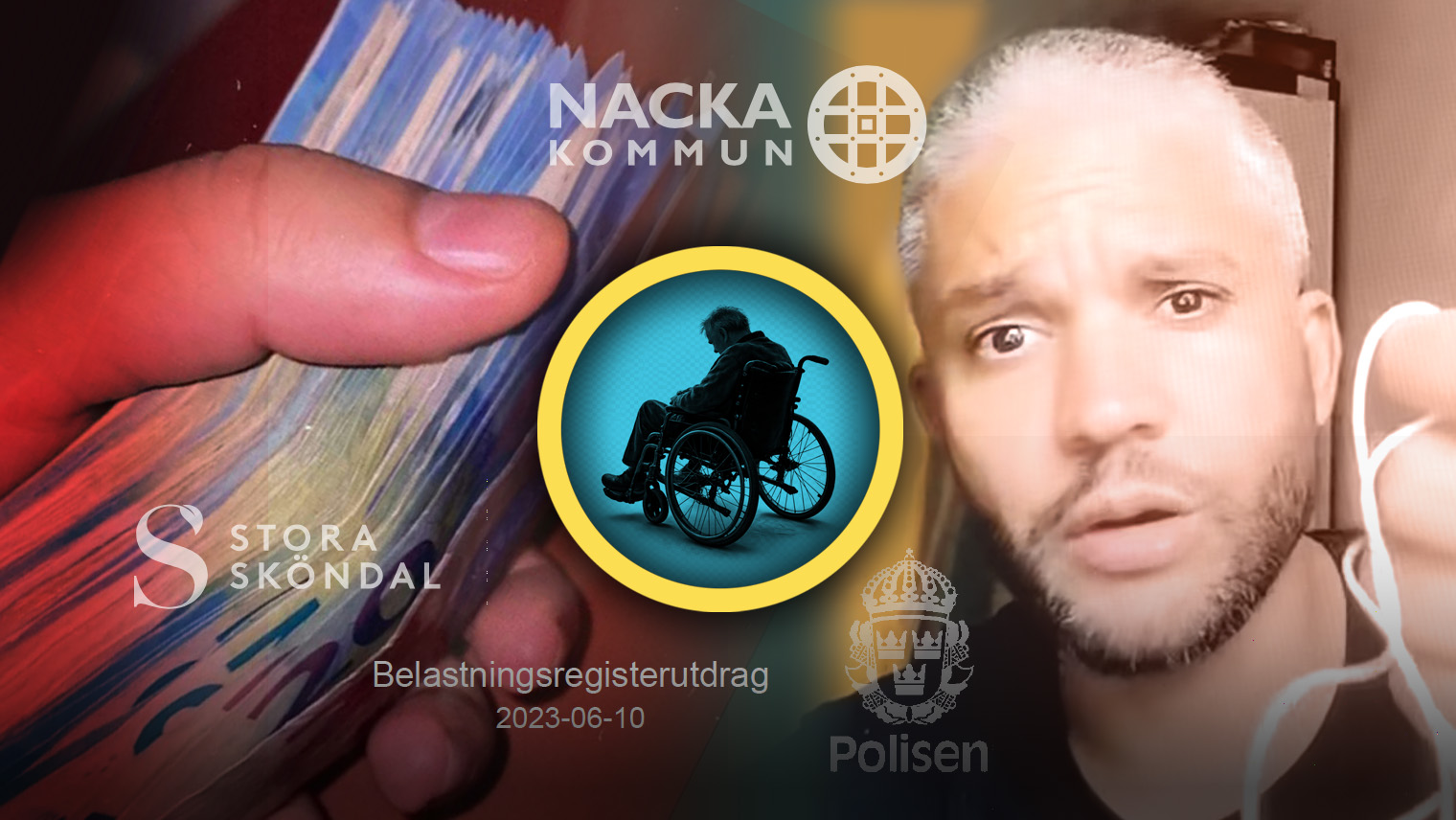
An Afghan man convicted of serious fraud against elderly care recipients—where, as a care worker, he obtained bank cards and stole money—still works in elderly care despite his convictions. Samnytt can reveal that, for almost a year, the man has been employed as an assistant nurse in Nacka municipality, south of Stockholm. When Samnytt confronts those responsible, they refer to their routines and assure that criminal records are always checked at the time of employment. The case clearly shows how inadequate controls in elderly care can be exploited by fraudsters.
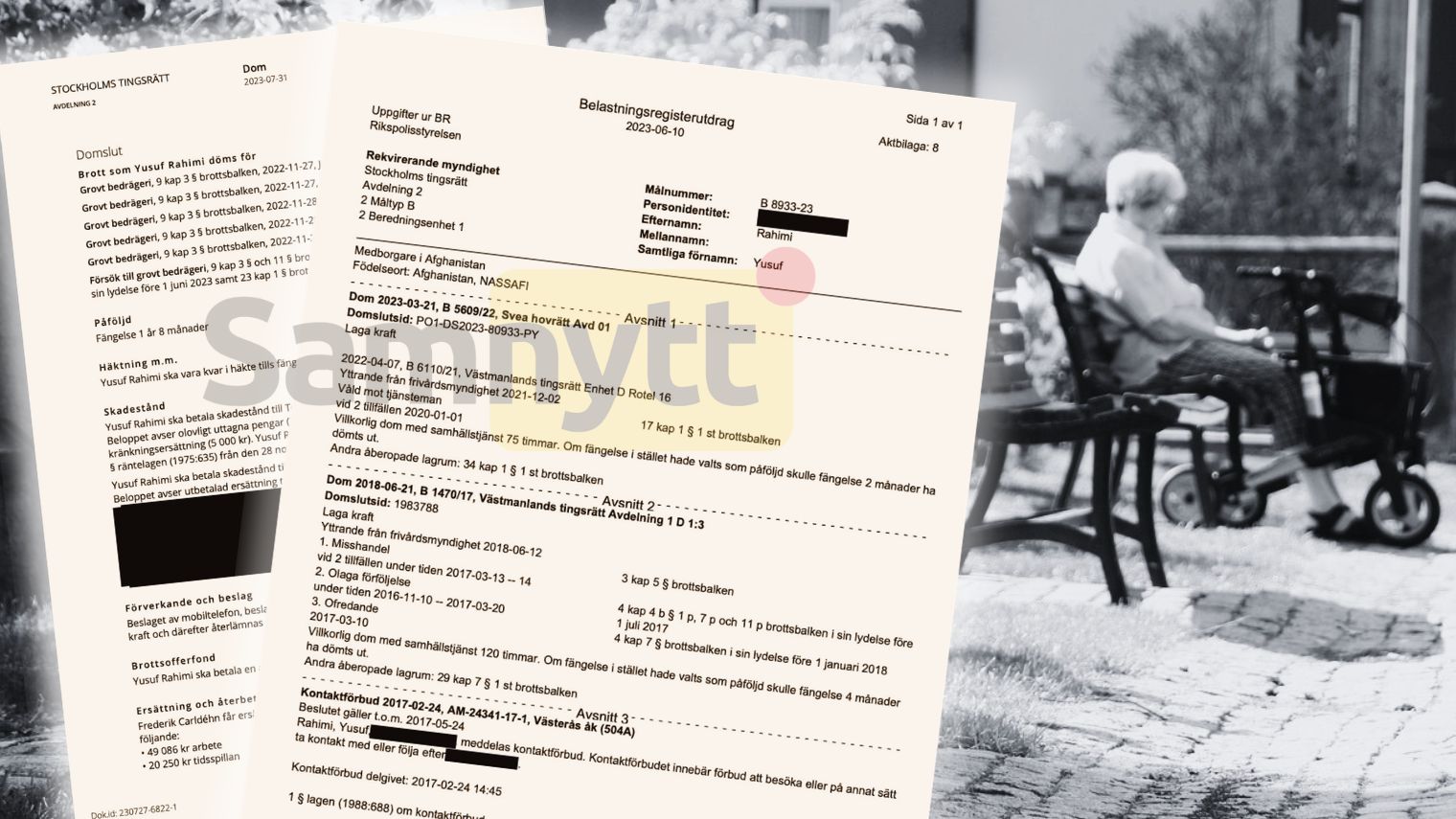
In the summer of 2023, Yusuf Rahimi was sentenced to one year and eight months in prison for several counts of serious fraud after he used his role as a care worker in Stockholm’s home care services to obtain bank cards and codes from elderly people. According to the verdict, the crimes were directed at people in dependent situations and were carried out in circumstances where trust in care staff was crucial.
The Stockholm District Court considered the offenses particularly grave precisely because they were committed within the framework of a profession built on trust. For many elderly people, contact with home care or care staff is an essential prerequisite for managing day-to-day life. When this trust is abused for crime, it has consequences that extend beyond individual acts.
READ ALSO: Home Care Syrian Strangled an 80-Year-Old and Took Her Money – Gets to Stay in Sweden
In several cases, he reportedly obtained bank cards and codes by asking for help with shopping or other practical errands, and then used the information for his own withdrawals and transactions. The court noted that the crimes targeted individuals in a position of dependence and that, specifically, the trust between care recipient and worker was systematically exploited.
The method was characterized by planning and repetition, according to the investigation. By working with several different seniors, he was able to carry out similar acts in various households without immediately arousing suspicion.

In some cases, the withdrawals were only discovered when family members or the bank noticed irregularities. The court judged that the acts not only caused financial harm but also constituted a serious abuse of the special trust upon which elderly care relies.
The police investigation revealed that one of the pensioners targeted by the Afghan man now feels unable to trust people anymore:
“NN is appalled by what happened — — — that her trust in other people has worsened and she no longer feels well. NN explains that she experienced the war in Germany, its persecutions, and all those horrors, but still wanted to believe the best about people. She says the incident with Yusuf has changed that belief. She recalls Yusuf being extremely accommodating and trustworthy while with her, almost excessively so. This made NN doubt herself even more, thinking she was at fault. She has felt badly since the incident and reports being more suspicious of people, believing there are people in her apartment.”
– Statement from court documents.
Further, police interviews show that when Yusuf Rahimi was confronted with the allegations, he claimed that what was said about him was a lie. To additional questions, the Afghan responded with “no comments.”

Criminal History Including Violence and Harassment
Samnytt can also report that, in addition to the fraud crimes against the elderly, Yusuf Rahimi, who immigrated to Sweden in 2013 and only has permanent residency, has previously been convicted of multiple violent and harassment offenses.
In a verdict from Västerås District Court in 2018, he was convicted on two occasions of assault, for unlawful persecution, and molestation in a relationship where the victim was underage during parts of the crime period.
We request criminal records from everyone we employ and have our own secured recruitment process in our organization.
Katarina Centerdal, Nacka Municipality
The verdict from Västerås District Court included repeated contacts and harassment despite a restraining order. He has also since been convicted of violence against a public official, in addition to the crimes that are now coming to light together with the systematic elderly fraud.
But despite repeated criminal activities, no prosecutor has demanded the Afghan national’s expulsion. Instead, he has been able to return to work within elderly care.
Information from other cases shows that employers in Sweden have sometimes only learned of employees’ criminal history following tips—not through their own background checks—because they relied on information and documents provided by the Afghan at job interviews.

Now Samnytt can reveal that Yusuf Rahimi is back in Swedish elderly care, this time in Nacka Municipality south of Stockholm, where he has been employed as an assistant nurse since April 2025, that is, for almost a year now.
But also, according to sources, at the care provider Stora Sköndal. Stora Sköndal’s website states that its operations include elderly care, preschools, primary care, neurological rehabilitation, university, and care for people with disabilities. The vision is described as “a society with a natural place for everyone.”
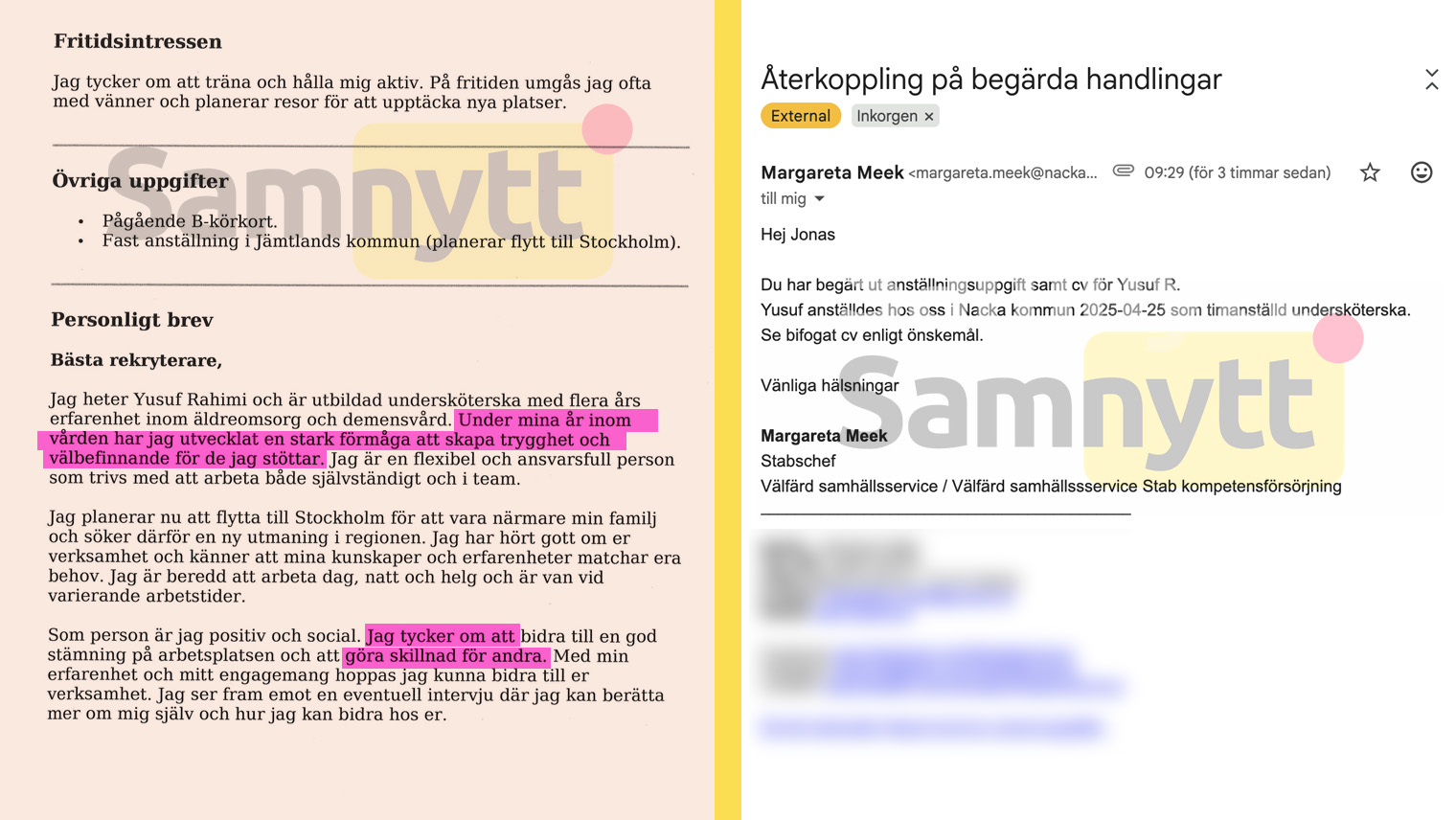
Samnytt has reviewed the CV that Rahimi sent in his job applications and spoken with responsible persons in both Nacka Municipality and Stora Sköndal about how the recruitment was conducted despite him being convicted of multiple elderly frauds.
The Response When Samnytt Calls: “That’s Your Take”
When Samnytt initially contacts the Head of Elderly Care in Nacka Municipality, Katarina Centerdal, she claims not to know about the case but reacts strongly to the information. At the same time, she questions whether it is even possible.
– How could this have happened? I’ll have to investigate that, she says, emphasizing that the municipality has long had routines for checking criminal records when hiring. She continues:
– We request criminal records from everyone we employ, and we have a secured recruitment process in our organization.
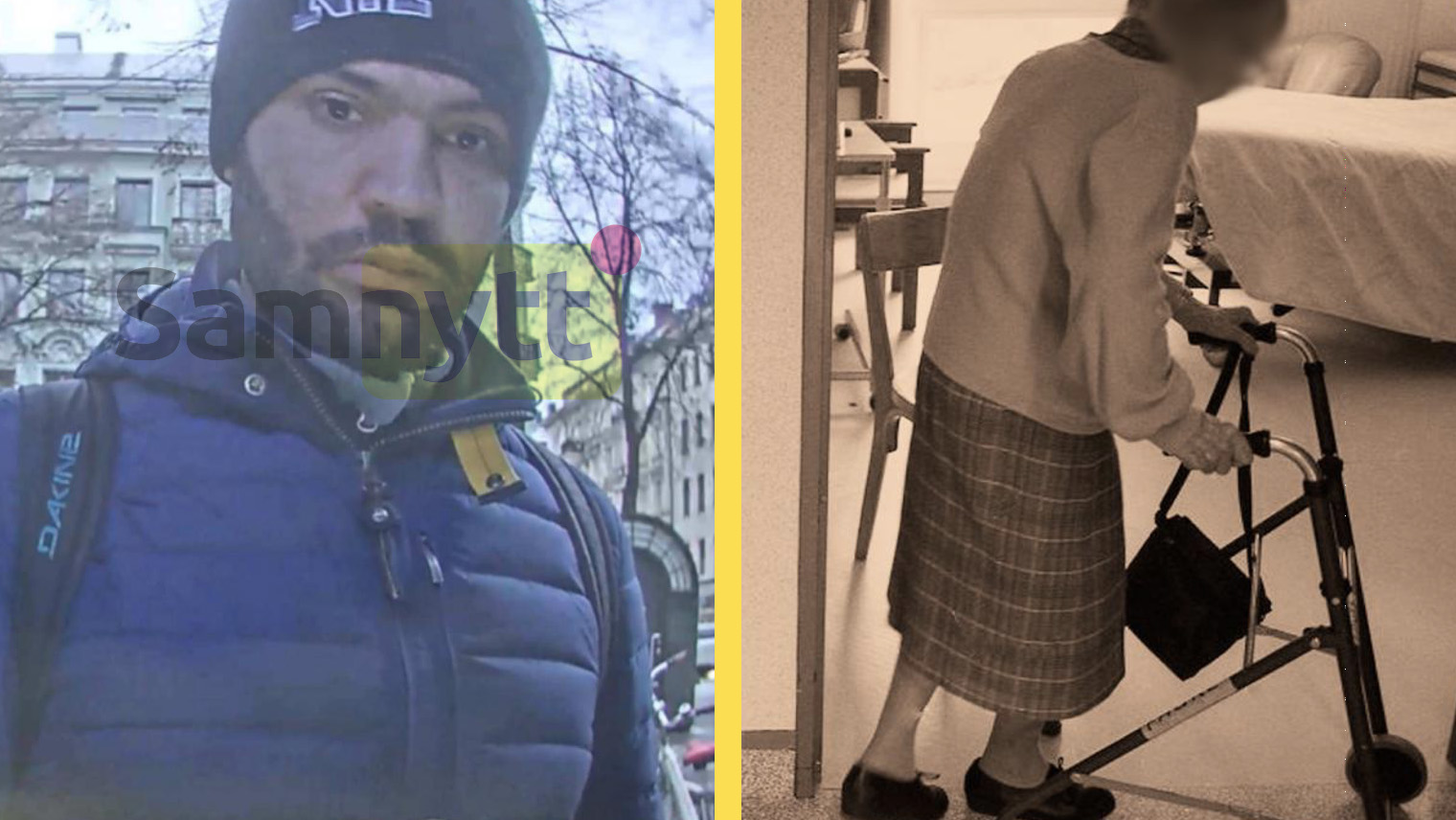
Centerdal points out that people with such criminal records as described should not work in elderly care.
– Of course, we don’t hire anyone with that kind of background, she says.
The responsible manager promises to follow up after checking the information internally. At the same time, she stresses that she needs time to ascertain the facts before the municipality can give a final statement.
Centerdal later gets back to Samnytt but refers to Henrik Feldhusen, who calls Samnytt to answer questions.
READ ALSO: Groping, Violence and Sexual Assaults – This is Sweden’s NEW Home Care
Feldhusen explains that he is Deputy Director of Welfare and Community Services in Nacka Municipality—and that they run all municipal services that are not schools or preschools, like elderly homes, LSS (care for disabled), youth centers, etc.
Yusuf Rahimi has been employed in Nacka Municipality since April 25, 2025 as an assistant nurse. How did that recruitment process go?
– I really can’t comment much at all on individual cases.
Rahimi has previously been sentenced to prison for several elderly frauds. He is also convicted of assault, unlawful persecution, and molestation.
– We always request and check criminal records, diplomas, references, and so on. As far as I know, this is routine in all recruitments.
HALF PRICE ON SUBSCRIPTIONS
Applies while the subscription lasts until the election
Want to see more exposés?
Hundreds of thousands read Samnytt every week—but only 1 in 100 contribute. Help us continue to deliver investigations and in-depth reports that show more of reality.
Without your support, there is no Samnytt.
Right now, you can subscribe at half price—the subscription lasts until the election. An easy way to both save money and support independent journalism.
123 083 33 50
Swish any amount
Thank you for reading and supporting Samnytt
Do you check if a criminal record has been forged?
– If it comes in a sealed envelope from the Police Authority and it looks correct, we assume it is correct. The criminal records we request, we check.
Yes, OK. You say that, and I hear what you say. If we get information of this kind about an employee, we suspend that person from work until we have investigated. But I won’t comment on individual cases, I haven’t met him.
Henrik Feldhusen, Nacka Municipality
But it’s not correct when it comes to Rahimi’s criminal record—we have it here in front of us.
– OK, that’s not something I know about.
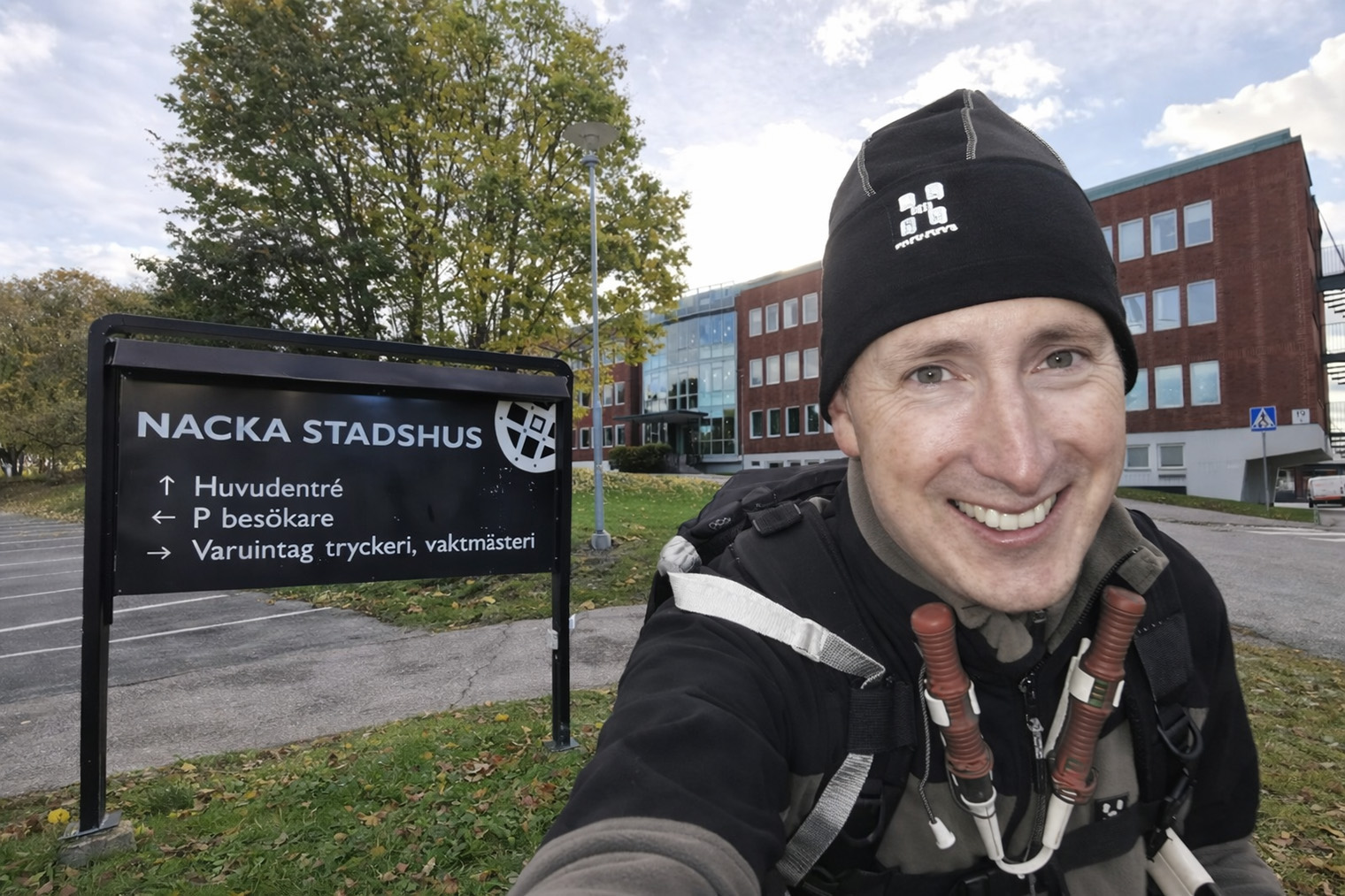
How does Nacka Municipality view having such a person working with the elderly again?
– Of course, Nacka Municipality does not wish to have people who commit crimes against the most vulnerable in society. If we learn that this is the case and there is suspicion, we investigate it.
We have proof here, that we are presenting. How will you act after this?
– I’d be very grateful if I could have the proof. Then we can act. It’s hard when someone just calls and says something. If I get the material, we’ll investigate the matter.
The information about Rahimi is public information. How could you fail to find this out before hiring this person?
– It’s very important that we do everything we can to ensure people don’t come to harm and that we employ honest people. Of course, we have a routine for that, we request criminal records…
But you haven’t done that in this case?
– That’s your assertion, I say we request and check criminal records as part of our routine. If someone forges documents, that I have no way of knowing—they’re committing another crime.
Can it really be that you just trust a fraudster who brings an envelope?
– You claim, or that’s your take, that in this case there has been a failure.
But it’s not a ‘perception,’ this is what happened?
– Yes, OK. You say it, and I hear you. If we get information of that kind about an employee, then we suspend that person until we’ve investigated. But I won’t comment on individual cases, I have not met him.
Overall, the conversation with Henrik Feldhusen gives the impression that the municipality prefers to refer to routines and formal processes rather than immediately take a stance on the information.
READ ALSO: Christer, 76, on life at elderly care home: “If you criticize, you’re called xenophobic”
Despite the criminal history being both public and well-documented in recent years, he chooses not to comment on the actual case, instead repeatedly returning to the municipality’s need to have the materials before he can answer further questions.
He submitted a criminal record and it showed zero. I opened it myself, it was sealed, and it was zero.
Judith Treuter, Recruitment Manager Stora Sköndal
At the same time, Feldhusen emphasizes that he cannot comment on individual persons, effectively leaving the central questions of how such a hiring could happen unanswered.
Instead, the focus of the conversation appears to be on defending existing routines and stressing the municipality’s general ambitions rather than addressing the specific criticism being made. For those following the case, this may give the impression that the issue of elderly people’s safety is secondary to maintaining an image of functioning systems.
The result is that the most crucial questions—of responsibility, oversight, and possible failures—remain open, while the municipality signals that further clarification may be delayed.

Care Provider Stora Sköndal: “I don’t know you—I don’t want to answer”
Samnytt contacts the recruitment officer at Stora Sköndal, Judith Treuter, where Yusuf Rahimi is reportedly also active. Stora Sköndal is a foundation-run care provider in elderly care and social services in Stockholm.
We have information that Yusuf Rahimi works for you?
– I can’t comment on that.
Why not?
– Because it’s a recruitment process that is ongoing, he is not yet employed.
Have you checked his criminal record?
– He submitted a criminal record, and it showed zero.
Rahimi is convicted of assault, molestation, unlawful persecution, and for elderly care fraud. You say it shows zero?
– I opened it myself, and it was sealed and said zero.
How do you comment when I have his actual criminal record in front of me?
– I don’t know you, I don’t know who you are. I don’t want to answer; I said I need to prepare. I can’t answer right now. But I’ll call my HR manager and talk to them.
It is very important that you realize how serious this is. This is a person convicted of defrauding the elderly. So, is he working for you now?
– You should send a message with your contact details so I can check that what you say is accurate, that you’re a journalist. Then I’ll call you after I talk with my HR.
But Judith Treuter, who has handled Rahimi’s recruitment process, does not get back to Samnytt, avoiding their questions.
Elderly Care in the New Sweden
The case of Yusuf Rahimi brings up not just the issue of a single recruitment, but also how well the social welfare system’s safeguards function when people with documented criminal history can return to jobs based on trust.
In elderly care, care often takes place in people’s own homes or in settings where staff are given far-reaching responsibility over everyday life, finances, and personal integrity. When control systems fail, the consequences can be especially serious—not just for those directly affected, but for trust in the entire care system.
READ ALSO: Here, an 81-Year-Old Man is Humiliated by Home Care in Värmland
The case also shows how responsibility can be shifted between different levels—between municipal providers, private actors, and legislative frameworks. Public officials refer to routines and regulations, while the concrete questions about how such hires happen in practice go unanswered.
This occurs in a sector already characterized by staff shortages, organizational changes, and increased demands for efficiency, which, according to critics, can lead to risks being overlooked or deprioritized.
For years, Samnytt has reported on recurring problems in elderly care. Relatives and pensioners have testified to a lack of supervision, poor language skills, inadequate care, and cases where frail individuals were left without sufficient protection or treatment, sometimes being taken to hospital or passing away in their homes.
READ ALSO: Ambulance Nurse Raised Alarm About Language Chaos at Dementia Care Home—Now It’s Closed
Reporting has also shed light on seniors being subjected to scams and various sexual crimes—a phenomenon that has received considerable media attention in recent years and led to several convictions.
But now, once again, the elderly are faced with fraudsters previously sentenced to prison for systematic fraud against pensioners, with no one seeming to take it seriously—except on official documents and background checks which do not match reality.
The current case involving the Afghan Yusuf Rahimi highlights a larger problem regarding trust-based professions and their vulnerability when control mechanisms fail. Managers relied on the envelope containing the criminal record submitted during the hiring process being correct—but in this case, it appears it was likely manipulated, as responsible managers stated there was no information at all in his record.
For relatives and pensioners dependent on elderly care, the question is primarily one of safety. When trust in care is undermined, it affects not just individual operations but also the legitimacy of the entire system.
How similar cases can be prevented—and who bears ultimate responsibility—are questions now brought up again in a debate that concerns both legal certainty and society’s ability to protect its most vulnerable. Samnytt continues its investigation of elderly care in the new Sweden.
READ ALSO: This Is What the Final Stop Looks like for Those Who Built Sweden
HALF PRICE ON SUBSCRIPTIONS
Applies while the subscription lasts until the election
Want to see more exposés?
Hundreds of thousands read Samnytt every week—but only 1 in 100 contribute. Help us continue to deliver investigations and in-depth reports that show more of reality.
Without your support, there is no Samnytt.
Right now, you can subscribe at half price—the subscription lasts until the election. An easy way to both save money and support independent journalism.
123 083 33 50
Swish any amount
Thank you for reading and supporting Samnytt