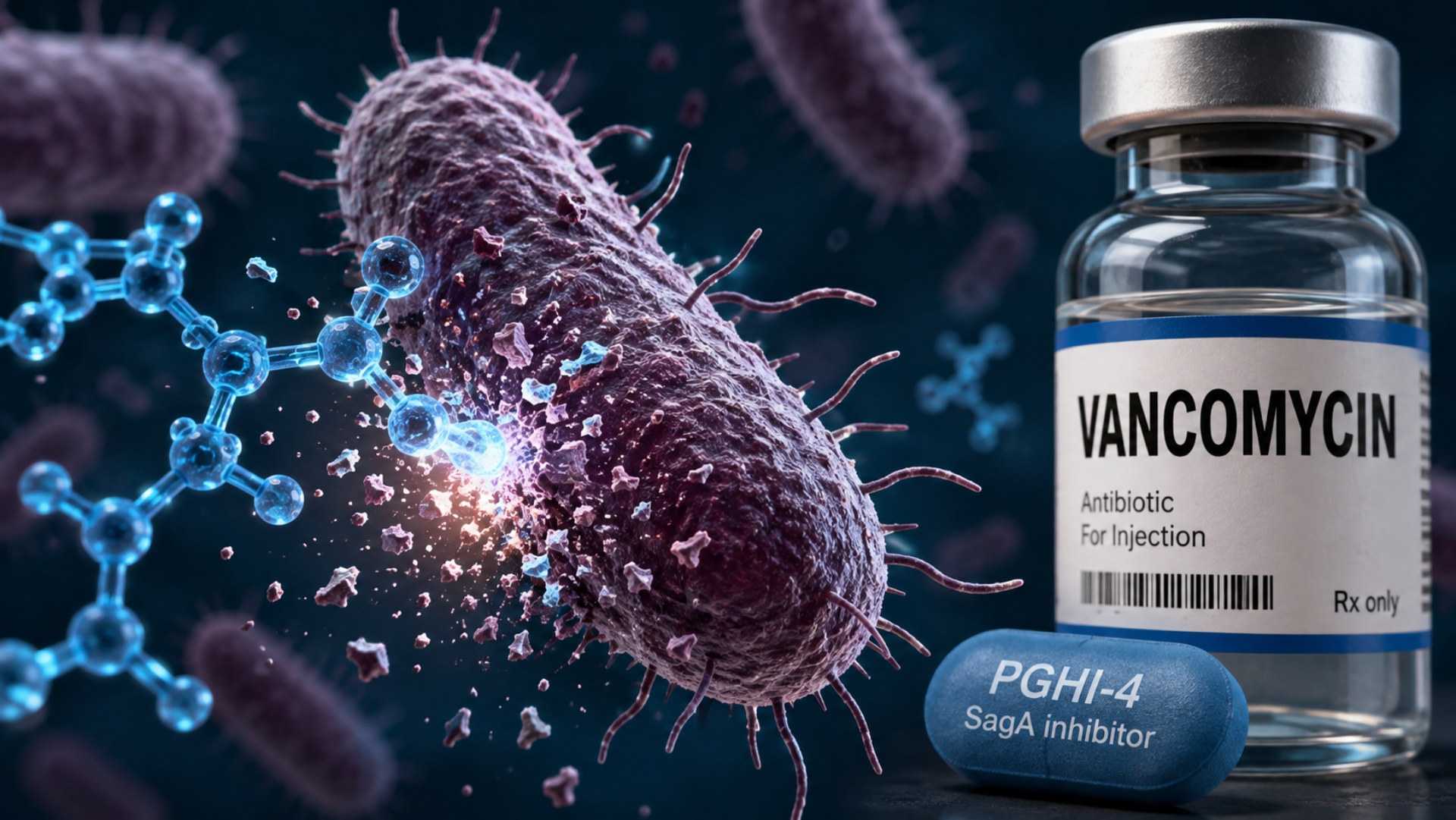
Researchers have found a way to make the antibiotic vancomycin effective again against bacteria that have developed resistance. By combining the drug with a small molecule, the scientists were able to disable one of the bacterium’s defense mechanisms.
The results have been published in the scientific journal Nature Communications and have been presented by Cold Spring Harbor Laboratory. The study was conducted together with researchers at Scripps Research.
Vancomycin is used for severe infections and has long been an important medication when other antibiotics do not work. However, certain bacteria have developed resistance even to vancomycin, which can make infections very difficult to treat.
Molecule Disabled Bacterial Defense
The researchers studied the bacterium Enterococcus faecium, which can cause severe infections, especially in healthcare settings. Some strains are resistant to vancomycin.
Instead of developing an entirely new antibiotic, the researchers tried to make the existing medicine effective again. They targeted an enzyme in the bacteria called SagA, which is involved in remodeling the bacterial cell wall.
The enzyme was blocked using the molecule pghi-4. When the resistant bacteria were treated with both pghi-4 and vancomycin, the antibiotic regained its ability to kill the bacteria.
In other words, the molecule does not kill the bacteria on its own. Instead, it acts as an adjuvant that makes the bacteria more sensitive to the antibiotic.
May Give New Life to Older Drugs
Pghi-4 was originally discovered in 2020 in a research project at Cold Spring Harbor Laboratory. The team has established a library of over 150 chemical compounds using a method that allows for rapid synthesis and testing of molecules with different properties.
The researchers hope that the same approach can be used to restore the effectiveness of other antibiotics to which bacteria have become resistant. Similar compounds could, in the future, also be tested against, for example, resistant tuberculosis.
The result does not mean that a new treatment is ready for use in patients. The finding must first be followed by further trials to determine whether the combination is safe and effective in living organisms and, subsequently, in clinical studies.
However, the study shows that the fight against antibiotic resistance does not have to be solely about developing entirely new drugs. Another alternative could be to disable the bacteria’s defenses, thereby giving older antibiotics their effect back.