
The recent tightening of regulations for labor immigration – including higher wage requirements for work permits – has become a new fault line in Swedish migration policy. In a widely noted exchange in the parliament, the Green Party’s Annika Hirvonen and the Sweden Democrats’ Ludvig Aspling clashed in a sharp debate about the consequences of the government’s policies, which culminated in the former being exposed as poorly informed and feeling so offended that she broke off the debate.
The debate was sparked by the Green Party’s criticism of the Tidö government’s stricter migration rules. Annika Hirvonen painted a picture of how people who have worked and established themselves in Sweden are now being forced to leave the country by the thousands.
She described the development as both unfair and contradictory to political promises that work should pay off.
– We in the Green Party think it is completely unreasonable to mass-expel thousands of people who have worked in Sweden … paid taxes and contributed to our welfare.

Hirvonen particularly highlighted professional groups within the welfare sector and argued that people are now being forced to uproot their lives in Sweden.
– Now we see how employees in home care, assistant nurses … are being forced to sell their houses and homes and pull their children out of school to travel to countries like Iran or Afghanistan … which I think we can all understand are places people would not want to return to.
ALSO READ: Dagerlind: Swedish Radio’s Strange Attack on Decent Wages for Labor Immigrants
She also warned against the effects of higher wage requirements.
– The government is going to raise the wage requirements so much that it will be almost impossible for many in working-class professions to return to Sweden.
Finally, she questioned the Sweden Democrats’ view on the principle that those who work and do the right thing should be allowed to stay.
Aspling: “No Mass Expulsion of Healthcare Personnel”
Ludvig Aspling from the Sweden Democrats rejected the criticism and accused Hirvonen of being poorly informed.
He started by questioning the claim that healthcare staff would be affected.
– I don’t think Annika Hirvonen really knows the numbers when she says we are mass-expelling nurses.
He informed his debate opponent that the number of nurses who immigrated to Sweden as labor migrants in 2022 – during the government that Hirvonen supported – was 18 people. None of them have been forced to leave Sweden, all of them meet the new wage requirements, Aspling said.
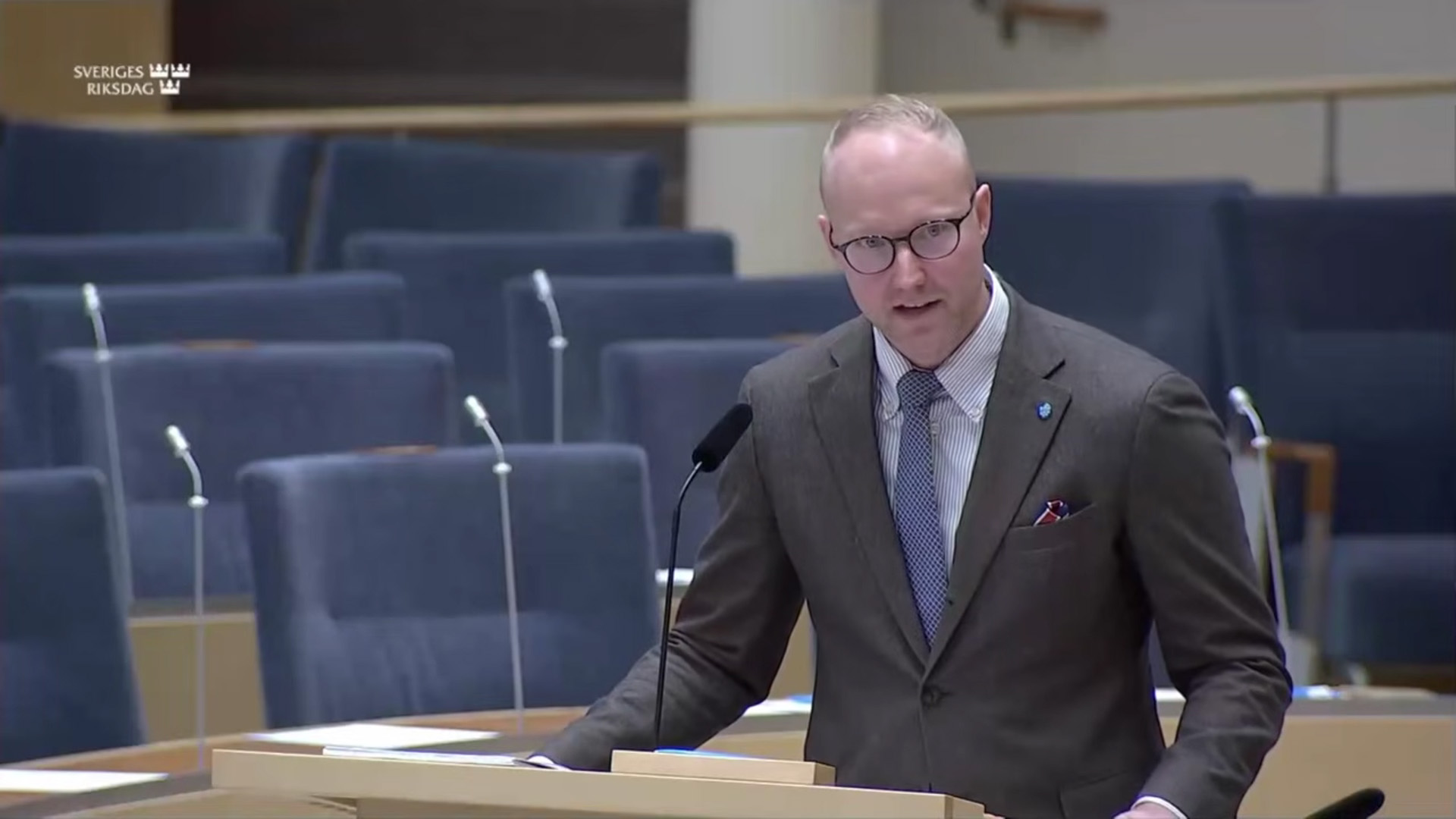
He also pointed out that the total number of foreign nurses in Sweden is very small and that they too fulfill the new wage requirements.
– A few hundred. It’s an extremely small number of people… I think we’ll manage. In other words, we are not mass-expelling any qualified healthcare staff.
ALSO READ: Unions and Employers Agree: Continued Low Wages for Labor Immigrants
On a more fundamental level, he criticized Hirvonen’s reasoning about the right to remain in Sweden.
– Not wanting to live in a place is not enough for someone to be granted a residence permit in Sweden.
He warned about the consequences of such a generous threshold.
– If we apply that principle… then it’s the end for this country.
Hirvonen refused to continue the debate
As Aspling continued with his numbers, it became increasingly clear that Hirvonen had come to the debate just as unprepared as it had initially seemed. When Aspling pointed this out, however, Hirvonen felt so offended that she ended the debate and demanded an apology from the SD representative before she would speak to him in the future.
Background: Stricter Requirements for Labor Immigration
The exchange is rooted in the changes made to labor immigration. The most noted is the increased wage requirement, which means that a labor immigrant must have a salary corresponding to about 80 percent of the median wage in Sweden.
ALSO READ: Government and SD Tighten Requirements for Labor Immigrants
The government’s intention is to limit low-skilled labor immigration and prevent abuse of the system. Critics, however, claim that the reform hurts shortage occupations – such as those in welfare, care, and service – where wages are often below the new threshold.
Rules related to so-called “track switching” – the possibility of switching from asylum to a work permit – have also been tightened, which affects people already in the country.