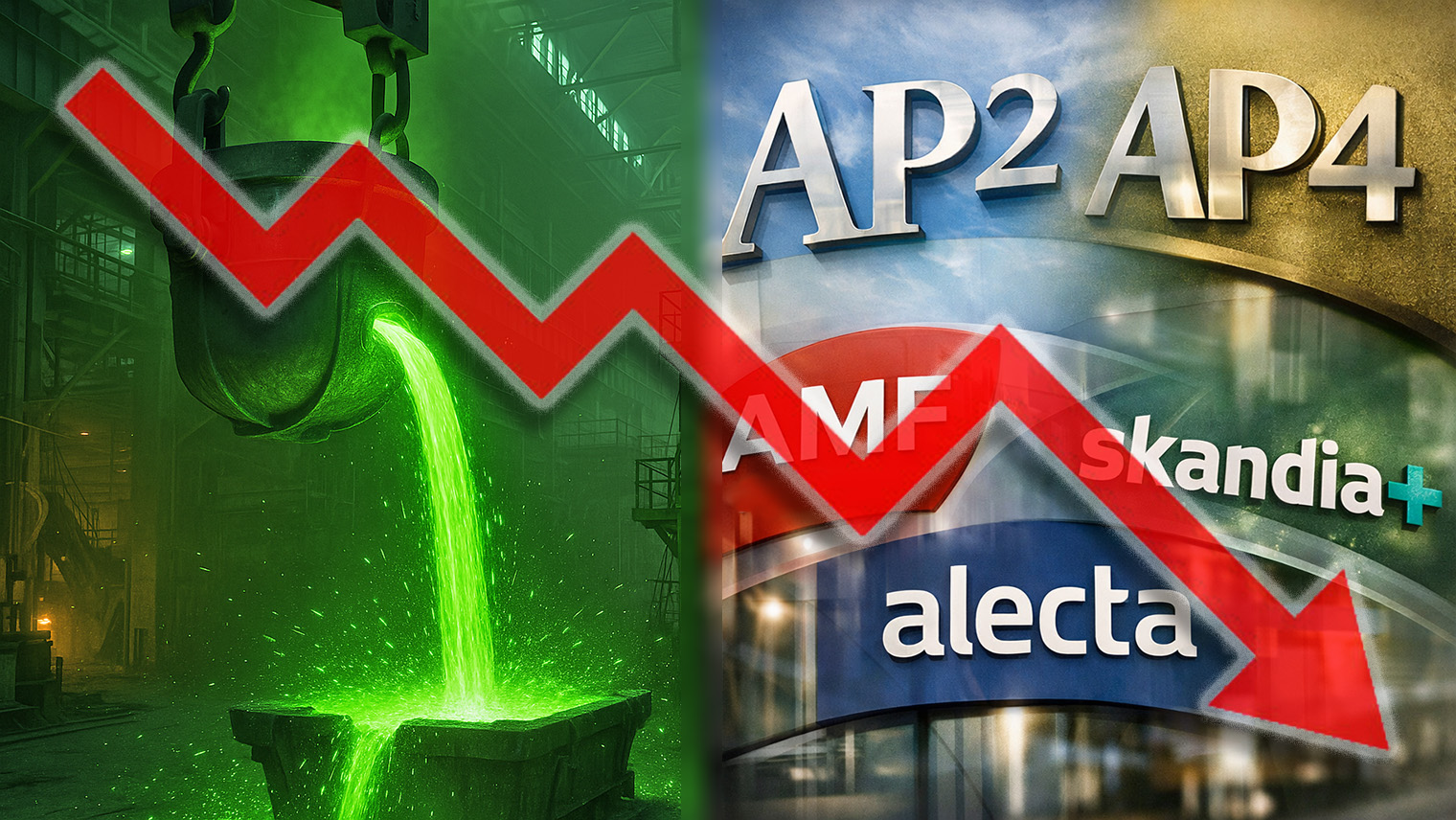
Billions from Swedes’ pension savings are at stake in the crisis-stricken steel project Stegra. Despite acute liquidity problems, unpaid invoices, and the departure of key personnel, several pension fund managers are open to investing even more – in a situation increasingly compared to the Northvolt fiasco.
The green steel initiative Stegra is facing severe financial pressure. In total, about 3.4 billion SEK in pension capital is exposed to the company. At the same time, Stegra has already used around 72 billion, and is estimated to need at least another 10 billion to keep the project alive.
There are many warning signs. Liquidity is strained, suppliers are not getting paid, and essential staff are leaving the company.
– The pension system should be built on long-term profitability rather than high-risk projects with uncertain funding. This is starting to look like a very risky investment, says business economist Ossi Pesämaa in a comment to Realtid.
Construction Halted, Billions Burned, and Threats from Lenders
The problems are not new – but they have accelerated. Already, Stegra was forced to pause parts of construction for several weeks after lenders indicated they could stop payouts.
READ ALSO: Behind the Green Steel: Risky Billions Game with Taxpayer Money
Behind the scenes, the company has had an extremely high capital demand. Reports indicate the operation has burned through about three billion SEK per month. Without new funds, the cash reserves risk being depleted quickly.
Meanwhile, the financing plan has collapsed. Lenders now demand guarantees that there is no financing shortfall – something increasingly difficult to provide in practice.
Suppliers Unpaid – Work Halted
The crisis is evident at the construction site in Boden. Several contractors are reportedly owed hundreds of millions in unpaid invoices.
According to reports, suppliers have gradually reduced their involvement, and some have stopped work altogether. The main contractor withdrew its workforce some time ago – and has yet to return to work at full scale.
READ ALSO: The Ground under Stegra Shakes – Needs More Billions
In a widely noted case, heating was even cut off in part of the facility during the coldest part of winter due to unpaid bills. Some invoices were only paid after considerable pressure.
At the same time, many suppliers reportedly hesitate to go to the Enforcement Authority – fearing that confronting Stegra’s management could mean losing all their money.
Internal Unrest and Departures
Meanwhile, several key figures have left the company, including the CFO and leading technical experts. Pesämaa describes the situation to Realtid as alarming.
– Acute cost crisis, liquidity crisis, the biggest supplier has withdrawn staff, the company is behind on payments, and key people are quitting. These are clear warning signs. Some insiders even doubt whether the steel plant will ever become a reality.
Pension Funds Open to More Risk
Despite this, several large pension managers do not rule out injecting more capital. AMF, which has already invested around two billion SEK, sees the holding as part of its high-risk portfolio.
The AP funds have also invested significant amounts both directly and through climate funds – and signal continued interest.
READ ALSO: Stegra’s New Problem – Heating Cut Off After Unpaid Invoices
This has drawn criticism. Economist Anders Anderson warns that trust in the pension system may be damaged.
– There have been several such widely discussed incidents. Many will probably get the impression that pension funds are making poor investments, he tells Realtid.
Parallels to Northvolt – Pension Billions Up in Smoke
Comparisons to battery company Northvolt are being made more and more often. There, pension savers lost billions when the project collapsed – while owners and early investors could leave with significant profits.
READ ALSO: The Green Fraud – Or When the Hydrogen Leaks, the Truth Leaks Out Too
Pesämaa sees similar patterns and tells Realtid he doubts that either savers or union members believe their money should be used as venture capital for further industrial policy experiments.
The Criticism: Political Prestige Project rather than Business Venture
Beyond the acute crisis, more fundamental criticism is being directed at the very logic of the project.
Several researchers have questioned the socioeconomic calculations used to justify the investment, arguing that the analyses resemble marketing more than serious decision-making material.
READ ALSO: Swedish National Debt Office Conceals Billion Guarantees for Crisis-Hit Stegra
At the same time, critics point out that the climate benefits may be exaggerated, since emissions are already regulated under the EU system.
This raises questions about the driving forces behind the project – and whether pension funds are in effect being used to finance political ambitions rather than secure returns.
Municipalities and Taxpayers Bear the Risks
The risks go beyond the pension system. The public sector also has significant stakes in the project.
Boden municipality has invested over 1.6 billion SEK in taxpayer money in infrastructure related to the project. At the same time, there are state guarantees and support linked to the financing.
Critics argue this creates an imbalance where profits can be privatized – while losses risk falling on taxpayers and pension savers.
A Project without Production and Growing Costs
Despite massive investments, production has yet to start. Not a single gram of green steel has been delivered. Meanwhile, costs continue to tick upward – and the need for new capital grows.
The question now is how much longer financing can be maintained. If new funds are not secured soon, several observers believe bankruptcy may be the only remaining option.
READ ALSO: Large Number of Illegals Deported After Raid at Stegra
At the same time, pension funds face a crossroads: to limit losses – or to commit further billions in hopes the project will eventually succeed. For many savers, concerns are growing that history is about to repeat itself.