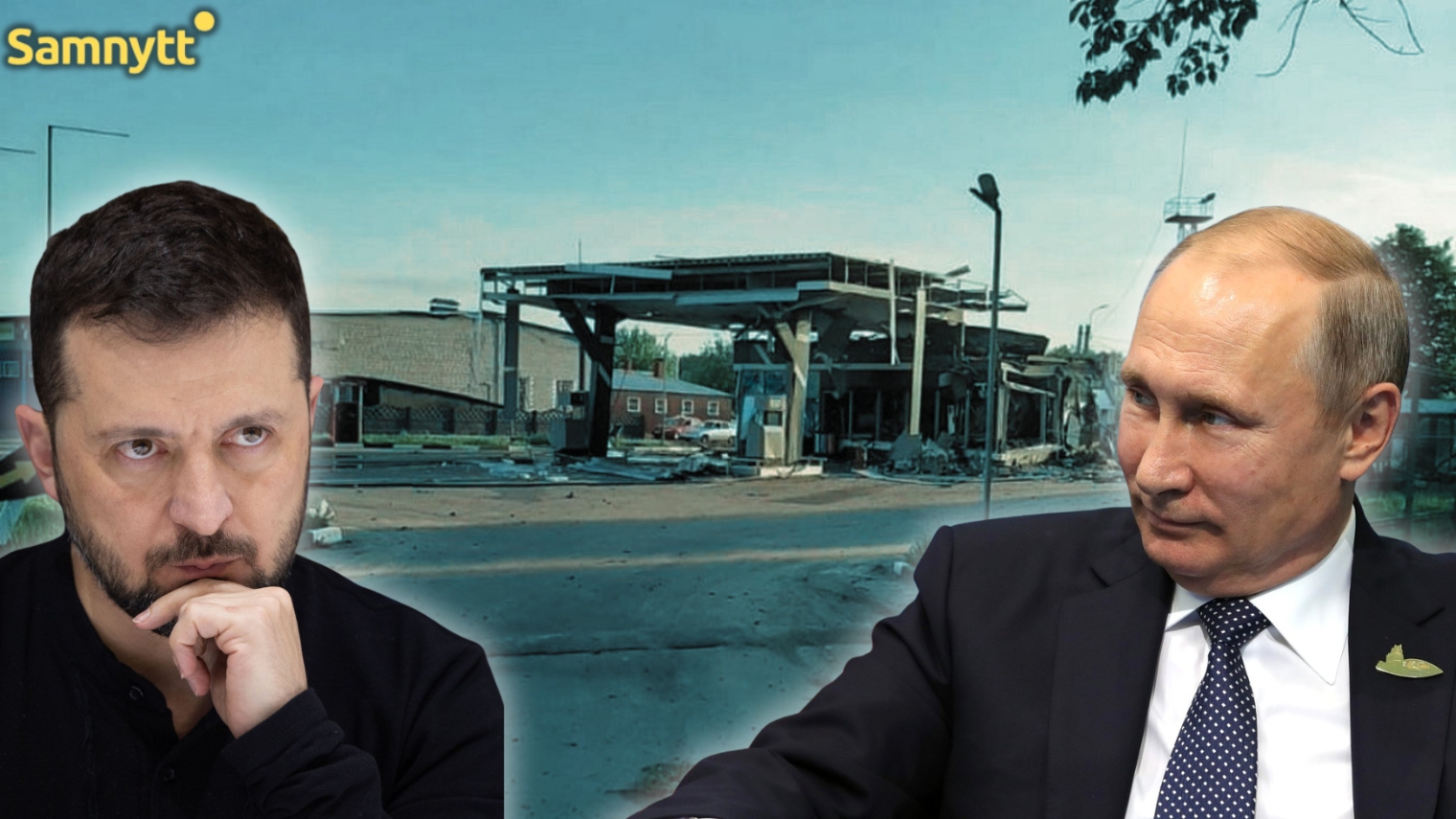
During the summer, Russia has intensified its attacks on Ukrainian energy infrastructure by targeting fuel stations across the country. Over 200 fuel stations are reported to have been destroyed or damaged during June and July in a sweeping wave of drone and air strikes. This series of attacks comes after a prolonged period of Ukrainian strikes on Russian oil facilities and fuel depots, where Ukraine has sought to hit Russia’s energy sector and war economy. Meanwhile, Ukraine continues to lose ground on the battlefield in the eastern regions.
The latest developments on the battlefield in Ukraine show continued Russian advances. According to the Ukrainian analysis group DeepState, Russian forces took control of more Ukrainian territory in July than the Ukrainian military was able to reclaim during the same period. This is reported by several Ukrainian media outlets.
The fiercest fighting is said to still be ongoing around Rodynske and Kostiantynivka, as well as in the direction of Sloviansk and Kramatorsk.
The group also notes that the nature of warfare has changed over the past year. The traditional role of large infantry assaults has significantly decreased, while drones and precision strikes have become increasingly important on the battlefield.
This type of aerial attack has also gained international attention in recent months, as Ukraine, with long-range drones, has succeeded in carrying out several successful strikes against Russian energy infrastructure, including oil refineries, fuel depots, and other strategic facilities.
READ ALSO: After Ukraine’s attacks: Putin admits to problems in fuel supply
With long-range drones, Ukrainian forces have for an extended period attacked Russian oil refineries, fuel depots, and other strategic energy sites.
Ukraine has described these operations as a way to strike at Russia’s war economy by reducing the country’s oil revenues and disrupting fuel supplies.
The Ukrainian attacks have on several occasions caused extensive fires at Russian refineries and led to disruptions with long queues at petrol stations. Russia has subsequently, according to several media sources, begun to target Ukraine’s own fuel stations in an increasingly evident spiral of retaliation over the countries’ energy infrastructure.
On the night of Monday, Ukraine once again carried out strikes against Russian targets, including oil depots in several areas of the country.
We continue applying our long-range sanctions against Russian facilities that serve the war effort and finance the aggression.
Last night, in Russia’s Saratov, more than 600 kilometers from the front line, two strategic facilities were hit: the Saratov Oil Refinery and the… pic.twitter.com/GjvWrWX0lc
— Volodymyr Zelenskyy / Володимир Зеленський (@ZelenskyyUa) August 2, 2026
Ukrainian officials describe the development as a new phase in the ongoing energy war between the countries, where both sides are trying to strike at each other’s infrastructure, but where the consequences for civilians have become increasingly apparent.
According to Oleksandr Skoryk, a member of the Kharkiv regional parliament, more than 200 gas stations have been destroyed in Russian attacks. At least 80 of these are said to be in the Kharkiv region, which has been one of the hardest hit areas during the recent wave of drone strikes.
CNN reports that it has analyzed and verified at least 30 video clips documenting attacks on gas stations in Ukraine during June and July.
Video from Russia’s Rubicon Center of FPV strikes on gas stations in Sumy and Kharkiv oblasts. https://t.co/KkGVERQ6Kd pic.twitter.com/I47fcBz3Or
— Rob Lee (@RALee85) July 27, 2026
The state energy company Naftogaz states that 37 of its gas stations have been destroyed by Russian attacks since the start of 2026.
To counter the threat from small attack drones, Ukraine has begun to use improvised protection. Hundreds of kilometers of old fishing nets have been stretched over roads, bridges, and other critical infrastructure to catch or disrupt incoming smaller drones.
The result of these air strikes has become a new front in the war, now in its fifth year, where the fight is not just about territory in the eastern parts of Ukraine, but also about who can affect the opponent’s daily life, economy, and ability to continue operating during wartime.
READ ALSO: Kristersson’s message to the Swedish people ahead of the NATO meeting: “European security right now means Ukraine”