Many believe they would manage better than average in a crisis, yet more than half lack cash at home as part of their crisis preparedness. This is revealed by a new survey.
This year’s edition of the report Financial Crisis Preparedness – The Public’s View from the Swedish Savings Banks Association shows that 41 percent believe Sweden will face a serious crisis or war situation in the coming years. Confidence in their own preparedness and ability in such situations is high – 35 percent are convinced that they would manage better than the average person. However, almost half, 44 percent, have not made any preparations at all.
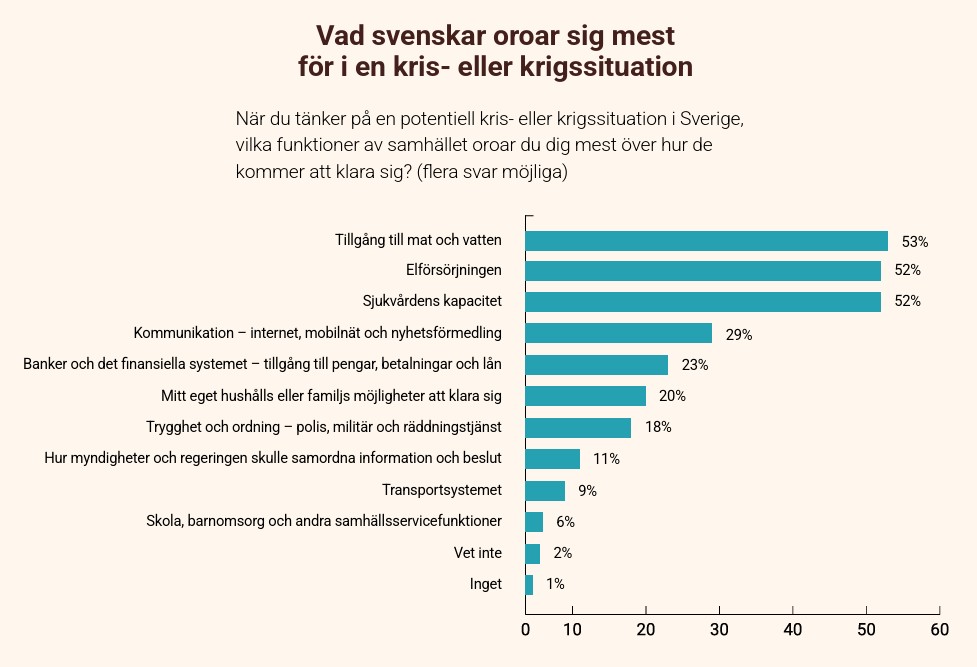
READ ALSO: What Worries Swedes Most in a Major Crisis
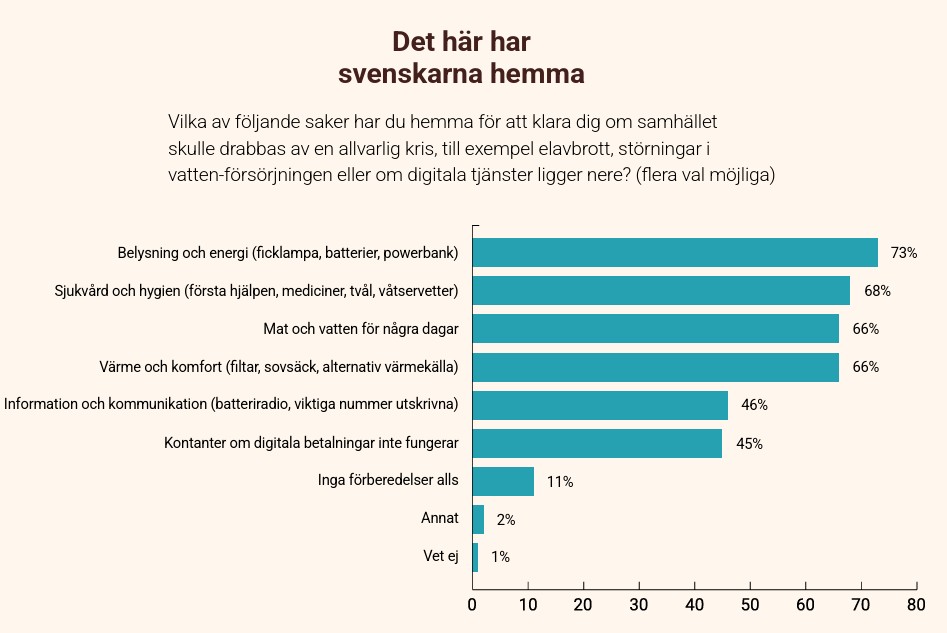
“Many seem to have strong confidence in their own ability in a potential crisis. The report also shows that men stand out with greater belief in their preparedness than women. Although many are unprepared, there is some basic preparedness in Swedish homes, especially when it comes to flashlights, first aid kits, and food and water for a few days. But when it comes to financial preparedness, households are significantly less well equipped,” says Björn Elfstrand, CEO of the Swedish Savings Banks Association.
More Information
At the same time, 44 percent say that more information is needed on how to prepare financially for a crisis or war situation. An equally large proportion say they have cash at home as part of their preparedness, and among them only 23 percent have more than 2,000 kronor.
READ ALSO: Swedish Households Poorly Prepared for Crisis
– Financial crisis preparedness is about more than cash. It’s about having financial margins and a plan for the unforeseen. Today, we see a gap between people’s perceived security and their actual preparations. At the same time, structural conditions are important, and the lack of physical financial infrastructure in the form of bank branches can impact both household security and society’s overall crisis readiness. Here, banks and authorities share responsibility to provide conditions, knowledge, and guidance, says Björn Elfstrand.
Nine out of ten say they have some form of crisis preparedness at home, and in the event of a disruption in payment systems, 24 percent say they would quickly face financial problems.