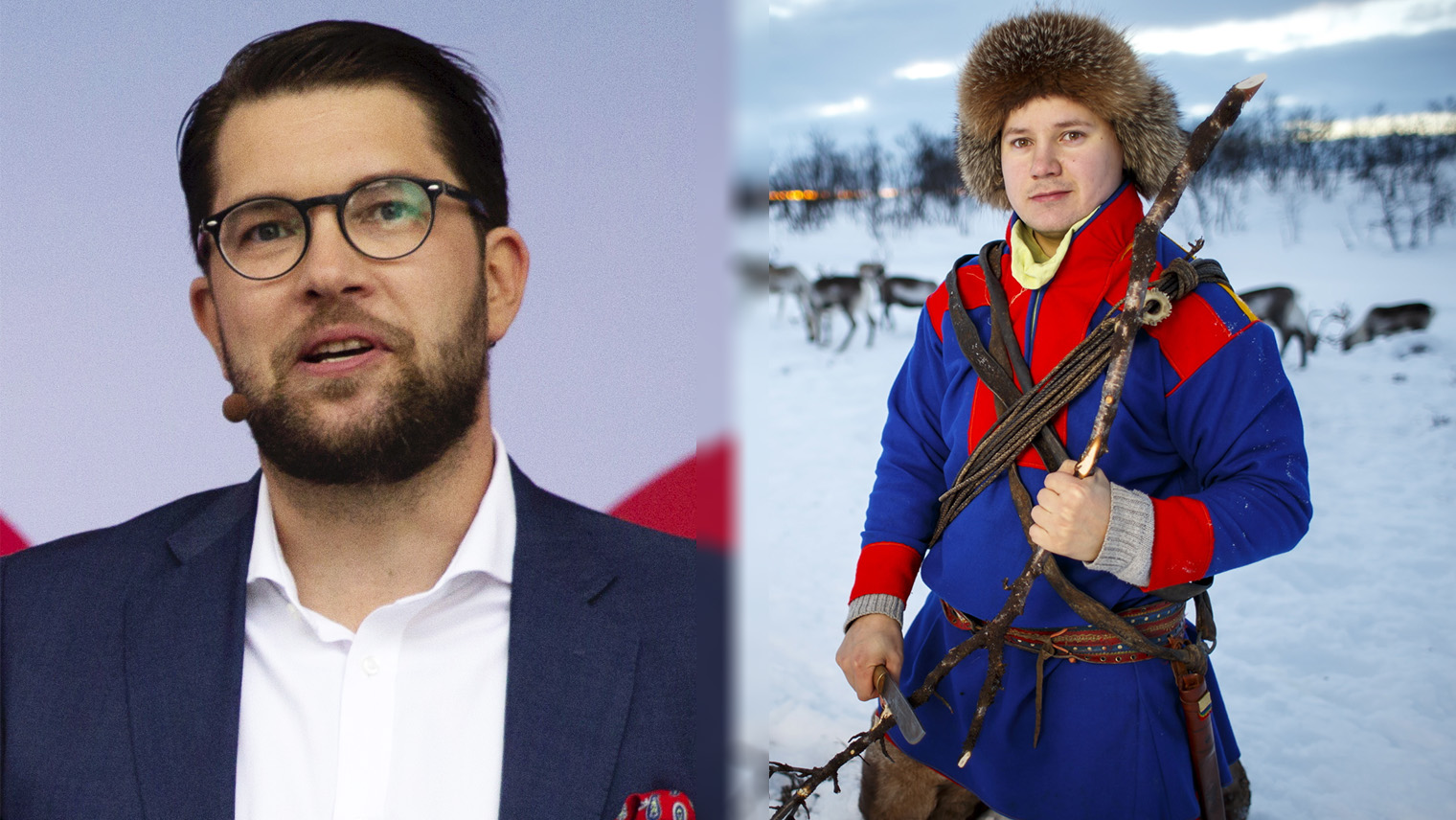
SD leader Jimmie Åkesson attacks the so-called Girjas verdict in an opinion piece and demands that it be overturned. He argues that the ruling has created unequal access to state land on ethno-nationalist grounds and calls for a return to what he describes as the principle that nature belongs to everyone living in Sweden, regardless of origin.
In his opinion piece, Jimmie Åkesson directs sharp criticism against the Girjas verdict and its consequences. He describes Sweden’s nature as a shared heritage and believes that it has historically been characterized by openness, where people have been able to move freely and enjoy hunting and fishing on equal terms, regardless of ethnicity.
According to Åkesson, this has fundamentally changed due to the ruling. He claims that in practice, the state has relinquished control over hunting and fishing rights on state land to a limited ethnic group, which he says violates the principle of equality before the law.
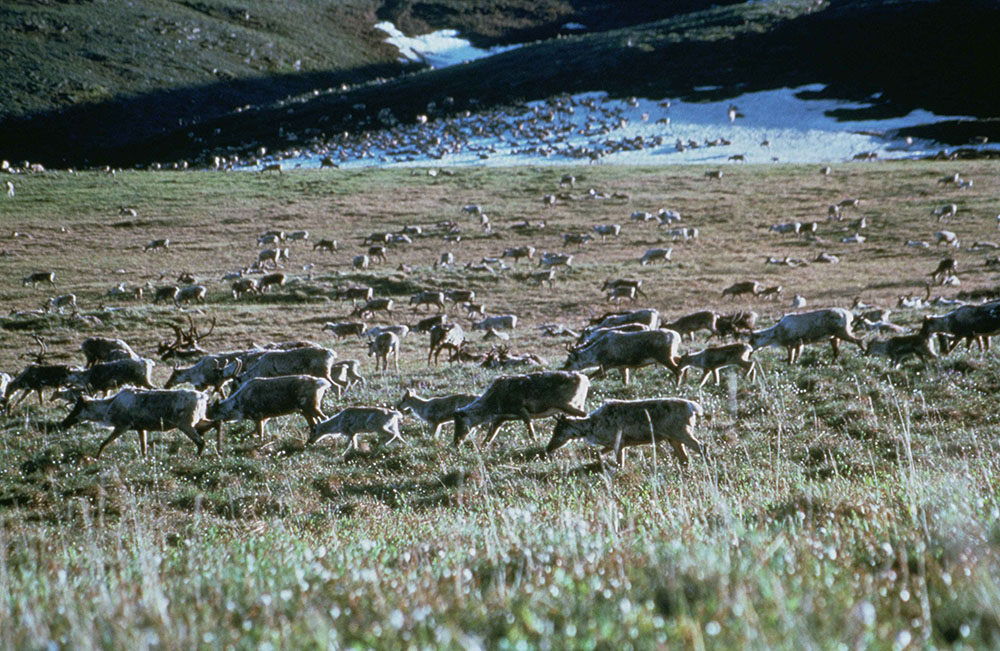
He writes that this has led to “ordinary Swedes – hunters, fishers, and outdoor enthusiasts – being shut out,” and that a kind of division has arisen where some are given preference over others. The special rights are based on whether the ‘right’ blood runs in a person’s veins or not.
Demands political change
Against this background, Åkesson announces that the Sweden Democrats want to bring up the issue politically in the next parliamentary term. The goal is to overturn the verdict and restore what he describes as equal access to natural resources on state land.
READ ALSO: Sami people prefer nuclear power to wind turbines
He emphasizes that state-owned land fundamentally belongs to the entire population and should therefore be accessible to everyone, regardless of background. In the article, he phrases it as the state’s land should be open “regardless of postal address, ethnicity, or membership in a particular group.”
This reasoning is advanced as a question of justice rather than an attack on any specific group, where Åkesson asserts that the change would mean a “restoration of justice.”
Economic and cultural arguments
In the article, Åkesson also highlights the practical consequences of restricted access to hunting and fishing. He argues that this not only affects individual recreational users but also the rural economy and local associations.
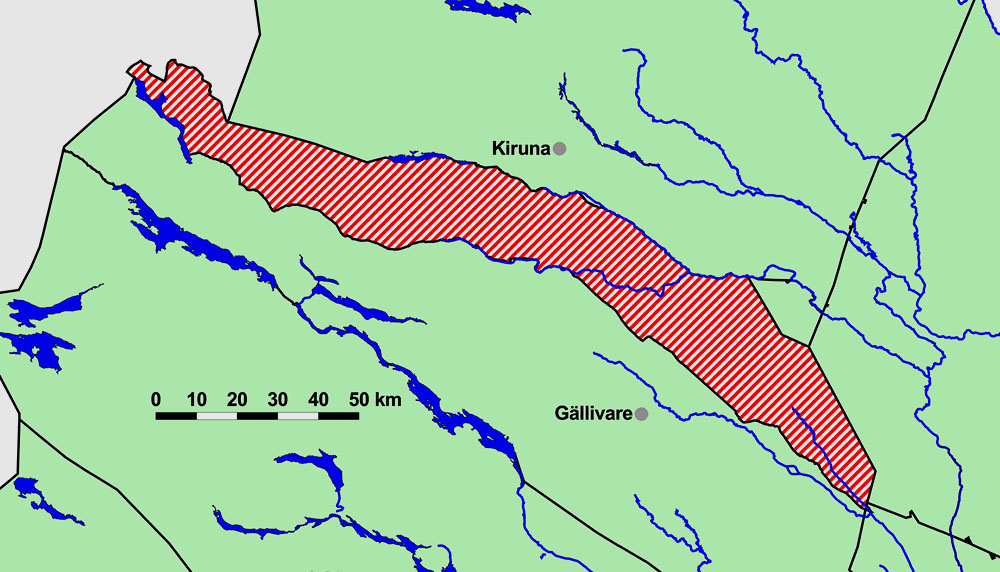
Hunting and fishing are described as important parts of Swedish culture and tradition, significant for both businesses and nonprofit organizations. When access is limited, he argues, it risks undermining the entire structure that has developed around outdoor life.
“Holding two thoughts in the head at the same time”
At the same time, Åkesson tries to balance his criticism by stressing the importance of protecting Sami culture. He maintains that Sami traditions, language, and livelihoods are an important part of Sweden and should be safeguarded.
But he considers that this does not have to conflict with everyone’s access to nature. According to Åkesson, it is possible to combine special rights linked to reindeer husbandry and culture with a general openness for hunting and fishing on state land.
READ ALSO: DEBATE: The reindeer industry is unsustainable
He argues for a model in which the state assumes clearer responsibility for natural resources, while Sami rights continue to be recognized—though not, in his view, in the form of exclusive control over hunting and fishing.
Wants to “restore” the principle of common nature
In summary, Åkesson portrays the Girjas verdict as a departure from a fundamental Swedish principle: that nature is shared. By overturning the ruling, he wants, according to his own description, to return to a more unified system where the same rules apply to everyone.
He concludes by describing the proposal as a step toward a more cohesive society, where nature once again becomes “our common property.”