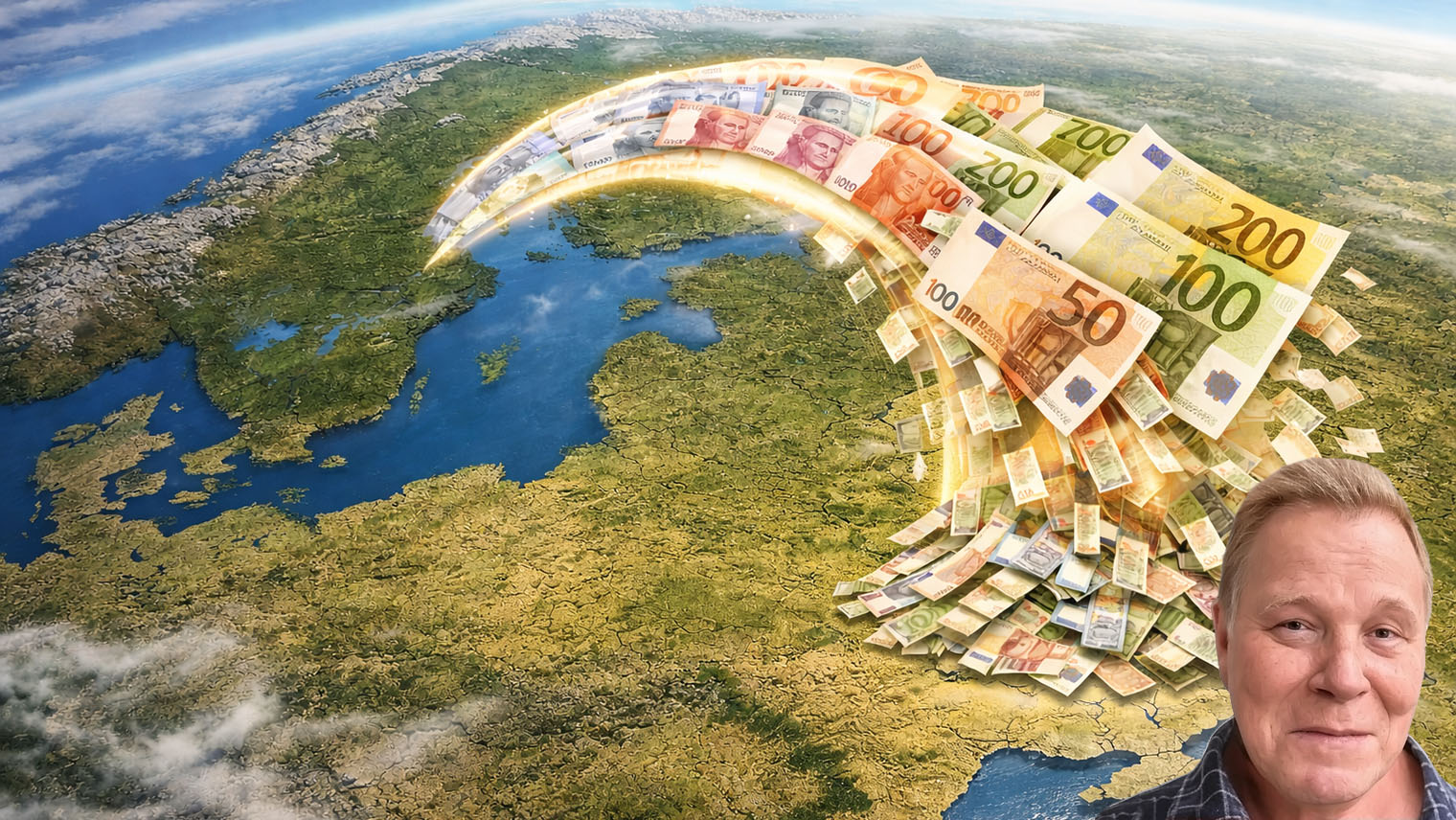
EDITORIAL • The Minister of Finance says that the room for reform in the next parliamentary term is basically gone. In the debate, defense, prisons, and infrastructure are mentioned – but not the single most traceable item causing budget squeeze in recent years: support for Ukraine. If we want to honestly discuss “empty granaries,” we must distinguish headline figures about the value of the aid from the actual budgetary squeeze each year. Only then does a picture emerge that is bigger – and more long-term – than both supporters and critics often admit.
Elisabeth Svantesson has now stated outright that the room for reform for the entire next term is more or less eradicated. This might sound like an abstract macroeconomic point, but to an average newspaper reader it means something very concrete: when parties promise new initiatives, they must either raise taxes, reprioritize away from something else, or borrow more. And when the room for reform shrinks, it’s reasonable to ask: Which decisions have already “eaten up” the space?
Here, support for Ukraine becomes a key – not as the sole explanation (that would be dishonest), but as one of the largest and most visible items that truly competes with other policies in the same state budget.
READ ALSO: Kristersson’s New Billions Rained on Ukraine
The government summarizes Sweden’s support since February 2022 at approximately SEK 114 billion (as of February 5, 2026), of which SEK 90 billion is military and SEK 24.4 billion is civil/humanitarian. But that figure is also the root of confusion. Because SEK 114 billion is not an ordinary cost for 2022–2026. It is a compilation of values and efforts: money actually paid out, yes – but also equipment that already existed in Swedish stockpiles, and so may not have burdened the state budget in the actual year it was donated.
This is where the debate often goes off track. The critic wants to use the total figure and lets it resonate as a direct squeeze from welfare here and now. Those defending the support do the opposite and say much is tied to “material values” and thus doesn’t cost any money, at least not money that strains today’s budget and reform space. Both have a point – but both miss the bigger picture.
Military Aid: Both ‘Money Now’ and ‘Bills Later’
The military support is expressly a mix: some is donations of equipment (from simple protection packages in the beginning to tanks, advanced systems, and ammunition later), some is economic contributions and procurements. This means one and the same decision can have two distinct budgetary effects:
First, the state can pay directly: new production, purchases, transport, training, maintenance, contributions through various instruments – these show up in the budget and compete with everything else in that same year.

Secondly, the state may donate something previously paid for – but if we are serious about Sweden’s defense capability, much of it must, in practice, be replaced. That replacement does not become free just because it occurs later. It appears as new orders, authorizations, and appropriations over several budget years. Anyone wishing to understand budget squeeze must thus consider both “money now” and “bill later.”
‘Support to Ukraine’ in Defense Expenditure Is Not the Whole Truth
There is one budget item especially important for transparency, as it’s so easy to point to: appropriation 1:14 Support to Ukraine in the defense expenditure area. In the 2025 budget bill, it is proposed that SEK 22.74 billion be allocated there for 2025. For 2026, it is estimated at SEK 25 billion. That’s not small change.
This is hard cash and ammunition (no pun intended) for those who want to talk about displacement – Ukraine support at the expense of domestic welfare and prosperity. Because this is not a valuation of stock donations. It is a concrete, large money item in the state budget that – had it not existed – could have been used for something else in the same year’s budget.
READ ALSO: Ukraine: Pål Jonson Promises Us the Largest Support Package Ever
At the same time, one must be careful: appropriations can be changed during the year through supplementary budgets. In an additional budget in January 2025, for example, it was proposed that appropriation 1:14 be reduced by around SEK 10.48 billion to finance other Ukraine-related increases in the budget. This doesn’t mean “the support disappeared,” but that budgetary techniques shifted parts of the cost to other appropriations and structures. The government later in 2025 also proposed increases, making the total support for 2025 SEK 29.5 billion.
This is exactly why the discussion of ‘squeeze’ should be tough but accurate: not get stuck on a single number but acknowledge that, in 2025, the government is dealing with tens of billions in direct Ukraine-related budget decisions that otherwise could have gone towards other reforms.
Civil/Humanitarian Support: A Floor Already Built into Future Budgets
On the civilian side, the government from 2025 onwards has made a long-term commitment of at least SEK 5.6 billion per year for civil support to Ukraine. And even if “at least” sounds modest, it is a floor – not a ceiling. In practice, the government has repeatedly announced higher levels in certain years, and in political agreements there has been talk of ambitions around SEK 10 billion per year in coming years.
This means that even setting aside the material discussions, a multi-year budget squeeze is already “baked in”: several billions per year that, in another scenario, could have gone to municipalities, healthcare waiting lists, rail maintenance, or other needs.
EU’s €90 Billion: Not a Swedish Invoice – But a Swedish Risk
Added to this is the EU aspect, which often is overlooked since it doesn’t show up as a “Ukraine” line in Sweden’s state budget. The EU has agreed on financing for Ukraine for 2026–2027 through joint loans, and the European Parliament has approved a package comprising an EU loan of €90 billion for 2026 and 2027 – corresponding to just over SEK 950 billion.
READ ALSO: Sweden Co-Loans SEK 953 Billion to Ukraine – Plus Interest
It’s important to be factual: Sweden doesn’t automatically receive an invoice for a certain percentage of €90 billion. But joint EU borrowing with the EU budget as collateral means that if costs (interest, losses, defaults) arise, these can in practice affect the EU budget – and thus the member states’ fees or other priorities. It is a squeeze that may arrive later and be more indirect, but it is a real risk.
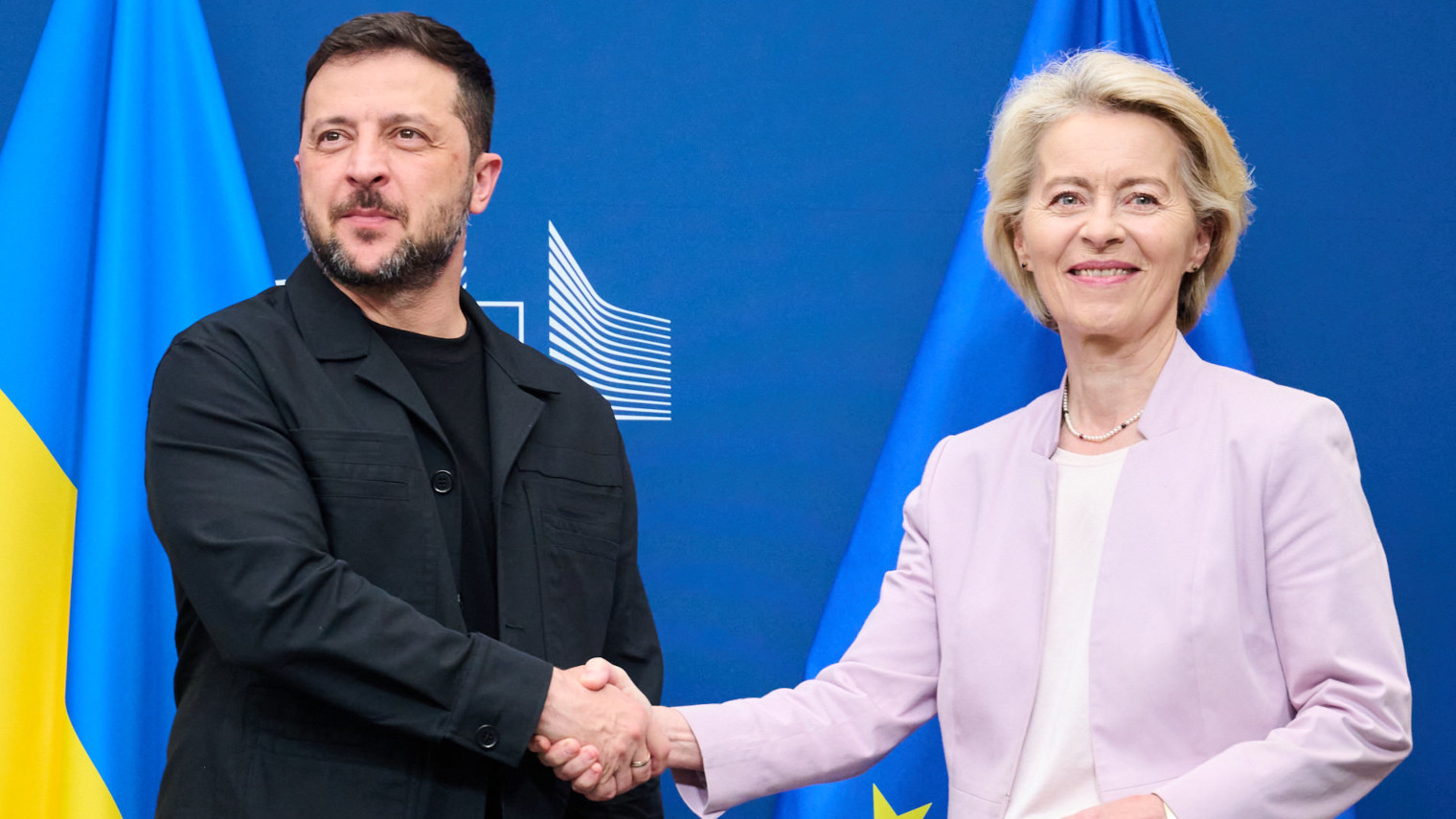
Those who want to argue critically but seriously can therefore say: Even though you can’t put an exact Swedish krona price tag without a deeper EU budget analysis, it is reasonable to count EU borrowing as a potential future burden which Sweden, as an EU member and net contributor in many contexts, will not be exempt from.
How the Calculation Should Be Made – and Why
For this discussion to be understandable, truthful, and honest, we need to calculate along two parallel tracks.
This is how it should be calculated: When we talk about budget squeeze, we primarily mean money that is actually allocated in the state budget in a given year – appropriations, expenditures, and decided increases that compete with other policies that same year. Therefore, the “Support to Ukraine” appropriation carries extra weight, as it is a distinct major item in the budget (SEK 22.74 billion in 2025 and projected SEK 25 billion in 2026), even if it can be adjusted through supplementary budgets and redistributed among appropriations.
READ ALSO: Sweden Sends Billions to the USA to Support Ukraine
We should also count future squeeze: When Sweden donates military equipment originally intended for Swedish defense capabilities, it does not become “free” just because it was bought previously. It has to be replaced in many cases – and defense materiel is rarely replaced in a single budget year. It often involves multi-year orders and appropriations that can stretch over an entire term or even longer. Therefore, we treat material donations as part of an ongoing future cost, not as a cost that disappeared because it wasn’t in that year’s spending.
We should avoid fake precision: The government’s total figure of SEK 114 billion is an important metric, but it mixes cash with valued materiel. Therefore, use the total figure to describe the scope – but actual budget appropriations to describe the squeeze.
What Does This Actually Mean for 2022–2026?
If we summarize the recent years with “squeeze glasses,” the picture is roughly as follows:
2022 and 2023 are characterized by the mix that makes the debate messy: some expenses are cash and direct, others are valued donations. To squeeze out an exact annual figure for the squeeze, one would need to do more meticulous work across several appropriations and agencies. This is entirely possible – but it’s not the same as saying the cost was insignificant. Rather, the point is that it isn’t always visible where you first look. Critics can with some justification speak of a lack of transparency.
From 2024 and especially 2025–2026, the squeeze becomes more visible even to laymen, as large amounts are placed in clear, Ukraine-linked budget tracks. For 2025, the big story is that the budget dimension of the support has gone from “many smaller decisions” to “a tens of billions item competing with everything else.” For 2026, budget texts point to continued generous levels.
On top of that is the “tail” that rarely makes headlines: re-acquisition and restoration of Swedish capabilities. This tail may or may not be an argument against supporting Ukraine – but it is an argument for criticizing those who say it doesn’t cost anything or very much, either out of ignorance of budget logic or an unwillingness to discuss it.
This Is Why It’s Relevant in the Room-for-Reform Debate
When the finance minister says the room for reform is gone, we have a discussion where defense, prisons, and infrastructure are mentioned as main drivers. But Ukraine support is for all intents and purposes part of the same defense and security bill – and in some years, one of the largest, most traceable items in the budget. Seeing the cost as self-evident in the name of solidarity is not the same as saying it shouldn’t be mentioned. On the contrary, it signals awareness that many don’t see things the same way and thus, it’s easier to keep silent.

To be serious in your criticism, you cannot blame everything on Ukraine support – we know, for example, that immigration also places enormous costs on society. It is enough to point out that tens of billions in direct budget space during 2025–2026 has been tied up for Ukraine, while civilian support puts a multi-year floor at minimum SEK 5.6 billion per year, and while material donations will reasonably generate large replacement costs in coming years that will drain the room for reform.
READ ALSO: Billions Given in Aid and War – But Pensioners Get Their Food Cut
This is a factual way to make the alternative cost visible: how much policy could have been done otherwise – and when? Even those who are wholly positive about comprehensive support for Ukraine should be able to address these points when drawn into a discussion with critics about reform space, priorities, transparency, and who ultimately pays the bill.
What Gets Pushed Aside
There’s a reason to let the finance minister’s statement about “end of room for reform” land firmly. When tens of billions are tied up in major security items – with Ukraine as one of the most traceable – a queue of other needs grows.
Take municipalities and regions as an example. The Swedish Association of Local Authorities and Regions (SKR) has repeatedly pointed out in its economic reports that government grants are not indexed in line with the cost and demand increases facing municipalities and regions. In its Economic Report (October 2025), SKR notes that simply indexing for price increases and demography for 2026 means about SEK 2.5 billion to municipalities and SEK 0.5 billion to regions – just enough to avoid falling behind.
READ ALSO: Swedish Municipalities’ Finances a Ticking Time Bomb
SKR also describes that during the inflation years 2022–2024, retroactive indexing would have meant just over SEK 13 billion to municipalities and nearly SEK 5 billion to regions, something the actual increases in general government grants have not matched. This is a concrete illustration of budget squeeze – even though the state does not record municipal welfare debt, the effect is that municipalities defer maintenance, reduce staffing, raise fees and taxes, or cut services.
In healthcare, the squeeze is even more tangible to citizens. The National Board of Health and Welfare monitors the shares of patients receiving their first visit or procedure within the care guarantee of 90 days, and waiting times have remained a recurring issue. This creates a kind of ‘welfare interest’ – delaying care today often becomes more costly tomorrow, in addition to lost tax revenues, sick pay expenses, and of course, reduced quality of life for those waiting.
READ ALSO: Ekeroth: ‘Healthcare on its Knees – Then We Throw 50 Billion at Aid’
Infrastructure is another area where Sweden lives with an ongoing maintenance debt. The Swedish Transport Administration’s assessments, cited in news reports, have indicated that only a small part of the railway’s maintenance debt has been addressed, despite us being well into the planning period, and that the backlog is likely to persist for a long time. Here too, deferring action risks increasing the overall cost as deterioration worsens.
READ ALSO: Transport Agency Wants to Forego Maintenance on 2,000 Miles of Road
The prison and probation service is a textbook case of how the state’s own priorities can swallow up the room for reform for many years. The government’s documentation on rapid expansion shows that capacity occupancy in prisons and remand centers has long greatly exceeded capacity, and solving the issue is central.
READ ALSO: Sharp Increase in Children Remanded – Prison Service Hires Teachers
The service’s own budget documentation also describes significant financial needs and that new construction takes time. This is an item, just like defense, that cannot be solved with a single budget decision but requires multiyear funding. That the greatly escalating need for remand and prison places has a migration policy basis is a separate discussion.
Adding to the Burden
Support for Ukraine alone has not erased the room for reform or created the underfunding causing Swedish society to erode in several areas, but it does add a heavy stone to the burden. It comes in a situation where several other heavy undertakings are also rising – where new tens of billions in committed space do not exist redundantly. If comprehensive continued support for Ukraine is to have popular acceptance – which is a reasonable stance in a democracy – then it must be defended with all cards on the table, even the uncomfortable ones.
There seems to be a perception that support for Ukraine is mainly financed with loans that affect the national debt instead of the state budget. This is not the case. However, the government is borrowing on a notably large scale. It actually makes no difference for state finances whether you borrow for Ukraine directly or for something else because Ukraine support ate up the room for reform.
Fiscal Policy Criticism
The state often borrows imprecisely for the whole – for the budget balance. When major expenditures and/or tax cuts cause the deficit to rise, borrowing generally increases and so do the national debt’s interest costs over time. And the cost of interest eats up the budget. That is what’s happening now. Media reported in November last year about an expected budget deficit of SEK 167 billion and that the national debt is rising again, with increased appropriations and tax cuts highlighted as causes.
This fiscal policy has recently been criticized by oversight and expert bodies. The Fiscal Policy Council in its reports has criticized that policy, in practice, means large deficits and debt financing, warning that it can undermine the framework and burden future generations with high interest costs.
The National Audit Office, in its review of the government’s application of the fiscal policy framework, has concluded that the government neither reports its fiscal policy transparently enough nor designs it in line with the framework, warning of risks to budgetary discipline if the framework is fundamentally changed.
Exploited by the Opposition
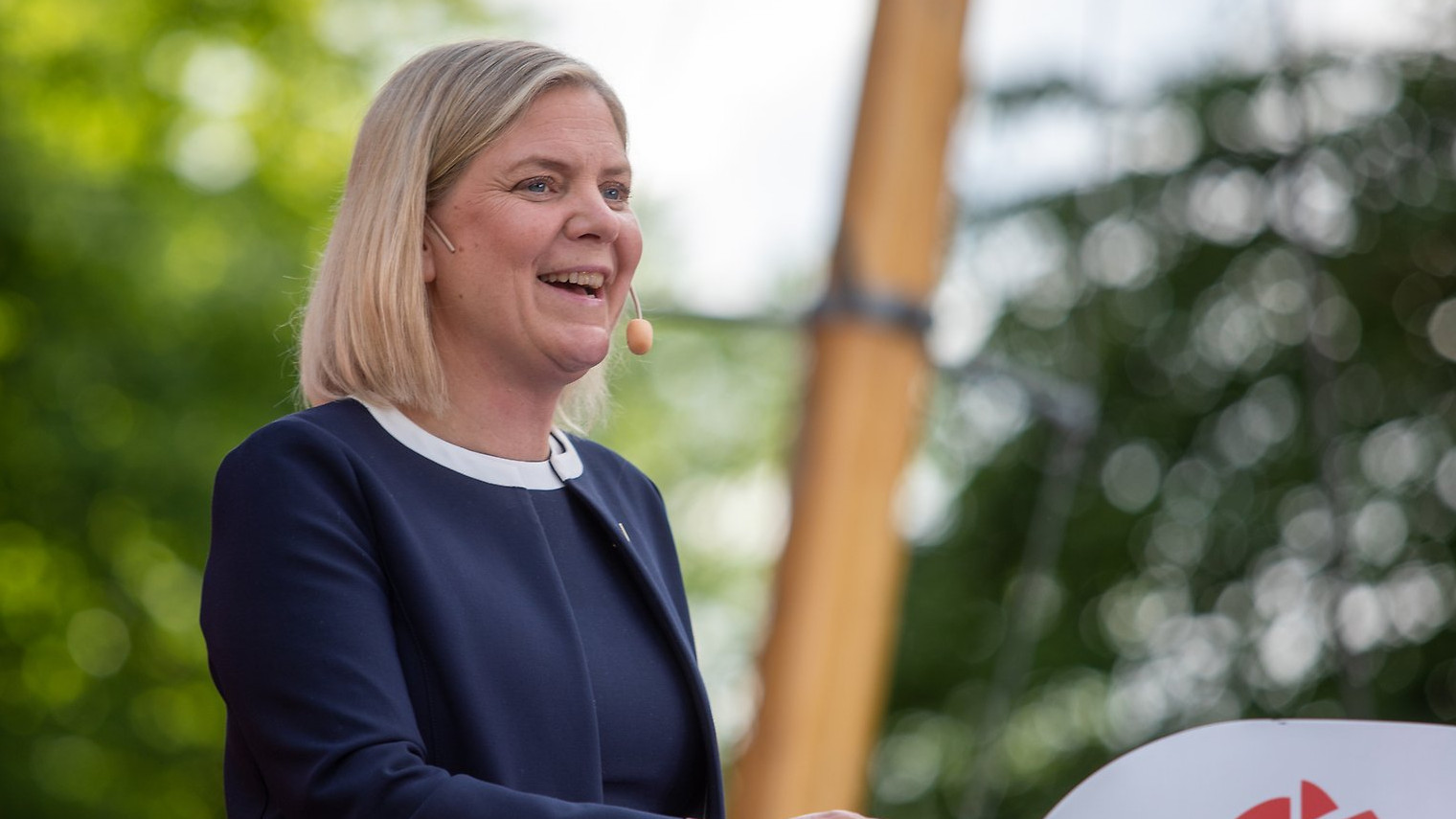
This is now being exploited by the red-green opposition at the start of the election campaign – no reform space, no budget discipline, no respect for the framework. It would almost certainly have looked even worse with a Social Democrat-led government, but that is necessarily a hypothesis which Magdalena Andersson, for lack of evidence, can deny.
In a post on Facebook, she goes all out to describe the current government’s fiscal policy with invective such as “sluggishness” and “betrayal of the Swedish people.” The Tidö parties are accused of “running the economy into the ground,” “cutting taxes for themselves,” and “putting themselves ahead of Sweden’s interests” instead of “shortening healthcare queues, reducing unemployment, or reviving growth.” Meanwhile, self-praise knows no bounds.
The Ukraine support itself does not need to be loan-financed from an accounting standpoint for it to contribute to the state borrowing more than it otherwise would. That is what is actually happening, and what the red-greens would also have done this term had they been in power. They have not flagged any intent to cut support to Ukraine, so the accusations against the Tidö parties ring hollow.
The state in recent years would have committed tens of billions to support for Ukraine regardless of government. The Social Democrats may argue that deficits would have been less had they been able to raise taxes sharply. But the absence of such a government indicates that voters did not want high-tax policies.
At the same time, you could argue it would be more honest to pay the bill ourselves today instead of letting it be passed on as higher national debt and interest costs for future taxpayers who neither participated in the decisions nor spent the money. Nevertheless, someone will have to pay the bill.
What Else Could the Money Fund?
It is also clear that a large part of the bill for Ukraine support must be paid by cutting elsewhere. Annual appropriations in the order of SEK 25–30 billion tied up in the state budget have consequences for the state of Swedish society.
That is money that could have indexed the municipal sector several times over in a single budget year, just to avoid the quiet erosion of welfare where things shrink without any formal decision on cuts. Money that could have been used to cut waiting times in healthcare and increase what is, in an international comparison, an extremely low number of hospital beds. Money that could have allowed the elderly a dignified life instead of the horror story that care homes and home care have become today.

It’s money that could have moved the railway closer to a state where the maintenance debt is actually reduced instead of being merely “managed,” especially when the Transport Administration estimates that only about a tenth of the debt will be addressed as far ahead as 2037. And it’s money that could have helped ease the capacity crisis in the prison service, where both occupancy and construction pace indicate multiyear needs and no one really knows how to finance it. More examples could be added.
Which Sweden Are We Trading Away for Ukraine?
If the government wants Sweden to take on a multiyear bill in the tens of billions – in direct appropriations, in civil floor commitments, in replenishment of donated materiel, and also in EU constructs that may become future budget risks – then the same government must also accept that voters ask the uncomfortable follow-up question: What Sweden are we trading away, meanwhile?
The solidarity and sacrifice for the Ukrainian people expected of the Swedish people should be presented more concretely than so far, in an honest prioritization discussion about who pays, how much, in what ways, when the bill comes, and what gets put on hold.
Many More Questions are Packed in Ukraine Support
The support for Ukraine also encompasses a number of other questions of geopolitical, democratic, and humanitarian nature. For how long is it reasonable to keep the war machine running, how many lives is it reasonable to sacrifice? How much money is reasonable for the Western arms industry to profit from the war? How much of the billions is it reasonable for corruption in Ukraine to pocket? How much longer can Zelenskyy’s government be considered legitimate without holding elections?
READ ALSO: NATO Chief: We Will Station Forces in Ukraine
What is reasonable to sacrifice, if anything, to achieve and hasten peace? Is the risk of expanded Russian aggression greater or less with compromises with Putin and caution about NATO and the EU moving eastward than with tough red lines and continued proxy war? Where do we find a balance between principle and pragmatism?
For Sweden, support to Ukraine also raises general questions about which :censored:6:cdd6bbaa89: conflicts our country should get involved in – not just economically but also politically, with sanctions, militarily. The question is also further widened to which other abuses in the world Sweden should spend billions of taxpayer-funded, budget-straining aid on.
READ ALSO: Zelenskyy’s Minister Channelled Over a Billion to Tax Havens
Less than 1% of our readers support us
Hundreds of thousands read Samnytt, but only 1 in 100 contributes. Help us grow and continue to deliver in-depth reporting and investigations.
Without your support, Samnytt does not exist.
No advertisers. No government support. Only our readers. Thanks to you, Samnytt has published over 33,000 articles that have challenged the established narrative in Sweden.
123 083 33 50
Swish any amount
Thank you for reading and supporting Samnytt